
Australia

The Land Down Under









1851
In the mid-1800s, the colony of New South Wales encompassed a vast territory that included what is now Victoria. However, as the population in the Port Phillip District (present-day Victoria) continued to grow rapidly, the locals began to feel disconnected from the colonial administration in Sydney. The people of Port Phillip sought more autonomy and control over their own affairs.
The separation movement gained momentum as tensions rose between the Port Phillip settlers and the New South Wales government. Demands for separation were driven by feelings of neglect, inadequate representation, and economic disparities between the two regions. This led to a series of petitions, meetings, and campaigns advocating for the establishment of a separate colony.
After years of lobbying and debates, the British Parliament passed the Australian Colonies Government Act which allowed for the separation of Victoria from New South Wales. On the 1st of July in 1851, Victoria officially became a distinct colony, with its own legislative council and government.
The separation of Victoria from New South Wales had a profound impact on the political and economic landscape of both colonies. Victoria rapidly developed and prospered as an independent colony, particularly with the discovery of gold later that year. The newfound autonomy allowed Victoria to focus on its own priorities and investments, leading to significant growth and development.
The event of Victoria separating from New South Wales marked a significant turning point in the history of Australia. It highlighted the importance of local governance and representation, paving the way for further reforms and democratization in the colonies. The legacy of this separation continues to shape the identity and governance structures of both Victoria and New South Wales.
#Victoria #NewSouthWales #Separation #Autonomy #Colony #History #Australia
View detailsIn the mid-1800s, gold was discovered in Summerhill Creek and Ballarat, triggering the start of the Victorian gold rush. This discovery brought a surge of fortune seekers from all around the world to the Australian colonies, leading to a rapid population growth and economic boom. The news of gold spread quickly, with prospectors flocking to the region in search of their own riches.
The influx of people had a profound impact on the Australian colonies. The population soared as migrants arrived in search of gold, creating a multicultural society in the goldfields. In 1852, Victoria separated from New South Wales in order to better administer the influx of people. The economy of the colonies also experienced a significant transformation, with businesses booming to cater to the needs of the growing population.
The Victorian gold rush had lasting effects on Australia. The wealth generated from the goldfields helped to establish Melbourne as a major city and contributed to the development of infrastructure such as roads, railways, and telegraph lines. The economic prosperity of the gold rush also laid the foundation for Australia's future growth and development.
Overall, the discovery of gold at Summerhill Creek and Ballarat in the mid-1800s marked the beginning of a transformative period in Australian history. It brought a diverse group of people together in search of fortune, reshaping the social, economic, and cultural landscape of the colonies.
#VictorianGoldRush #SummerhillCreek #Ballarat #AustralianHistory #EconomicBoom #MulticulturalSociety
View details1850
In 1850, University of Sydney, the first university in Australia, was established. Founded upon the principles of providing higher education, research, and community service, the institution played a pivotal role in shaping the academic landscape of the country. The university's inception marked a significant milestone in Australia's educational history, paving the way for future generations of scholars and professionals.
With an initial focus on medicine and law, University of Sydney expanded its curriculum over the years to encompass a wide range of disciplines, attracting students and faculty members from diverse backgrounds. The university's commitment to fostering innovation and critical thinking has helped cultivate a culture of excellence and intellectual curiosity among its academic community.
The establishment of University of Sydney had a lasting impact on the development of Australia, by nurturing a generation of graduates who would go on to serve as leaders in various fields. The university's research initiatives and collaborations with industry partners have also contributed significantly to the advancement of knowledge and the growth of the economy.
Today, University of Sydney stands as a symbol of academic excellence and innovation. It continues to uphold its tradition of providing a world-class education to students from all walks of life, while also leading groundbreaking research in areas such as health, technology, and sustainability.
#UniversityofSydney #AustraliaEducation #InnovationImpact
View detailsIn 1850, the Australian Colonies Government Act granted representative constitutions to four Australian colonies - New South Wales, Victoria, South Australia, and Tasmania. This act marked a significant step towards self-governance for these colonies under the British Empire.
Prior to this act, the colonies were under direct rule from Britain, with limited autonomy. The granting of representative constitutions allowed the colonies to have their own parliaments with the power to make laws on various matters, a key development towards self-government.
The impact of the Australian Colonies Government Act was profound. It paved the way for the development of democratic institutions in the colonies, as well as for increased participation of the colonists in the political process. This led to a greater sense of local identity and autonomy, as well as the ability to address specific local issues through legislation.
The act also set a precedent for the eventual establishment of the Commonwealth of Australia in 1901, as it laid the groundwork for the principles of representative democracy and self-governance that would later be enshrined in the Australian Constitution.
In conclusion, the Australian Colonies Government Act [1850] granting representative constitutions to the colonies of New South Wales, Victoria, South Australia, and Tasmania was a pivotal moment in the history of Australia, marking a significant step towards self-governance and the development of democratic institutions in the colonies.
#AustralianHistory #SelfGovernance #RepresentativeDemocracy
View details1849
In the mid-19th century, Western Australia became a penal colony for British convicts due to severe overcrowding in eastern Australian prisons. The colony was established to alleviate pressure on the existing penal settlements and to provide labor for the region's development.
Convicts were transported to Western Australia where they were put to work on various infrastructure projects, including roads, buildings, and farms. The penal colony also played a significant role in the expansion of European settlement in the area, contributing to the development of the colony's economy and infrastructure.
The establishment of Western Australia as a penal colony had a lasting impact on the region's social, cultural, and economic landscape. It brought a diverse range of individuals to the area, including convicts, prison officials, and military personnel, shaping the demographics of the colony. Additionally, the labor provided by convicts was essential for the construction and development of key infrastructure projects, laying the foundation for Western Australia's future growth.
Over time, the convict population in Western Australia declined as transportation of convicts from Britain ceased. The legacy of the penal colony, however, remains visible in the architecture, institutions, and historical sites that dot the Western Australian landscape.
The establishment of Western Australia as a penal colony serves as a reminder of the region's complex history and its role in the broader context of British colonial expansion. It is a key aspect of Western Australia's heritage and continues to influence the state's identity and development to this day.
#WesternAustralia #PenalColony #BritishConvicts #ColonialHistory #InfrastructureDevelopment
View details1845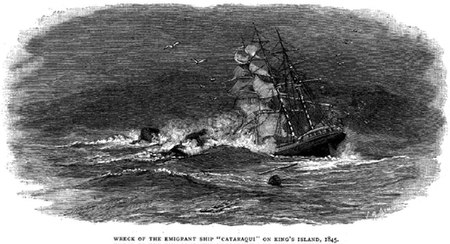
The ship Cataraqui was wrecked off King Island in Bass Strait, resulting in the loss of 406 lives. The Cataraqui was a British-built, Australian-owned vessel carrying immigrants from Liverpool to Melbourne. On that fateful voyage, strong winds and rough seas caused the ship to run aground on a reef near King Island. Despite efforts to save the passengers and crew, only nine people survived.
The disaster had a profound impact on Australia, as it remains the country's deadliest civil maritime tragedy. Families were shattered, communities were devastated, and the nation mourned the loss of so many lives. The tragedy highlighted the dangers of sea travel during that era and led to improvements in maritime safety regulations.
The wreck of the Cataraqui serves as a somber reminder of the risks faced by early settlers and immigrants to Australia. It is a tragic chapter in the nation's history, commemorated by memorials and ceremonies to honor the lives lost in the disaster. The event also underscores the resilience and spirit of those who survived and the importance of remembering the past to prevent similar tragedies in the future.
#Cataraqui #MaritimeDisaster #AustraliaHistory #RememberingTheLost
View details1843
Copper was discovered at Burra in South Australia. The discovery of copper in this remote region sparked a rush of miners and settlers, leading to the establishment of the town of Burra. The copper mines at Burra were some of the largest in the world during that time, with significant deposits to be extracted.
As news of the discovery spread, the population of Burra swelled, with workers from all over flocking to the area in search of employment in the mines. The development of the copper mines brought economic prosperity to the region, transforming Burra into a bustling hub of activity. The mining operations also led to the construction of infrastructure such as roads, railways, and housing to support the growing population.
The impact of the copper discovery at Burra was felt not only locally but also nationally, as the mining industry played a crucial role in the economic development of South Australia. Copper from the Burra mines was in high demand, both domestically and internationally, contributing significantly to the state's economy.
The legacy of the copper mines at Burra can still be seen today in the historic buildings and mining structures that remain in the town. The discovery of copper at Burra marked a turning point in the history of South Australia, shaping the development of the region and leaving a lasting impact on the local community.
#CopperDiscovery #BurraSouthAustralia #MiningHistory
View details1842
In 1843, Australia witnessed its first parliamentary elections held for the New South Wales Legislative Council. The establishment of these elections marked a pivotal moment in the country's political history, as it granted residents the opportunity to participate in the democratic process and have a say in their governance.
Prior to these elections, the Legislative Council was composed solely of appointed members, predominantly representing the British colonial government's interests. The introduction of parliamentary elections allowed for a more representative and inclusive government, laying the foundation for democratic principles to take root in Australia.
The significance of this event cannot be understated, as it set the stage for the evolution of Australia's political landscape. Through these elections, the voices of the people were finally heard, shaping the policies and decisions that would impact their lives and futures.
The newfound ability for Australians to elect their representatives gave rise to a more accountable and responsive government, fostering a sense of ownership and participation among the populace. This marked a crucial step towards a more equitable and just society, where power resided in the hands of the people rather than a select few.
Australia's first parliamentary elections for the New South Wales Legislative Council paved the way for greater democratization and representation within the country's political institutions. It symbolized a shift towards a more inclusive and participatory form of governance, empowering Australians to shape their collective destiny through the power of the vote.
#Australia #ParliamentaryElections #NewSouthWales #Democracy #PoliticalHistory
View details1841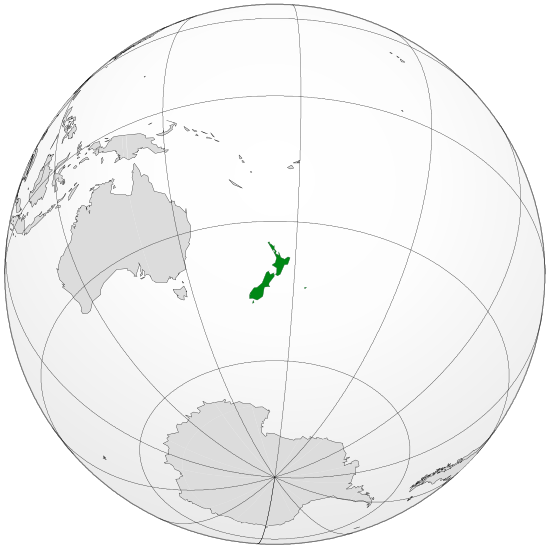
In 1841, New Zealand was officially declared a separate colony, breaking away from its previous association with New South Wales. This decision came after years of debate and negotiations amid increasing concerns over the governance of the territory. The establishment of New Zealand as an independent colony marked a significant milestone in the region's history.
The move to separate New Zealand from New South Wales was influenced by the need for better administration and governance of the growing colony. It was believed that having its own government would enable more efficient decision-making and better responsiveness to the needs of the local population. The establishment of a separate colony also allowed for the implementation of laws and policies tailored specifically to the unique circumstances and challenges faced in New Zealand.
The proclamation of New Zealand as a separate colony had far-reaching implications for the region. It paved the way for the development of a distinct identity and sense of nationhood among the people of New Zealand. The establishment of local governance structures provided opportunities for greater self-determination and representation for the colonists.
The decision to separate New Zealand from New South Wales was a defining moment in the history of the region, shaping its trajectory towards becoming an independent nation. It laid the foundation for the future development and evolution of New Zealand as a sovereign state.
#NewZealand #SeparateColony #Governance #History
View detailsIn 1842, copper was discovered at Kapunda in South Australia. The finding of this valuable mineral sparked a rush of miners and settlers to the region, leading to the establishment of the first commercial copper mine in Australia. This marked the beginning of the mining industry in South Australia, contributing significantly to the economic development and growth of the colony.
The discovery of copper at Kapunda brought about an economic boom, attracting entrepreneurs, investors, and laborers seeking opportunities in the mining sector. The establishment of the mine created jobs, stimulated trade, and increased infrastructure development in the region. The increased production and export of copper also boosted the colony's revenue and helped to bolster its economy.
The mining operations at Kapunda not only had a local impact but also played a significant role in the broader context of Australia's industrial development. The copper extracted from the mines was used in various industries, including construction, manufacturing, and telecommunications, contributing to the country's economic advancement.
The discovery of copper at Kapunda marked a pivotal moment in Australia's history, highlighting the importance of mining as a key industry that would shape the nation's economy and infrastructure. It also underscored the role of natural resources in driving economic growth and development in the region.
#CopperDiscovery #KapundaSouthAustralia #MiningIndustry #EconomicDevelopment #AustralianHistory
View details1839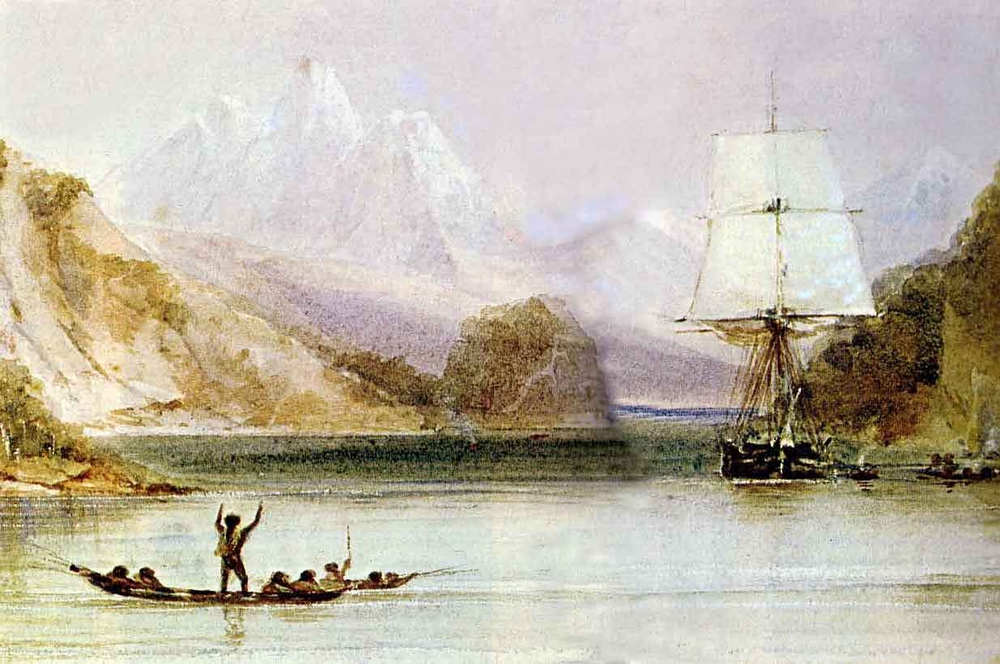
In 1839, HMS Beagle arrived at Darwin Harbour during its surveying expedition. John Clements Wickham christened the area Port Darwin in tribute to Charles Darwin, a former shipmate. This designation marked the beginning of a settlement that later evolved into the town of Palmerston. Eventually, in 1911, the town was officially renamed Darwin.
The naming of Port Darwin in honor of Charles Darwin highlighted the camaraderie and respect among the crew members of HMS Beagle. The significance of this event can be seen in how the town grew and developed over the years, transforming from a small settlement into a thriving community known as Darwin. This evolution reflects the enduring impact of Wickham's decision to name the area after his esteemed colleague.
The renaming of Palmerston to Darwin in 1911 further solidified the town's identity and connection to the historical voyage of the HMS Beagle. The town of Darwin continues to be a place of historical importance, attracting visitors and researchers interested in its ties to Charles Darwin and the natural world.
Overall, the event of HMS Beagle's arrival at Darwin Harbour, the naming of Port Darwin, and the subsequent evolution of the settlement into the town of Darwin are pivotal moments in Australia's history. These events have left a lasting legacy, shaping the identity and heritage of the region to this day.
#HMSBeagle #DarwinHarbour #PortDarwin #Palmerston #Darwin #CharlesDarwin #Australia
View detailsPaul Edmund Strzelecki, a Polish explorer and geologist, achieved a remarkable feat by ascending and naming Australia's highest peak, Mount Kosciuszko, in 1839. Strzelecki's expedition to the Australian continent was motivated by his passion for exploration and discovery. During his journey, he meticulously documented the flora, fauna, and geological features of the uncharted territories he encountered.
Strzelecki's ascent of Mount Kosciuszko was a challenging endeavor that required physical endurance and navigational skills. Upon reaching the summit, he named the peak in honor of the Polish-Lithuanian military leader and national hero, Tadeusz Kościuszko, paying tribute to his homeland's rich cultural heritage.
The significance of Strzelecki's achievement went beyond personal triumph, as it contributed to the mapping and exploration of the Australian landscape. His meticulous observations and detailed reports provided valuable insights for future expeditions and scientific studies in the region.
The naming of Mount Kosciuszko served as a symbolic gesture of solidarity with the Polish cause for independence and inspired a sense of national pride among the Polish diaspora in Australia. The legacy of Strzelecki's exploration lives on through the recognition of Mount Kosciuszko as a prominent landmark and a testament to the spirit of adventure and exploration.
#Exploration #Discovery #MountKosciuszko #AustralianHistory #PaulEdmundStrzelecki
View detailsEstablished in 1840, the City of Adelaide became Australia's inaugural municipal authority, setting a precedent for urban governance in the region. Following closely, Sydney City Council was established, marking a significant development in local administration systems within the Australian colonies.
The establishment of these municipal authorities marked a crucial step in the organization and management of Australia's growing urban centers. The City of Adelaide and Sydney City Council were tasked with responsibilities such as town planning, waste management, infrastructure development, and public services, fostering the growth and development of these burgeoning cities.
With the formation of these municipal authorities, residents of Adelaide and Sydney gained a platform to voice their concerns, participate in local decision-making processes, and contribute to the development of their communities. The establishment of these councils also laid the foundation for local democracy in Australia, paving the way for the representation of citizens' interests at the grassroots level.
The impact of the establishment of the City of Adelaide and Sydney City Council was far-reaching. It not only enhanced the quality of life for residents through improved urban services and infrastructure but also contributed to the overall progress and prosperity of the cities. By establishing formal governance structures at the local level, these municipal authorities played a crucial role in shaping the social, economic, and cultural landscapes of Adelaide and Sydney.
The establishment of the City of Adelaide and Sydney City Council marked a pivotal moment in the history of urban governance in Australia, setting the stage for the development of municipal authorities across the country. These initiatives underscored the importance of local administration in fostering community engagement, promoting civic participation, and driving sustainable development in Australia's urban centers. #CityofAdelaide #SydneyCityCouncil #UrbanGovernance #AustralianHistory
View details1838
In 1838, the first Prussian settlers arrived in South Australia, marking the largest group of non-British migrants in Australia at that time. These immigrants were predominantly from Eastern Prussia, seeking new opportunities in the British colony. The South Australian government actively encouraged European migration to boost the development of the region.
The arrival of the Prussian settlers had a significant impact on the cultural diversity and economic growth of South Australia. Their skills and knowledge contributed to the agricultural and industrial sectors, helping to establish thriving communities. The settlers faced challenges such as adapting to a new environment and learning English, but their resilience and hard work laid the foundation for future generations of migrants.
Over time, the Prussian community in South Australia grew and integrated into the fabric of Australian society, retaining their cultural heritage while embracing their new home. Their presence not only enriched the multicultural landscape of the region but also fostered a sense of unity among different immigrant groups.
This event symbolizes the spirit of migration and settlement, highlighting the contributions of non-British migrants to the development of Australia. The legacy of the first Prussian settlers continues to resonate in South Australia, inspiring future generations to embrace diversity and build a harmonious society.
#PrussianSettlers #SouthAustralia #MigrationLegacy #CulturalDiversity
View details1836
In December 1836, the Province of South Australia was officially declared, setting its western border at 132° E longitude. This proclamation marked a significant moment in the history of Australia, as it established a new administrative region within the continent. The decision to delineate the province at 132° E was crucial in defining its geographic boundaries and determining its governance.
The establishment of the Province of South Australia had far-reaching consequences for the region. It facilitated the systematic colonization and settlement of South Australia, encouraging migration and development in the area. The proclamation also led to the implementation of governmental structures and regulations, providing a framework for the management of the province's affairs. Additionally, the decision to set the western border at 132° E had implications for land ownership, resource allocation, and future expansion in the region.
Overall, the proclamation of the Province of South Australia with its western border at 132° E was a pivotal moment that shaped the course of history for the region. It laid the foundation for the growth and development of South Australia, establishing an official structure for governance and administration. By defining its boundaries, the proclamation helped to clarify the extent of the province and set the stage for its social, economic, and political evolution in the years to come.
#ProvinceOfSouthAustralia #WesternBorder #Proclamation #AustralianHistory
View details1835
In 1835, John Batman and John Pascoe Fawkner established a settlement at Port Phillip, laying the foundations for the future city of Melbourne. Batman, a grazier, negotiated a treaty with the Wurundjeri people for the purchase of land, while Fawkner, a businessman, saw the economic potential of the area. Their actions marked the beginning of European settlement in the region.
The establishment of the settlement at Port Phillip had a significant impact on the indigenous communities who had inhabited the land for thousands of years. The arrival of European settlers brought about drastic changes to the environment and traditional way of life for the Wurundjeri people. The subsequent influx of migrants and the rapid growth of Melbourne transformed the landscape and demographics of the area forever.
The settlement at Port Phillip also had far-reaching consequences for the development of Victoria as a British colony. Melbourne quickly became a hub for trade and commerce, attracting settlers from around the world seeking opportunities in the booming economy. The establishment of the settlement laid the groundwork for the future expansion and urbanization of the city, shaping its development for generations to come.
Today, Melbourne stands as a vibrant and diverse city, known for its rich cultural heritage, thriving arts scene, and bustling metropolis. The legacy of John Batman and John Pascoe Fawkner lives on in the streets and buildings of the modern city, serving as a reminder of the beginnings of European settlement in Australia.
#Melbourne #EuropeanSettlement #IndigenousHistory #Urbanization
View details1834
In 1835, William Wentworth played a pivotal role in Australian history by establishing the Australian Patriotic Association, the country's first political party. This milestone marked a significant step towards advocating for democracy in New South Wales. At the time, the region was under a form of autocratic governance, prompting Wentworth and like-minded individuals to push for political reforms and increased citizen participation in decision-making processes.
The Australian Patriotic Association sought to challenge the existing power structures and demand greater political rights for the people of New South Wales. Their efforts paved the way for the burgeoning movement towards democracy in Australia, setting a precedent for future political developments in the country.
With its formation, the Australian Patriotic Association provided a platform for citizens to voice their concerns, participate in political discussions, and actively engage in the democratic process. This milestone marked a turning point in Australian history, as it laid the groundwork for the democratic principles that would come to shape the country's future governance.
The establishment of the Australian Patriotic Association by William Wentworth underscored the growing desire among Australians for greater political freedoms and representation. This event served as a catalyst for the push towards democracy in New South Wales and ultimately, the broader Australian political landscape. Wentworth's initiative and leadership in forming the country's first political party were instrumental in driving political change and shaping the democratic values that are upheld in Australia today.
#WilliamWentworth #AustralianPatrioticAssociation #DemocracyAdvocacy #PoliticalReform #NewSouthWales #AustralianHistory
View details1833
In 1834, the Tolpuddle Martyrs, a group of six English agricultural workers who formed a friendly society to protest against declining wages, were convicted of violating an archaic law that prohibited swearing secret oaths. They were sentenced to transportation to Australia as punishment for their activism. The Martyrs—George Loveless, James Loveless, Thomas Standfield, James Brine, James Hammett, and John Standfield—were sent to Sydney aboard the ship 'Eliza' and later transferred to Hobart, Tasmania.
The arrival of the Tolpuddle Martyrs in Sydney and Hobart sparked public outrage and widespread sympathy for their cause. Their unjust treatment brought attention to the harsh and unjust convict system in Australia and raised awareness about the need for labor rights and reform. Their story became a symbol of resistance against oppressive labor practices and inspired solidarity among working-class communities.
Despite their exile, the Tolpuddle Martyrs continued to campaign for workers' rights from afar. Their resilience and determination in the face of adversity captured the hearts of many, leading to petitions and protests calling for their pardon and release. The public outcry eventually forced authorities to reconsider their decision, and the Martyrs were granted a pardon in 1836, allowing them to return to England.
The legacy of the Tolpuddle Martyrs lives on as a reminder of the power of solidarity and the ongoing struggle for workers' rights. Their courage and sacrifice paved the way for labor movements and unionization efforts in Australia and around the world, leaving a lasting impact on the fight for social justice and equality.
#TolpuddleMartyrs #LaborRights #SocialJustice #Solidarity #HistoricalActivism #WorkersRights.
View details1832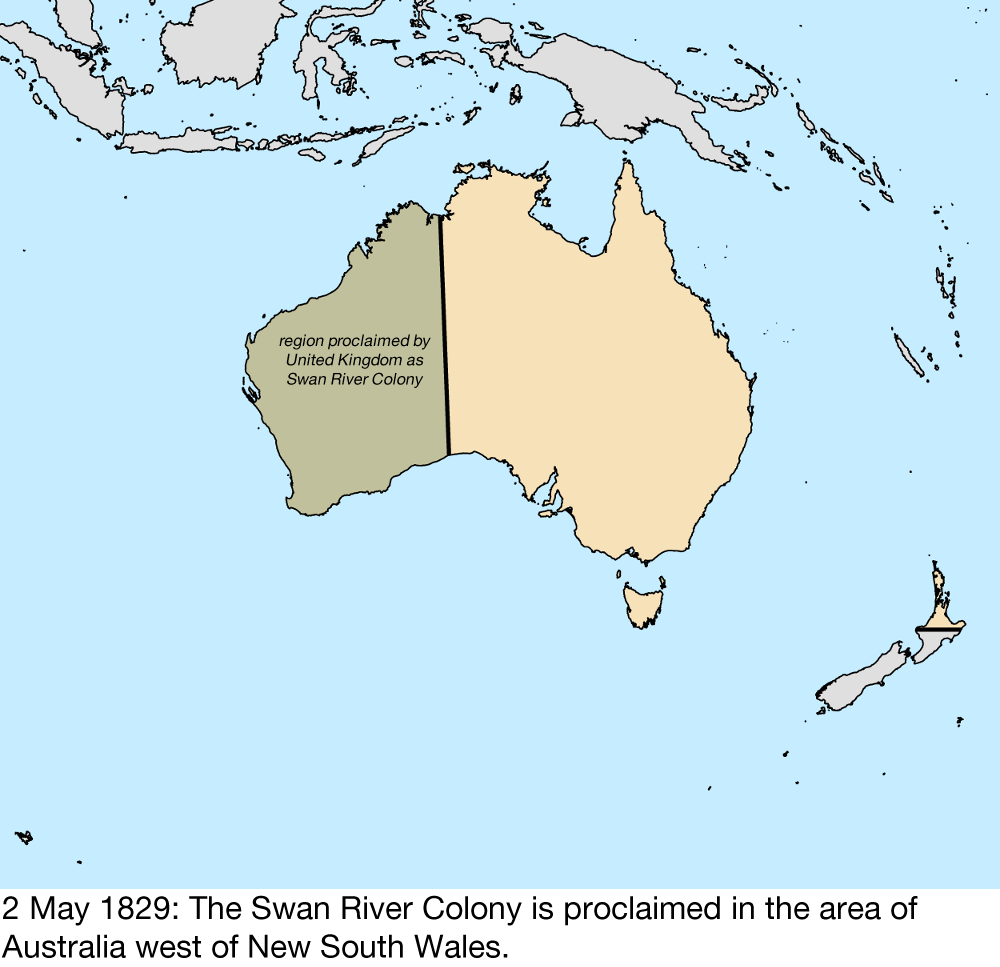
In 1832, the Swan River Colony was renamed Western Australia, aligning its name with its geographical location in the western part of the Australian continent. The decision to change the colony's name aimed to better reflect its broader scope and territorial boundaries.
This renaming marked a significant shift in the colony's identity, emphasizing its distinctiveness within the larger Australian context. The adoption of the name Western Australia not only provided a more accurate depiction of the colony's location but also acknowledged its unique attributes and contributions to the region.
The change in name had practical implications as well, impacting administrative processes, official correspondence, and broader recognition of the colony both domestically and internationally. It solidified Western Australia's place within the evolving colonial landscape of Australia during the 19th century.
Overall, the renaming of the Swan River Colony to Western Australia represented a crucial moment in the colony's history, shaping its identity and positioning within the Australian colonial framework. It underscored a sense of regional pride and autonomy while reinforcing the colony's ties to the larger Australian federation.
#WesternAustralia #SwanRiverColony #ColonialHistory #Identity #Australia
View detailsIn the early 1830s, the British Empire established the penal settlement of Port Arthur in Van Diemen's Land, present-day Tasmania, as a response to the overcrowding of prisons in New South Wales. The isolated location was chosen to deter escape attempts by convicts, who were sent to the settlement as punishment for crimes committed in the colony.
Port Arthur quickly gained a reputation as a place of harsh and unforgiving punishment, with convicts subjected to hard labor in the surrounding forests and quarries. The penal settlement also implemented a system of strict discipline and surveillance, with the use of solitary confinement and physical punishment for those who disobeyed the rules.
The establishment of Port Arthur had a lasting impact on the penal system in Australia, serving as a model for future convict settlements across the continent. It also played a significant role in the history of convict transportation, with thousands of men and women being sent to the settlement over the years.
Despite its brutal reputation, Port Arthur also saw efforts towards prisoner rehabilitation through education and religious instruction. The construction of impressive buildings and landscaped gardens within the settlement reflected attempts to instill a sense of order and civility among the convicts.
The legacy of Port Arthur continues to be felt in Australia today, with the site now preserved as a historic landmark and tourist attraction. It serves as a reminder of the harsh realities of Australia's colonial past and the enduring impact of the penal system on the country's development.
#PortArthur #VanDiemensLand #PenalSettlement #ConvictHistory #AustralianColonialHeritage
View details1831
In Australia, The Sydney Herald, later known as The Sydney Morning Herald, made its debut as a newspaper under the ownership of Edward Smith Hall. The publication aimed to provide news of local events, politics, and general information to the residents of Sydney. The newspaper's first edition consisted of four pages, offering a mix of advertisements, news articles, and editorials.
With its first publication, The Sydney Herald became a crucial source of information for the citizens of Sydney, reporting on local happenings, political developments, and social issues. The newspaper played a significant role in shaping public opinion and facilitating communication within the community.
The founding of The Sydney Herald marked a milestone in Australian journalism, contributing to the growth of the media industry in the region. The newspaper's commitment to providing accurate and timely information set a standard for journalistic integrity and helped establish the publication as a trusted source of news.
Over time, The Sydney Herald evolved into The Sydney Morning Herald, becoming one of the longest-running newspapers in Australia. The publication's influence extended beyond Sydney, reaching readers across the country and contributing to the development of Australian media landscape.
The establishment of The Sydney Herald laid the foundation for the modern Australian media industry, setting a precedent for quality journalism and comprehensive news coverage. The newspaper's legacy continues to this day, reflecting its enduring impact on the dissemination of information and the development of public discourse in Australia.
#TheSydneyHerald #TheSydneyMorningHerald #AustralianJournalism #MediaIndustry #PublicDiscourse
View detailsAfter the convicts from New South Wales were taken to King George Sound, its administration was transferred to the Swan River Colony. This was due to the unsuitability of King George Sound as a penal settlement. The convicts were then returned to New South Wales in order to serve out their sentences in a more appropriate environment.
The decision to transfer the administration of King George Sound to the Swan River Colony had a significant impact on the convicts and the colonies involved. It marked a shift in penal practices and highlighted the challenges of establishing suitable penal settlements in Australia. The convicts faced the upheaval of being moved from one location to another, while authorities grappled with the logistics and implications of managing the penal colony.
This event sheds light on the complexities of early colonial history in Australia, particularly in the context of penal settlements and the challenges of managing convict populations. It also underscores the evolving nature of colonial administration and decision-making as authorities grappled with the realities of establishing settlements in a new and unfamiliar land.
#ColonialAdministration #ConvictTransportation #AustralianPenalHistory
View details1830
The Black Line military offensive was a massive operation aimed at removing all Aboriginal Tasmanians from the settled districts of the colony and relocating them to the Tasman Peninsula. The idea behind the Black Line was to create a physical barrier, or cordon, which would drive the Aboriginal people towards the peninsula where they could be 'controlled'.
The operation involved the coordination of soldiers, settlers, and convicts who formed a moving line stretching across the settled areas to flush out and capture the Aboriginal people. The operation lasted for six weeks and covered a considerable distance, with the hope of capturing as many Aboriginal people as possible.
The impact of the Black Line was significant as it disrupted the Aboriginal communities, forced people from their lands, and resulted in the loss of life and culture. Many Aboriginal people were captured, some were killed, and others fled into the wilderness to avoid capture. The use of force and coercion in the operation further strained the already tense relationship between the Indigenous population and the colonizers.
Despite the large-scale effort and resources put into the Black Line, it ultimately failed in its objectives. The Aboriginal people were not completely removed from the settled districts, and the conflict and displacement continued for many years to come. The Black Line stands as a dark chapter in Australian history, highlighting the violent and damaging impact of colonization on the Indigenous peoples of the land.
#BlackLine #MilitaryOffensive #AboriginalTasmanians #Colonization #TasmanPeninsula #AustralianHistory
View details1829
In August 1829, the settlement of Perth was established in Western Australia. The British colony was founded by Captain James Stirling as part of efforts to expand British presence in the region. The site was chosen for its strategic location along the Swan River, offering fertile land for agriculture and potential for trade.
The establishment of Perth had a significant impact on the region, leading to increased migration from Europe and other parts of Australia. The new settlement brought economic opportunities for settlers, with industries such as farming, fishing, and timber thriving in the area. Perth quickly developed into a bustling town, attracting people seeking a fresh start and a better life.
With the influx of settlers, Perth grew into a cultural hub, with diverse communities contributing to the rich tapestry of the city. The establishment of government institutions and infrastructure further solidified Perth as a key center of administration and commerce in Western Australia.
Today, Perth stands as a vibrant metropolitan city, blending modernity with historical charm. The legacy of its founding in 1829 continues to shape the city's identity, with its rich heritage and cultural diversity attracting visitors from around the world.
#Perth #Settlement #Australia #History #Colonization
View detailsIn 1829, Charles Sturt embarked on an expedition to explore the inland of Australia, with the aim of charting the flow of the Darling River. The expedition was significant as it aimed to uncover new geographical knowledge and expand the understanding of the uncharted territories of the Australian continent.
Sturt and his team ventured into the harsh and unfamiliar Australian outback, facing challenges such as extreme weather conditions, rugged terrains, and limited resources. Despite these obstacles, they persevered and successfully navigated through the vast and unknown lands, eventually reaching the Darling River.
The charting of the Darling River by Sturt provided valuable insights for future explorations and settlements in the region. The expedition's findings contributed to the mapping of Australia's waterways and furthered the understanding of the continent's geography. It also paved the way for future expeditions and played a crucial role in the exploration and development of inland Australia.
The exploration led by Charles Sturt was a significant step in the exploration and understanding of Australia's vast and diverse landscapes. It marked a milestone in the mapping of the continent and opened up possibilities for further exploration and settlement in the inland regions. Sturt's expedition remains an important chapter in Australia's history, highlighting the spirit of exploration and discovery that characterizes the nation's heritage.
#CharlesSturt #AustralianExploration #DarlingRiver #GeographicalDiscovery #InlandAustralia.
View details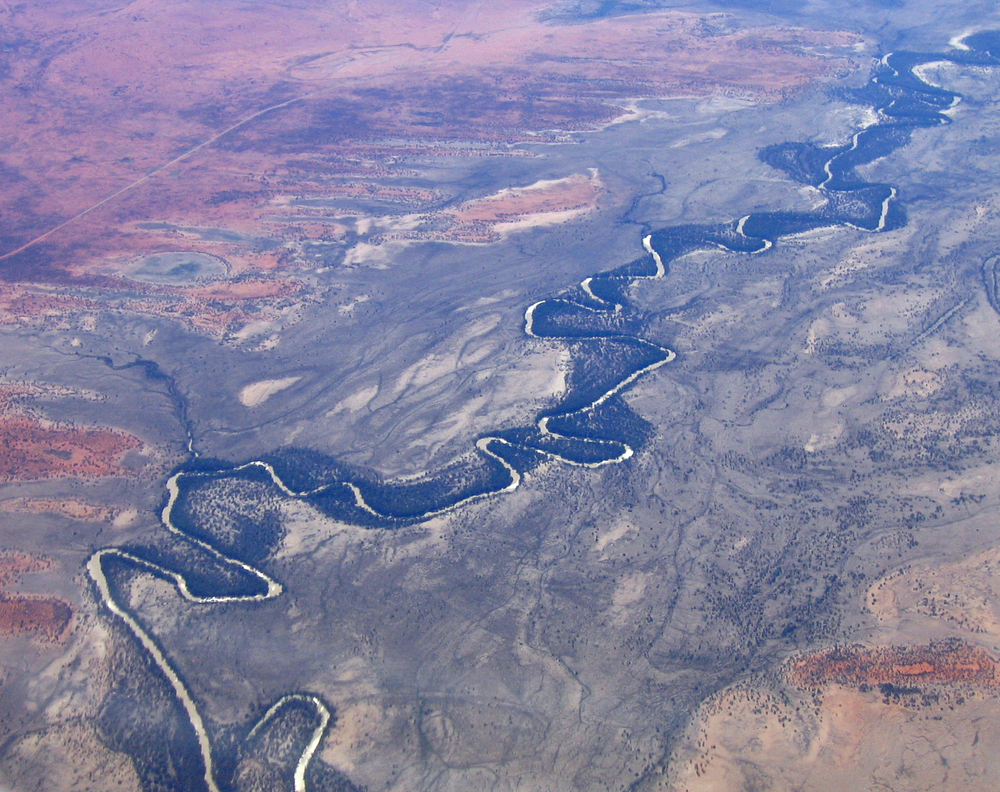
In 1830, explorer Charles Sturt completed his journey along the Murray River, reaching the final destination at Goolwa. This significant expedition was part of Sturt's mission to explore and chart the inland waterways of Australia.
Sturt's arrival at Goolwa marked the successful completion of a challenging and arduous expedition that began upstream on the Murray River. This exploration was essential in unveiling the geographical mysteries of the Australian continent, particularly its vast river systems and potential for inland navigation.
The journey undertaken by Sturt and his team was fraught with difficulties, including harsh environmental conditions, limited resources, and encounters with indigenous communities. Despite these obstacles, Sturt's meticulous mapping and recording of the terrain were instrumental in expanding knowledge of Australia's interior and paved the way for future inland exploration and settlement.
The arrival of Sturt at Goolwa had a lasting impact on Australian history, as it provided valuable insights into the continent's geography and further fueled interest in inland exploration and colonization. The expedition also highlighted the importance of waterways like the Murray River in shaping the landscape and facilitating transportation and trade in the region.
Sturt's achievement in charting the Murray River to Goolwa remains a significant milestone in the exploration of Australia's interior. His expedition contributed to the growing understanding of the continent's vast and diverse terrain and laid the groundwork for future endeavors to unlock the mysteries of the Australian outback.
#Exploration #AustralianHistory #MurrayRiver #Goolwa #InlandNavigation
View detailsCaptain Charles Fremantle, a British naval officer, claimed the western side of Australia for the British crown, firmly establishing British presence in the region. This event marked the official beginning of British colonization in Western Australia. Fremantle's actions were part of the broader British efforts to expand their territory and influence in the southern hemisphere, particularly in the strategically important region of Australia.
Taking possession of Western Australia was a strategic move by the British to counter the growing presence of other European powers in the region, particularly the Dutch and the French. By claiming this vast and resource-rich territory, the British aimed to secure valuable resources, expand trade routes, and strengthen their global power and influence.
Fremantle's proclamation of British sovereignty over Western Australia had far-reaching consequences for the indigenous populations of the region. The arrival of British colonizers led to significant disruptions and upheavals for the Aboriginal people, as their lands were gradually taken over, their traditional ways of life were disrupted, and their cultures were endangered.
The event of Captain Charles Fremantle taking possession of Western Australia remains a crucial moment in Australian history, marking the beginning of a new era of colonization, settlement, and cultural exchange in the region. It set the stage for the establishment of British colonies in Western Australia, which would eventually grow and develop into the modern state it is today.
#BritishColonization #WesternAustralia #IndigenousHistory.
View details1827
Major Edmund Lockyer led the formal annexation of the western portion of Australia at King George Sound in a profound ceremony. This act symbolized the expansion of British territorial claims in the region, solidifying their authority over the land. The annexation was a strategic move to establish control and assert dominance in the area, signaling the beginning of British colonization in Australia.
The ceremony marked a significant shift in the political landscape of Australia, as the British Empire sought to assert its influence and expand its territories. This event played a crucial role in shaping the future of the country, setting the stage for further colonization and the displacement of Indigenous populations.
The annexation of the western portion of Australia by Major Edmund Lockyer at King George Sound had long-lasting repercussions for the Indigenous peoples of the region. It marked the beginning of a long and complex history of colonization, dispossession, and marginalization, which continue to impact Indigenous communities to this day.
This event serves as a reminder of the dark legacy of colonialism in Australia and the ongoing struggles faced by Indigenous peoples in their fight for recognition, justice, and reconciliation. It is a key moment in Australian history that continues to shape national conversations about identity, land rights, and sovereignty.
#BritishColonization #Annexation #IndigenousRights #AustralianHistory
View details1826
In 1826, the British colony of New South Wales established the first settlement in Western Australia at King George Sound. The settlement was initially named Frederick Town, but later changed to Albany in 1832. The decision to set up a settlement in this region was strategic, as it provided a crucial stopping point for ships traveling between the British colonies in the east and the British territories in the Indian Ocean.
The establishment of Albany played a significant role in securing British influence and power in the region. The settlement served as a military outpost, helping to protect British interests in Western Australia and the surrounding areas. It also facilitated communication and trade between the eastern and western parts of the Australian continent.
Albany quickly grew in importance as a hub for the whaling and pastoral industries. The natural harbor and fertile land around King George Sound made it an ideal location for these economic activities. The influx of settlers and the development of infrastructure in Albany contributed to the growth and prosperity of the region.
The establishment of Albany also had a lasting impact on the local indigenous population. The Noongar people, who had inhabited the land for thousands of years, were displaced and dispossessed as British settlers claimed the area for themselves. This led to significant social and cultural disruptions for the indigenous people of the region.
Overall, the establishment of Albany marked a significant milestone in the colonization of Australia and the extension of British influence in the region. The legacy of this event continues to shape the history and development of Western Australia to this day.
#BritishColonization #AlbanySettlement #WesternAustralia #NoongarPeople #TradeandCommerce
View details1824
In 1824, the Hume and Hovell expedition departed on a journey to explore and survey the uncharted regions of southeastern Australia. Led by Australian explorers Hamilton Hume and William Hovell, the expedition aimed to find an overland route from New South Wales to Port Phillip Bay in present-day Victoria.
The expedition was significant as it marked the first recorded European journey to traverse through vast terrains, including rugged mountains, dense forests, and expansive plains. As they ventured southward, Hume and Hovell encountered various challenges, including harsh weather conditions, limited food supplies, and unfamiliar terrains. Despite these obstacles, the expedition persevered and continued their exploration.
After weeks of arduous travel, Hume and Hovell reached the banks of the Murray River, one of Australia's longest rivers. The sight of the mighty river flowing towards Port Phillip Bay brought a sense of achievement to the explorers, knowing they were drawing closer to their destination.
The encounter with the Murray River not only provided a vital water source for the expedition but also showcased the rich natural landscapes of the Australian continent. The journey of Hume and Hovell contributed to the mapping of the inland regions, paving the way for future explorations and settlement in the area.
The Hume and Hovell expedition's overland journey to Port Phillip Bay and their discovery of the Murray River remains a significant chapter in Australia's exploration history. Their venture into the unknown wilderness exemplified courage, resilience, and a thirst for discovery that characterized the spirit of early Australian explorers.
#HumeandHovell #Exploration #MurrayRiver #AustralianHistory
View details