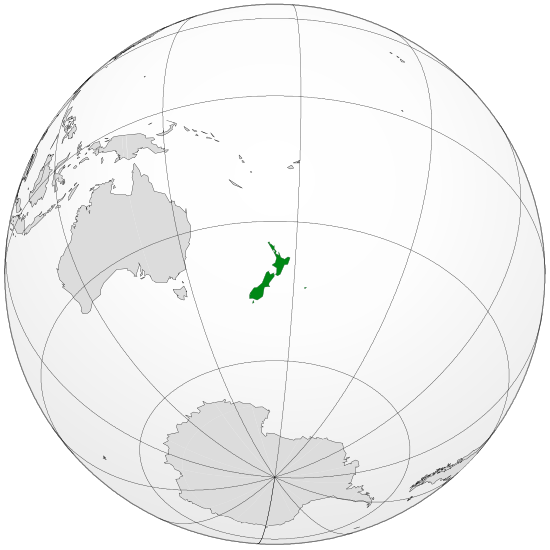
New Zealand declared separate colony from New South Wales.
Australia
4 min read
Updated By: History Editorial Network (HEN)
Published:
In 1841, New Zealand was officially declared a separate colony, breaking away from its previous association with New South Wales. This decision came after years of debate and negotiations amid increasing concerns over the governance of the territory. The establishment of New Zealand as an independent colony marked a significant milestone in the region's history.
The move to separate New Zealand from New South Wales was influenced by the need for better administration and governance of the growing colony. It was believed that having its own government would enable more efficient decision-making and better responsiveness to the needs of the local population. The establishment of a separate colony also allowed for the implementation of laws and policies tailored specifically to the unique circumstances and challenges faced in New Zealand.
The proclamation of New Zealand as a separate colony had far-reaching implications for the region. It paved the way for the development of a distinct identity and sense of nationhood among the people of New Zealand. The establishment of local governance structures provided opportunities for greater self-determination and representation for the colonists.
The decision to separate New Zealand from New South Wales was a defining moment in the history of the region, shaping its trajectory towards becoming an independent nation. It laid the foundation for the future development and evolution of New Zealand as a sovereign state.
#NewZealand #SeparateColony #Governance #History
Explore the Life Moments of
 AI Twin