
Palestine

Land of Olives and Resilience
Related Lives

Kenya
The Cradle of Humankind

Dominican Republic
A Caribbean Paradise

Adventure Movies
Where courage meets the unknown

Luxembourg
The Gibraltar of the North

Timor-Leste (East Timor)
Land of the Rising Sun

Mauritius
Island Rythms

Olympics
The Grandest Stage of All

Ghana
Culture-Warmth-Rhythm

2021
In 2021, the Israeli government, under the leadership of Prime Minister Naftali Bennett, announced a significant development project aimed at revitalizing the Gaza Strip, which includes plans for the construction of a new seaport. The Gaza Strip, being the only coastal region of Palestine, has long been affected by a naval blockade imposed by Israel, severely limiting its economic potential and access to international waters. Historically, during the Oslo Accords, there was an initiative to develop an international seaport in Gaza in collaboration with the Netherlands and France; however, this project was ultimately abandoned due to ongoing political tensions and conflict. The new proposal for a seaport in Gaza is seen as a crucial step towards improving the economic conditions in the region, facilitating trade, and providing a gateway for goods and services. This development could potentially enhance cooperation between Israelis and Palestinians, fostering a more stable and prosperous future for both communities. The success of this project will depend on various factors, including political will, security considerations, and international support.
View detailsThe Unity Intifada, one of the deadliest escalations in years, erupted in May after weeks of growing tensions in Jerusalem. The conflict was triggered by protests against the forced eviction of Palestinian families in the Sheikh Jarrah neighborhood and violent Israeli police crackdowns at Al-Aqsa Mosque during Ramadan. These confrontations, particularly on May 6 and 7, saw Israeli forces storming Al-Aqsa, firing tear gas, rubber bullets, and stun grenades at Palestinian worshippers. Hundreds were injured, intensifying public outrage.
On May 10, Hamas issued an ultimatum demanding Israeli forces withdraw from Al-Aqsa and Sheikh Jarrah. When the demand was ignored, Hamas launched rockets towards Jerusalem, marking the beginning of an all-out war. Israel responded with intense airstrikes on Gaza, targeting what it claimed were Hamas military sites but also hitting residential areas, government buildings, and essential infrastructure.
Throughout the conflict, Israeli airstrikes pounded Gaza, killing civilians and displacing thousands. Among the most controversial attacks was the May 15 bombing of the Al-Jalaa Tower, home to international media outlets like Al Jazeera and the Associated Press. Israel claimed Hamas operated within the building, but no concrete evidence was provided. The attack was widely condemned as an assault on press freedom. Other major buildings destroyed included the Hanadi Tower, Al-Shorouk Tower, and Al-Jawhara Tower, reducing much of Gaza’s skyline to rubble.
Meanwhile, Hamas and other militant groups fired over 4,000 rockets at Israeli cities, including Tel Aviv and Ashkelon. While Israel’s Iron Dome intercepted many, some rockets caused casualties and destruction.
By the time a ceasefire was brokered by Egypt on May 21, the toll was devastating:
256 Palestinians killed, including 66 children and 39 women
13 Israelis killed, including two children
Over 2,000 Palestinians injured, and tens of thousands displaced
Gaza’s infrastructure severely damaged, worsening an already dire humanitarian crisis
Though the violence stopped, the root causes remained unresolved, leaving the region in a fragile state. The 2021 conflict underscored the ongoing struggle of Palestinians under occupation and the cyclical nature of violence in the region.
#IsraelPalestine #GazaUnderAttack #AlAqsa #SheikhJarrah #MiddleEastCrisis #AlJalaaTower #MomentOfLife #MoofLife
View details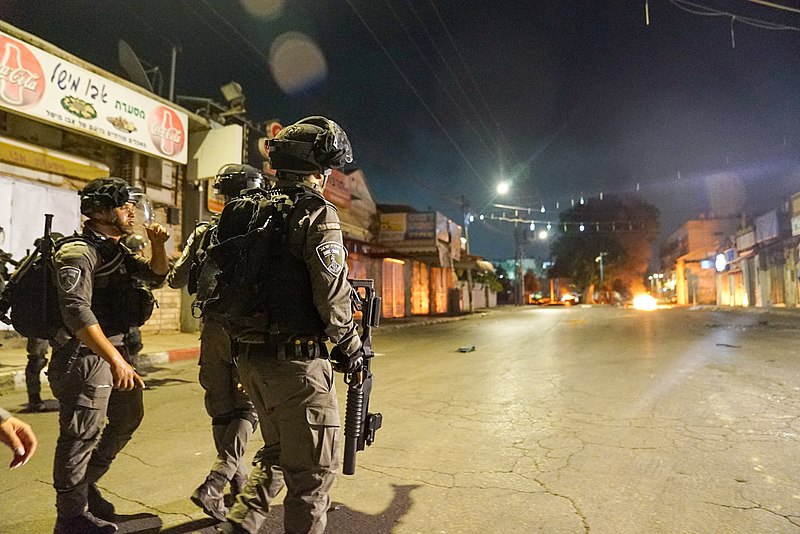
In 2020, Bethlehem proudly participated in the Arab Capital of Culture initiative, an event organized by UNESCO to celebrate and promote the rich cultural heritage of Arab cities. Known for its profound historical and religious significance, Bethlehem showcased its vibrant cultural traditions through a series of events and activities that highlighted its contributions to Arab culture. The city, renowned for its arts, literature, and historical sites, provided a unique platform for cultural exchange and understanding within the Arab world. Through exhibitions, performances, and community engagement, Bethlehem was able to share its distinctive cultural identity with a broader audience, fostering appreciation and dialogue among diverse cultures. This participation not only emphasized Bethlehem's role in the Arab cultural landscape but also reinforced the importance of preserving and promoting cultural heritage in the region.
View details2020
On June 12, 2020, the World Bank approved a significant grant of US$15 million for the Technology for Youth and Jobs (TechStart) Project, aimed at bolstering the Palestinian IT sector. This initiative is designed to enhance the capabilities of local firms and create high-quality job opportunities, particularly for the youth demographic, which represents 30% of the Palestinian population. The region has been grappling with high unemployment rates, making this project crucial for economic revitalization. Kanthan Shankar, the World Bank Country Director for West Bank and Gaza, emphasized the IT sector's potential to drive economic growth and provide meaningful employment for young Palestinians. By investing in technology and innovation, the TechStart Project seeks to empower the youth, equipping them with the skills necessary to thrive in a competitive job market. This grant not only aims to uplift the IT sector but also to foster a sustainable economic environment that can lead to long-term benefits for the Palestinian community.
View details2019
In 2019, the inaugural solar power plant and solar park were launched in Jenin as part of the Noor Palestine campaign. This initiative, spearheaded by the Palestine Investment Fund, aims to reduce the Palestinian territories' dependency on Israeli energy sources and promote sustainable power solutions. The project reflects a significant commitment to renewable energy, addressing both the energy needs of the population and environmental concerns. Qudra Energy, a joint venture between the Bank of Palestine and NAPCO, has been instrumental in establishing several solar power plants across various locations, including Jammala, Nablus, Birzeit, and Ramallah. Furthermore, plans are underway for two additional solar parks in Jericho and Tubas, alongside a new solar power plant currently under construction at the Abu Dis campus of Al-Quds University, which will serve the Palestinian community in Jerusalem. These developments mark a pivotal shift towards renewable energy in Palestine, fostering energy independence and sustainability in the region.
View details2018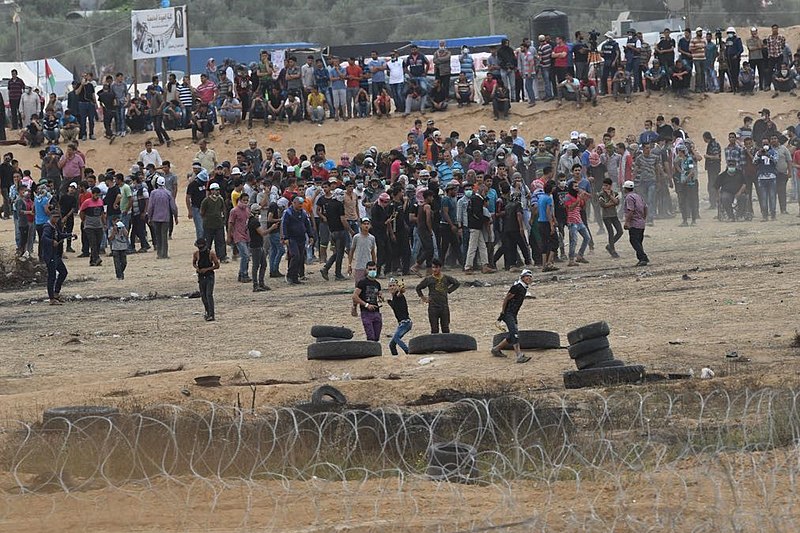
The Great March of Return was a significant movement that began on March 30, 2018, in the Gaza Strip, organized by Palestinian activists and civil society groups. This mass protest aimed to highlight the plight of Palestinian refugees who have been displaced since the establishment of Israel in 1948. The movement called for their right to return to their ancestral homes, as recognized under international law. It also protested the Israeli blockade of Gaza, which has contributed to widespread economic hardship and humanitarian crises in the region. Demonstrations were held weekly along the Gaza-Israel border, with participants demanding justice, freedom, and dignity.
The protests were marked by their symbolic timing, beginning on Land Day, which commemorates the killing of six Palestinian citizens of Israel in 1976 during protests against Israeli land confiscation. Despite being largely peaceful, the demonstrations often escalated into violence due to confrontations with Israeli forces, who used tear gas, rubber bullets, and live ammunition to disperse the crowds. The Great March of Return drew international attention, sparking debates about human rights, the Israeli-Palestinian conflict, and the broader struggle for Palestinian statehood. This movement, although met with severe challenges, stands as a testament to the enduring spirit and resilience of the Palestinian people.
View details2017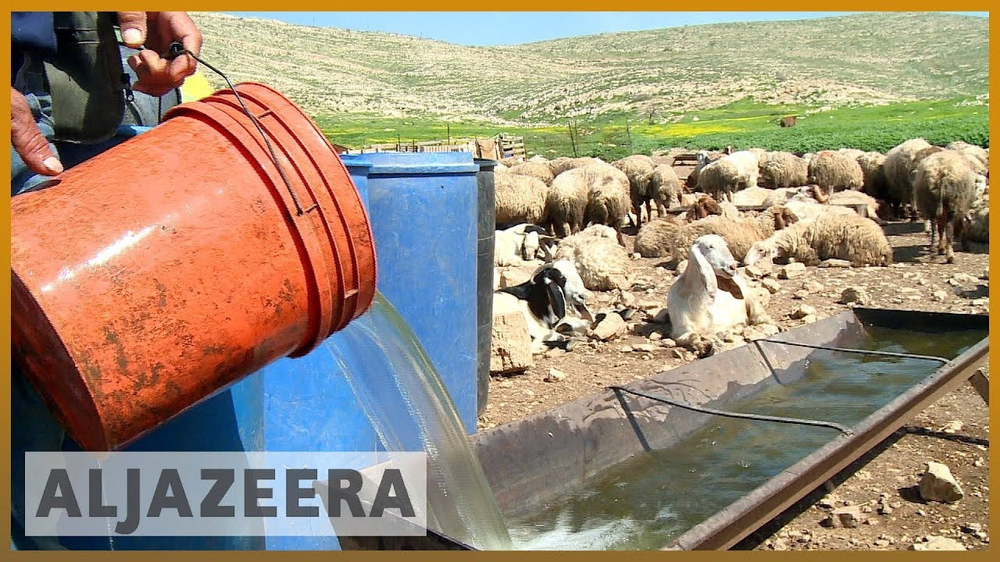
The water supply and sanitation in Palestine are highly influenced by the Israeli occupation. The water resources of Palestine are partially controlled by Israel due to historical and geographical complexities, with Israel granting partial autonomy in 2017. The division of groundwater is subject to provisions in the Oslo II Accord, agreed upon by both Israeli and Palestinian leadership. Israel provides the Palestinian territories water from its own water supply and desalinated water supplies, in 2012 supplying 52 MCM. Generally, the water quality is considerably worse in the Gaza Strip when compared to the West Bank. About a third to half of the delivered water in the Palestinian territories is lost in the distribution network. The lasting blockade of the Gaza Strip and the Gaza War have caused severe damage to the infrastructure in the Gaza Strip. Concerning wastewater, the existing treatment plants do not have the capacity to treat all of the produced wastewater, causing severe water pollution. The development of the sector highly depends on external financing.
View details2015
In December 2015, the United Nations General Assembly took a significant step towards recognizing Palestinian rights by passing a resolution that demands Palestinian sovereignty over natural resources in the occupied territories. This resolution highlights the ongoing concerns regarding the exploitation and damage of these resources by Israel. It calls for an immediate cessation of such activities and emphasizes the importance of granting Palestinians the right to seek restitution for any losses incurred. This move is part of a broader international effort to support Palestinian self-determination and sovereignty, which has been a contentious issue in the region for decades. The resolution aligns with previous acknowledgments of the State of Palestine's status, including its declaration of independence in 1988 and subsequent recognition as a non-member observer state by the UN. The implications of this resolution are profound, as it not only reinforces the Palestinian claim to their natural resources but also challenges the legality of ongoing Israeli practices in the occupied territories. The international community's support for this resolution reflects a growing consensus on the need for a just and equitable resolution to the Israeli-Palestinian conflict, particularly concerning resource rights and sovereignty.
View detailsIn August 2015, Palestine's representatives at the United Nations took a significant step by proposing a draft resolution aimed at allowing the flags of non-member observer states, specifically Palestine and the Holy See, to be raised at the UN headquarters. This initiative was initially presented as a collaborative effort between Palestine and the Holy See. However, the Holy See later denied any joint involvement in the proposal. The move was met with criticism from Israel, with Ambassador Ron Prosor labeling it as 'another cynical misuse of the UN.' This statement reflects ongoing tensions surrounding the recognition of Palestinian statehood and the broader geopolitical dynamics at play within the UN framework. The proposal for flag raising was seen as a symbolic gesture towards affirming Palestinian identity and sovereignty on the international stage, amidst a backdrop of complex diplomatic relations and historical grievances. The outcome of this initiative remains a point of contention in discussions about the rights and recognition of Palestine within the global community.
View detailsIn May 2015, the Vatican officially recognized the State of Palestine, marking a significant shift in its diplomatic stance. This decision followed the 2012 United Nations General Assembly vote that granted Palestine non-member observer state status. The Holy See's recognition aligns with a broader trend, as currently, 146 UN member states, representing approximately 75% of the global community, recognize the State of Palestine. While some countries do not formally recognize Palestine, they acknowledge the Palestine Liberation Organization (PLO) as the legitimate representative of the Palestinian people. The PLO's executive committee functions as the governing body, operating under the authority of the Palestinian National Council (PNC). Furthermore, the PLO is a full member of several international organizations, including the Arab League, the Organization of Islamic Cooperation, and the Union for the Mediterranean. Notably, Sweden took a pioneering step in 2013 by upgrading the status of the Palestinian representative office to a full embassy, becoming the first EU member state outside the former communist bloc to officially recognize the State of Palestine. This evolving recognition reflects the ongoing international dialogue surrounding Palestinian statehood and rights.
View detailsIn January 2015, the International Criminal Court (ICC) officially affirmed Palestine's status as a 'State' following its recognition as a non-member observer state by the United Nations. This significant ruling marked a pivotal moment in international law and diplomacy, as it allowed Palestine to pursue legal actions against Israel for alleged war crimes. The decision was met with strong condemnation from Israeli leaders, who labeled it as a form of 'diplomatic terrorism,' arguing that it undermined peace efforts and the ongoing negotiations between Israel and Palestine. The ICC's affirmation of Palestine's statehood is rooted in the broader context of international recognition, which has been a contentious issue since the Palestinian declaration of independence in 1988. Furthermore, in December 2015, the UN General Assembly passed a resolution that demanded Palestinian sovereignty over natural resources in the occupied territories, urging Israel to cease its exploitation and damage to these resources. This resolution reinforced the international community's support for Palestinian rights and sovereignty, highlighting the ongoing struggle for recognition and justice in the region.
View details2014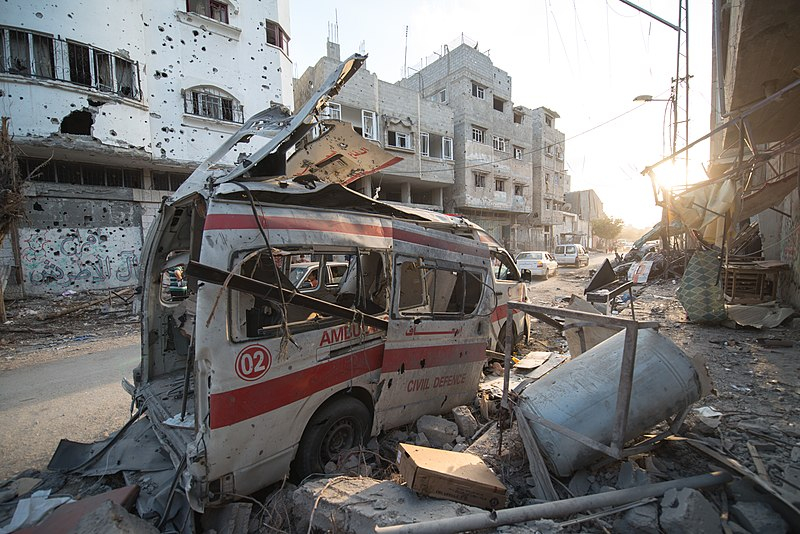
The 2014 Gaza War, also known as Operation Protective Edge, erupted on July 8, 2014, following months of escalating tensions between Israel and Hamas. This was the third major war between the two sides in less than six years, following conflicts in 2008–09 and 2012. The war was characterized by heavy bombardment, urban warfare, rocket attacks, and a devastating humanitarian toll on Gaza, lasting for 50 days until a ceasefire was reached on August 26, 2014.
The conflict was triggered by a series of events beginning in June 2014, when three Israeli teenagers were kidnapped and murdered in the West Bank, an act Israel blamed on Hamas, despite Hamas not claiming responsibility. In response, Israel launched a massive security crackdown in the West Bank, arresting hundreds of Hamas members and conducting raids on Palestinian homes and institutions. This crackdown further inflamed tensions, leading to a wave of rocket fire from Gaza into Israeli territory. Meanwhile, the brutal murder of a Palestinian teenager in East Jerusalem by Israeli extremists further fueled unrest, sparking violent riots and an escalation in hostilities between Hamas and the Israeli Defense Forces (IDF).
On July 8, 2014, Israel launched Operation Protective Edge, beginning with airstrikes on Hamas positions and military infrastructure in Gaza. Hamas and other Palestinian militant groups retaliated by firing thousands of rockets into Israel, targeting major cities including Tel Aviv, Jerusalem, and Haifa. Despite Israel’s Iron Dome missile defense system, which intercepted many of these rockets, several struck civilian areas, prompting further Israeli retaliation. As the war intensified, Hamas expanded its tactics, using underground tunnels to infiltrate Israeli territory, launching suicide attacks and ambushes on Israeli soldiers, and engaging in urban warfare in densely populated areas of Gaza.
On July 17, Israel escalated the conflict by launching a ground invasion of Gaza, focusing on destroying Hamas’s extensive tunnel network, which had been used to smuggle weapons, militants, and supplies. The fighting in Gaza’s urban centers was fierce and highly destructive, with Israeli forces advancing into densely populated areas, encountering stiff resistance from Hamas fighters who used booby traps, snipers, and guerrilla tactics. The battle in neighborhoods such as Shujaiya resulted in massive casualties and destruction, with hundreds of Palestinian civilians killed in heavy Israeli bombardment. Reports from humanitarian organizations described entire families being buried under rubble, hospitals overwhelmed with casualties, and a severe humanitarian crisis unfolding as thousands of Palestinians fled their homes.
As the war dragged on, the international community increasingly criticized Israel for the high number of civilian casualties, particularly after attacks on UN shelters, schools, and hospitals. Israel, in turn, accused Hamas of using civilians as human shields, embedding military infrastructure within residential areas, and launching rockets from schools, mosques, and hospitals. By August 26, 2014, after weeks of intense fighting, a ceasefire was brokered by Egypt, bringing an end to the war, though neither side achieved a decisive victory. Israel claimed to have destroyed over 30 Hamas tunnels, significantly weakening its military capabilities, while Hamas declared victory for having survived the conflict and continued launching attacks until the final moments of the war.
The toll of the war was staggering. Over 2,200 Palestinians were killed, the majority of them civilians, including hundreds of children, with tens of thousands more injured. The infrastructure of Gaza was devastated, with over 18,000 homes completely destroyed and hundreds of thousands of residents displaced. In Israel, 73 people were killed, including 67 soldiers and six civilians, with hundreds wounded from rocket fire and direct combat. The destruction in Gaza led to an economic and humanitarian disaster, with hospitals, power plants, and essential services crippled, plunging the region further into hardship.
Despite the ceasefire, the war failed to resolve the deeper issues at the heart of the Israeli-Palestinian conflict. Israel continued its blockade on Gaza, restricting the flow of goods and people, while Hamas remained in control of the strip, vowing to continue its struggle against Israeli occupation. The war further hardened hostilities between Israelis and Palestinians, deepening mistrust and setting the stage for future conflicts, as periodic flare-ups and escalations have continued in the years since. The 2014 Gaza War remains one of the deadliest and most destructive conflicts in the history of the Israeli-Palestinian struggle, with long-term consequences for both sides and no clear path to peace.
#GazaWar2014 #OperationProtectiveEdge #IsraelHamasConflict #MiddleEastConflict #PalestineIsrael #MomentOfLife #MoofLife
View details2012
On November 29, 2012, the United Nations General Assembly made a historic decision by granting Palestine non-member observer state status. This resolution, which passed with 138 votes in favor, 9 against, and 41 abstentions, marked a significant diplomatic milestone for the Palestinian leadership. The new status allowed Palestine to engage in General Assembly debates and activities, as well as to join various international treaties and organizations, although it did not confer full UN membership or voting rights. The move was celebrated by many countries as a step towards greater international recognition and legitimacy for Palestine, reflecting the ongoing struggle for statehood and sovereignty amidst the challenges posed by Israeli occupation and settlement activities. However, the resolution also faced strong opposition from Israel and the United States, highlighting the polarized views on the Israeli-Palestinian conflict. Overall, this development was seen as a symbolic victory for the Palestinian cause, emphasizing the need for a peaceful resolution and the recognition of Palestinian rights on the global stage.
View detailsIn 2013, Mohammad Assaf, a talented Palestinian singer, captured the hearts of millions by winning the prestigious Arab Idol competition. His victory not only marked a significant milestone in his career but also brought international attention to Palestinian music and culture. Assaf's performances, particularly his renditions of traditional Palestinian songs, resonate deeply with audiences around the world, showcasing the rich musical heritage of the region. His success story has inspired countless young Palestinians, encouraging them to embrace their cultural identity and pursue their artistic dreams. Assaf's ability to blend contemporary styles with traditional sounds has revitalized interest in Palestinian music, making it more accessible to a global audience. Through his artistry, he has become a symbol of hope and resilience for many, proving that music can transcend borders and unite people from diverse backgrounds. As he continues to perform and create, Assaf remains a vital ambassador for Palestinian culture, highlighting the beauty and depth of its musical traditions.
View details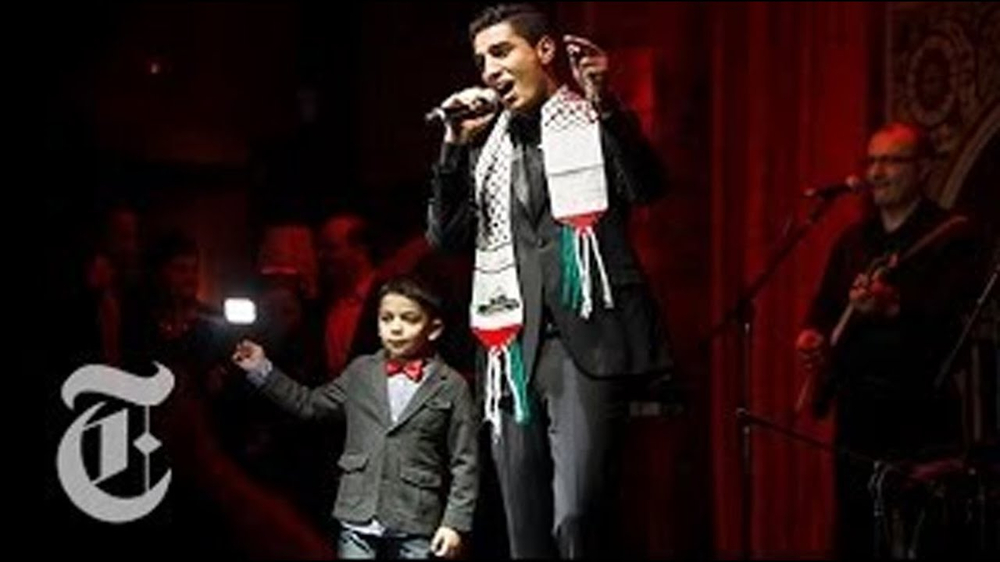
The division between the West Bank and Gaza complicated efforts to achieve Palestinian unity and negotiate a comprehensive peace agreement with Israel. Multiple rounds of reconciliation talks were held, but no lasting agreement was reached. The division also hindered the establishment of a unified Palestinian state and led to different governance structures and policies in the two territories. Throughout this period, there were sporadic outbreaks of violence and tensions between Palestinians and Israelis. Since 2001, incidents of rocket attacks from Gaza into Israeli territory and Israeli military operations in response often resulted in casualties and further strained the situation. Following the inter-Palestinian conflict in 2006, Hamas took over control of the Gaza Strip (it already had majority in the PLC), and Fatah took control of the West Bank. From 2007, the Gaza Strip was governed by Hamas, and the West Bank by the Fatah party led Palestinian Authority. International efforts to revive the peace process continued. The United States, under the leadership of different administrations, made various attempts to broker negotiations between Israel and the Palestinians. However, significant obstacles such as settlement expansion, the status of Jerusalem, borders, and the right of return for Palestinian refugees, remained unresolved. In recent years, diplomatic initiatives have emerged, including the normalization agreements between Israel and several Arab states, known as the Abraham Accords. These agreements, while not directly addressing the Israeli-Palestinian conflict, have reshaped regional dynamics and raised questions about the future of Palestinian aspirations for statehood. The status quo remains challenging for Palestinians, with ongoing issues of occupation, settlement expansion, restricted movement, and economic hardships.
View details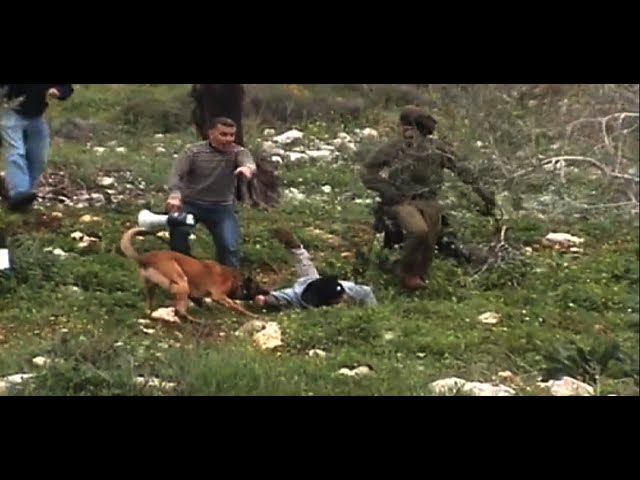
2011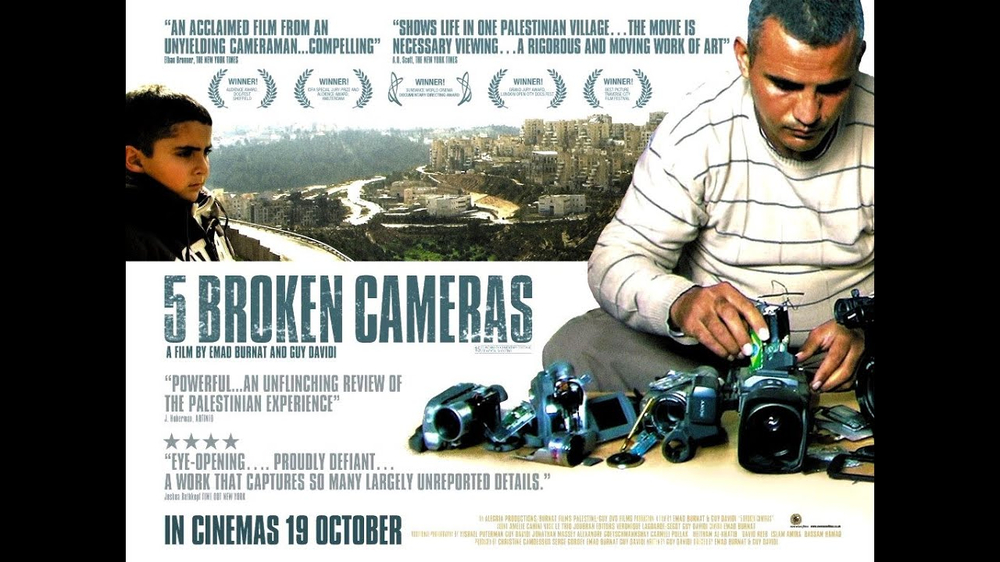
The documentary '5 Broken Cameras' directed by Emad Burnat and Guy Davidi has garnered critical acclaim for its intimate and powerful portrayal of life in the West Bank. The film is a personal narrative that chronicles Burnat's experiences as a Palestinian farmer living in a village affected by the Israeli-Palestinian conflict. Through the lens of five cameras, each representing a different chapter of his life, Burnat captures the struggles, resilience, and everyday realities faced by his community. The documentary not only highlights the impact of the conflict on individuals and families but also serves as a testament to the power of grassroots activism and the importance of documenting personal stories. '5 Broken Cameras' has been praised for its emotional depth and authenticity, making it a significant contribution to the genre of documentary filmmaking focused on the Palestinian experience. It exemplifies how Palestinian filmmakers utilize their craft to share their narratives with a global audience, fostering understanding and empathy towards their plight.
View details2009
In 2009, Jerusalem was honored as the Arab Capital of Culture, a designation bestowed by UNESCO that underscores the city's profound cultural heritage and its pivotal role in the Arab world. This recognition served to highlight the rich tapestry of cultural expressions that Jerusalem embodies, including its historical landmarks, vibrant arts scene, literature, and diverse traditions. The year-long celebration aimed to promote and celebrate the cultural identity of Jerusalem, showcasing its significant contributions to the broader Arab culture. A variety of cultural activities, festivals, and events were organized throughout the year, drawing attention to the city's status as a cultural hub in the region. This initiative not only fostered a sense of pride among the local population but also encouraged international interest in the cultural richness of Jerusalem, reinforcing its importance as a center of cultural dialogue and exchange.
View details2007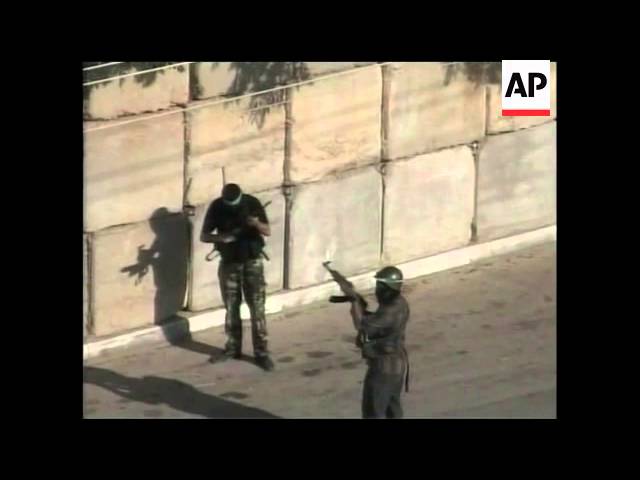
The Battle of Gaza, fought between June 10 and June 15, 2007, was a brutal and decisive conflict that resulted in Hamas taking full control of the Gaza Strip. The battle was the climax of months of escalating violence between the two main Palestinian factions: Hamas and Fatah.
Tensions between the two groups had been rising since January 2006, when Hamas won a surprise victory in the Palestinian legislative elections, defeating Fatah, the party that had traditionally dominated Palestinian politics. Despite Hamas’s electoral success, deep political and ideological divisions between the two factions quickly led to a power struggle. A fragile unity government was formed, but relations between Hamas and Fatah continued to deteriorate, fueled by international sanctions, external interference, and internal mistrust.
In June 2007, clashes erupted in Gaza City and spread rapidly across the territory. Hamas fighters, led by their military wing, the Izz ad-Din al-Qassam Brigades, launched coordinated attacks on Fatah security compounds and government institutions. The fighting was intense, with gun battles, assassinations, and violent raids occurring across Gaza. Hamas used RPGs, machine guns, and explosives to overpower Fatah forces, who were supported by elements of the Palestinian Authority’s security services.
By June 13, Hamas fighters had seized control of most Fatah-held positions. On June 14, Hamas stormed the Preventive Security Headquarters in Gaza, a key Fatah stronghold, effectively sealing Fatah’s defeat. Many Fatah officials and security officers were executed or forced to flee. Palestinian Authority President Mahmoud Abbas, based in the West Bank, responded by dismissing the Hamas-led government and declaring a state of emergency.
By June 15, Hamas had complete control of Gaza, while Fatah retained control of the West Bank, leading to a permanent political and geographical split between the two Palestinian territories. In the aftermath, Hamas established its own de facto government in Gaza, while Fatah, under Abbas, consolidated its rule in the West Bank.
The Battle of Gaza significantly reshaped Palestinian politics. It deepened the divide between Hamas and Fatah, making national reconciliation efforts nearly impossible. It also transformed Gaza into a separate political entity, leading to years of blockades, economic hardships, and repeated conflicts with Israel. The battle’s consequences are still felt today, as the Palestinian territories remain divided between Hamas in Gaza and the Palestinian Authority in the West Bank.
#BattleOfGaza #HamasVsFatah #PalestinianConflict #MiddleEastPolitics #PalestinianAuthority #MomentsOfLife #MoofLife_Moment #MoofLife
View details2006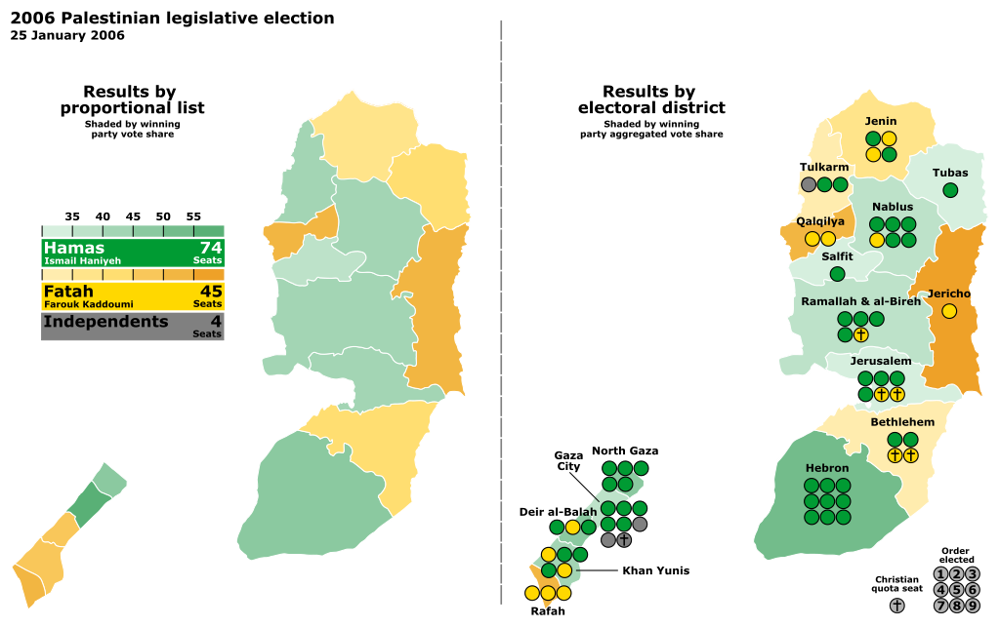
On January 25, 2006, the Palestinian territories witnessed a significant political shift when Hamas won the Palestinian legislative elections, securing 74 out of 132 seats in the Palestinian Legislative Council. This victory was unexpected and marked a pivotal moment in Palestinian politics, as Hamas, an Islamist political and militant group, took control of the majority of the Palestinian Authority's (PA) institutions. In contrast, Fatah, the leading party prior to the elections, managed to secure only 45 seats. Following the election, Hamas attempted to form a unity government with Fatah; however, these efforts were rejected, leading to increased tensions between the two factions. In response to Hamas's electoral success, both Israel and the United States imposed sanctions on the PA, aiming to destabilize the newly formed government and prompt new elections. Despite these efforts, the sanctions did not lead to the anticipated outcomes, but they did exacerbate the rift between Hamas and Fatah, contributing to the ongoing division between the Gaza Strip, controlled by Hamas, and the West Bank, where Fatah remains dominant. This split has had lasting implications for Palestinian governance and the broader Israeli-Palestinian conflict.
View details2005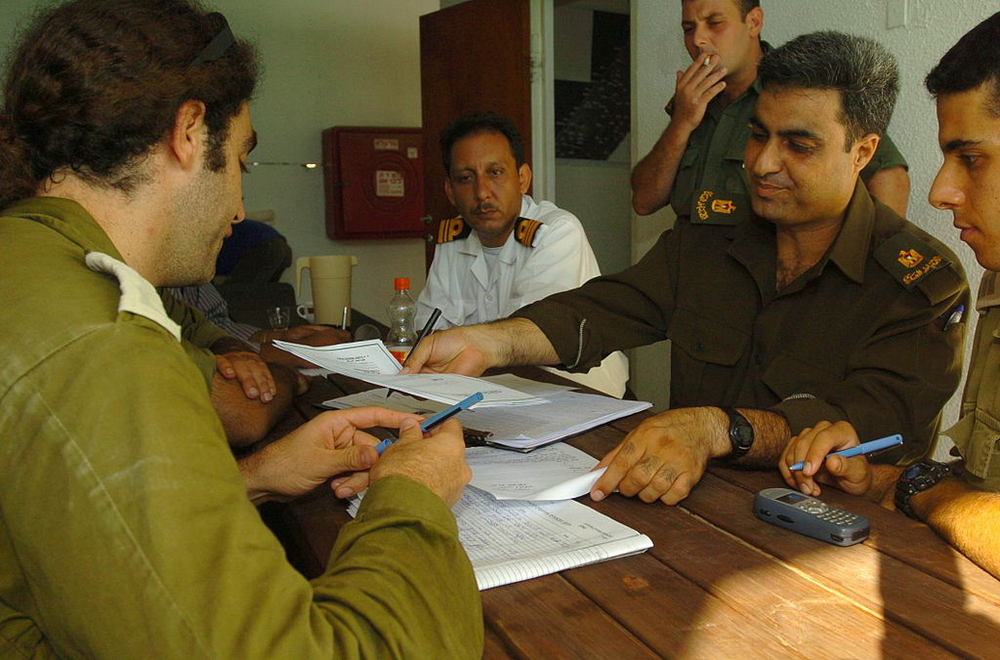
In 2005, Israel carried out a unilateral disengagement from the Gaza Strip, a move that marked a major shift in its policy toward the Palestinian territories. Initiated by Israeli Prime Minister Ariel Sharon, the disengagement aimed to reduce friction with Palestinians and reshape Israel’s security strategy by withdrawing from areas that were increasingly difficult to defend.
The withdrawal officially began on August 15, 2005, when Israeli forces started evacuating all 21 Jewish settlements in Gaza and four settlements in the northern West Bank. While some settlers left voluntarily, many others refused to leave and resisted eviction, believing that Gaza was part of the Jewish biblical homeland.
Zionist settlers, particularly those from Gush Katif, a large settlement bloc in Gaza, staged intense protests and acts of civil disobedience. Thousands of settlers barricaded themselves inside homes, synagogues, and community centers, refusing to comply with evacuation orders. Some burned their homes rather than allow them to be handed over to Palestinians. Others clashed with Israeli security forces, with emotional confrontations between settlers and Israeli soldiers who had been sent to remove them.
One of the most dramatic standoffs occurred in Neve Dekalim, the largest settlement in Gaza, where settlers and thousands of right-wing activists from outside Gaza resisted evacuation efforts for days. Protesters blocked roads, staged sit-ins, and some even physically resisted Israeli soldiers, leading to tense scenes of Israeli forces dragging settlers and activists away.
By August 22, Israeli authorities had cleared the last remaining settlers from Gaza, and the evacuation of the West Bank settlements was completed shortly after. On September 12, 2005, Israel formally declared the end of its 38-year occupation of Gaza. All Israeli military bases were dismantled, and troops withdrew, leaving Gaza under Palestinian control for the first time in decades.
However, despite the withdrawal, Israel retained control over Gaza’s airspace, borders, and coastline, restricting its access to the outside world. The disengagement was highly controversial within Israel. Supporters saw it as a necessary step for Israel’s security, while opponents, including many religious Zionists and right-wing Israelis, viewed it as a betrayal of Jewish heritage and a capitulation to terrorism.
The disengagement also empowered Hamas, which later seized control of Gaza in 2007, leading to increased rocket attacks on Israel and repeated military confrontations. Many Israelis, especially on the right, saw this as proof that withdrawal had strengthened Palestinian militants instead of advancing peace.
The Israeli disengagement from Gaza remains a defining moment in the Israeli-Palestinian conflict. It demonstrated the deep divisions within Israeli society and had long-term consequences for regional stability, security, and future peace efforts.
#GazaWithdrawal #IsraeliDisengagement #MiddleEastConflict #PalestineIsrael #ZionistResistance #MomentOfLife #MoofLife
View detailsOn January 9, 2005, the Palestinian presidential election was held to determine the successor to Yasser Arafat, who had passed away in November 2004. This election was the first since 1996 and took place under the supervision of the Palestinian Authority (PA).
The main candidate was Mahmoud Abbas, the leader of Fatah, who campaigned on a platform of diplomacy, negotiations with Israel, and internal reforms. His strongest opponent was Mustafa Barghouti, an independent candidate who advocated for democratic change and resistance to Israeli policies.
With a voter turnout of approximately 62%, Mahmoud Abbas won the election with 62.52% of the vote, securing the presidency of the Palestinian Authority. Mustafa Barghouti finished in second place with 19.48%. Other candidates, including leftist and independent figures, received smaller percentages of the vote.
This election was seen as a crucial moment for Palestinian leadership, as Abbas aimed to restart peace negotiations and reform governance. However, political divisions, particularly with Hamas, would later pose significant challenges to his administration.
#PalestinianElections #MahmoudAbbas #PalestinianAuthority #MiddleEastPolitics #MomentsOfLife #MoofLife
View details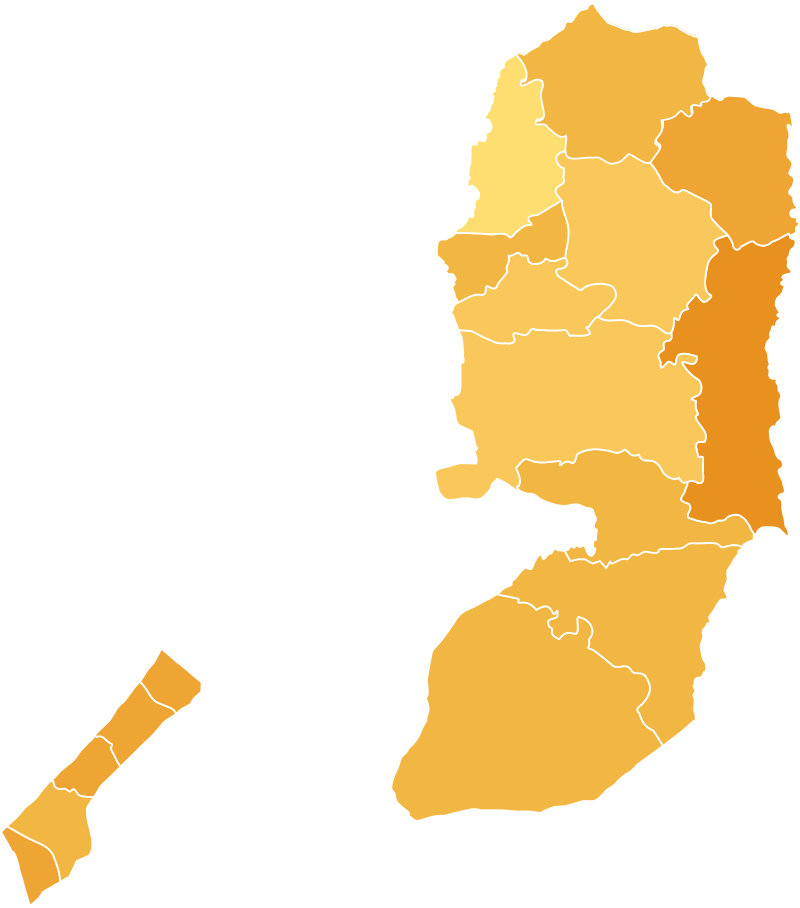
2004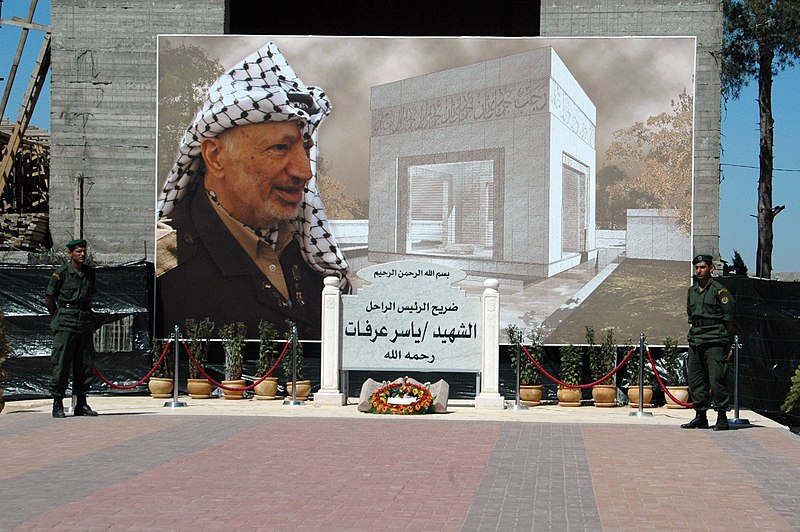
Yasser Arafat, the long-time leader of the Palestinian Liberation Organization (PLO) and the first President of the Palestinian Authority, passed away on November 11, 2004, at the Percy Military Hospital in Clamart, France. His death came after a sudden decline in health, which began in late October of that year. Arafat was initially treated in Ramallah before being transferred to France, where he spent his final days in a coma. The exact cause of his death remains a subject of controversy. Officially, French medical reports stated that he died of a stroke caused by an unknown infection. However, many Palestinians and political analysts suspected foul play, with theories suggesting that he was poisoned. In 2012, Swiss scientists found traces of radioactive polonium-210 on his belongings, reigniting suspicions that he had been assassinated, though conclusive evidence has never been officially established.
Arafat's death marked the end of an era in Palestinian politics. As a symbol of Palestinian nationalism and the struggle for statehood, his leadership was both revered and criticized. While he was seen as a freedom fighter by many Palestinians, others, including Israel and the West, viewed him as a controversial figure linked to armed resistance and political maneuvering. His passing left a leadership vacuum that led to a power struggle within Palestinian factions, ultimately contributing to the division between Fatah and Hamas. The absence of his unifying presence further complicated the Israeli-Palestinian peace process. Even years after his death, Arafat’s legacy remains a powerful force in Middle Eastern politics, with his name synonymous with the Palestinian cause and the ongoing quest for sovereignty.
#YasserArafat #Palestine #MiddleEast #PLO #IsraeliPalestinianConflict #PoliticalHistory #ArafatLegacy #MoofLife_Moment #MomentsOfLife #MoofLife
View detailsThe assassination of Sheikh Ahmed Yassin, the spiritual leader and co-founder of Hamas, took place on March 22, 2004, in Gaza City. Yassin, who was wheelchair-bound and visually impaired, was targeted by an Israeli airstrike as he was leaving a mosque after morning prayers. An Israeli Apache helicopter fired Hellfire missiles at him and his aides, killing Yassin instantly along with seven others. The attack was part of Israel's broader strategy to eliminate key figures in militant groups, citing their direct involvement in planning and executing attacks against Israeli civilians and military forces. His assassination sparked outrage across the Arab and Muslim world, leading to widespread protests and vows of retaliation from Hamas and other Palestinian factions.
The killing of Ahmed Yassin had significant repercussions in the Israeli-Palestinian conflict. For many Palestinians, Yassin was not only a political and military leader but also a revered religious figure, and his death further fueled animosity towards Israel. Hamas, in response, escalated its armed resistance, carrying out several attacks in retaliation. The assassination also drew international criticism, with many world leaders condemning it as an extrajudicial killing that would further destabilize the region. However, Israel defended its actions by asserting that eliminating Yassin was a necessary step in preventing future terrorist attacks. Despite his death, Hamas continued to grow in strength, eventually taking control of Gaza in 2007. Yassin’s assassination remains a pivotal event in Middle Eastern history, symbolizing the deep-seated tensions and cycles of violence in the Israeli-Palestinian conflict.
#AhmedYassin #MiddleEastConflict #Gaza #Hamas #IsraelPalestine #HistoricalEvents #PoliticalAssassination #MomentOfLife #MoofLife
View details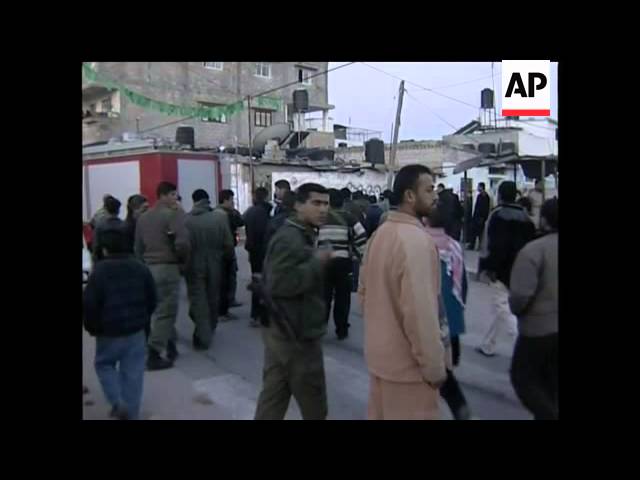
2003
Muammar Gaddafi's Isratine proposal, advocating for a one-state solution to the Israeli-Palestinian conflict, was first introduced by his son, Saif al-Islam Gaddafi, at Chatham House in London. This proposal was later incorporated into Muammar Gaddafi's White Book, published on May 8, 2003. This proposal aimed to address the longstanding Arab-Israeli conflict by advocating for a single state that would encompass both Israelis and Palestinians, thereby promoting coexistence and mutual recognition. Gaddafi's offer was rooted in his strong support for Palestinian independence and his desire to play a mediating role in the region. However, the geopolitical landscape was shifting, particularly with the United Arab Emirates (UAE) moving towards normalization with Israel, a decision that strained relations with Gaddafi's Libya. The Isratin proposal highlighted the complexities of peace efforts in the region, as it sought to reconcile deeply entrenched national identities and historical grievances. Gaddafi's initiative, while ambitious, faced skepticism from various factions, reflecting the challenges of achieving lasting peace in a conflict marked by decades of animosity and division.
View detailsRachel Aliene Corrie was born on April 10, 1979, in Olympia, Washington, USA. She was a passionate advocate for human rights, justice, and peace. From a young age, Corrie demonstrated a strong sense of empathy and activism, dedicating herself to humanitarian causes. She studied at The Evergreen State College, where she became deeply involved in global issues, particularly the Israeli-Palestinian conflict. Inspired by her belief in nonviolent resistance, she joined the International Solidarity Movement (ISM), a group committed to using peaceful protest to support Palestinian civilians affected by Israeli military actions.
On March 16, 2003, in the city of Rafah, Gaza Strip, Rachel Corrie took a stand against the demolition of Palestinian homes by the Israel Defense Forces (IDF). She, along with other ISM activists, attempted to block an armored bulldozer from destroying a Palestinian family’s house. Witnesses reported that Corrie, wearing a bright orange vest, was clearly visible as she stood in the bulldozer’s path. However, the bulldozer continued forward, crushing her under its weight. She was severely injured and died shortly after being taken to a hospital.
Israeli authorities claimed that the driver of the bulldozer did not see her, but ISM activists and eyewitnesses insisted that it was an intentional act. Her death sparked international outrage and led to widespread discussions on the Israeli-Palestinian conflict, military accountability, and the role of international activists in war zones.
Rachel Corrie’s death turned her into a symbol of resistance and peace activism. Her family pursued justice through Israeli courts, but in 2012, an Israeli court ruled that her death was an accident and dismissed the case. This ruling was widely criticized by human rights organizations. The Rachel Corrie Foundation for Peace and Justice, established by her family, this organization promotes nonviolent activism and raises awareness about global injustices.
Her writings, letters, and emails from Gaza were compiled into the play My Name is Rachel Corrie, which has been performed worldwide, shedding light on the Israeli-Palestinian conflict. Corrie remains an enduring figure in peace movements, and streets, murals, and humanitarian awards have been named in her honor. Her tragic death underscored the human cost of conflict and continues to inspire discussions on justice, activism, and the power of nonviolent resistance.
View details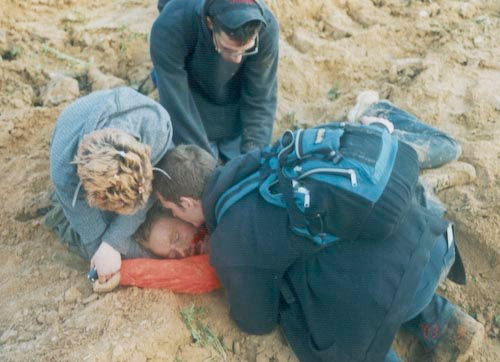
2002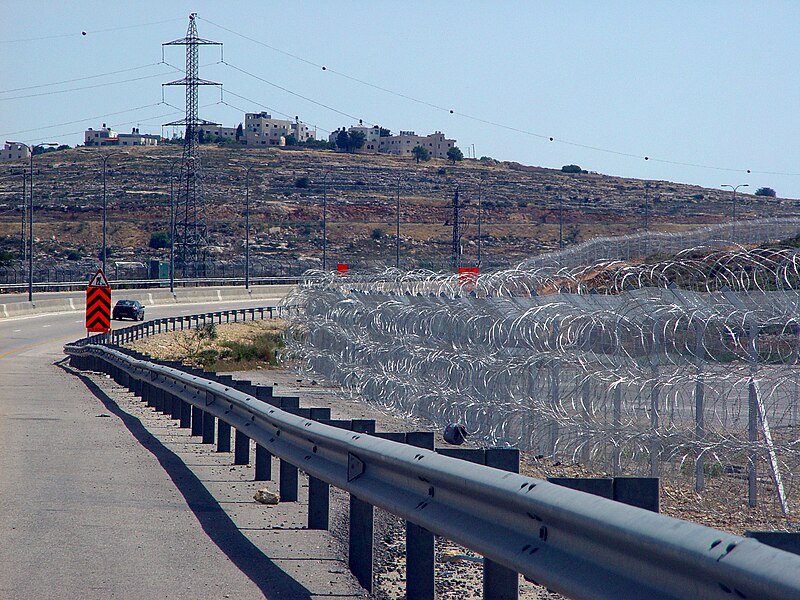
In 2002, Israel initiated the construction of the Israeli West Bank Barrier, a complex security structure designed to prevent suicide bombers and other attackers from crossing into Israeli territory from the West Bank. This barrier, which includes fences, walls, and checkpoints, was a significant response to a wave of violence during the Second Intifada, a period marked by heightened conflict between Israelis and Palestinians. The primary objective of the barrier was to enhance the security of Israeli citizens by reducing the number of attacks. While the barrier has been credited with decreasing the incidence of suicide bombings, it has also been a source of controversy and debate. Critics argue that the barrier infringes on the rights of Palestinians, restricts their movement, and complicates the peace process. The construction of the barrier coincided with the introduction of the Road Map for Peace, a plan proposed by the Quartet (the United States, European Union, Russia, and the United Nations) aimed at resolving the Israeli-Palestinian conflict. The barrier remains a focal point in discussions about security, human rights, and the future of Israeli-Palestinian relations.
View detailsIn 2002, following the tragic Passover massacre, Israel initiated Operation Defensive Shield, a military campaign aimed at curbing Palestinian militant activities. This operation led to intense confrontations between the Israel Defense Forces (IDF) and Palestinian fighters, particularly in the city of Jenin, where heavy fighting ensued. Concurrently, the Church of the Nativity in Bethlehem became a focal point of conflict as it was besieged by the IDF for a week. The siege drew international attention and culminated in successful negotiations that allowed for the withdrawal of Israeli troops from the church, which is a significant religious site for Christians. The year also witnessed the interception of the Karine A freighter, which was found to be carrying weapons from Iran, further escalating tensions in the region. Additionally, the United Nations Security Council passed Resolution 1397, reaffirming the commitment to a two-state solution amidst ongoing violence, including a deadly Hamas attack in Netanya. These events marked a critical period in the Israeli-Palestinian conflict, highlighting the complexities and challenges of achieving peace in the region.
View details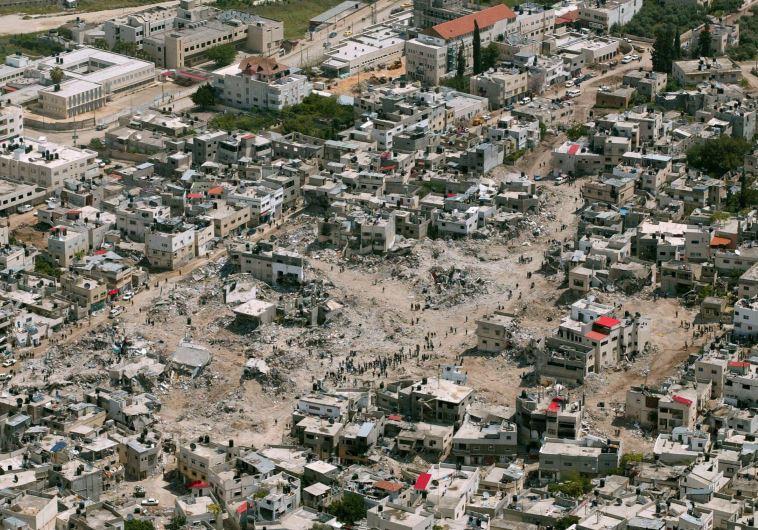
2001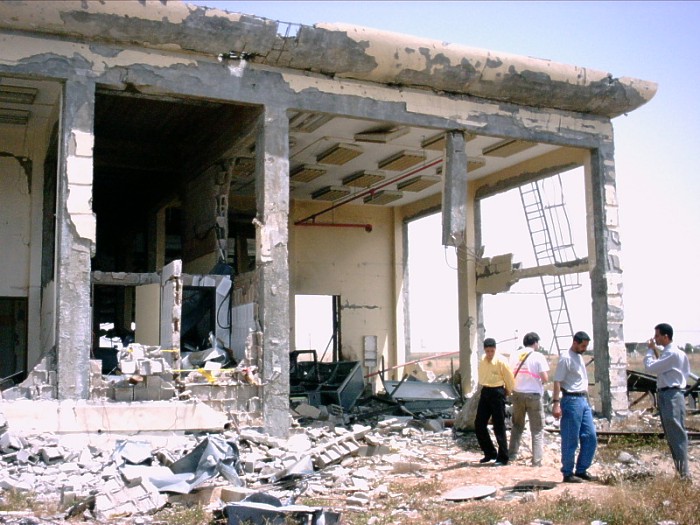
In 2001, the Israeli-Palestinian conflict escalated significantly, marked by a notable increase in violence from Palestinian militant groups targeting Israel. In response to these attacks, particularly those attributed to Hamas, the Israeli army conducted an airstrike that resulted in the destruction of Gaza Airport. This military action was framed by Israel as a necessary retaliation to ongoing threats and violence. The year was also pivotal politically, as it witnessed the failure of the Taba Summit, which aimed to negotiate a peace agreement between the two sides. Additionally, Ariel Sharon was elected as Prime Minister of Israel, a development that further complicated the peace process. Sharon's hardline stance and the subsequent military actions contributed to a cycle of violence that deepened the conflict, making the prospect of peace increasingly elusive. The events of 2001 set the stage for further hostilities and highlighted the challenges of achieving a lasting resolution in the region.
View details2000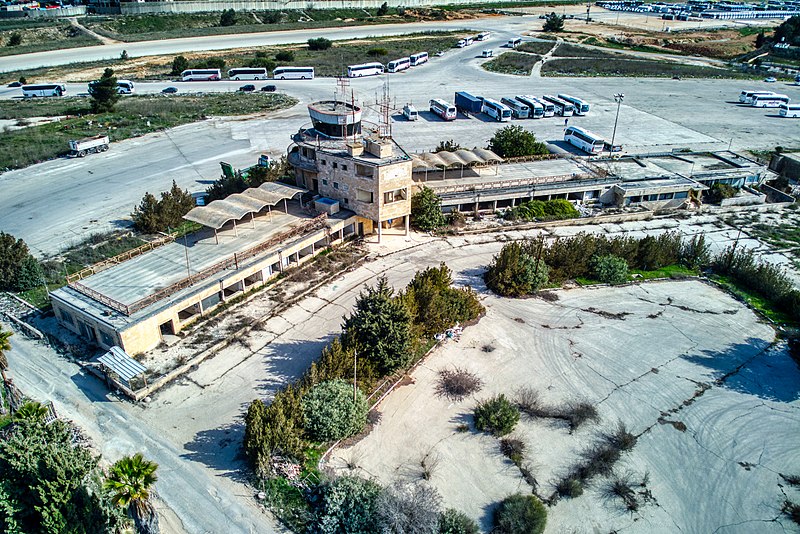
In the early years of the second intifada, two significant airports in Palestine, Jerusalem International Airport and Gaza International Airport, were destroyed by Israeli forces. This destruction marked a pivotal moment in Palestinian aviation, as it left the region without any operational airports. Prior to this, Palestinians relied on these airports for international travel, but since their closure, they have had to use airports in neighboring countries and Israel, such as Ben Gurion Airport and Ramon Airport in Israel, as well as Queen Alia International Airport in Amman, Jordan. The absence of operational airports has severely impacted the mobility of Palestinians, limiting their ability to travel freely and connect with the outside world. Over the years, various proposals have emerged from both governmental and private sectors to establish new airports within Palestinian territories, aiming to restore a sense of autonomy and improve transportation infrastructure. However, these proposals have yet to materialize into concrete plans, leaving the Palestinian aviation sector in a state of stagnation.
View detailsIn September 2000, Ariel Sharon, the then opposition leader of the Likud Party, visited the Temple Mount, a site of significant religious and political importance. His visit, accompanied by a controversial speech, provoked outrage among Palestinian Jerusalemites, leading to a rapid escalation of tensions. The situation quickly deteriorated into violent riots, with bloody clashes erupting around Jerusalem. The unrest was so severe that it resulted in the closure of Jerusalem Airport, which has remained non-operational since that time. The violence continued into October 2000, marked by further riots between Jewish and Arab communities, culminating in the lynching and killing of two Israeli soldiers in Ramallah. This period of unrest is widely recognized as the beginning of the Second Intifada, a significant and tumultuous chapter in the Israeli-Palestinian conflict, characterized by widespread violence and political strife.
View details