
Palestine

Land of Olives and Resilience
Related Lives
Kenya
The Cradle of Humankind

Dominican Republic
A Caribbean Paradise

Adventure Movies
Where courage meets the unknown

Luxembourg
The Gibraltar of the North

Hungary
Tales of the Danube

Lithuania
The Land of Amber

Italy
The Land of Art and Romance

Mexico
The Land of the Maya

2000
The Gaza Marine natural gas field, discovered by the British Gas Group in 1999, is located approximately 32 kilometers (20 miles) off the coast of the Gaza Strip in the Mediterranean Sea. This significant find is estimated to hold between 28 billion cubic meters (990 billion cubic feet) and 32 billion cubic meters (1.1 trillion cubic feet) of natural gas reserves, which far exceed the energy requirements of the Palestinian territories. The discovery was celebrated by Yasser Arafat, who referred to it as a 'Gift from God', highlighting its potential to transform the energy landscape of the region. However, the ongoing conflict in Gaza has severely hindered the development and exploitation of this resource, leaving the project in a state of uncertainty. The Gaza Marine field represents not only a potential energy source but also a symbol of the broader geopolitical challenges facing the region. As discussions around energy independence and regional cooperation continue, the future of the Gaza Marine natural gas field remains a critical issue for the Palestinian Authority and the surrounding areas.
View detailsIn the early 2000s, Palestinian hip-hop emerged as a significant cultural movement, providing a powerful platform for the expression of the struggles and realities faced by Palestinians. Artists such as DAM, Shadia Mansour, and Tamer Nafar became prominent figures in this genre, gaining international recognition for their socially conscious lyrics. Their music addresses critical issues such as occupation, identity, and resistance, resonating deeply with both local and global audiences. This genre not only reflects the socio-political landscape of Palestine but also serves as a form of cultural resistance, amplifying the voices of Palestinian youth. Through their art, these artists narrate the stories and experiences of their communities, fostering a sense of identity and solidarity among listeners. The rise of Palestinian hip-hop has not only enriched the cultural tapestry of the region but has also contributed to the global discourse on social justice and human rights, making it a vital part of contemporary music history.
View details1998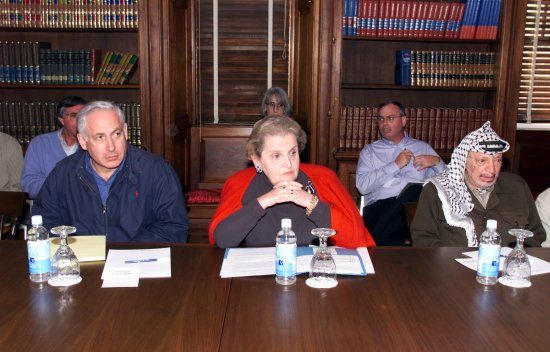
In 1998, the Wye River Memorandum was signed by Israel and the Palestinian government, marking a significant milestone in the ongoing peace process aimed at resolving the Israeli-Palestinian conflict. This agreement was designed to advance the implementation of the Oslo Accords, which had previously laid the groundwork for peace negotiations. The Wye River Memorandum included critical provisions for Israeli withdrawals from specific areas in the West Bank, enhancing Palestinian autonomy. Additionally, it established frameworks for security cooperation between the two parties and outlined measures to combat terrorism, which was a pressing concern for both sides. The memorandum was viewed as a crucial step towards building trust and addressing contentious issues that had hindered progress in the peace process. Despite facing numerous challenges and slow advancements, the Wye River Memorandum represented a commitment from both Israel and the Palestinian leadership to continue negotiations and work towards a comprehensive peace agreement. This agreement underscored the importance of dialogue and cooperation in achieving lasting peace in the region.
View details1996
Since 1996, Palestine has proudly participated in the Olympic Games, showcasing the talents of its athletes across various sports such as athletics, swimming, judo, and taekwondo. This participation marks a significant milestone for Palestine, allowing its Olympians to represent their nation on the international stage and foster a sense of national pride. As a member of the International Olympic Committee, Palestine continues to strive for excellence in sports. Beyond the Olympics, sports like football, basketball, handball, and volleyball are immensely popular in the region. The Palestinian Basketball Federation and the Palestinian Handball Federation play crucial roles in the development and organization of these sports, promoting athleticism and teamwork among the youth. The commitment to sports not only enhances physical fitness but also serves as a unifying force for the Palestinian people, encouraging community engagement and international representation. As Palestine continues to grow in the sporting arena, the hope is to inspire future generations to pursue their athletic dreams and achieve success on global platforms.
View detailsThe first-ever Palestinian general elections were held in 1996, marking a pivotal moment in the political landscape of the Palestinian territories. These elections were a direct outcome of the Oslo Accords, which aimed to establish a framework for peace and self-governance. Yasser Arafat was re-elected as president, and a Palestinian Legislative Council was formed, providing a democratic mandate for the Palestinian leadership. This electoral process was seen as a significant step towards greater self-determination and governance for the Palestinian people. Following the elections, Israel began to redeploy its forces from select Palestinian cities in the West Bank in 1997, which further advanced the peace process and facilitated the transfer of authority to the newly established Palestinian government. The 1996 elections not only represented a milestone in Palestinian democracy but also highlighted the ongoing complexities of the Israeli-Palestinian conflict, as both sides navigated the challenges of implementing the agreements made in the Oslo Accords.
View details1994
On May 4, 1994, the Palestinian National Authority (PNA) was officially established following the signing of the Gaza-Jericho Agreement in Cairo, Egypt. This agreement, a direct outcome of the 1993 Oslo I Accord, marked a historic step toward Palestinian self-governance. It granted the PNA limited administrative and security control over parts of the West Bank and Gaza Strip, with the goal of eventually expanding its authority over additional areas through further negotiations.
With the establishment of the PNA, Yasser Arafat, chairman of the Palestine Liberation Organization (PLO), was appointed as its first president. In July 1994, Arafat returned to Gaza after decades in exile to formally assume leadership. The PNA was given responsibility for civil administration, economic management, and law enforcement in Palestinian-controlled territories, marking a significant transition from Israeli military rule to Palestinian self-rule in certain areas.
The PNA was originally intended as a temporary governing body for a five-year period, leading to final status negotiations that would determine the future of Palestine. However, political tensions, security concerns, and stalled peace talks have prolonged its existence. Despite facing significant challenges, including territorial fragmentation and internal divisions, the PNA remains the official governing body of the Palestinian territories, playing a crucial role in Palestinian politics and diplomacy.
View details1993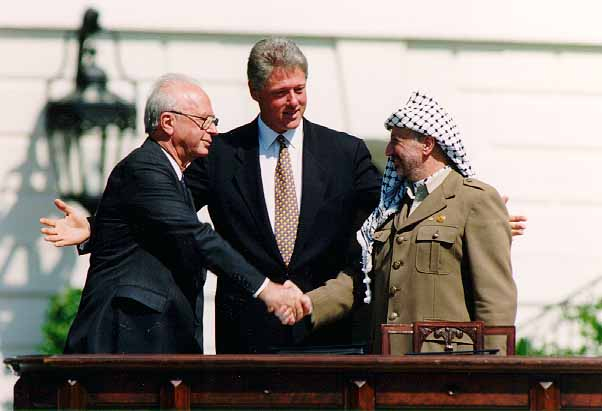
The 1993 Oslo Peace Accords represented a significant milestone in the Israeli-Palestinian conflict, marking the first formal recognition between Israel and the Palestine Liberation Organization (PLO). Facilitated by the efforts of Yasser Arafat and Israeli leaders, the accords established the Palestinian Authority (PA), granting limited self-rule to Palestinians in parts of the West Bank and Gaza Strip, excluding East Jerusalem. The agreements outlined a framework for the withdrawal of Israeli military forces from these territories and set the stage for future negotiations aimed at achieving a comprehensive peace settlement. Despite the initial optimism surrounding the accords, subsequent developments have faced numerous challenges, leading to stalled negotiations and ongoing tensions. The Oslo Accords laid the groundwork for future peace efforts and proposals for a Palestinian state, highlighting the complexities of achieving lasting peace in the region. The legacy of the Oslo Accords continues to influence the dynamics of Israeli-Palestinian relations today, as both parties navigate the path toward a potential resolution of their longstanding conflict.
View detailsThe establishment of the Palestinian Security Services (PSS) in 1993 marked a significant step towards maintaining internal security and law enforcement within the Palestinian territories. Formed under the auspices of the Palestinian Authority, the PSS is tasked with a critical mandate: to protect Palestinian citizens and uphold the integrity of the Palestinian State. The PSS encompasses various forces and intelligence services that work collaboratively to ensure stability and order in areas under Palestinian control. Their operations include counterterrorism efforts aimed at mitigating threats to security and fostering a safe environment for the populace. The PSS plays a vital role in the broader context of governance and public safety, contributing to the rule of law and the protection of human rights within the region. As the PSS continues to evolve, its effectiveness in addressing both internal and external challenges remains crucial for the future of Palestinian society and its aspirations for statehood.
View details1991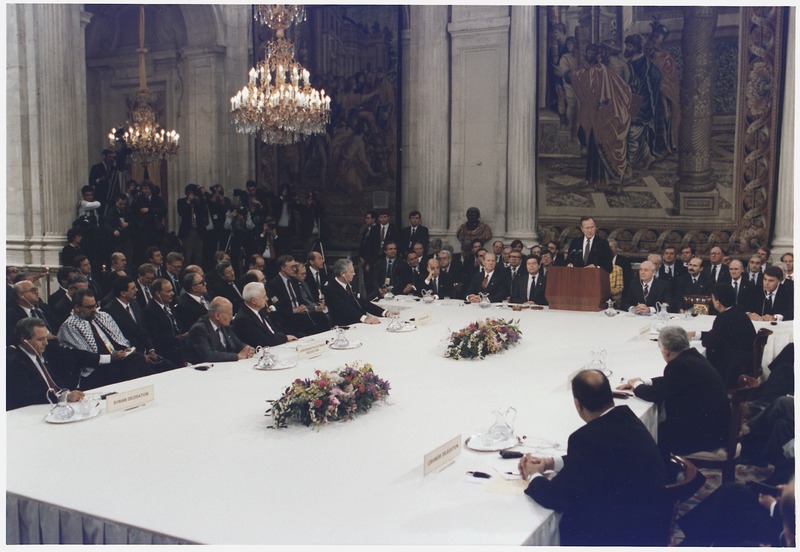
The Madrid Conference of 1991 marked a pivotal moment in the Israeli-Palestinian peace process. Co-sponsored by the United States and the Soviet Union, the conference was held in Madrid, Spain, and aimed to bring together Israel, Palestine, and neighboring Arab countries to discuss peace negotiations. This conference was a response to the First Intifada, which had begun in 1987 and highlighted the urgent need for a resolution to the ongoing conflict. Although the Madrid Conference did not yield a final peace agreement, it was instrumental in laying the groundwork for future negotiations, ultimately leading to the Oslo Accords in the early 1990s. The conference facilitated direct dialogue between the parties involved and established a framework for addressing key issues such as borders, security, and the status of Palestinian territories. The significance of the Madrid Conference lies in its role as a catalyst for subsequent peace efforts, demonstrating the international community's commitment to resolving the Israeli-Palestinian conflict and fostering stability in the region.
View details1988
In 1988, the United Nations Educational, Scientific and Cultural Organization (UNESCO) recognized the State of Palestine, marking a significant moment in the international acknowledgment of Palestinian sovereignty. This recognition was part of Palestine's request for admission to UNESCO, which included an explanatory note listing 92 states that had recognized Palestine. Among these were both Arab and non-Arab nations, highlighting a diverse range of international support. Notably, India was included in this list, reflecting its historical stance as a strong ally of Palestine. However, since 1991, India has shifted its foreign policy focus, strengthening ties with Israel, which has led to a more complex relationship with Palestine. This evolution in India's diplomatic relations illustrates the changing dynamics in the Middle East and the broader geopolitical landscape. The recognition of Palestine by UNESCO not only underscored the aspirations of the Palestinian people for statehood but also highlighted the varying degrees of support from different nations, including prominent leaders like Muammar Gaddafi of Libya, who was a vocal advocate for Palestinian independence. The events of 1988 remain a pivotal point in the ongoing discourse surrounding Palestinian rights and statehood.
View detailsOn November 15, 1988, the Palestine Liberation Organization (PLO) made a significant declaration by establishing the State of Palestine. This momentous event was recognized by the United Nations General Assembly through Resolution 43/177, which acknowledged the Palestinian right to self-determination. The legal status of the State of Palestine remains a complex and debated issue among international states and legal scholars. While some countries have established bilateral diplomatic relations with Palestine, granting it a degree of recognition, others remain hesitant or outright reject the notion of Palestinian statehood. As of now, over 130 UN member states recognize the State of Palestine, and it has been granted non-member observer state status at the United Nations since 2012. The ongoing discourse surrounding Palestine's statehood continues to influence international relations and peace efforts in the Middle East, highlighting the intricate balance between political recognition and legal status in the realm of international law.
View detailsIn July 1988, Jordan officially ceded its claims to the West Bank to the Palestine Liberation Organization (PLO), retaining only guardianship over the Haram al-Sharif. This significant political move came after Israel's occupation of the West Bank and Gaza Strip, territories previously held by Jordan and Egypt, respectively. Following the 1967 Six-Day War, Israel began establishing settlements in these areas, leading to complex administrative challenges. The Israeli Civil Administration, under the Coordinator of Government Activities in the Territories, managed the Arab population, alongside local municipal councils that had existed prior to the Israeli takeover. In 1980, Israel opted to freeze elections for these councils, instead creating Village Leagues, which were intended to be pro-Israeli local governance structures. However, this model proved ineffective, and the Village Leagues began to disband, culminating in the dissolution of the last league, the Hebron League, in February 1988. The cession of claims by Jordan marked a pivotal moment in the Israeli-Palestinian conflict, reshaping the political landscape and the future of Palestinian self-determination.
View details1987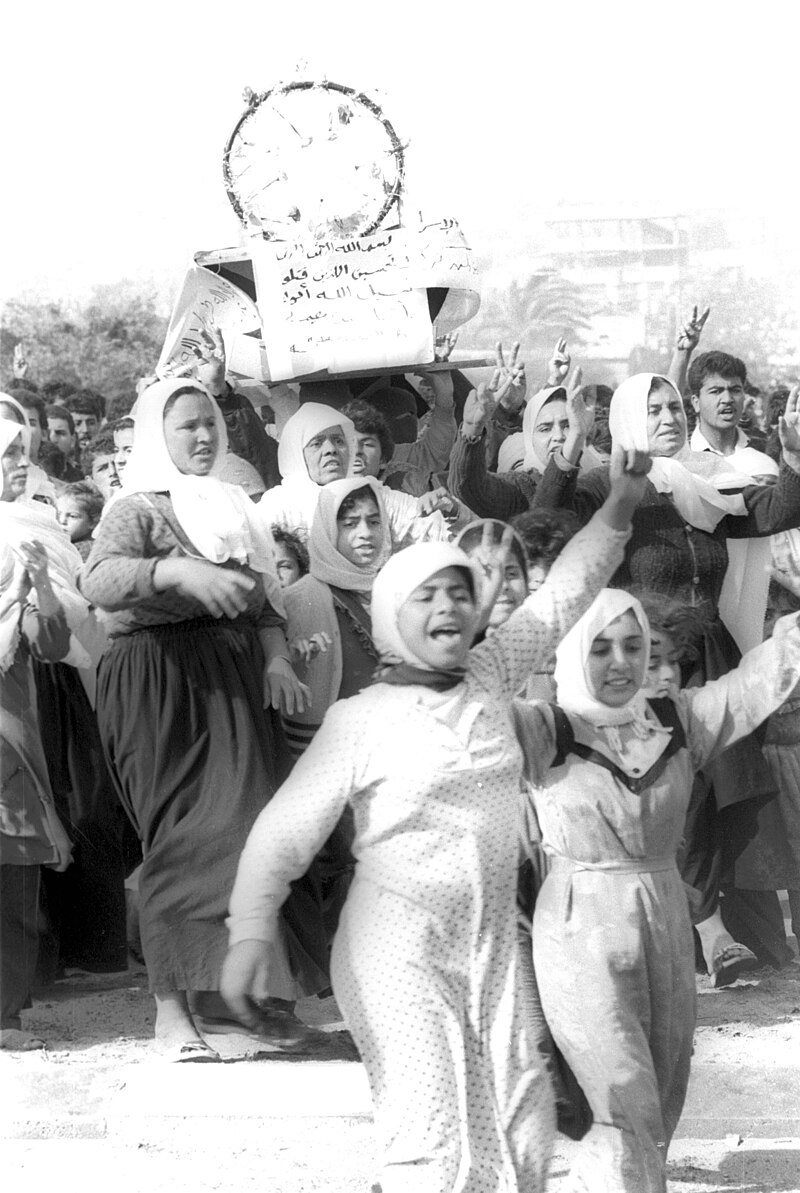
The First Intifada, an uprising against Israeli occupation, erupted on December 9, 1987, in the Gaza Strip and quickly spread to the West Bank and East Jerusalem. It was a mass movement of Palestinian resistance against Israeli military rule, lasting until 1993 and fundamentally reshaping the Israeli-Palestinian conflict.
The immediate spark came when an Israeli military truck collided with a civilian car, killing four Palestinian workers in Jabalia refugee camp in Gaza. Widespread frustration over Israeli settlements, military control, and economic hardships boiled over, leading to mass protests, strikes, and violent confrontations.
The uprising was largely grassroots-led, involving young Palestinians throwing stones and Molotov cocktails at Israeli soldiers, along with widespread boycotts, general strikes, and civil disobedience. The Palestinian Liberation Organization (PLO), while influential, did not directly organize the uprising. Instead, local leaders and newly formed groups like Hamas (founded in 1987) played major roles.
Israel responded with harsh military measures, including mass arrests, curfews, and live ammunition. The controversial "Iron Fist" policy resulted in thousands of deaths and injuries, as well as international criticism of Israeli tactics. The intifada also led to increased global attention on the Palestinian cause, with media coverage showing the brutality of the occupation.
The First Intifada officially ended in 1993 with the signing of the Oslo Accords, which granted limited Palestinian self-rule in parts of the West Bank and Gaza. However, it also deepened divisions between those who supported negotiations and groups like Hamas, which rejected any peace with Israel.
The uprising remains a key turning point in Palestinian history, showing the power of mass resistance and shaping future conflicts, including the Second Intifada (2000–2005).
#FirstIntifada #PalestinianResistance #IsraeliOccupation #MiddleEastConflict #OsloAccords #MomentsOfLife #MoofLife
View details1980
In 1980, the Israeli Knesset enacted the Basic Law: Jerusalem, which declared Jerusalem as the complete and united capital of Israel. This law served as a constitutional reaffirmation of Israel's annexation of East Jerusalem, a move that had been initiated in 1967 following the Six-Day War. The Basic Law has since become a focal point of international controversy, as the annexation of East Jerusalem is not recognized by any other country, leading to significant diplomatic tensions. The law has further complicated the Israeli-Palestinian conflict, particularly concerning the status of Jerusalem in future peace negotiations. The demographic and political landscape of the city has been profoundly affected, with ongoing disputes regarding the rights and administration of both Palestinian and Israeli residents. The implications of this law continue to resonate in discussions about peace and coexistence in the region, highlighting the complexities surrounding Jerusalem's status and the broader Israeli-Palestinian conflict.
View details1974
In October 1974, a significant milestone was achieved for the Palestinian Liberation Organization (PLO) during the Arab League summit, where the PLO was officially designated as the "sole legitimate representative of the Palestinian people." This designation underscored the Arab League's commitment to the Palestinian cause and reaffirmed the urgent need for the establishment of an independent Palestinian state. The summit's resolution marked a pivotal moment in the recognition of Palestinian rights on an international stage. Following this, in November 1974, the United Nations General Assembly recognized the PLO as competent to address all matters concerning the question of Palestine. This recognition granted the PLO observer status as a "non-state entity," allowing it to participate in UN discussions and advocate for Palestinian rights and statehood. The events of 1974 were crucial in shaping the political landscape for Palestinians and laid the groundwork for future diplomatic efforts aimed at achieving self-determination and independence.
View details1973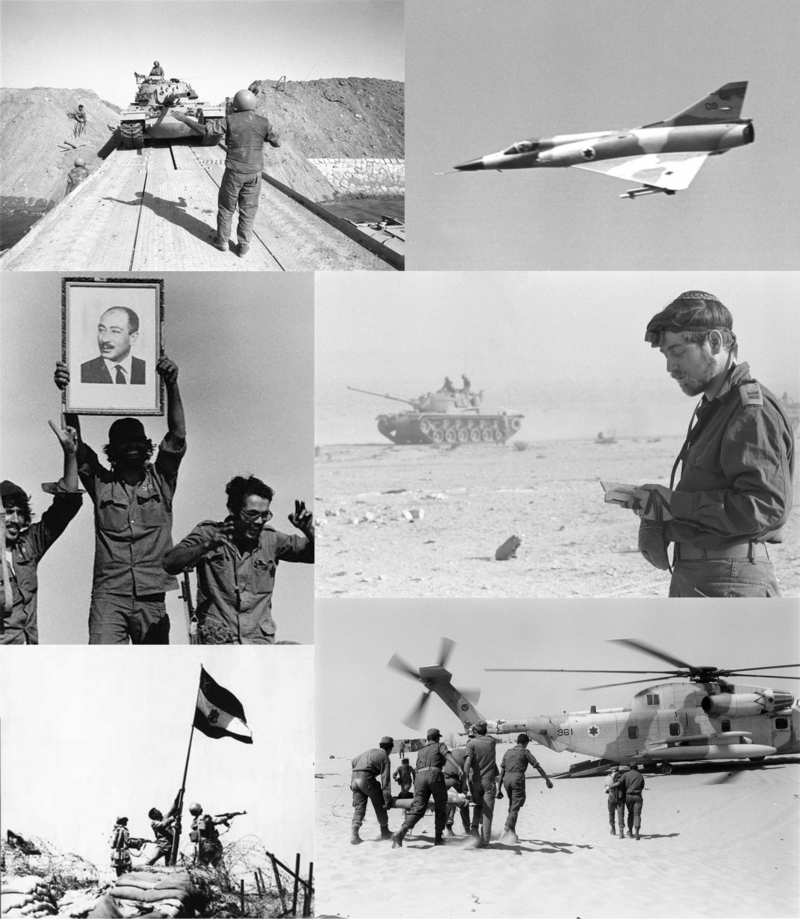
On October 6, 1973, a coalition of Egyptian and Syrian forces launched a surprise attack on Israel during Yom Kippur, the holiest day in Judaism. This conflict, also known as the October War or Ramadan War, was fought on two main fronts: the Sinai Peninsula and the Golan Heights.
The war began when Egyptian forces crossed the Suez Canal, breaking through Israeli defensive lines in the Sinai, while Syrian troops launched an offensive in the Golan Heights. The coordinated attack caught Israel off guard, as the country was observing a national holiday, and its military was unprepared for a large-scale invasion.
In the early days, Egypt and Syria made significant territorial gains, overwhelming Israeli positions. However, Israel quickly regrouped. With U.S. military aid and reinforcements, Israeli forces launched a counteroffensive. By October 14, Israel had halted the Syrian advance and pushed deep into Syrian territory. In the Sinai, Israeli forces under General Ariel Sharon successfully crossed the Suez Canal, surrounding the Egyptian Third Army.
The war ended on October 25, 1973, after intense diplomatic efforts led by the United States and the Soviet Union. A ceasefire brokered by the United Nations (UN Security Council Resolution 338) was accepted by all sides, effectively halting the fighting.
Although Israel retained control of most of its territory, the war shattered the myth of Israeli invincibility and forced it into diplomatic negotiations. The conflict led to the 1978 Camp David Accords, in which Egypt and Israel signed a peace treaty, making Egypt the first Arab nation to recognize Israel. However, the war also deepened Arab-Israeli hostilities and fueled further regional tensions.
The Yom Kippur War remains a critical moment in Middle Eastern history, demonstrating the changing balance of power and the role of superpower diplomacy in the Arab-Israeli conflict.
#YomKippurWar #OctoberWar #RamadanWar #ArabIsraeliConflict #MiddleEastHistory #MomentsOfLife #MoofLife
View details1967
In 1967, following the Six-Day War, Israel effectively annexed East Jerusalem by applying Israeli law, jurisdiction, and administration to the area. This annexation was constitutionally reaffirmed in the Basic Law: Jerusalem 1980. However, this annexation is not recognized by any other country. The annexation has led to significant demographic changes and political tensions. As of 2010, East Jerusalem had a population of approximately 456,000 people, with roughly 60% being Palestinians and 40% Israelis. The construction of Israel's West Bank Security Barrier in the late 2000s further complicated the situation by re-annexing tens of thousands of Palestinians bearing Israeli ID cards to the West Bank, leaving East Jerusalem with a small Israeli majority. Under the Oslo Accords, Jerusalem was proposed to be included in future negotiations, but Israel maintains that the Accords prohibit the Palestinian Authority from operating in Jerusalem. Despite this, certain neighborhoods in East Jerusalem outside the historic Old City were allotted to the Palestinian Authority.
View detailsThe Six-Day War of 1967 marked a pivotal moment in Middle Eastern history, resulting in significant territorial changes and the intensification of the Israeli-Palestinian conflict. During this brief but impactful conflict, Israel launched a preemptive strike against its neighboring Arab states, leading to the swift conquest of the West Bank, including East Jerusalem, and the Gaza Strip, which were under Jordanian and Egyptian control, respectively. Following the war, Israel began to establish settlements in these newly occupied territories, a move that faced widespread international condemnation and raised questions about the legality and morality of such actions under international law. The occupation of these areas not only altered the geopolitical landscape but also fueled tensions between Israelis and Palestinians, leading to a protracted struggle for land, rights, and recognition. The Palestinian national movement gained momentum during this period, seeking international support and recognition for their aspirations. The consequences of the Six-Day War continue to resonate today, as the region grapples with the complexities of occupation, settlement expansion, and the quest for peace.
View detailsIn the course of the Six-Day War in June 1967, Israel captured the rest of the area that had been part of the British Mandate of Palestine, taking the West Bank (including East Jerusalem) from Jordan and the Gaza Strip from Egypt. Following military threats by Egypt and Syria, including Egyptian president Nasser's demand of the UN to remove its peace-keeping troops from the Egyptian-Israeli border, in June 1967 Israeli forces went to action against Egypt, Syria and Jordan. As a result of that war, the Israel Defense Forces conquered the West Bank, the Gaza Strip, the Golan Heights, and the Sinai Peninsula bringing them under military rule. Israel also pushed Arab forces back from East Jerusalem, which Jews had not been permitted to visit during the prior Jordanian rule. East Jerusalem was allegedly annexed by Israel as part of its capital, though this action has not been recognized internationally. Israel also started building settlements on the occupied land.
View details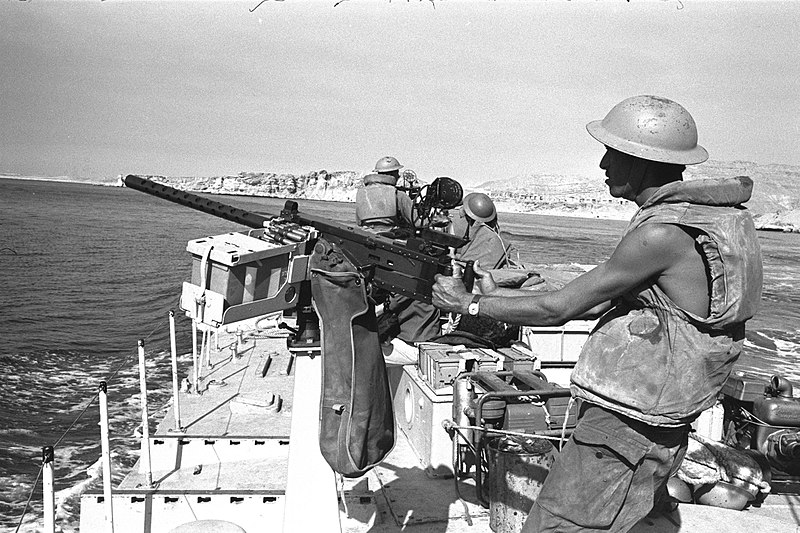
1964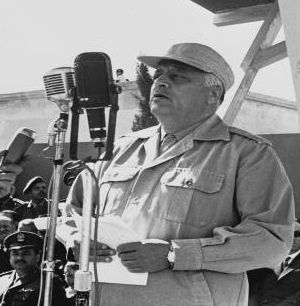
In 1964, the Palestine Liberation Organization (PLO) was established in the West Bank, which was then under Jordanian control. The formation of the PLO marked a significant moment in Palestinian nationalism, as it aimed to confront Israel and advocate for the rights of Palestinians. The Palestinian National Charter, adopted by the PLO, delineates the boundaries of Palestine as encompassing the entire territory of the former British Mandate, including present-day Israel. This assertion of territorial claims has been a point of contention in the Israeli-Palestinian conflict. The geopolitical landscape shifted dramatically during the Six-Day War in 1967, when Israel engaged in conflict with Egypt, Jordan, and Syria. The war resulted in Israel's occupation of the West Bank and Gaza Strip, among other territories. Following this conflict, the PLO relocated its base from Jordan to Lebanon in 1971, continuing its struggle for Palestinian self-determination and statehood amidst ongoing regional tensions. The establishment of the PLO and its subsequent actions have played a crucial role in shaping the dynamics of the Israeli-Palestinian conflict, influencing both local and international responses to the situation.
View details1950
Shortly after the proclamation of the All-Palestine Government in Gaza, the Jericho Conference named King Abdullah I of Transjordan as the 'King of Arab Palestine'. The Congress called for the union of Arab Palestine and Transjordan, and Abdullah announced his intention to annex the West Bank. However, the other Arab League member states opposed Abdullah's plan. The New Historians, like Avi Shlaim, suggest that there was an unwritten secret agreement between King Abdullah of Transjordan and Israeli authorities to partition the territory between themselves, which translated into each side limiting their objectives and exercising mutual restraint during the 1948 war. The presence of a large number of immigrants and refugees from the now dissolved Mandate of Palestine fueled the regional ambitions of King Abdullah I, who sought control over what had been the British Jerusalem and Samaria districts on the West Bank of the Jordan River. Towards this goal, the king granted Jordanian citizenship to all Arab holders of the Palestinian Mandate identity documents in February 1949 and outlawed the terms 'Palestinian' and 'Transjordanian' from official usage, changing the country's name from the Emirate of Trans-Jordan to the Hashemite Kingdom of Jordan. The area east of the river became known as al-Ḍiffah al-Sharqiyya, or 'The East Bank'. In April 1950, with the formal annexation of the positions held by the Jordanian Army since 1948, the area became known as al-Ḍiffah al-Gharbiyya or 'The Western Bank'. With the formal union of the East and West Banks in 1950, the number of Palestinians in the kingdom rose by another 720,000, of whom 440,000 were West Bank residents and 280,000 were refugees from other areas of the former Mandate then living on the West Bank. Palestinians became the majority in Jordan although most believed their return to what was now the state of Israel was imminent.
View details1948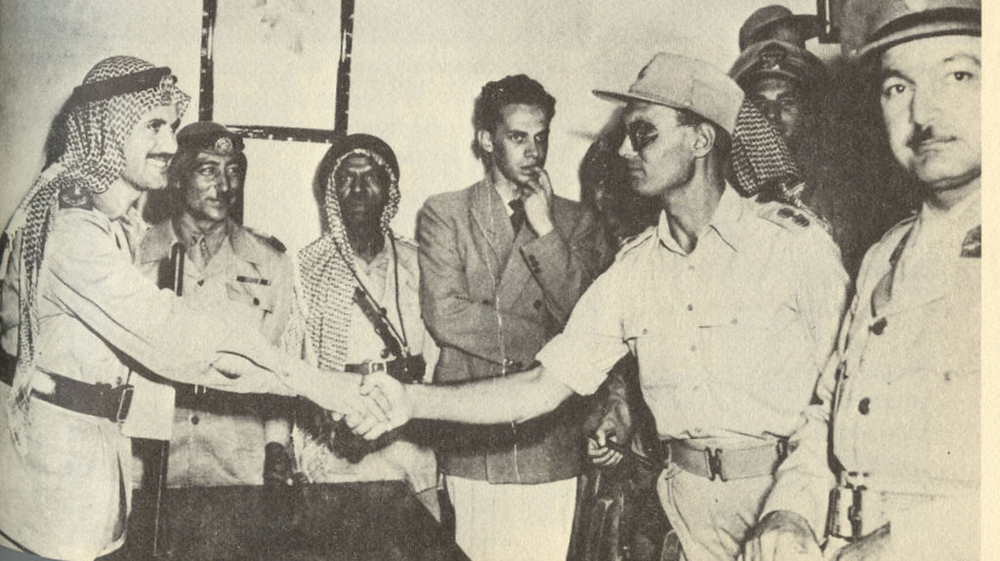
The Arabs rejected the Partition Plan while the Jews ostensibly accepted it. Following the 1948 Arab–Israeli War, the area allocated to the Palestinian Arabs and the international zone of Jerusalem were occupied by Israel and the neighboring Arab states in accordance with the terms of the 1949 Armistice Agreements. In addition to the UN-partitioned area allotted to the Jewish state, Israel captured and incorporated a further 26% of the British Mandate territory. Jordan retained possession of about 21% of the former Mandate territory. Jerusalem was divided, with Jordan taking the eastern parts, including the Old City, and Israel taking the western parts. In addition, Syria held on to small slivers of the former Mandate territory to the south and east of the Sea of Galilee, which had been allocated in the UN partition plan to the Jewish state. For a description of the massive population movements, Arab and Jewish, at the time of the 1948 war and over the following decades, see Palestinian exodus and Jewish exodus from Arab lands.
View detailsThe All-Palestine Government was established by the Arab League on 22 September 1948, during the 1948 Arab–Israeli War. It was soon recognized by all Arab League members, except Jordan. Though jurisdiction of the Government was declared to cover the whole of the former Mandatory Palestine, its effective jurisdiction was limited to the Gaza Strip. The Prime Minister of the Gaza-seated administration was named Ahmed Hilmi Pasha, and the President was named Hajj Amin al-Husseini, former chairman of the Arab Higher Committee. The All-Palestine Government is regarded by some as the first attempt to establish an independent Palestinian state. It was under official Egyptian protection, but had no executive role, rather mostly political and symbolic. Its importance gradually declined, especially due to the relocation of the seat of government from Gaza to Cairo following Israeli incursions in late 1948. Though the Gaza Strip returned under Egyptian control later on through the war, the All-Palestine Government remained in-exile in Cairo, managing Gazan affairs from outside. In 1959, the All-Palestine Government was officially merged into the United Arab Republic, coming under formal Egyptian military administration, with the appointment of Egyptian military administrators in Gaza. Egypt, however, both formally and informally denounced any and all territorial claims to Palestinian territory, in contrast to the government of Transjordan, which declared its annexation of the West Bank.
View detailsIn the years following World War II, Britain's control over Palestine became increasingly tenuous. This was caused by a combination of factors, including the costs of maintaining an army of over 100,000 men in Palestine, which weighed heavily on a British economy suffering from post-war depression. Rapid deterioration due to the actions of Jewish paramilitary organizations (Hagana, Irgun, and Lehi), involving attacks on strategic installations as well as on British forces and officials, caused severe damage to British morale and prestige. The U.S. Congress delayed a loan necessary to prevent British bankruptcy in response to the British refusal to fulfill a promise given to Truman that 100,000 Holocaust survivors would be allowed to emigrate to Palestine. In early 1947, the British Government announced their desire to terminate the Mandate and asked the United Nations General Assembly to make recommendations regarding the future of the country. The British Administration planned to terminate its mandate on 15 May 1948.
View detailsOn 14 May 1948, David Ben-Gurion, representing the Jewish People's Council, proclaimed the establishment of a Jewish state in Eretz Israel, officially named the State of Israel. This significant declaration followed the United Nations' partition plan, which aimed to create separate Jewish and Arab states in the region. However, the announcement was met with immediate resistance from neighboring Arab states, which sought to prevent the partition and support the Palestinian Arab population. In the ensuing conflict, Transjordan and Egypt seized control of territories designated for the future Arab state, while Syrian and Iraqi forces launched attacks against Israel, albeit without success. Intense battles erupted, particularly over Jerusalem, where Jordanian and Israeli forces clashed. A truce was accepted on 11 June 1948, allowing Israel to bolster its military capabilities. Following this, a series of military operations enabled Israel to gain control over key areas, including the Galilee region, Lydda, Ramle, and the Negev, while also securing a vital road linking Jerusalem to the rest of Israel. During this tumultuous period, it is estimated that between 150,000 and 350,000 Arab Palestinians fled or were expelled from the newly conquered territories, marking a significant demographic shift in the region.
View details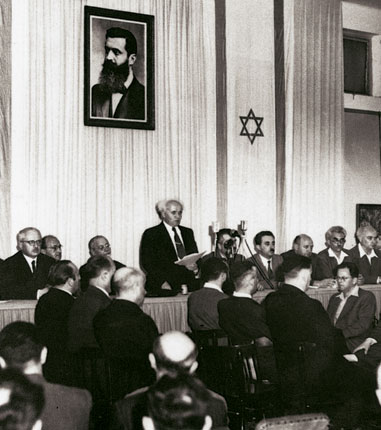
1947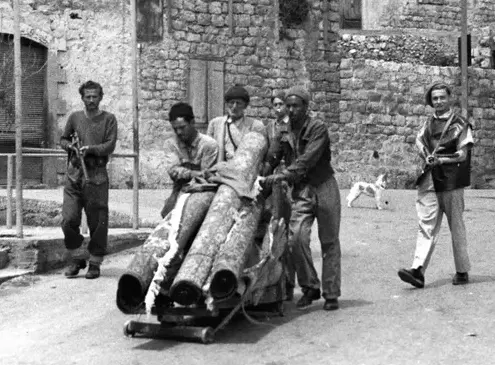
During the Arab-Israeli war, a significant event known as the Nakba, meaning 'catastrophe' in Arabic, led to the displacement of approximately 700,000 Palestinians from their homes. This mass expulsion occurred amidst the conflict and has had profound implications for the Palestinian population. Many of those displaced sought refuge in neighboring Arab countries, including Jordan, Iraq, Lebanon, and Egypt. Additionally, a considerable number of Palestinians migrated to Gulf countries such as Saudi Arabia, Qatar, Oman, and Kuwait. The Nakba also prompted a significant emigration of Palestinians to Western nations, including the United States, the United Kingdom, and various parts of Europe. Today, the impact of the Nakba is still felt, with around half of the Palestinian population living in the diaspora or as refugees. The ongoing conflict with Israel and subsequent wars have perpetuated this cycle of displacement and suffering, highlighting the enduring consequences of the Nakba on Palestinian identity and existence.
View detailsIn 1947, the United Nations proposed a partition plan for Palestine, which aimed to resolve the ongoing conflict between Jewish and Arab populations in the region. The plan recommended the establishment of separate Jewish and Arab states, with Jerusalem designated as an international city. This proposal was a response to the increasing tensions and violence in Palestine, as well as the aftermath of World War II and the Holocaust, which intensified Jewish aspirations for a homeland. Jewish leaders accepted the plan, viewing it as a legitimate path to statehood. However, the Arab nations and Palestinian leaders rejected the proposal, arguing that it violated the rights of the Arab majority in Palestine. The rejection of the plan led to heightened tensions and violence, ultimately culminating in the 1948 Palestine War following the declaration of the State of Israel. The partition plan remains a significant historical event, as it set the stage for the ongoing Israeli-Palestinian conflict and shaped the geopolitical landscape of the Middle East. The legacy of the 1947 partition plan continues to influence discussions around peace and statehood in the region today.
View details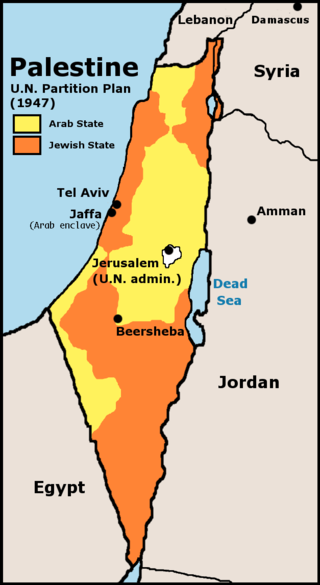
1941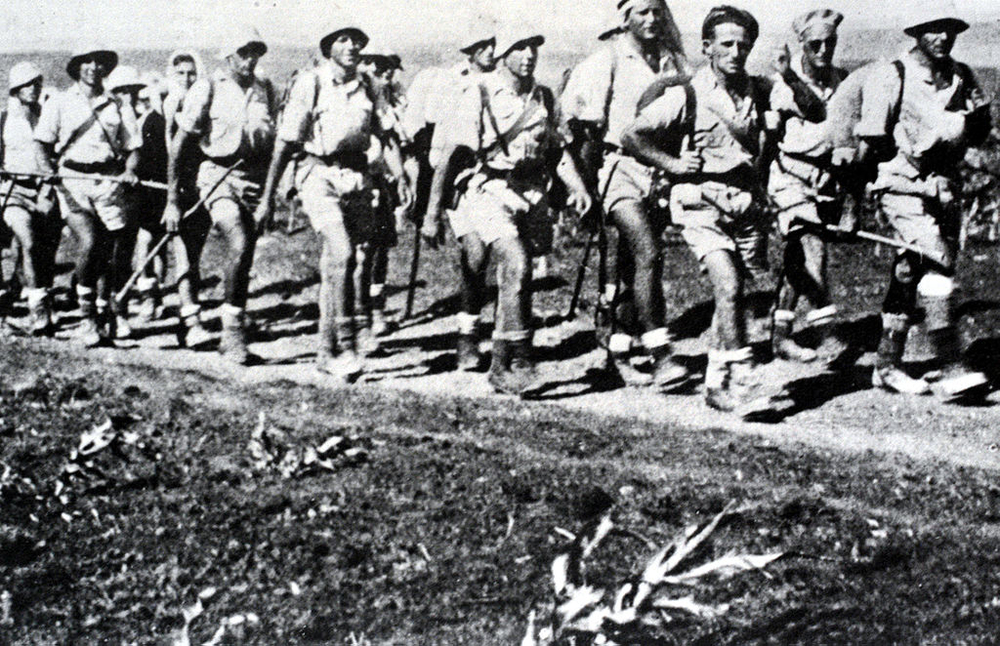
The Yishuv, the Jewish community in Palestine, faced a significant period of anxiety as the forces of German General Erwin Rommel advanced eastward in North Africa towards the Suez Canal. This military movement raised fears that Palestine could be the next target for conquest. The situation was exacerbated by the Italian air attacks on key cities such as Tel Aviv and Haifa, which further heightened the sense of vulnerability among the Jewish population. In response to these threats, and with the support of the British authorities, the Palmach was founded. The Palmach was a highly trained elite unit of the Haganah, primarily composed of reserve troops. Its establishment marked a pivotal moment in the defense strategy of the Yishuv, as it aimed to prepare for potential military confrontations and safeguard the community against the looming dangers of World War II. The formation of the Palmach not only represented a strategic military response but also symbolized the determination of the Yishuv to protect its interests and ensure its survival during a time of great uncertainty.
View details1940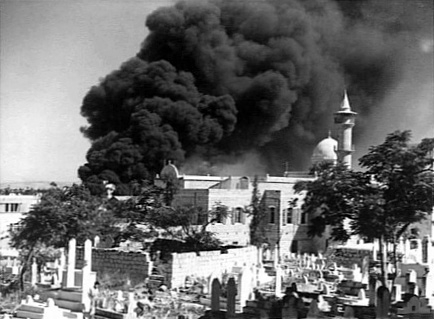
On June 10, 1940, Italy officially declared war on the British Commonwealth, aligning itself with Nazi Germany during World War II. This declaration marked a pivotal moment in the conflict, as Italy sought to expand its influence in the Mediterranean region. Within a month of the declaration, Italian forces launched aerial attacks on Palestine, specifically targeting key cities such as Tel Aviv and Haifa. These bombings represented a significant escalation in hostilities, directly affecting the local population and altering the dynamics of the region. The attacks not only instilled fear among the inhabitants but also highlighted the strategic importance of Palestine in the broader context of the war. The involvement of Italian forces in Palestine was part of a larger campaign to undermine British control in the Middle East, which was crucial for maintaining supply routes and colonial interests. The bombings contributed to the growing tensions in the region, as both Palestinian Arabs and Jews were drawn into the conflict, with approximately 6,000 Palestinian Arabs and 30,000 Palestinian Jews enlisting in the British forces to combat the Axis powers. This period marked a significant chapter in the history of Palestine, as the impacts of the war continued to resonate long after the conflict ended.
View details1939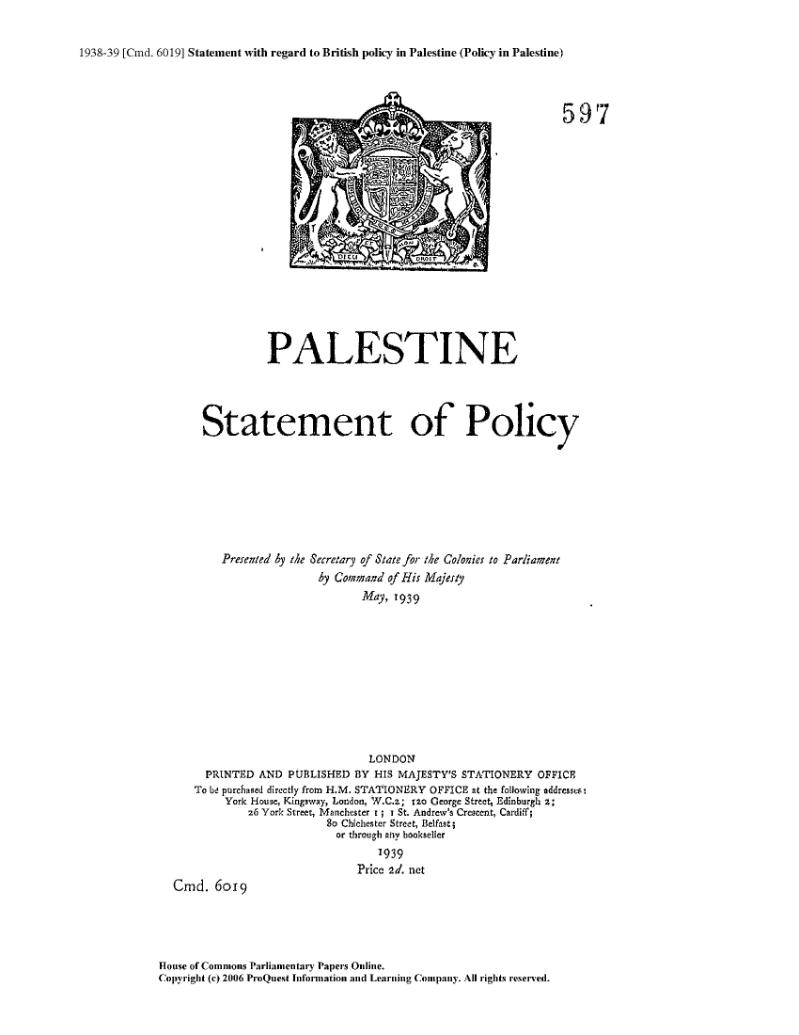
In 1939, the British government issued the 1939 White Paper, a pivotal policy document aimed at addressing the growing tensions between Arabs and Jews in Palestine. This White Paper imposed significant restrictions on Jewish immigration and land purchases, reflecting the British intention to limit the establishment of a Jewish state in the region. The document was met with fierce opposition from the Zionist movement, which viewed it as a betrayal of the Balfour Declaration—a commitment made by the British government in 1917 to support the establishment of a Jewish homeland in Palestine. The Zionist community perceived the White Paper as a direct threat to their aspirations and rights. In response to these limitations, the Zionist community in Palestine organized a widespread strike in 1939, demonstrating their unity and determination to oppose the British government's restrictive measures. This period marked a significant turning point in the Israeli-Palestinian conflict, as it highlighted the deepening rift between the two communities and set the stage for future confrontations over national identity and territorial claims.
View details