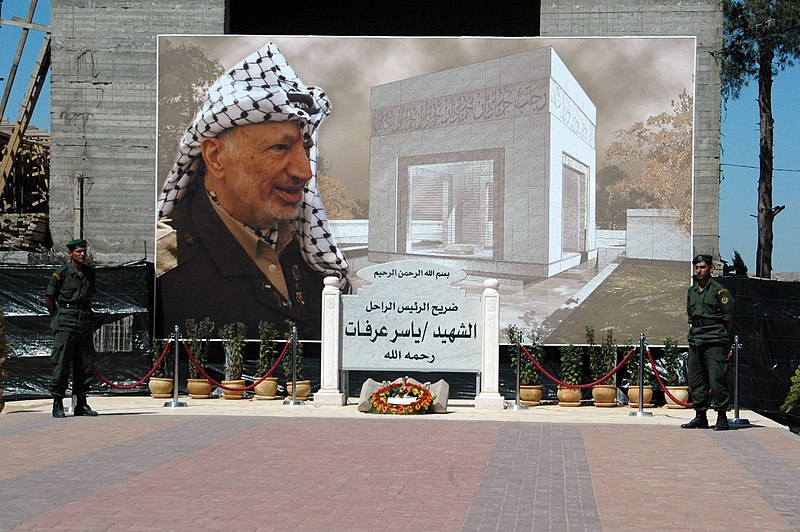
Death of Yasser Arafat
Palestine
Palestine
4 min read
Updated By: History Editorial Network (HEN)
Published:
Yasser Arafat, the long-time leader of the Palestinian Liberation Organization (PLO) and the first President of the Palestinian Authority, passed away on November 11, 2004, at the Percy Military Hospital in Clamart, France. His death came after a sudden decline in health, which began in late October of that year. Arafat was initially treated in Ramallah before being transferred to France, where he spent his final days in a coma. The exact cause of his death remains a subject of controversy. Officially, French medical reports stated that he died of a stroke caused by an unknown infection. However, many Palestinians and political analysts suspected foul play, with theories suggesting that he was poisoned. In 2012, Swiss scientists found traces of radioactive polonium-210 on his belongings, reigniting suspicions that he had been assassinated, though conclusive evidence has never been officially established.
Arafat's death marked the end of an era in Palestinian politics. As a symbol of Palestinian nationalism and the struggle for statehood, his leadership was both revered and criticized. While he was seen as a freedom fighter by many Palestinians, others, including Israel and the West, viewed him as a controversial figure linked to armed resistance and political maneuvering. His passing left a leadership vacuum that led to a power struggle within Palestinian factions, ultimately contributing to the division between Fatah and Hamas. The absence of his unifying presence further complicated the Israeli-Palestinian peace process. Even years after his death, Arafat’s legacy remains a powerful force in Middle Eastern politics, with his name synonymous with the Palestinian cause and the ongoing quest for sovereignty.
#YasserArafat #Palestine #MiddleEast #PLO #IsraeliPalestinianConflict #PoliticalHistory #ArafatLegacy #MoofLife_Moment #MomentsOfLife #MoofLife

Explore the Life Moments of
 AI Twin