Killing of Rachel Corrie
Palestine
HumanRights
Peace Activism
5 min read
Updated By: History Editorial Network (HEN)
Published:
Updated:
Rachel Aliene Corrie was born on April 10, 1979, in Olympia, Washington, USA. She was a passionate advocate for human rights, justice, and peace. From a young age, Corrie demonstrated a strong sense of empathy and activism, dedicating herself to humanitarian causes. She studied at The Evergreen State College, where she became deeply involved in global issues, particularly the Israeli-Palestinian conflict. Inspired by her belief in nonviolent resistance, she joined the International Solidarity Movement (ISM), a group committed to using peaceful protest to support Palestinian civilians affected by Israeli military actions.
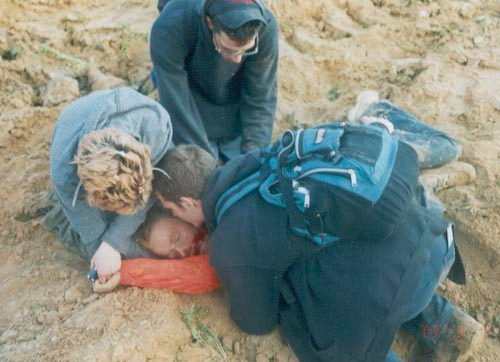
On March 16, 2003, in the city of Rafah, Gaza Strip, Rachel Corrie took a stand against the demolition of Palestinian homes by the Israel Defense Forces (IDF). She, along with other ISM activists, attempted to block an armored bulldozer from destroying a Palestinian family’s house. Witnesses reported that Corrie, wearing a bright orange vest, was clearly visible as she stood in the bulldozer’s path. However, the bulldozer continued forward, crushing her under its weight. She was severely injured and died shortly after being taken to a hospital.
Israeli authorities claimed that the driver of the bulldozer did not see her, but ISM activists and eyewitnesses insisted that it was an intentional act. Her death sparked international outrage and led to widespread discussions on the Israeli-Palestinian conflict, military accountability, and the role of international activists in war zones.
Rachel Corrie’s death turned her into a symbol of resistance and peace activism. Her family pursued justice through Israeli courts, but in 2012, an Israeli court ruled that her death was an accident and dismissed the case. This ruling was widely criticized by human rights organizations. The Rachel Corrie Foundation for Peace and Justice, established by her family, this organization promotes nonviolent activism and raises awareness about global injustices.
Her writings, letters, and emails from Gaza were compiled into the play My Name is Rachel Corrie, which has been performed worldwide, shedding light on the Israeli-Palestinian conflict. Corrie remains an enduring figure in peace movements, and streets, murals, and humanitarian awards have been named in her honor. Her tragic death underscored the human cost of conflict and continues to inspire discussions on justice, activism, and the power of nonviolent resistance.
Primary Reference
Rachel Corrie

Explore the Life Moments of
 AI Twin