
Palestine

Land of Olives and Resilience
Related Lives

Kenya
The Cradle of Humankind

Dominican Republic
A Caribbean Paradise

Adventure Movies
Where courage meets the unknown

Luxembourg
The Gibraltar of the North

Chad
Heart of the Sahel

Jordan
Land of Ancient Wonders

Colombia
Land of Diversity and Beauty

Germany
The Land of Ideas

0744
In 744, a significant rebellion erupted among the Palestinian tribes against the ruling caliph. The caliph, recognizing the potential threat to his authority, sought to quell the unrest by offering various offices and benefits to the tribes. This strategy temporarily appeased the tribes and brought an end to the immediate conflict. However, the underlying tensions remained, and the tribes continued to harbor resentment towards the caliphate. The situation escalated further in 745 when Marwan II ascended to the caliphate, leading to another uprising in Syria. This rebellion proved to be more violent and required considerable bloodshed to suppress. In a show of force and as a punitive measure, Marwan II ordered the destruction of the city walls of Jerusalem, Damascus, and other cities, aiming to reassert control and deter future insurrections. These events highlight the ongoing struggles between the caliphate and local tribes, reflecting the complexities of governance and resistance during this tumultuous period in Islamic history.
View details0715
Sulayman ibn Abd al-Malik (r. 715–717), who had long been governor of Palestine, ruled from the region and founded the city of Ramla. Ramla remained the region's administrative center until the Crusader conquest in 1099. The centuries-long feud between the Arab tribal confederations the Qays and the Yaman that began under the Umayyads came to color Palestine's history. The early caliphs would seek support from one of these groups and would consequently be opposed by the other, often resulting in warfare. The pretender standing victorious in these wars would reward their confederation with governorships in the provinces and other privileges. The casualties inflicted during the wars would also have to be avenged, causing further bloodshed. Later caliphs tried to curb the feud, but it was almost impossible to stop; the best that they could do was to keep it under control by threats and themselves paying the bloodmoney demanded to prevent further retaliation.
View details0685
The construction of the Dome of the Rock and Al-Aqsa Mosque on the Temple Mount in Jerusalem marks a significant chapter in Islamic architecture and religious history. Initiated by the Umayyad caliph Abd al-Malik (r. 685–705) and later completed by his son al-Walid I (r. 705–715), these structures symbolize the religious centrality of Jerusalem in Islam. The Dome of the Rock, often mistakenly referred to as a mosque, is actually a shrine and is recognized as the oldest extant Islamic monument in the world. Its original function and significance remain subjects of scholarly debate. Abd al-Malik's focus on Palestine was driven by Jerusalem's pivotal role as a transit zone between Syria and Egypt, leading him to invest in infrastructure, including the construction and repair of roads connecting these regions. This is evidenced by the discovery of seven milestones throughout the area, highlighting the importance of Jerusalem during the Umayyad period. The architectural grandeur of both the Dome of the Rock and Al-Aqsa Mosque continues to attract visitors and scholars alike, serving as a testament to the rich history and cultural heritage of the Islamic world.
View details0661
In 661, the Umayyads emerged as the ruling dynasty of the caliphate, marking a significant shift in Islamic history following the tumultuous period of the first civil war (fitna). This civil war was ignited by the assassination of the third Rashidun caliph, Uthman, in 656, which led to a power struggle among various factions within the Muslim community. The Umayyad dynasty was established under the leadership of Mu'awiya I, who held his accession ceremony in Jerusalem, a city of great religious significance. One of the pivotal changes during this period was the relocation of the caliphate's capital from Kufa to Damascus. This move was strategic, as Damascus offered strong tribal support and a more stable environment for governance. Additionally, the diverse population of Syria, where Arabs and non-Arabs coexisted, contributed to the Umayyads' ability to maintain control and expand their influence. The Umayyad dynasty would go on to play a crucial role in the expansion of the Islamic empire, shaping the political and cultural landscape of the region for centuries to come.
View details0636
Between 636 and 641 CE, the Muslim armies of the Rashidun Caliphate, led by ʿUmar ibn al-Khaṭṭāb, successfully conquered Palestine, marking a pivotal moment in the region's history. This conquest was part of a broader military campaign in the Levant, which ultimately led to the end of Byzantine rule in the area. Following the conquest, Palestine was integrated into the province of Bilad al-Sham, and two military districts were established: Jund Filastin and Jund al-Urdunn. The new Muslim rulers implemented Islamic administrative and legal systems, which facilitated governance while allowing for the coexistence of various religious and cultural communities. The establishment of a new city, Ramlah, symbolized the Islamic presence in the region. This period marked the beginning of Islamic governance in Palestine, which would continue under various Islamic dynasties for centuries. The conquest of Palestine was not only significant for the spread of Islam but also for the cultural and political transformations that shaped the region's future.
View details0629
In March 629, Roman Emperor Heraclius made a historic return of the True Cross to Jerusalem, marking a significant moment in the Byzantine Empire's history. This event followed a successful military campaign against the Persian Empire, which had invaded the Levant and captured Jerusalem in 614. The Persians, allied with the local Jewish population, had taken the True Cross and other sacred relics as trophies during their occupation. Heraclius' counter-offensive into the Persian heartland forced the Persians to sue for peace, resulting in the return of the captured Roman provinces and the stolen relics. The restoration of the True Cross symbolized not only the resilience of the Byzantine Empire but also the re-establishment of Christian relics in Jerusalem. However, the prolonged warfare had weakened both empires, setting the stage for the subsequent Arabian conquests a decade later. Additionally, the aftermath of the conflict saw the expulsion of Jews from Jerusalem and the execution of those who participated in the earlier revolt, highlighting the complex socio-political dynamics of the period.
View details0614
In 614 CE, the Persian invasion of the Levant, coupled with a Jewish revolt against the Byzantine Empire, culminated in the successful capture of Jerusalem by Persian-Jewish forces. This pivotal event was marked by the destruction of churches and the massacre of the Christian population, as well as the seizure of the True Cross and other significant relics, which were taken as trophies. The collaboration between the Persians and the Jewish population underscored their shared goal of autonomy from Byzantine rule. However, this victory was short-lived; the Roman Emperor Heraclius launched a counter-offensive, ultimately leading to the return of the True Cross to Jerusalem by 629 CE. The aftermath of this conflict had profound implications, including the expulsion of Jews from Jerusalem and the execution of those who participated in the revolt. Additionally, the prolonged warfare weakened both the Byzantine and Persian empires, setting the stage for the subsequent Arabian conquest a decade later. The events of 614 CE remain a significant chapter in the history of Jerusalem and the broader context of the Byzantine-Sasanian War.
View details0613
In 613, the Persian Empire launched a significant invasion of the Levant, which catalyzed a revolt among the Jewish population against the Byzantine Empire. The Jews, motivated by a desire for autonomy over Jerusalem, formed an alliance with the invading Persians. This collaboration proved effective, leading to the capture of key locations such as Caesarea and Jerusalem in 614. During this period, Persian-Jewish forces engaged in violent actions, including the destruction of churches and the massacre of the Christian populace, as they seized religious relics like the True Cross. However, the tide turned when the Byzantine Emperor Heraclius initiated a counter-offensive, successfully advancing into Persian territory by 627/8. The Persians ultimately sought peace, agreeing to return the captured Roman provinces and the stolen relics. In March 629, Heraclius made a triumphant return to Jerusalem with the True Cross. Despite this victory, the aftermath of the conflict was dire for the Jewish community, as many were expelled from Jerusalem and those involved in the uprising faced execution. The prolonged warfare between the two empires significantly weakened them, setting the stage for the subsequent Arabian conquests a decade later.
View details0556
The Third Samaritan Revolt, which erupted in 556, marked a significant moment in the historical tensions between the Samaritans, Jews, and Christians in Palestine. This revolt was notable for the unprecedented alliance formed between Jews and Samaritans, who united against the Christian authorities. The underlying cause of this uprising is believed to be the systemic discrimination faced by non-Christians under Byzantine rule. The Byzantine Empire's policies, which favored Christians and marginalized other religious groups, created an environment ripe for conflict. The revolt, however, was met with a swift and brutal response from the Byzantine authorities, who were determined to maintain their dominance in the region. The suppression of the revolt not only led to a decline in the Samaritan population but also solidified Christian control over Palestine. This period of unrest and the subsequent anti-Samaritan policies contributed to the long-term demographic and cultural shifts in the region, further entrenching Christian hegemony and diminishing the presence of Samaritan communities. The Third Samaritan Revolt serves as a poignant reminder of the complex inter-religious dynamics and the struggles for power and recognition in ancient Palestine.
View details0529
The Second Samaritan Revolt occurred in 529 CE, marking a significant conflict between the Samaritans and the Byzantine authorities, alongside the Christian population. This uprising was characterized by violent attacks from the Samaritans against Christians and Jews, resulting in the destruction of estates and churches. The revolt was ultimately suppressed by the Byzantine Empire, with crucial support from Christian Ghassanid Arabs, who played a pivotal role in quelling the insurrection. Following the defeat, thousands of Samaritans were taken as slaves, highlighting the severe repercussions of the revolt. The underlying causes of this conflict can be traced back to the systemic discrimination faced by non-Christians under Byzantine rule, which fostered resentment and unrest among the Samaritan community. The aftermath of the revolt not only led to a decline in the Samaritan population but also contributed to the consolidation of Christian dominance in Palestine. This period is crucial for understanding the socio-religious dynamics of the region and the impact of imperial policies on minority communities.
View details0484
The First Samaritan Revolt, which occurred in 484 CE, marked a significant moment in the history of the Samaritans under Byzantine rule. This uprising was a response to the increasing discrimination faced by non-Christians, particularly the Samaritans, who were subjected to oppressive policies by the Byzantine authorities. The revolt required a substantial military response to suppress, highlighting the tensions between the Samaritans and the ruling powers. In the aftermath, as a punitive measure, the Samaritans' sacred synagogue on Mt. Gerizim was replaced with a church, symbolizing the diminishing status of the Samaritan community. This event not only led to a decline in the Samaritan population but also contributed to the solidification of Christian dominance in Palestine. The repercussions of the revolt were felt for centuries, as subsequent uprisings in 529 and 556 further illustrated the ongoing conflict between the Samaritans, Christians, and Jews, ultimately leading to a significant transformation in the religious landscape of the region. The suppression of these revolts and the anti-Samaritan policies of the Byzantine Empire played a crucial role in shaping the historical narrative of the Samaritans and their place in the broader context of Middle Eastern history.
View details0476
The Byzantine period marked a significant transformation in the Roman Empire, beginning with intense persecution of Christians and culminating in Christianity becoming the state religion. Constantine the Great, the first Christian emperor, played a pivotal role in this transformation by supporting Christianity and issuing laws that granted the church and its clergy various privileges. This era saw the construction of significant Christian sites in Palestine, such as the Church of the Holy Sepulchre in Jerusalem and the Church of the Nativity in Bethlehem. The period also witnessed the establishment of numerous Christian monasteries, making Palestine a center for eremitic life. The Council of Chalcedon in 451 elevated Jerusalem to a patriarchate, enhancing the Palestinian church's international prestige. The Byzantine era was marked by prosperity and cultural flourishing in Palestine, with increased urbanization, new civic structures, and a population that may have exceeded one and a half million. Caesarea and Gaza emerged as important centers of learning, and the Roman provincial administration underwent reforms to improve efficiency and prevent revolts. The provinces of Palestine were reorganized into Palaestina Prima, Palaestina Secunda, and Palaestina Tertia, which became part of the Eastern Roman Empire after the split in 395. The Ghassanid Arabs, who migrated from South Arabia, became significant allies of the Byzantines. The Nabataeans, annexed by the Romans in 106, continued to prosper and gradually Hellenized. The late 5th and early 6th centuries saw several Samaritan revolts, which were suppressed by the Byzantines, leading to a decline in the Samaritan population and solidifying Christian dominance in Palestine.
View details0400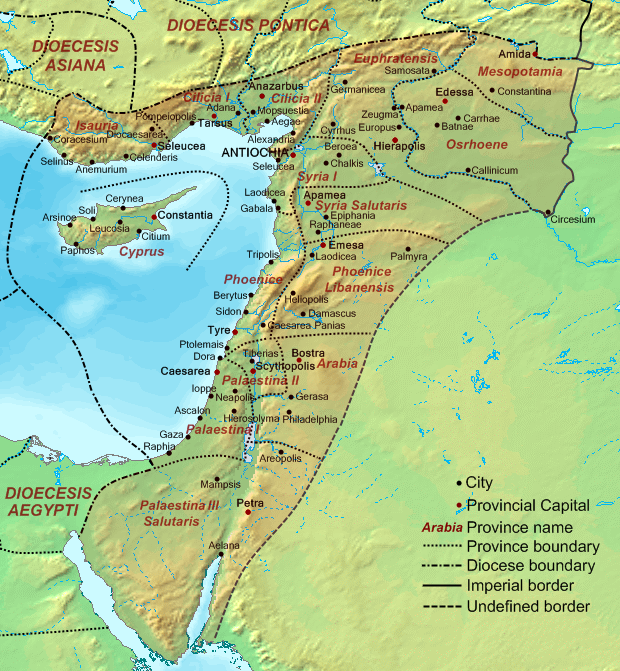
In the 4th century CE, Palestine emerged as a pivotal center for Christianity during a transformative period in the Roman Empire. As the empire began to embrace Christianity, the region became a significant destination for pilgrims, monks, and scholars seeking to deepen their faith and knowledge. This influx of religious figures contributed to the establishment of numerous churches and monastic communities, fostering a vibrant Christian culture. Notable sites, such as Jerusalem, became focal points for worship and pilgrimage, attracting believers from across the empire. The period also saw the development of theological discourse and the codification of Christian practices, which played a crucial role in shaping the future of the religion. The cultural and religious transformation in Palestine during this time laid the groundwork for Christianity's expansion and influence in the subsequent centuries, marking it as a key player in the history of the faith.
View details0395
In the 4th century, the Roman provincial administration underwent significant reforms aimed at enhancing efficiency and mitigating the risk of revolts. This reorganization led to the establishment of three distinct provinces in the region of Palestine: Palaestina Prima, Palaestina Secunda, and Palaestina Tertia. Palaestina Prima, with its capital in Caesarea, encompassed the central areas of Palestine, including the coastal plain, Judea, and Samaria. Palaestina Secunda, headquartered in Scythopolis, covered northern Transjordan, the lower Jezreel Valley, the Galilee, and the Golan Heights. Lastly, Palaestina Tertia, with its capital in Petra, included the Negev, southern Transjordan, and parts of the Sinai Peninsula. This restructuring was part of a broader strategy to reduce the territorial control of individual governors, thereby improving administrative efficiency and decreasing the likelihood of uprisings. Following the division of the Roman Empire in 395, these provinces became integral parts of the Eastern Roman Empire, further solidifying their administrative significance in the region.
View details0260
In the 260s, Odaenathus emerged as a pivotal figure in the history of Syria Palaestina, becoming its de facto ruler while still recognized as a vassal of Rome. His reign was marked by significant military achievements, particularly in aiding the Roman Empire against the Sasanian Empire, which threatened the stability of the region. Odaenathus's leadership allowed him to maintain a degree of autonomy, effectively governing the Near East and ensuring the safety of Roman interests. His ability to navigate the complexities of Roman politics and local governance established a unique power dynamic in the region. Following his death, his widow, Zenobia, sought to expand this autonomy by declaring herself the Empress of the Palmyrene Empire. However, her ambitions ultimately led to conflict with Rome, culminating in her defeat in 272. Odaenathus's legacy is significant, as it highlights the interplay between local rulers and imperial authority during a tumultuous period in ancient history.
View details0210
Around 210 CE, following the Bar Kokhba revolt, the Roman authorities imposed a ban on Jews settling in Jerusalem and its surrounding areas as a punitive measure. This significant event marked a turning point in Jewish history, as the revolt had led to severe repercussions for the Jewish population. The city was re-established as Aelia Capitolina, a diminished military colony with an estimated population of only 4,000 residents. Although the ban on Jewish settlement was intended to disconnect the Jewish people from their homeland, it was not strictly enforced. Over the subsequent centuries, a gradual trickle of Jews began to return to the city, indicating a persistent connection to their ancestral land despite the Roman restrictions. The Bar Kokhba revolt and its aftermath highlight the complex relationship between the Jewish people and Jerusalem, as well as the broader implications of Roman policies aimed at controlling and reshaping the demographics of the region. This historical episode remains a subject of scholarly debate, particularly regarding the motivations behind the Roman authorities' actions and their long-term impact on Jewish identity and settlement patterns.
View details0132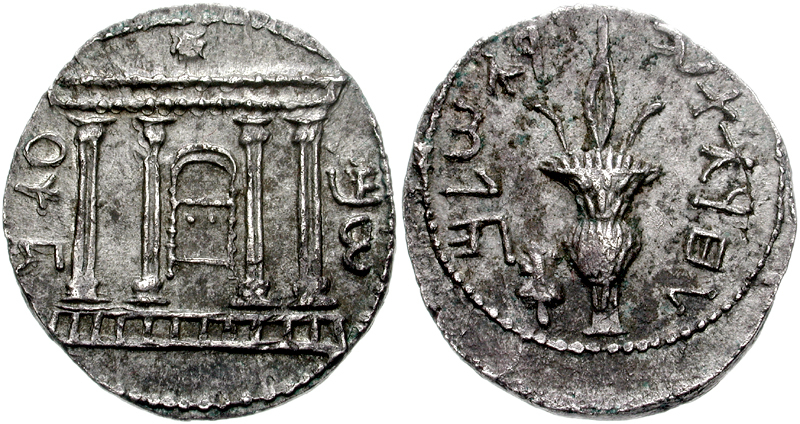
In 132 CE, the Bar Kokhba Revolt marked a significant uprising against Roman rule in Judea, lasting three years and resulting in devastating consequences for both the Jewish population and the Roman Empire. This revolt was led by Simon Bar Kokhba, who was viewed as a messianic figure by many Jews. The conflict incurred massive costs, both in terms of human life and economic resources. According to a late epitome of Dio Cassius's Roman History, approximately 580,000 Jews perished during the conflict, with countless others succumbing to hunger and disease in the aftermath. The Roman military response was brutal, leading to the destruction of 50 key outposts and 985 villages, effectively rendering much of Judaea desolate. This widespread devastation not only altered the demographic landscape of Palestine but also had lasting implications for Jewish identity and the relationship between the Jewish people and the Roman authorities. The Bar Kokhba Revolt remains a pivotal moment in Jewish history, symbolizing both resistance and the tragic consequences of rebellion against a powerful empire.
View details1970
In 70 CE, the Roman Empire achieved a significant military victory during the First Jewish-Roman War by capturing Jerusalem and destroying the Second Temple, a pivotal event in Jewish history. The siege, marked by intense conflict and suffering, resulted in the death of approximately 1,100,000 Jews, as chronicled by the Jewish historian Flavius Josephus. His accounts provide a harrowing insight into the scale of the tragedy, detailing the brutal conditions faced by the inhabitants of Jerusalem during the siege. Additionally, around 97,000 Jews were taken captive, leading to widespread displacement and suffering. In the aftermath of the siege, the Roman authorities imposed the Fiscus Judaicus, a tax levied on Jews throughout the Roman Empire, as a form of reparations. This tax not only served as a financial burden but also symbolized the ongoing oppression faced by the Jewish people in the wake of their defeat. The destruction of the Second Temple marked a turning point in Jewish history, leading to significant changes in religious practices and community structures that resonate to this day.
View detailsIn 70 CE, a pivotal event in Jewish history occurred when the Roman Empire, responding to a series of Jewish revolts that began in 66 CE, laid siege to Jerusalem and ultimately destroyed the city along with the Second Jewish Temple. This destruction marked a significant turning point for the Jewish people, leading to a widespread diaspora as many Jews were forced to leave their homeland. The Second Temple had been a central place of worship and identity for the Jewish community, and its loss profoundly impacted Jewish religious practices and cultural identity. Following this event, the region of Palestine underwent significant transformation under Roman rule, which eventually transitioned to a Christian stronghold in the 4th century. This shift not only altered the religious landscape but also established Palestine as a center for Christian pilgrimage and scholarship. The destruction of the Second Temple and the subsequent changes in governance and culture set the stage for centuries of Jewish history, influencing their religious practices and community structures in the diaspora. The legacy of 70 CE continues to resonate in Jewish thought and identity today.
View details2066
In 66 CE, the Jewish population in Roman Judea initiated a series of revolts against Roman rule, collectively known as the Jewish-Roman Wars. The first and most significant of these uprisings, referred to as the Great Jewish Revolt, was fueled by a combination of religious fervor, political discontent, and economic hardship, including heavy taxation imposed by the Roman authorities. The revolt escalated into a full-scale conflict, culminating in the Roman siege of Jerusalem in 70 CE. This siege led to the catastrophic destruction of the Second Temple, a pivotal event in Jewish history that marked a significant turning point for the Jewish people. The aftermath of the Jewish-Roman Wars had profound and lasting impacts, including the dispersion of Jewish communities across the Roman Empire and the transformation of Judaism into a religion that adapted to life without the Temple. The subsequent Bar Kokhba revolt (132-136 CE) further exemplified the ongoing struggle for Jewish autonomy and identity under Roman rule. These revolts not only shaped the historical landscape of Judea but also influenced the development of Jewish thought and practice in the post-Temple era, leading to a redefined Jewish identity that persists to this day.
View detailsIn 66 CE, the Jewish population in Roman Judea erupted in revolt against Roman rule, marking the beginning of the First Jewish-Roman War. This uprising was fueled by a combination of factors, including heavy taxation, religious oppression, and a growing desire for autonomy among the Jewish people. The conflict escalated rapidly, leading to significant military engagements and the eventual siege of Jerusalem. The culmination of this revolt was the destruction of the Second Jewish Temple in 70 CE, a pivotal event that not only devastated the Jewish community but also altered the religious landscape of the region. The loss of the Temple marked a significant turning point in Jewish history, leading to a shift from temple-based worship to rabbinic Judaism. The aftermath of the revolt had lasting effects, including increased Roman repression and the eventual diaspora of the Jewish people. The Jewish-Roman wars, particularly the events of 66 CE, remain a critical chapter in understanding the historical relationship between the Jewish people and the Roman Empire, as well as the broader implications for the region's history.
View details0539 BCE
In 539 BCE, the Persian Empire, led by Cyrus the Great, achieved a significant milestone by conquering the Babylonian Empire, which included the region of Palestine. This conquest initiated a new era of Persian rule over the area, characterized by a notable degree of local autonomy. One of the most impactful decisions made by Cyrus was to allow the exiled Jewish population to return to Jerusalem, facilitating the reconstruction of the Second Temple. This act not only restored a vital religious center for the Jewish people but also symbolized a broader policy of tolerance and respect for local customs and traditions under Persian governance. The Persian administration brought stability and prosperity to Palestine, integrating it into the empire's extensive administrative and economic network. This period is often viewed as a time of relative peace and development, contrasting sharply with the preceding tumultuous eras of Assyrian and Babylonian conquests. The Persian influence laid the groundwork for future cultural and political developments in the region, setting the stage for subsequent historical events, including the later conquests by Alexander the Great in the late 330s BCE, which would usher in the Hellenistic period. Overall, the Persian conquest of Palestine was a pivotal moment that shaped the historical trajectory of the region and its peoples.
View details0601 BCE
In 601 BCE, Nebuchadnezzar II, the king of Babylon, initiated an ambitious military campaign against Egypt. However, this invasion ended in failure, compelling him to retreat to Babylon to regroup and rebuild his forces. The unsuccessful campaign was perceived as a significant sign of weakness, leading to a loss of loyalty among several vassal states, including Judah. This defection triggered the Judahite–Babylonian War, as the people of Judah sought to assert their independence from Babylonian rule. In response to this revolt, Nebuchadnezzar laid siege to Jerusalem in 598 BCE, aiming to quell the uprising and reassert his dominance. The siege culminated in 597 BCE with the capture of Jerusalem, resulting in the deportation of King Jeconiah of Judah, along with the city's aristocracy and priesthood, to Babylon. This event marked a pivotal moment in the history of Judah, as it signified the beginning of a period of exile and the decline of Judahite autonomy under Babylonian control.
View details0605 BCE
The Battle of Carchemish, fought in 605 BCE, marked a significant turning point in the ancient Near East. In this decisive confrontation, the Babylonian forces, led by King Nebuchadnezzar II, achieved a resounding victory over the Egyptian army. This defeat forced the Egyptians to retreat back to their homeland along the Nile River, effectively diminishing their influence in the region. Following this victory, Nebuchadnezzar turned his attention to the Philistine cities, systematically destroying Ashdod, Ekron, Ashkelon, and Gaza in the subsequent year. By 601 BCE, the geopolitical landscape of the Levant had transformed, with all former states succumbing to Babylonian control and becoming colonies. The Babylonians, continuing the policies of their Assyrian predecessors, implemented a strategy of deportation for populations that resisted their rule. Many of these displaced individuals were relocated to Babylon, where they contributed to the city's reconstruction efforts. This period not only solidified Babylon's dominance in the region but also set the stage for the cultural and political developments that would follow in the ancient world.
View details0616 BCE
In 616 BCE, the Egyptian empire, under the leadership of its pharaoh, made a significant military move by sending armies northward to assist the beleaguered Assyrian empire, which was facing a formidable threat from the rising power of Babylon. This intervention was a strategic attempt to bolster Assyria's defenses and maintain regional stability. However, the Egyptian efforts proved to be futile, as Babylon successfully captured Nineveh, the Assyrian capital, in 612 BCE, marking a critical turning point in the decline of Assyrian power. Following this, in 610 BCE, Babylon continued its campaign by taking Harran, further solidifying its dominance in the region. The situation escalated in 609 BCE when Pharaoh Necho II of Egypt again mobilized his forces, this time with the intent to assert control over the Levant. During this campaign, Necho II encountered the Judahite king Josiah at Megiddo, resulting in Josiah's death and the subsequent installation of Jehoiakim as the king of Judah. This series of events not only highlights the geopolitical complexities of the time but also underscores the shifting power dynamics in the ancient Near East, with Egypt attempting to reclaim influence amidst the rise of Babylon.
View details0631 BCE
The death of King Ashurbanipal in 631 BCE marked a significant turning point in the history of the Assyrian Empire. His passing led to intense struggles over succession, which ultimately weakened the empire's political stability. This internal strife created an opportunity for Babylon to rise against Assyria, leading to a successful revolt that resulted in the conquest of much of Assyria's territory. The power vacuum left by Ashurbanipal's death not only facilitated Babylon's resurgence but also allowed Egypt to reassert its influence in the region. Egypt established a network of vassal states, which were required to pay taxes in exchange for military protection. This strategic move enabled Egypt to strengthen its position and control over neighboring territories, further diminishing Assyria's power. The events following Ashurbanipal's death illustrate the fragility of empires and the impact of leadership transitions on regional dynamics, setting the stage for a significant shift in power in the ancient Near East.
View details0701 BCE
In 701 BCE, the Assyrian Empire, under the reign of King Sennacherib, launched a significant military campaign against the kingdom of Judah, culminating in the siege of Lachish. This event is notably commemorated by the Lachish reliefs, which were discovered in the ancient city of Nineveh. These reliefs serve as a vivid artistic representation of the Assyrian victory and provide valuable insights into the military strategies and the scale of the Assyrian forces during this period. The siege of Lachish was a pivotal moment in the Babylonian period, showcasing the Assyrians' military prowess and their ability to exert control over neighboring territories. The fall of Lachish not only marked a significant territorial gain for the Assyrians but also had lasting implications for the political landscape of the region, as it demonstrated the vulnerability of the kingdoms of Judah and Israel to Assyrian aggression. The Lachish reliefs remain an important archaeological find, illustrating the power dynamics of the ancient Near East and the impact of Assyrian expansionism on the history of Judah.
View details0715 BCE
In 715 BCE, Hezekiah ascended to the throne of Judah and initiated a significant political shift by forming an alliance with Egypt and Ashkelon. This coalition aimed to resist the dominance of the Assyrian Empire, which had been exerting pressure on the region. Hezekiah's refusal to pay tribute to the Assyrians marked the beginning of his revolt against their authority. In retaliation, Sennacherib, the king of Assyria, launched a military campaign against Judah, targeting its fortified cities. The conflict escalated, culminating in the siege of Jerusalem in 701 BCE. Despite the intense pressure and the formidable Assyrian forces, Jerusalem managed to withstand the siege, a testament to its defenses and the resilience of its inhabitants. The Assyrian expansion continued unabated, eventually leading to the conquest of Egypt and the capture of Thebes in 664 BCE. Hezekiah's revolt is a pivotal moment in the history of Judah, highlighting the struggle for autonomy in the face of imperial aggression and the complex geopolitical landscape of the ancient Near East.
View details2063 BCE
In 63 BCE, the Jewish Hasmonean Kingdom, which had previously established itself as a dominant power in Palestine, was annexed by the Roman Republic. This significant political shift marked the beginning of Roman Judea, a period characterized by increased Roman influence and control over the region. The Hasmonean Kingdom had expanded its territory through military conquests, but its annexation by Rome transformed it into a vassal state, leading to a complex relationship between the Jewish population and their new rulers. The Roman annexation initiated a series of events that would culminate in significant turmoil, including various Jewish revolts against Roman authority. These revolts were fueled by a desire for independence and religious freedom, ultimately leading to the destruction of Jerusalem and the Second Jewish Temple in 70 CE. This period of Roman rule not only reshaped the political landscape of Judea but also had lasting impacts on Jewish identity and culture, as the community grappled with the challenges of foreign domination and the quest for autonomy.
View detailsIn 63 BCE, the Roman Republic formally annexed the region of Palestine, marking a significant shift in the political landscape of the area. This annexation followed the decline of the Hasmonean Kingdom, which had previously established itself as a dominant power in the region but ultimately became a vassal state of Rome. The incorporation of Palestine into the Roman Empire brought about substantial changes, including the implementation of Roman administrative systems, the development of infrastructure, and the introduction of Roman culture and customs. However, this period of Roman rule was not without conflict. The Jewish population, resistant to foreign domination, experienced a series of revolts against Roman authority. The most notable of these was the Great Jewish Revolt, which erupted in 66 CE and culminated in the catastrophic destruction of Jerusalem and the Second Temple in 70 CE. This event marked a pivotal moment in Jewish history, leading to significant religious and cultural transformations within the Jewish community. The Roman annexation of Palestine thus set the stage for centuries of complex interactions between the Jewish people and their Roman rulers, shaping the historical trajectory of the region.
View details