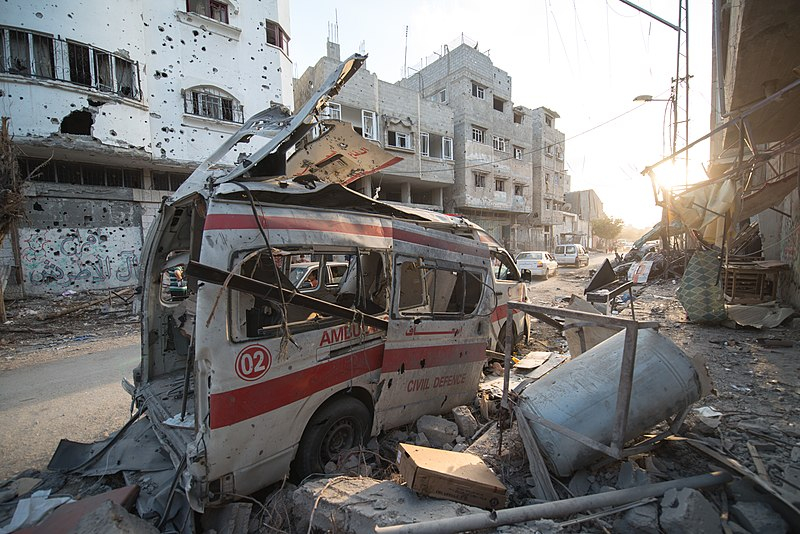
Gaza in Flames: The Human Cost of Operation Protective Edge
Palestine

Conflict
Humanitarian Issues
Post-War Analysis
10 min read
Updated By: History Editorial Network (HEN)
Published:
Updated:
The 2014 Gaza War, also known as Operation Protective Edge, erupted on July 8, 2014, following months of escalating tensions between Israel and Hamas. This was the third major war between the two sides in less than six years, following conflicts in 2008–09 and 2012. The war was characterized by heavy bombardment, urban warfare, rocket attacks, and a devastating humanitarian toll on Gaza, lasting for 50 days until a ceasefire was reached on August 26, 2014.
The conflict was triggered by a series of events beginning in June 2014, when three Israeli teenagers were kidnapped and murdered in the West Bank, an act Israel blamed on Hamas, despite Hamas not claiming responsibility. In response, Israel launched a massive security crackdown in the West Bank, arresting hundreds of Hamas members and conducting raids on Palestinian homes and institutions. This crackdown further inflamed tensions, leading to a wave of rocket fire from Gaza into Israeli territory. Meanwhile, the brutal murder of a Palestinian teenager in East Jerusalem by Israeli extremists further fueled unrest, sparking violent riots and an escalation in hostilities between Hamas and the Israeli Defense Forces (IDF).
On July 8, 2014, Israel launched Operation Protective Edge, beginning with airstrikes on Hamas positions and military infrastructure in Gaza. Hamas and other Palestinian militant groups retaliated by firing thousands of rockets into Israel, targeting major cities including Tel Aviv, Jerusalem, and Haifa. Despite Israel’s Iron Dome missile defense system, which intercepted many of these rockets, several struck civilian areas, prompting further Israeli retaliation. As the war intensified, Hamas expanded its tactics, using underground tunnels to infiltrate Israeli territory, launching suicide attacks and ambushes on Israeli soldiers, and engaging in urban warfare in densely populated areas of Gaza.
On July 17, Israel escalated the conflict by launching a ground invasion of Gaza, focusing on destroying Hamas’s extensive tunnel network, which had been used to smuggle weapons, militants, and supplies. The fighting in Gaza’s urban centers was fierce and highly destructive, with Israeli forces advancing into densely populated areas, encountering stiff resistance from Hamas fighters who used booby traps, snipers, and guerrilla tactics. The battle in neighborhoods such as Shujaiya resulted in massive casualties and destruction, with hundreds of Palestinian civilians killed in heavy Israeli bombardment. Reports from humanitarian organizations described entire families being buried under rubble, hospitals overwhelmed with casualties, and a severe humanitarian crisis unfolding as thousands of Palestinians fled their homes.
As the war dragged on, the international community increasingly criticized Israel for the high number of civilian casualties, particularly after attacks on UN shelters, schools, and hospitals. Israel, in turn, accused Hamas of using civilians as human shields, embedding military infrastructure within residential areas, and launching rockets from schools, mosques, and hospitals. By August 26, 2014, after weeks of intense fighting, a ceasefire was brokered by Egypt, bringing an end to the war, though neither side achieved a decisive victory. Israel claimed to have destroyed over 30 Hamas tunnels, significantly weakening its military capabilities, while Hamas declared victory for having survived the conflict and continued launching attacks until the final moments of the war.
The toll of the war was staggering. Over 2,200 Palestinians were killed, the majority of them civilians, including hundreds of children, with tens of thousands more injured. The infrastructure of Gaza was devastated, with over 18,000 homes completely destroyed and hundreds of thousands of residents displaced. In Israel, 73 people were killed, including 67 soldiers and six civilians, with hundreds wounded from rocket fire and direct combat. The destruction in Gaza led to an economic and humanitarian disaster, with hospitals, power plants, and essential services crippled, plunging the region further into hardship.
Despite the ceasefire, the war failed to resolve the deeper issues at the heart of the Israeli-Palestinian conflict. Israel continued its blockade on Gaza, restricting the flow of goods and people, while Hamas remained in control of the strip, vowing to continue its struggle against Israeli occupation. The war further hardened hostilities between Israelis and Palestinians, deepening mistrust and setting the stage for future conflicts, as periodic flare-ups and escalations have continued in the years since. The 2014 Gaza War remains one of the deadliest and most destructive conflicts in the history of the Israeli-Palestinian struggle, with long-term consequences for both sides and no clear path to peace.
#GazaWar2014 #OperationProtectiveEdge #IsraelHamasConflict #MiddleEastConflict #PalestineIsrael #MomentOfLife #MoofLife
#mooflife
#MomentOfLife
#GazaWar
#EconomicImpact
#PalestinianEconomy
#ConstructionRestrictions
#HumanitarianCrisis

Explore the Life Moments of
 AI Twin