
Sri Lanka

The Pearl of the Indian Ocean
Related Lives

Ancient Greece
The Cradle of Civilization

Bhutan
Land of the Thunder Dragon

Cape Verde
Jewel of the Atlantic

Argentina
Land of the Tango

Luxembourg
The Gibraltar of the North

South Africa
The Rainbow Nation

Andorra
Hidden Gem of the Pyrenees

China
Land of Silk

1907
The McCallum Executive Council of Ceylon, a pivotal assembly named after the British Colonial Governor Sir Henry McCallum, marked a critical phase in the governance of Ceylon, present-day Sri Lanka. This council signaled a shift in the island's colonial administrative framework, attempting to incorporate more local involvement in decision-making processes, albeit under colonial oversight.
At the time, Ceylon was a colony in the throes of gradual administrative transformation under British rule. The colonial governance structure had largely been top-down, characterized by minimal local representation. The McCallum Executive Council introduced an advisory component, bringing in an increased number of Ceylonese leaders, though with limited power compared to their British counterparts. This move came in response to rising local demands for greater participation and representation within the colonial administration.
The transition aimed to placate growing local discontent and to lay foundations for future administrative reforms. While the changes were modest, they were significant steps towards involving local leaders in the governance process. This council was composed of both official and unofficial members, integrating local stakeholders in an unprecedented manner, even though executive power largely remained with colonial officials.
In terms of impact, this moment opened pathways for subsequent reforms, leading to more profound changes in the island's political structure. The inclusion of local members within the council allowed for localized issues to be addressed within the broader administrative framework, albeit still restricted under colonial control. This inclusion helped to sow the seeds for future political movements advocating for further autonomy and self-governance.
Statistics from this period show that the population of Ceylon was steadily growing, and along with it, the complexity of governance and the necessity for inclusive administrative methods. The literacy rate among the Ceylonese population had been improving, and a more educated populace increasingly sought a say in their governance.
Concluding, the McCallum Executive Council of Ceylon was a crucial development in the history of Sri Lanka’s governance under colonial rule, marking a beginning to more inclusive, though still heavily controlled, administrative reforms. It served as a precursor to greater political changes and broader local involvement in future years.
#ColonialCeylon #McCallumCouncil #GovernanceReform #LocalInvolvement #PathToAutonomy #MoofLife
View details1881
The Introduction of the Waste Lands Ordinance played a pivotal role in reshaping the agricultural landscape of Sri Lanka in the late 19th century. The ordinance was implemented as a response to the increasing demand for agricultural exports, particularly tea and rubber, which were gaining significant prominence in the global market. It facilitated the appropriation of vast tracts of land deemed 'waste' or underutilized, often at the expense of village commons and lands traditionally used by local communities.
This legal framework enabled colonial authorities and private enterprises to acquire extensive areas for the development of plantation economies. In its wake, a multitude of estates emerged, fundamentally transforming the island's agrarian structure. The emphasis shifted predominantly towards monoculture, primarily of cash crops such as tea, rubber, and coconuts, which were cultivated for export rather than local consumption.
The economic impact was substantial as it resulted in increased employment opportunities in plantation sectors. However, this development came with significant socio-economic costs. Indigenous populations were often displaced, losing access to essential resources and their ancestral lands. The ordinance triggered major changes in land ownership patterns, reinforcing colonial control and influence over the island's economy.
Statistically, the tea industry burgeoned, with tea exports accounting for a sizeable portion of Sri Lanka's foreign exchange earnings. The rapid expansion of plantations contributed to the establishment of infrastructure such as roads and railways, connecting remote estates to ports for export.
The introduction of the Waste Lands Ordinance marked a crucial juncture in Sri Lanka's agricultural and economic development. It underscored the dual-edged nature of colonial economic policies—stimulating economic growth and infrastructure, while also catalyzing significant socio-economic displacements and environmental changes.
#AgrarianHistory #SriLankaPlantations #ColonialImpact #EconomicShift #TeaRubberCoconuts #LandDisplacement #MoofLife
View details1867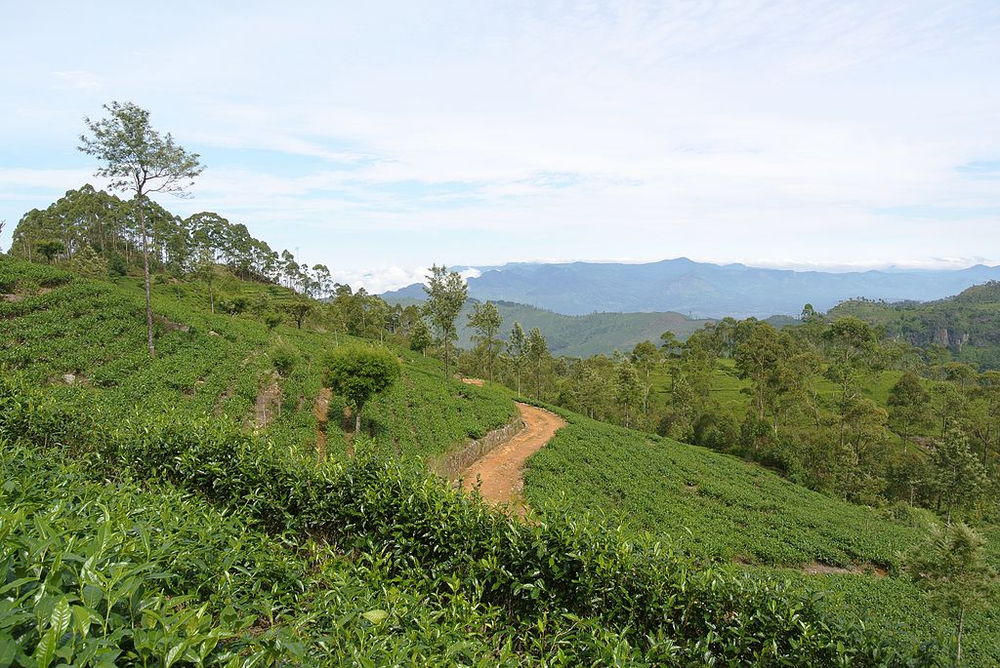
James Taylor’s efforts marked a transformation in the agricultural landscape of Ceylon, now known as Sri Lanka. Prioritizing tea cultivation over coffee, which had been decimated by disease, Taylor cultivated tea plants on the Loolecondera estate in Kandy. This plantation, spanning 19 acres, served as the starting point for what would become a vital industry for the island.
Taylor’s experimentation and methods cemented the foundation of Ceylon tea, which soon gained international recognition. By refining the processing techniques and optimizing the plantation resources, he ensured the consistency and quality demanded by global markets. British companies, seeing the promise in tea over the imperiled coffee crops, invested in the development of infrastructure, factories, and shipping routes, significantly altering the island's economic canvas.
From a financial perspective, the revenue generated from tea exports became a cornerstone of Ceylon's economy. The tea industry provided employment to thousands, with an impact on both rural and urban populations. The development of infrastructure, such as roads and railways, to support tea transport further contributed to the island's modernization. Industrial advancements enabled Ceylon to emerge as one of the leading tea producers globally, a status it maintains today, contributing significantly to global tea consumption.
Taylor's contribution resulted in Ceylon tea becoming synonymous with high-quality beverages, setting a gold standard in the tea industry. Various innovative manufacturing practices introduced during this early period laid the groundwork for future expansions and diversification, allowing the industry to thrive and adapt to changing market needs.
In essence, the establishment of the Ceylon tea industry did more than just provide a new agricultural product. It triggered a broader economic development across the island, influencing social structures and setting up a legacy that continues to shape Sri Lanka's economic identity.
#CeylonTea #SriLanka #EconomicTransformation #AgricultureDevelopment #JamesTaylor #TeaIndustry #GlobalTrade #MoofLife
View details1865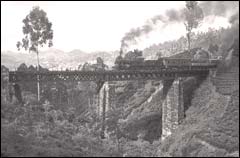
In the mid-19th century, Sri Lanka marked a pivotal change in its transportation with the introduction of the first railway line between Colombo and Ambepussa. This 54-kilometer track heralded a new era in the island's economic and social landscape. The motive behind this construction was primarily to facilitate the movement of coffee from the plantations to the port of Colombo, reflecting the colonial priorities of the British administration.
The railway line's construction faced numerous challenges, including dense jungle, complex river crossings, and the hot, humid climate. Despite these obstacles, the line was completed and inaugurated, signaling the start of modern transportation in Sri Lanka. The steam engines, initially employed, represented an advanced technological leap from the traditional bullock carts and river transport.
The impact of this rail line was profound. Firstly, it significantly reduced the travel time between the interior regions and Colombo. Previously, a journey that would take days was now reduced to a matter of hours. This efficiency spurred economic growth, facilitating easier and quicker movement of goods and people. The coffee economy, which had been burgeoning, received a substantial boost, creating more opportunities for both local and colonial enterprises.
Secondly, the railway infrastructure laid the foundation for further expansions. Over the following decades, it catalyzed the development of an extensive railway network across the island. This network not only supported the export of coffee but also adapted to include other commodities like tea, rubber, and coconut. The expansion provided a significant thrust to rural and urban connectivity, influencing settlement patterns and urbanization.
Additionally, the railway line played a crucial role in the cultural and social domains. It enabled better accessibility to different parts of the island, fostering interactions and exchanges among diverse communities. Educational and employment opportunities expanded as people could travel with greater ease.
By setting the stage for future advancements in the transport sector, the first railway line between Colombo and Ambepussa remains a landmark in Sri Lankan history. Its establishment was a cornerstone for economic development and societal transformation in the country.
#MoofLife #SriLanka #RailwayHistory #EconomicDevelopment #TransportationRevolution #ColonialImpact #InfrastructureDevelopment #CulturalExchange
View detailsThe establishment of the Colombo Municipal Council marked a pivotal development in the administrative framework of Colombo, the largest city in Sri Lanka. Prior to its founding, Colombo's urban management was handled through informal and fragmented mechanisms, often leading to inefficiencies and inconsistencies in public services. The British colonial administration recognized the growing need for a formal municipal organization to govern the city's expanding population and infrastructure.
The new council was created with the objective of implementing structured governance and addressing the diverse needs of Colombo's residents. With its establishment, Colombo witnessed improved urban planning, public health, sanitation, and infrastructure development. The council comprised several elected officials responsible for various administrative functions, such as public works, health services, and city planning. This shift to an organized municipal system facilitated better resource allocation and planning, driving economic growth and improving living standards.
The establishment of the Colombo Municipal Council also marked the beginning of greater civic participation in governance. The electoral process allowed residents of Colombo to have a direct say in selecting their representatives, fostering a sense of community involvement and accountability. As a result, it played a significant role in shaping the city's civic and political landscape.
The impact of the Colombo Municipal Council can be measured through the tangible improvements in public services and infrastructure that followed its inception. Roads were systematically paved and maintained, public buildings were constructed, and sanitation systems were overhauled to reduce the incidence of diseases. Furthermore, the council's efforts in urban planning and public health services set a precedent for other municipalities in the region.
The founding of the Colombo Municipal Council was a cornerstone in Colombo's journey toward becoming a well-organized and modern urban center. By establishing a formal governance structure, it paved the way for ongoing development and civic engagement. This milestone not only addressed immediate public needs but also laid the groundwork for future advancements in municipal governance across Sri Lanka.
#UrbanDevelopment #PublicGovernance #CivicParticipation #SriLankaHistory #ColomboGrowth #MoofLife
View details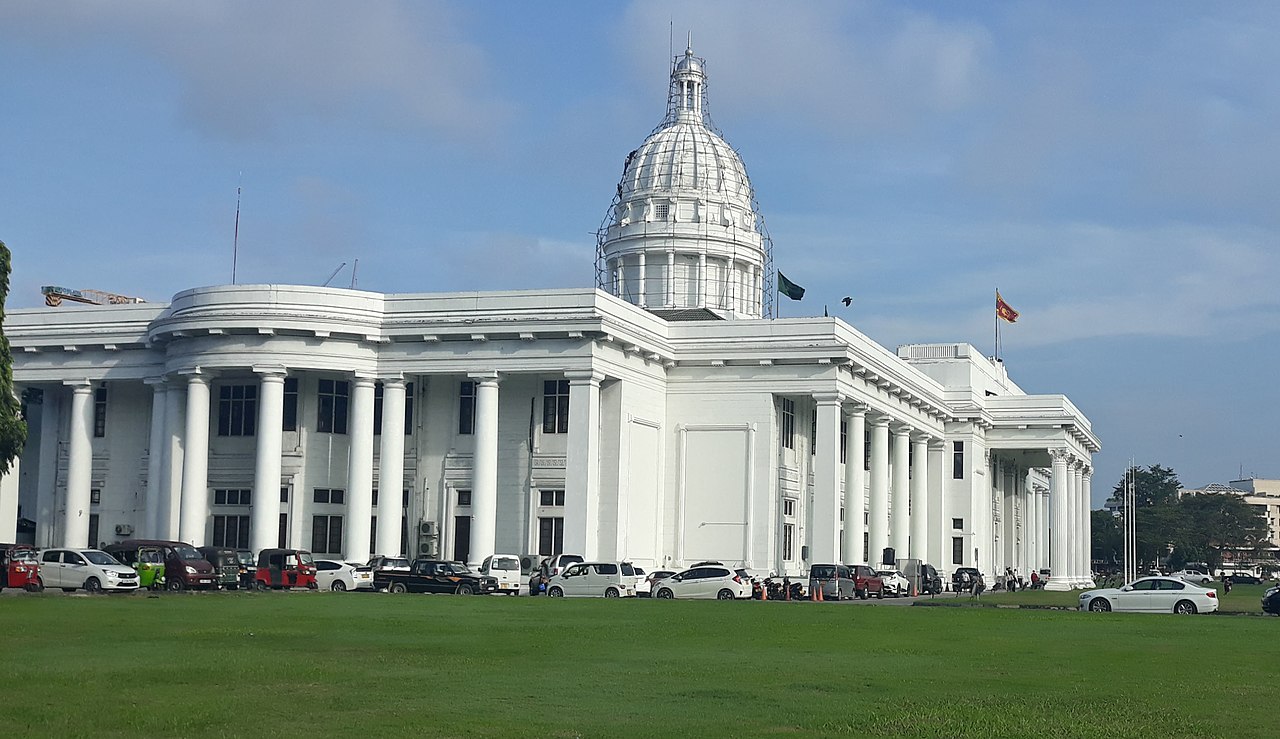
1864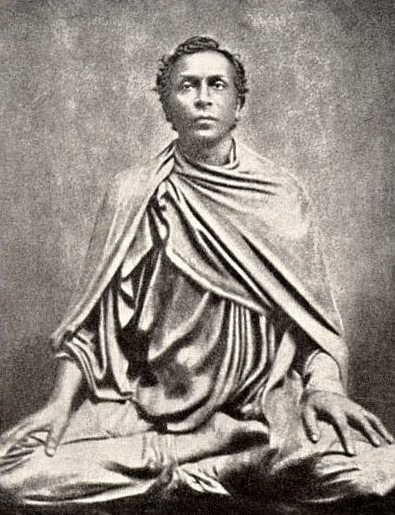
Anagarika Dharmapala, a Sri Lankan, was born in a period marked by colonial dominance and cultural upheaval. His birth coincided with the British colonial rule in Ceylon (now Sri Lanka), which brought significant changes to the socio-religious fabric of the island. During this time, Buddhism, which had flourished for centuries, was experiencing decline under colonial pressure and the rise of Christian missionary activities.
Born to a family with deep Buddhist roots, Dharmapala was given the name Don David Hewavitarne. From a young age, he showed a keen interest in spiritual matters, influenced by the Buddhist revival occurring under the leadership of figures like the American theosophist Henry Steel Olcott. Dharmapala was educated at Christian missionary schools but remained passionate about his Buddhist heritage.
Dharmapala's contributions to the Buddhist revival movement were substantial. He took up the cause of revitalizing Buddhism not only in Sri Lanka but also on a global scale. He founded the Maha Bodhi Society in India, aiming to restore the shrines and sacred sites associated with the Buddha, with a particular focus on Bodh Gaya. His efforts saw significant international collaboration, drawing attention from Buddhists around the world.
His writings and speeches emphasized the importance of Buddhist teachings and their application in modern life. Dharmapala was instrumental in promoting education, the establishment of schools, and the spread of Buddhist philosophy. He also worked tirelessly to create a sense of unity among Buddhists worldwide, advocating for global peace and harmony through the principles of Buddhism.
Dharmapala's influence extended to the nationalist movement in Sri Lanka, where his religious activities intersected with broader societal reforms. He championed causes such as temperance, education, and social welfare, all aligned with Buddhist ethical values.
#AnagarikaDharmapala #BuddhistRevival #SriLanka #CulturalHeritage #MoofLife
View detailsThe establishment of the Rāmañña Nikāya marked a turning point within the Buddhist monastic community in Sri Lanka. This period in Sri Lankan history was characterized by a profound interest in religious reform and a reawakening of traditional practices. The Rāmañña Nikāya emerged due to the efforts of a group of monks who sought to return to what they considered the purer practices of Theravāda Buddhism. They aimed to distinguish themselves from other monastic orders that had, in their view, diverged from original teachings and rituals.
The formation of the Rāmañña Nikāya was highly influenced by the interactions Sri Lankan Buddhists had with the Mon community of Myanmar. Sri Lankan monks traveled to Myanmar to undergo rigorous training and ordination processes. This interaction led to a significant exchange of knowledge and religious practices between the two regions. Upon their return, these monks established the Rāmañña Nikāya, introducing stricter monastic codes and enhanced attention to the Vinaya, the regulatory framework for the monastic community.
The impact of this establishment was multifaceted. It introduced a wave of religious rejuvenation across the island, inspiring both clergy and laypeople. This movement played a crucial role in reasserting the importance of discipline and adherence to ancient practices within the monastic order. Moreover, it helped in standardizing rituals and practices that had become heterogeneous over time. The Rāmañña Nikāya attracted a considerable following and significantly influenced the religious landscape of Sri Lanka, challenging existing norms and promoting a return to what was viewed as more authentic practices.
Today, the Rāmañña Nikāya continues to play an essential role in maintaining the Theravāda tradition in Sri Lanka. It has become an integral part of the island's rich religious tapestry, with numerous temples and monasteries affiliated with this order. Their contribution to the preservation and revitalization of Theravāda Buddhism remains a testament to their foundational mission.
#RāmaññaNikāya #Buddhism #TheravādaTradition #SriLankanHistory #ReligiousReform #MoofLife
View details1848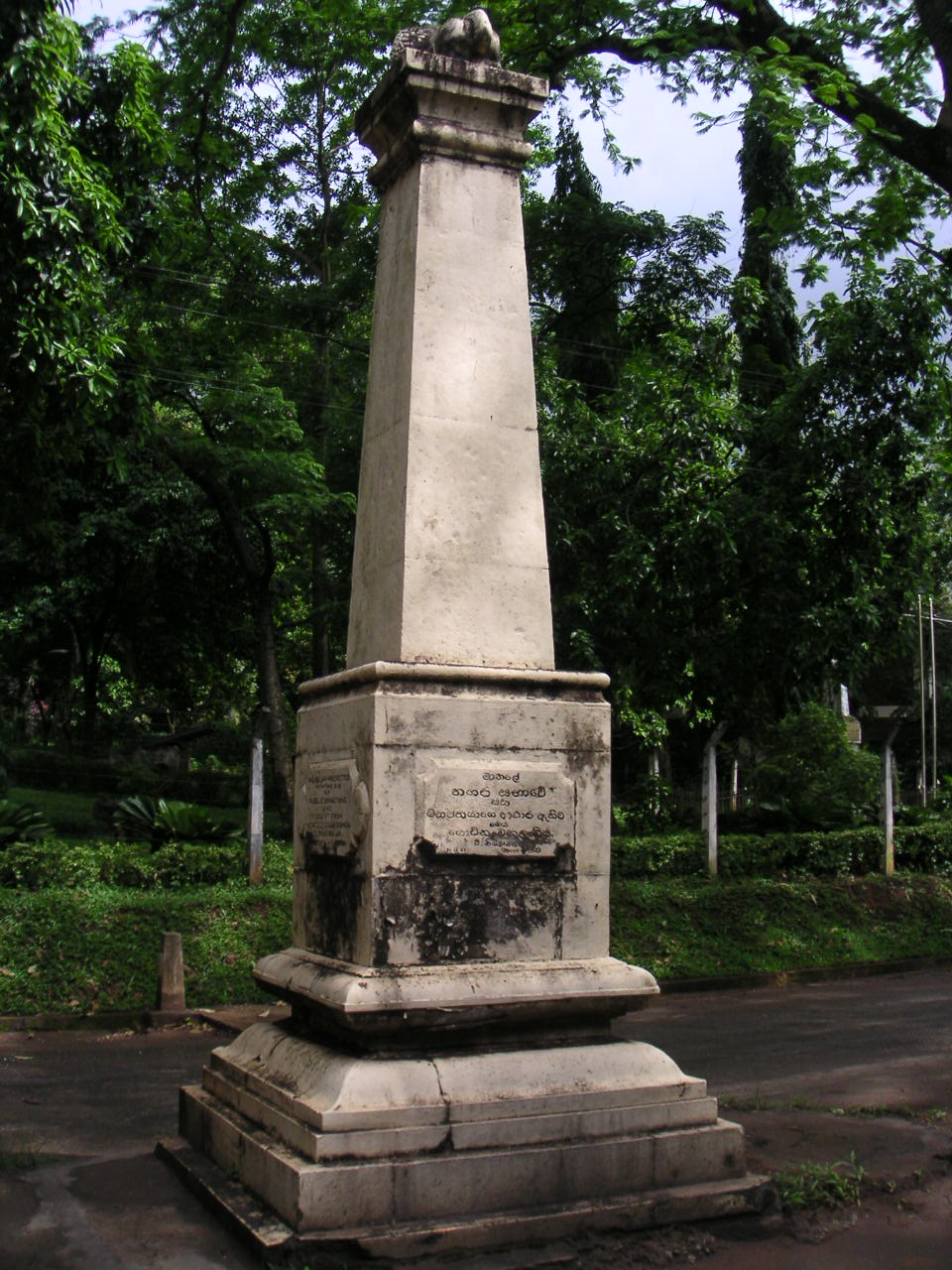
In the mid-19th century, the British colonial administration in Sri Lanka imposed a series of taxes on the local population. These measures included a road tax, which required labor or payment from every household, and a heavy duty on essential goods. The peasants, already struggling under the weight of economic hardship, found these levies intolerable.
Led by figures such as the Buddhist monk Gongalegoda Banda and local leaders like Puran Appu, the local population organized a revolt that came to be known as the Matale Rebellion. The rebel leaders symbolized the resistance against the colonial government's oppressive taxation policies. The movement rapidly gained support, attracting both rural peasants and urban unemployed who sought an end to the financial burdens imposed by the British authorities.
The insurrection began in the region of Matale before spreading to other parts of the Kandy district. The rebels attacked government buildings, destroyed official records, and attempted to seize control from colonial authorities. However, the British administration responded with severe force. Military reinforcements were sent to the affected areas, and martial law was declared.
Despite the widespread support for the rebellion, it was ultimately suppressed. The leaders were captured, and subsequent trials led to executions and imprisonments. The British administration took stringent measures to prevent future uprisings by increasing their military presence and employing divide-and-rule tactics among the local population.
The Matale Rebellion highlighted the local populace's deep dissatisfaction with colonial rule and its economic policies. While it was crushed swiftly, it remained a critical episode that exposed the vulnerabilities and struggles of the agrarian society under British colonialism.
#MataleRebellion #SriLankaHistory #ColonialResistance #TaxationStruggles #MoofLife
View details1833
The British colonial administration in Sri Lanka recognized the need for administrative and economic reforms. The colonial economy was primarily agrarian, with the coffee industry beginning to show promise. However, inefficiencies, corruption, and the monopolistic tendencies of the Dutch East India Company’s legacy required significant address. The British government, aiming to modernize and streamline governance, appointed Charles Turing Colebrooke and William McBean George Colebrooke to recommend necessary changes.
Appointed with the mission to evaluate and suggest reforms, Colebrooke and Cameron undertook a thorough review of varying facets of the colonial administration. They examined the judicial, revenue, and trade systems, proposing far-reaching changes designed to integrate the colony more effectively into the British Empire's economic and administrative structures.
Colebrooke-Cameron Reforms introduced landmark changes. The central government was restructured, and for the first time, Ceylon was divided into five provinces, each governed by a Government Agent. These reforms did away with Dutch and sinhalese administrative systems and introduced a more centralized British administrative system. The judiciary was overhauled to ensure fairer administration of justice, and English was made the official language of the courts.
In the economic sphere, the reforms paved the way for the development of infrastructure critical for the economic exploitation of the island's resources. Roads and railway lines began to develop, facilitating the transport of goods, particularly coffee, which became a significant export.
The education system also saw changes. The Colebrooke-Cameron recommendations laid the groundwork for the development of a western educational system aimed at creating a class of English-educated locals who could serve in the colonial administration.
Contributing to a more inclusive governance structure, the legislative council was reformed to include appointed unofficial members, including Ceylonese representatives. This change marked a shift toward considerate governance and increasing political awareness among local leaders.
While these changes primarily facilitated British economic interests, they also led to modernizing Sri Lankan governance and infrastructure, setting foundational changes for future developments.
#ColebrookeCameronCommission #SriLankaReforms #ColonialAdministration #EconomicInfrastructure #JudicialReform #LegislativeCouncil #MoofLife
View details1815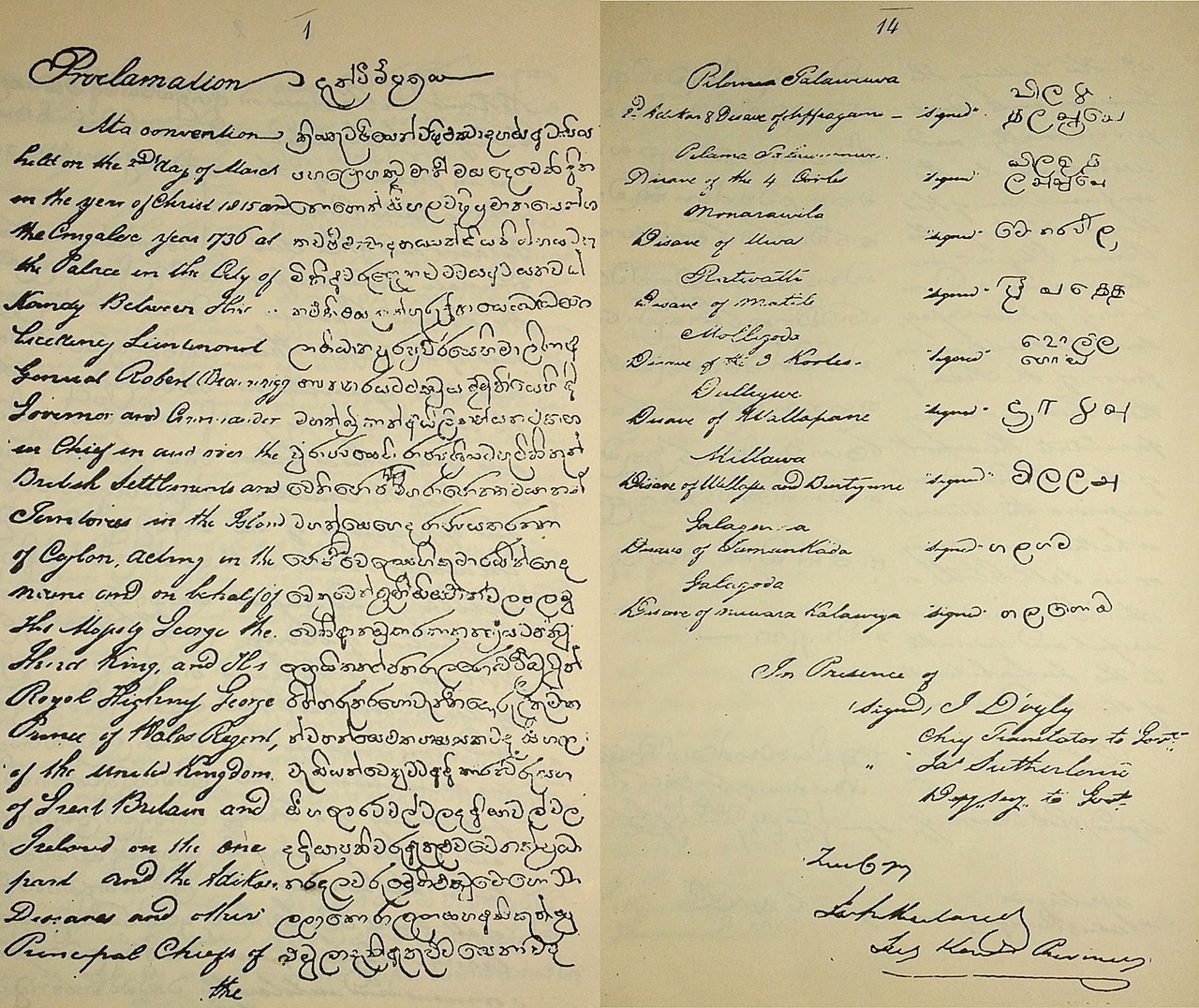
The Kandyan Convention marked the official transfer of control of the Kingdom of Kandy to the British Crown. Situated in the central region of Sri Lanka, Kandy was the last independent monarchy on the island. A convergence of political instability and British strategic interests set the stage for this pivotal event.
Prior to this, Kandy had successfully resisted multiple European colonials, preserving its sovereignty through diplomatic and military maneuvers. However, rising internal strife and ineffective leadership under King Sri Vikrama Rajasinha weakened its defenses. Seizing this opportunity, the British, who had already established control over the coastal areas of Sri Lanka, advanced into the Kandyan territory.
The Convention took place in the presence of Kandyan chiefs, British officials, and military representatives. The document outlined several key provisions: it deposed King Sri Vikrama Rajasinha, detailed the new administrative structure under British rule, and assured the protection of Buddhism and traditional privileges of the chiefs. The Kandyans, disillusioned with the king and faced with an overwhelming British military presence, acceded to these terms.
The immediate impact was the end of centuries of indigenous monarchical rule in Kandy. The British now controlled the entire island, thereby facilitating their commercial and plantation interests. Economically, this led to the expansion of coffee plantations, which later transitioned to tea, shaping Sri Lanka's economic landscape.
Politically, the British administrative overhaul, which centralized governance and imposed new legal codes, marked a significant transformation from traditional Kandyan society. Socially and culturally, the Convention’s assurance to protect Buddhism and traditional privileges played a crucial role in mitigating potential unrest among locals.
Historically, the signing of the Kandyan Convention was a critical juncture in Sri Lanka’s colonial narrative, effectively unifying the island under British rule and ending the era of independent kingdoms. This singular act of political realignment had far-reaching implications, laying the groundwork for the island's subsequent colonial history and post-independence trajectory.
#KandyanConvention #BritishColonialRule #SriLankaHistory #KingdomOfKandy #EndOfSoverignty #MoofLife
View details1803
The early 19th century saw an intense period of conflict between the British Empire and the Kingdom of Kandy in Sri Lanka. The First Kandyan War was initiated when the British forces attacked the Kingdom after Pilimatalawe, the King's Adigar (Prime Minister), defected. The political and military tension between the British colonial power and the Kandyan Kingdom had been simmering, aggravated by the strategic significance of controlling the central highlands.
Pilimatalawe's defection was a pivotal move that shifted the balance of power. As the chief minister of the Kandyan Kingdom, Pilimatalawe held considerable sway and his defection to the British provided them with crucial intelligence and a psychological edge. The British leveraged this opportunity to launch an offensive against the Kingdom of Kandy, aiming to expand their influence and control over the entire island.
The initial British offensive was marked by a swift series of maneuvers. They sought to capitalize on the internal dissent within the Kandyan court. Utilizing their superior firepower and organized military tactics, the British managed to make significant inroads into the Kandyan territory. Despite their tactical advantage, the harsh terrain and the tenacious resistance of the Kandyan forces presented formidable challenges.
The impact of this conflict was profound. The initial success of the British campaign gave them temporary control over key parts of the Kandyan territory. However, the resistance by local forces, along with the logistical difficulties of maintaining control over a mountainous and hostile environment, eventually led to a British retreat. The war highlighted the complexity of colonial military campaigns and the resilience of local kingdoms in Sri Lanka. It underscored the strategic and cultural resistance encountered by colonial powers in regions outside their technological and logistical comfort zones.
Ultimately, the First Kandyan War set the stage for continued hostilities, leading to further conflicts and eventual British dominion over the island. This period marked a significant struggle in Sri Lankan history, influencing subsequent political and social developments on the island.
#KandyanWar #SriLankanHistory #ColonialConflict #MilitaryStrategy #LocalResistance #MoofLife
View details1802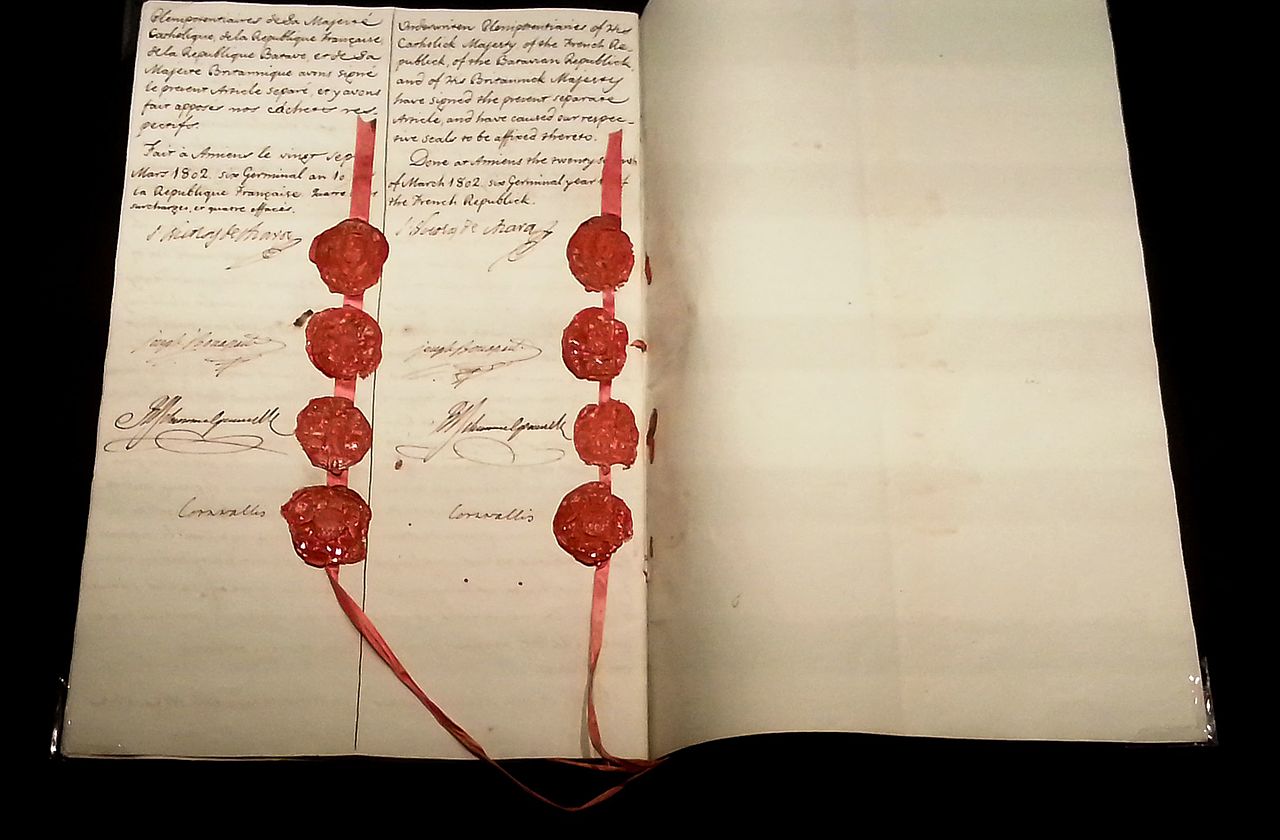
The Treaty of Amiens marked a pivotal moment in colonial histories, especially for the island of Ceylon, currently known as Sri Lanka. The agreement, primarily forged between Britain and France, aimed at terminating hostilities during the War of the Second Coalition. Under its terms, Ceylon was momentarily handed back to the Dutch from the British control. The British had initially taken control from the Dutch during the previous conflicts of the late 18th century.
One significant clause of the treaty included the restitution of colonies previously seized, impacting various territories, among which Ceylon was notably mentioned. This decision was influenced by the strategic importance of Ceylon due to its location in the Indian Ocean, which allowed for control over maritime trading routes. The Dutch East India Company had established its presence in the mid-17th century, exerting influence over the coastal regions, primarily for securing trade monopolies, particularly in spices like cinnamon.
The British occupation saw changes in administrative practices and infrastructure, aligning Ceylon's development with other British territories. However, the Treaty of Amiens intended to stabilize European political relations by restoring territories, illustrative of the oscillating power dynamics amongst colonial powers.
Although the treaty temporarily transferred control back to the Dutch, the broader geopolitical context meant that this restored possession was short-lived. The conflicts and tensions resumed shortly after, and the British re-asserted dominance, incorporating Ceylon into their empire permanently within a few years.
For Ceylon's local population, these colonial handovers entailed shifts in governance, economic policies, and social conditions. The continued struggle of European powers over Ceylon underscored its role in advancing global imperial interests, often neglecting the aspirations of indigenous people.
Overall, the treaty represented a transient phase in the island's colonial saga, emphasizing the complexities of colonial exchanges and the island's status as an invaluable asset in global trade networks.
#TreatyofAmiens #CeylonHistory #SriLanka #ColonialHistory #BritishEmpire #DutchColonization #GeopoliticalShifts #MoofLife
View details1796
During a period marked by shifts in global colonial power, the British arrival in Sri Lanka initiated a new phase of governance and administration on the island. This event followed a series of European colonial influences, primarily Portuguese and Dutch, over the centuries. The British takeover of the coastal areas previously controlled by the Dutch led to significant changes in the island's political and social structures.
The background to this transfer of power lies in the broader context of European rivalries and military conflicts. As the Dutch faced difficulties in maintaining their overseas colonies due to European wars and declining economic conditions, the British East India Company capitalized on these weaknesses. Using diplomatic and military strategies, the British gradually secured control over the Dutch possessions in Sri Lanka.
Upon establishing control, the British introduced reforms aimed at consolidating their rule. These included changes in the administrative framework, taxation systems, and economic policies. One of the notable impacts of British rule was the introduction of coffee plantations, which later transitioned to tea due to blight. This shift played a crucial role in shaping the island’s economy.
The British also extended their influence into the Kandyan Kingdom, the last independent kingdom in the island's central highlands. Through military campaigns and treaties, they eventually brought the entire island under British colonial administration. This unified governance led to the development of modern infrastructure, such as roadways and railways, to support economic activities and resource extraction.
Socially, British colonial rule introduced new legal systems and educational reforms, which had long-lasting effects on Sri Lankan society. These changes, while modernizing certain aspects, also disrupted traditional social structures and generated resistance among local populations.
As a factual conclusion, the British arrival in Sri Lanka during this period marked the beginning of a significant colonial era. Their influence reshaped the island’s political landscape, economy, and society, laying the foundations for future developments.
#SriLankaHistory #ColonialImpact #BritishColonialRule #EconomicChanges #SocialTransformation #MoofLife
View details1795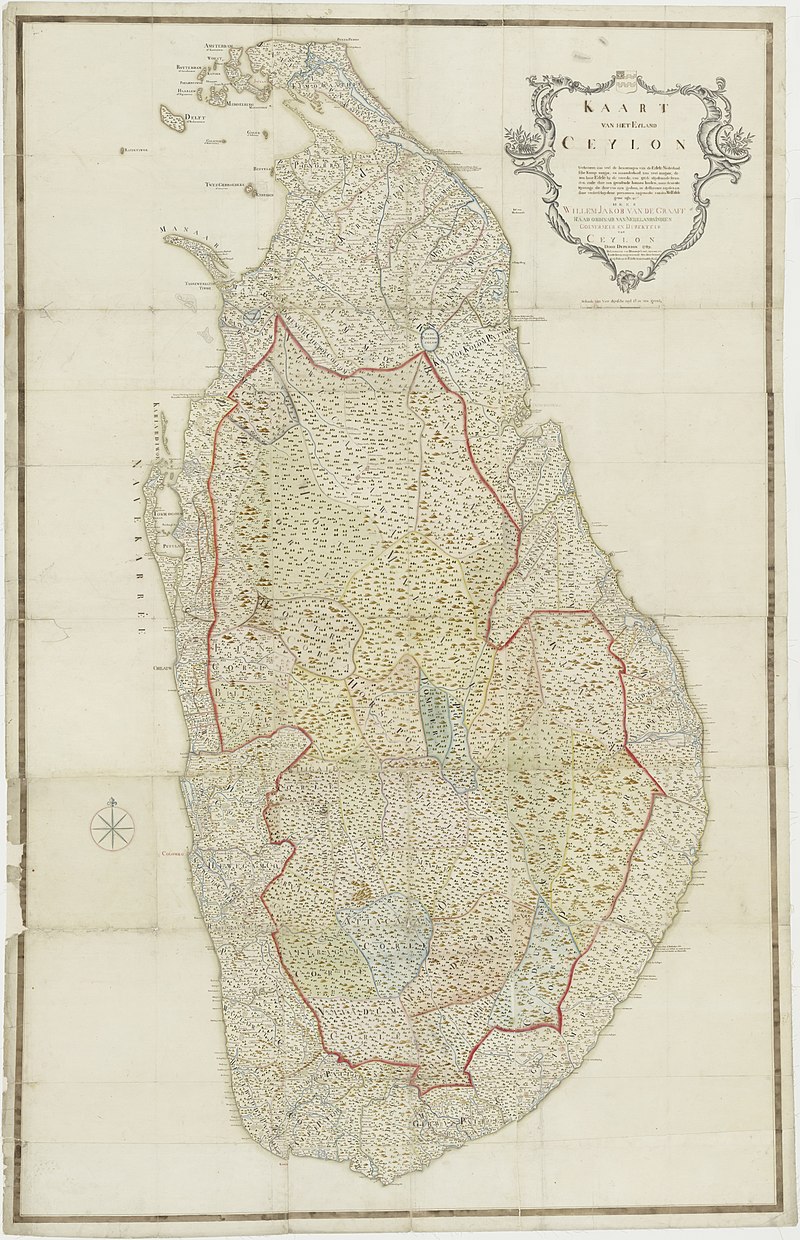
The British invasion of Ceylon, a strategically significant island in the Indian Ocean, commenced as part of the broader conflict between European colonial powers vying for dominance in Asia. The Dutch had controlled Ceylon, leveraging its position for trade and resources, particularly cinnamon. However, as war progressed in Europe, the British sought to undercut Dutch influence and advance their own imperial interests.
The British East India Company initiated the military operation against the Dutch-held Ceylon with the strategic objective of capturing key ports and territories. British forces, well-coordinated and experienced from prior campaigns, launched an offensive targeting Colombo and other major Dutch settlements. The Dutch forces and local resistance, hindered by limited resources and waning morale, struggled to defend their positions.
The British invasion not only facilitated the transfer of power from one European colonial power to another, but it also marked a shift in the colonial landscape of Ceylon. The swift occupation by British forces led to the imposition of British administrative systems and economic policies, reshaping local governance and commerce. This event fundamentally altered the trajectory of the island’s development, embedding it further into the global network of British colonial trade and governance.
Statistics and records from the period highlight the significant shifts in trade patterns, with increased exploitation of local resources like tea and rubber under the British. The local population experienced changes in societal structures, influenced by British laws and practices. The implications of this invasion echoed through the economic, political, and social spheres, influencing the island's path for decades to come.
The British remained in control of Ceylon, later modern-day Sri Lanka, for an extended period. Their administration introduced infrastructural developments alongside systemic changes that would lay the groundwork for the future nation-state. This event in Ceylon’s history stands as a pivotal point, reflecting the broader currents of colonial expansion and conflict between European powers.
#ColonialHistory #BritishImperialism #CeylonHistory #MaritimeStrategy #EconomicImpact #SriLanka #MoofLife
View details1655
In a decisive event, the Dutch succeeded in capturing Colombo from Portuguese control. Colombo, an important port city located in present-day Sri Lanka, had been under Portuguese influence for over a century. The Portuguese had established Colombo as a major administrative and military center, capitalizing on its strategic location and its rich spice trade.
The struggle between the Dutch and the Portuguese for control of the coastal regions of Ceylon, as Sri Lanka was then known, was part of a larger conflict in the region. The Dutch, represented by the Dutch East India Company (VOC), aimed to monopolize the lucrative spice trade. The capture of Colombo formed a critical part of this strategy. Armed with superior naval forces and local alliances, the Dutch launched a series of sieges and military engagements against the Portuguese strongholds along the coast.
The Dutch sieged Colombo for several months, effectively blockading the port and cutting off supplies and reinforcements to the Portuguese garrison. This prolonged campaign eventually led to the Portuguese surrendering the city. The successful capture of Colombo marked a turning point in the control of the island, as it effectively ended Portuguese dominance in the region.
The impact of the Dutch capture of Colombo was substantial. The victory not only facilitated Dutch control over the coastal areas but also allowed them to dominate the spice trade, which had long been a Portuguese stronghold. In the aftermath, the administrative center of colonial operations moved from Goa, under Portuguese control, to Colombo, under Dutch administration. This transition reinforced the VOC's commercial and military presence in the Indian Ocean, altering the balance of colonial power.
In terms of economic impact, the Dutch established a monopoly on cinnamon and other spices, reinforcing their trading network and enhancing profits. The Dutch also introduced changes in the local administration, impacting the socio-political landscape of the region. Local rulers who allied with the Dutch benefited in terms of power and trade, altering relationships within the island.
The event signifies a critical shift in colonial powers in Sri Lanka, affecting trade, governance, and local dynamics.
#ColonialHistory #DutchPortugueseConflict #TradeWars #SriLanka #SpiceTrade #MoofLife
View details1649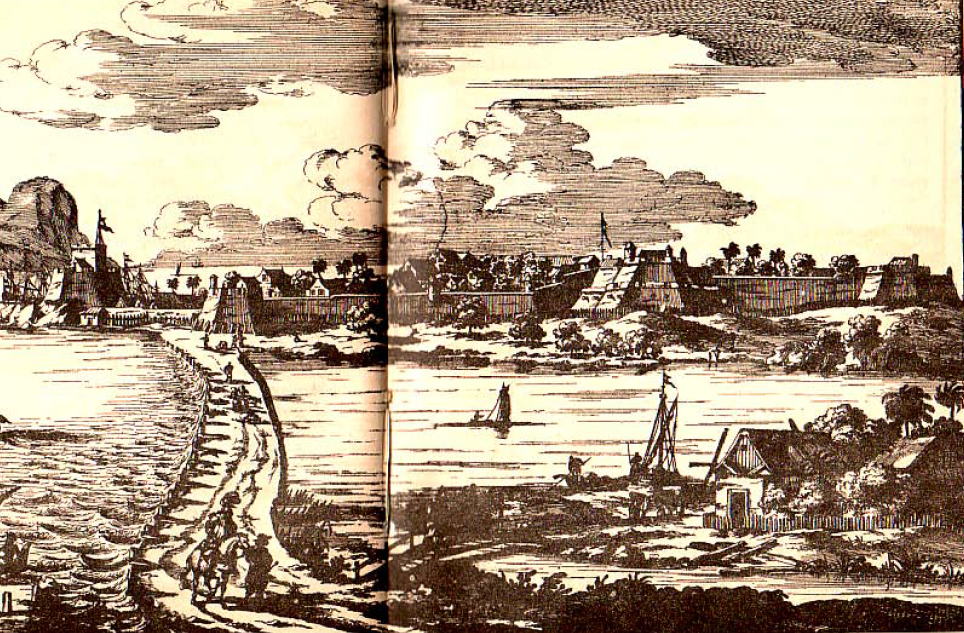
The construction of the Dutch Fort in Galle marked a pivotal development in the colonial history of Sri Lanka. The fort was established by the Dutch after they captured Galle from the Portuguese. Built to ensure maritime dominance and protect trade routes, the fort became a strategic point for the Dutch East India Company (VOC).
The site chosen for the fort was previously fortified by the Portuguese, but the Dutch expanded and strengthened the structure significantly. It encompassed key architectural features of European military engineering of that period, including thick walls and bastions designed to withstand artillery attacks. The fort covered approximately 52 hectares and included a complex network of streets, residential quarters, churches, and administrative buildings, showcasing a blend of European and South Asian architectural styles.
The construction phase saw significant involvement from local laborers and craftsmen, who worked alongside Dutch engineers, reflecting a mix of local and foreign influences in the fort's design. The fortifications included prominent bastions such as the Sun, Moon, Star, and others, which were strategically positioned to oversee the harbor and town.
Galle Fort quickly grew into a prominent administrative and trade hub under Dutch rule, facilitating the export of local goods such as cinnamon, cloves, and other spices. It contributed significantly to the region's economy and served as a critical link in the Dutch maritime empire across the Indian Ocean.
The impact of the fort was felt for centuries, as it remained a crucial site through subsequent British control and into modern times. Its enduring legacy is evident as Galle Fort is recognized as a UNESCO World Heritage Site, drawing tourists and scholars alike.
The strategic importance and historical relevance of the Dutch Fort in Galle highlight the broader narrative of colonial expansion and the blending of cultures in Sri Lanka.
#DutchFortGalle #SriLankaHistory #ColonialArchitecture #MaritimeTrade #CulturalHeritage #UNESCO #MoofLife
View details1640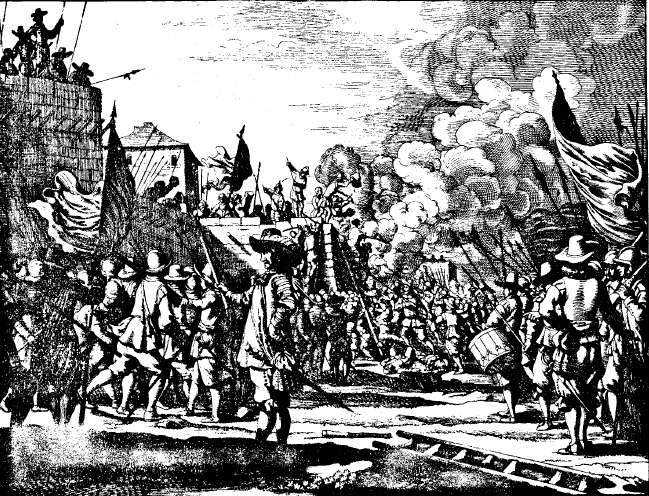
The event known as the Capture of Colombo by the Dutch from the Kingdom of Kandy, was a pivotal episode in South Asian colonial history. The Dutch East India Company (VOC) sought control over Colombo, a strategically significant port city in what is now Sri Lanka, to enhance their influence and commercial interests in the region. At the time, the area was under the fluctuating control of the Kingdom of Kandy and the Portuguese, who had entrenched their presence in the coastal zones.
The Kingdom of Kandy, located inland, harbored a long-standing enmity with the coastal Portuguese, who were exploiting the island's resources and imposing trade monopolies. Willing to dislodge the Portuguese, the Kandyans allied with the Dutch, who were motivated by commercial benefits rather than territorial conquest. The Dutch strategy capitalized on their naval prowess and superior firepower.
The siege of Colombo was marked by a series of tactical maneuvers, blockades, and confrontations. The superior engineering skills and the naval capabilities of the Dutch proved decisive. The Portuguese, although well-fortified and experienced in combat, could not withstand the sustained Dutch assault coupled with the coordinated attacks by Kandyan forces from inland.
The capture of Colombo had far-reaching implications. It weakened Portuguese territorial claims and reduced their foothold in the region. For the Dutch, it was a significant step in establishing their dominance in the spice trade in South Asia. The Kingdom of Kandy, although benefiting temporarily from the ousting of its enemy, found itself dealing with a new European power, initiating a complex dynamic of alliances, trade, and conflicts.
In the broader context, the fall of Colombo indicated a shift in the colonial power structure in Sri Lanka and showcased the rising influence of the Dutch in the Indian Ocean trade network. This event was instrumental in shaping the political and economic tapestry of the island, influencing subsequent colonial and local interactions.
#MoofLife #DutchColonialism #Kandy #ColomboCapture #SriLankaHistory #TradeWars #SouthAsianHistory
View details1638
The Kandyan Treaty of 1638, signed on May 23, 1638, was a significant agreement between the Kingdom of Kandy in Sri Lanka and the Dutch East India Company (VOC). This treaty marked the beginning of a crucial alliance aimed at expelling the Portuguese, who had been occupying coastal regions of the island. The agreement not only set the stage for the eventual decline of Portuguese power in Sri Lanka but also laid the groundwork for Dutch influence over the island's coastal areas, which would have lasting implications for the country’s history.
Background: Portuguese Occupation in Sri Lanka
By the early 17th century, Sri Lanka was divided into several kingdoms, with the Kingdom of Kandy being the most prominent in the interior and the Kingdoms of Kotte and Jaffna under Portuguese control. The Portuguese had arrived in Sri Lanka in 1505 and gradually expanded their influence, controlling most of the island's coastal regions by the early 1600s. They established strongholds in key areas like Colombo, Galle, and Jaffna, and imposed their authority over trade, particularly in cinnamon, which was highly valued in Europe.
The Kingdom of Kandy, under the leadership of King Rajasinghe II, fiercely resisted Portuguese domination and sought to regain control over the coastal areas. However, Kandy's military efforts alone were insufficient to challenge the well-fortified Portuguese positions. Recognizing the need for a powerful ally, Rajasinghe II turned to the Dutch, who were increasingly active in the Indian Ocean and eager to challenge Portuguese power.
The Kandyan Treaty of 1638
The Kandyan Treaty of 1638 was the result of negotiations between King Rajasinghe II and the representatives of the Dutch East India Company. The treaty established a formal alliance between the two parties with the shared goal of expelling the Portuguese from Sri Lanka.
Key Provisions of the Treaty:
Military Alliance: The Dutch agreed to provide military assistance to the Kingdom of Kandy in its efforts to expel the Portuguese from the island. In return, Kandy would support the Dutch by providing troops, supplies, and strategic cooperation.
Territorial Arrangements: Upon the successful expulsion of the Portuguese, the Dutch would control the coastal areas, including key ports and fortifications. The interior regions, including the Kingdom of Kandy, would remain under the control of the Kandyan king. The Dutch would also ensure that the Portuguese were permanently excluded from the island.
Trade Agreements: The treaty included provisions for trade, with the Dutch securing rights to trade in cinnamon and other valuable commodities in exchange for their military support. The Dutch were granted monopolistic rights over the cinnamon trade, which was a major economic interest for both parties.
Impact and Consequences
The Kandyan Treaty of 1638 marked the beginning of a concerted effort by the Kandyans and the Dutch to expel the Portuguese. The Dutch, with their superior naval power and military expertise, were able to capture key Portuguese fortresses, including Galle in 1640. Over the next few decades, the combined efforts of the Dutch and Kandyans led to the gradual decline of Portuguese influence in Sri Lanka, culminating in the complete expulsion of the Portuguese by 1658.
However, the alliance between Kandy and the Dutch was not without its tensions. While the Kandyans had hoped to regain control over the coastal areas, the Dutch had their own ambitions and began to establish their dominance over the coastal regions, effectively replacing the Portuguese as the colonial power. The Dutch controlled the lucrative cinnamon trade and imposed their authority over the coastal areas, leading to a new era of colonial influence in Sri Lanka.
The relationship between the Kingdom of Kandy and the Dutch remained uneasy, with both sides occasionally clashing over territorial and trade issues. The Kandyans resisted full Dutch control and continued to maintain a degree of independence in the interior. This complex and often uneasy relationship would continue until the arrival of the British in the late 18th century, who eventually took control of the entire island.
Legacy
The Kandyan Treaty of 1638 is a pivotal event in Sri Lanka's history, marking the end of Portuguese dominance and the beginning of Dutch colonial rule in the coastal regions. While the treaty was initially seen as a means for the Kingdom of Kandy to regain control of its territory, it ultimately led to the establishment of a new colonial power that would shape the island's history for over a century.
This period also underscores the complexities of alliances and the unintended consequences of seeking foreign support to address local conflicts. The Kandyan Kingdom's alliance with the Dutch, while successful in removing the Portuguese, resulted in a new form of foreign domination that the Kandyans had not anticipated.
#MomentsOfLife #MoofLife_Moment #MoofLife #SriLanka #KandyanTreaty #DutchColonialism #SriLankanHistory
View details1630
In the lush and hilly terrain of Sri Lanka, the Kingdom of Kandy clashed with Portuguese colonial forces in an intense conflict known as the Battle of Randeniwela. The confrontation emerged from growing tensions between the expansive ambitions of the Portuguese Empire and the sovereignty of the Kandy kingdom.
The Portuguese had been intent on consolidating their control over the island, looking to exploit its rich resources and strategic location in maritime trade. The Kingdom of Kandy, under its determined leader King Senarath, sought to resist these incursions. With superior knowledge of the terrain and strong local alliances, the Kandyan forces strategically used the environment to their advantage.
Portuguese troops, led by Dom Constantino de Sá de Noronha, found themselves unprepared for the guerrilla tactics and the challenging landscape. The Kandyan army, employing deep knowledge of their terrain, orchestrated ambushes and constrained the Portuguese movement through the dense jungle and rugged mountains.
The conflict reached a decisive point when the Kandyans successfully encircled the Portuguese. With the Portuguese forces significantly outnumbered and disoriented, the Kandyans launched a concentrated assault. The superior tactical position of the Kandyans and their fierce resistance led to a substantial victory, with many Portuguese soldiers either killed or captured. Dom Constantino de Sá de Noronha lost his life during the battle, marking a pivotal shift in the balance of power.
This defeat significantly impacted Portuguese ambitions in Sri Lanka, weakening their foothold on the island and emboldening other local kingdoms to resist colonial rule. The victory reinforced the resilience and strategic acumen of the Kingdom of Kandy, establishing a legacy of resistance that would echo throughout the region's subsequent conflicts.
#MoofLife #SriLanka #BattleOfRandeniwela #KingdomOfKandy #ColonialResistance #StrategicVictory #PortugueseEmpires
View details1618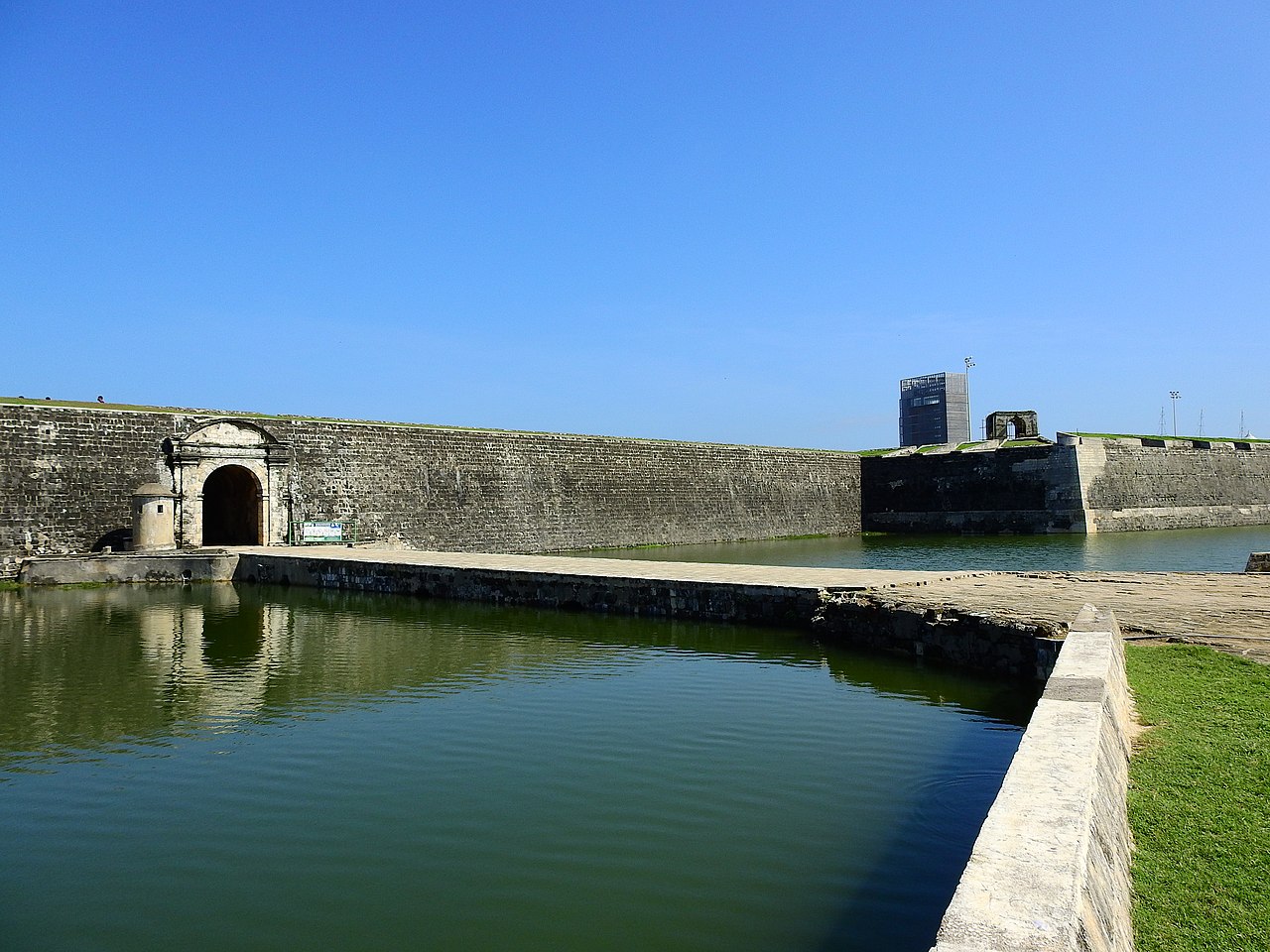
The construction of Jaffna Fort in Sri Lanka commenced following the occupation of the Jaffna Kingdom by the Portuguese. Situated in the northern region of Sri Lanka, the initiative to build the fort was a strategic move to consolidate Portuguese control over the region and defend against both local and external threats.
The Portuguese, recognizing the strategic importance of Jaffna, laid down the initial foundations for what would become a stronghold, ensuring a permanent presence in the area. This construction project was part of a broader strategy that included fortifying various key locations across the island to bolster their trade routes and secure their colonial interests.
The fort was designed using Renaissance fortification styles, incorporating features such as angular bastions and robust defensive walls. This structure not only served military purposes but also acted as a center for administration and commerce. The fort's strategic location allowed for better control and monitoring of maritime activities, significantly influencing trade dynamics in the region.
Portuguese control over Jaffna Fort eventually facilitated further efforts to assimilate the local populace into Catholicism while imposing their cultural and administrative practices. The fort played a crucial role during multiple sieges and conflicts, reflecting the tumultuous period of colonial and local power struggles. It formed an integral part of the Portuguese defense network until the Dutch East India Company captured it in a later era, transforming it into one of their own administrative bases.
The remnants of Jaffna Fort stand as a historical testament to these interactions and the shifting control of colonial powers over the region. It remains a subject of study for those interested in colonial military architecture and the impacts of European colonization in South Asia.
#PortugueseColonization #JaffnaFort #ColonialSriLanka #MilitaryArchitecture #HistoricalSites #MoofLife
View details1602
The Dutch East India Company (VOC) began asserting its influence over the strategic coastal areas of Sri Lanka. This followed a period during which the Portuguese had been dominant in the region, exercising control over valuable spice trade routes. The VOC, aiming to monopolize the lucrative trade in spices such as cinnamon, sought to challenge Portuguese supremacy and secure a foothold in the region.
The Dutch entered into an alliance with the Kingdom of Kandy, which had been resisting Portuguese dominance. This political alliance empowered the Dutch to conduct military campaigns against Portuguese forts and establish a series of trading posts along the coast. The VOC's strategic use of naval power, combined with local alliances, allowed it to systematically dismantle Portuguese fortifications and monopolize trade routes.
The establishment of Dutch control resulted in significant shifts in trade patterns. The VOC implemented a systematic approach to harvesting cinnamon, which was standardized to maximize output and profits. This leveled out tax revenue for local kingdoms allied with the Dutch, while the Portuguese influence waned. The establishment of VOC control also led to the construction of enduring infrastructure such as forts and trading posts, bolstering the Dutch economic position and enabling long-term dominance.
The consequences of VOC control extended beyond mere economics. It altered political dynamics, as local rulers had to navigate their relationships with a new European power. Social changes were inevitable, as Dutch legal and administrative systems were introduced. The demographic impact was significant as well, with an influx of foreign traders and new labor systems.
In summary, the establishment of Dutch East India Company's control over the coastal areas significantly reshaped Sri Lanka’s trade, political landscape, and social structures, laying the foundation for enduring Dutch influence.
#TradeRoutes #ColonialHistory #SriLanka #EconomicShift #PoliticalAlliance #NavalPower #MoofLife
View details1595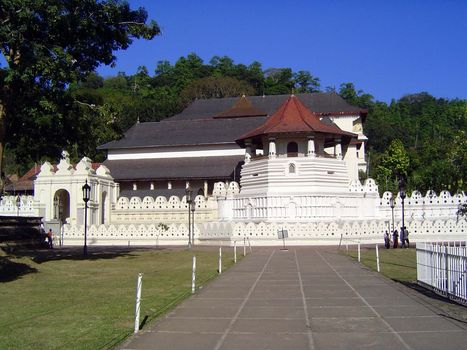
The establishment of the Dalada Maligawa, also referred to as the Temple of the Tooth, in Kandy marked a notable event in Sri Lankan history. The Temple holds the sacred tooth relic of Buddha, which has long been a potent symbol of political and religious authority in Sri Lanka. This moment was driven by the strategic and cultural need to safeguard and centralize this revered relic as a means of unifying the Sinhala Buddhist kingdom.
During this period, Sri Lanka was fractured with internal and external conflicts. The Kingdom of Kandy, under the leadership of King Vimaladharmasuriya I, undertook the responsibility of securing the relic. The King, recognizing the religious and societal influence of the Buddha's relic, commissioned the establishment of the Temple within the secure and historically significant site of Polonnaruwa, a former capital of Sri Lanka.
The construction and consecration of the Dalada Maligawa represented not only a religious resurgence but also reinforced the political legitimacy of the ruling dynasty. The site of Polonnaruwa was chosen due to its cultural heritage and its fortified nature, providing a stronghold for the relic.
The impact of this development was multifaceted. Religiously, it reaffirmed the centrality of Theravada Buddhism in Sri Lankan society. It played a critical role in the ceremonial and spiritual landscape of the nation, becoming a pilgrimage site for Buddhists. Politically, it helped consolidate power by using the relic as a symbol of royal and divine authority. Economically, the influx of pilgrims and the Temple's operations contributed to local economic activities.
Statistics indicate that the Temple, over time, drew thousands of pilgrims, establishing it as one of the most visited religious sites in Sri Lanka. The deity's presence was believed to bring prosperity and stability to the kingdom, correlating with periods of relative peace and growth in the region.
The establishment produced a long-lasting legacy, with the Dalada Maligawa remaining a paramount Buddhist religious site. It continues to be a focal point for Buddhist worship and a repository of cultural heritage.
#DaladaMaligawa #TempleOfTheTooth #SriLanka #Buddhism #CulturalHeritage #MoofLife
View details1543
King Dharmapala of Kotte, ruler of a kingdom in present-day Sri Lanka, signs the Treaty of Colombo with Portuguese officials. This agreement results in the Portuguese gaining control over the island's trade. The context for this event involves ongoing conflicts and shifting alliances within the island, as well as increasing European interest in Asia's lucrative spice trade routes.
The Kingdom of Kotte, one of the prominent Sinhalese kingdoms, faced internal strife and external threats, creating a vulnerable atmosphere. During this period, European maritime powers, including the Portuguese, sought to expand their influence over the Indian Ocean’s trade networks. Their presence in the region grew stronger, backed by advanced naval capabilities and strategic alliances.
By signing the Treaty of Colombo, King Dharmapala effectively granted the Portuguese significant economic leverage. This move shifted the control of key trade routes and commodity exchanges, particularly those involving spices like cinnamon, to the Europeans. The treaty stipulated Portuguese protection of the Kingdom of Kotte from local adversaries in return for trade privileges and territorial concessions.
This treaty accelerated the decline of indigenous control over trade and marked a significant step in the expansion of European colonial influence in the region. The Portuguese established footholds in coastal areas and began to enforce their dominance over maritime commerce, impacting the socio-economic landscape of the island. Local merchants and the traditional trade networks experienced disruptions as the Portuguese imposed their monopolistic trade practices.
The People of Kotte and the broader Sinhalese society faced profound changes, as their economy and sovereignty were increasingly subject to external forces. The involvement of Portuguese traders and military units in local affairs often led to cultural exchanges yet also resulted in significant cultural impositions by the European colonizers.
The Treaty of Colombo symbolized a turning point where European powers began to assert more control over Asian trade routes and resources, laying the groundwork for future colonial expansions in the region.
#TradeControl #ColonialHistory #SriLanka #PortugueseInfluence #CinnamonTrade #MoofLife
View details1521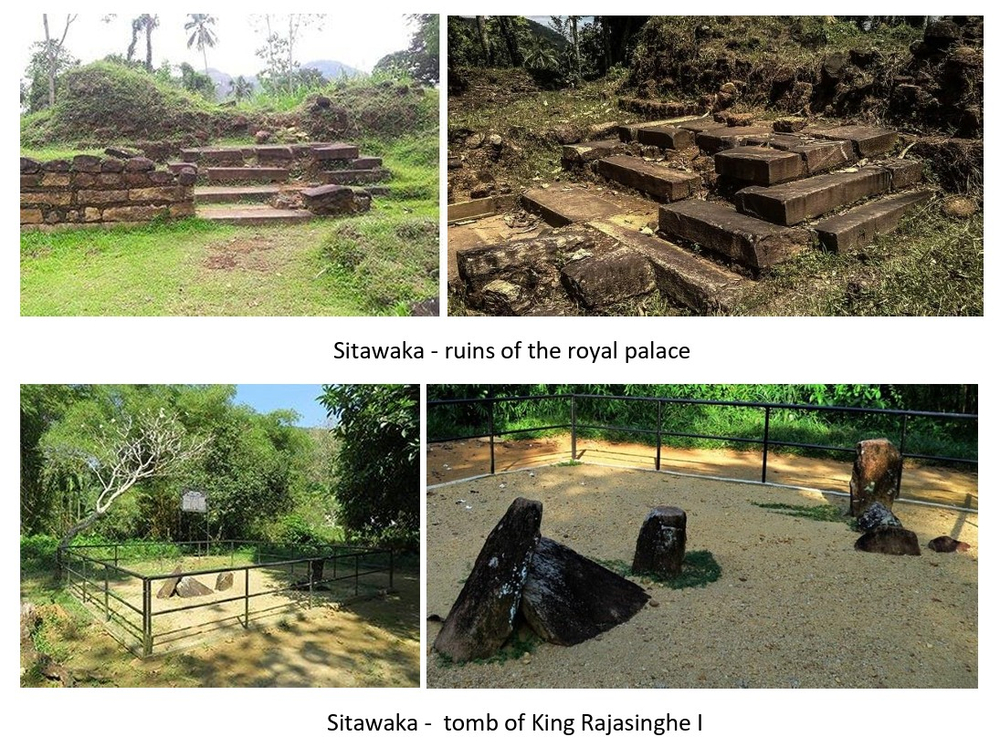
The Kingdom of Sitawaka was established in 1521 during a period of political upheaval in Sri Lanka following the fragmentation of the Kingdom of Kotte. The turning point came with an internal revolt commonly referred to in Sri Lankan historical tradition as the “Spoiling of Vijayabahu.” King Vijayabahu VI of Kotte faced rebellion from his three sons: Bhuvanekabahu, Mayadunne, and Raigam Bandara. The conflict resulted in the division of the Kingdom of Kotte into separate regional kingdoms, permanently altering the island’s political structure during the sixteenth century.
Following the division, Mayadunne established the Kingdom of Sitawaka in the central and southwestern region of Sri Lanka. Sitawaka’s location gave it strategic advantages due to its access to inland trade routes and defensible terrain. Mayadunne rapidly expanded his influence and transformed Sitawaka into one of the island’s strongest regional powers. Meanwhile, Bhuvanekabahu retained control over Kotte, while Raigam Bandara governed Raigama. The rivalry among these kingdoms created a prolonged period of warfare and shifting alliances.
Under Mayadunne’s leadership, Sitawaka became widely known for its resistance to Portuguese expansion in Sri Lanka. The Portuguese had established a growing presence along the island’s coast after arriving in the early sixteenth century and increasingly intervened in local political affairs. Sitawaka repeatedly engaged Portuguese forces and allied kingdoms in military campaigns aimed at limiting foreign influence and consolidating territorial control. These conflicts intensified during the reign of Mayadunne and later under his son, Rajasinha I.
The kingdom invested heavily in military organization, fortifications, and territorial defense. Sitawaka achieved several successes against rival kingdoms and Portuguese backed forces, at times becoming the dominant Sinhalese kingdom on the island. However, continuous warfare, succession struggles, and military pressure from both local and foreign rivals gradually weakened the kingdom. By the end of the sixteenth century, the Kingdom of Sitawaka declined, and its territories were eventually absorbed into the expanding Kingdom of Kandy and other regional powers.
Despite its relatively short existence, the Kingdom of Sitawaka remains an important part of Sri Lankan history because of its role in resisting Portuguese colonial expansion and reshaping political power on the island during the sixteenth century. The kingdom reflected the complex interaction between local dynastic rivalries and the growing influence of European colonial powers in South Asia.
Historical Significance:
The rise of Sitawaka marked one of the earliest large scale organized resistances against European colonial involvement in Sri Lanka. Its military campaigns and political alliances influenced the balance of power on the island for decades and contributed to the long history of resistance against foreign domination in the region.
View details1505
The arrival of the Portuguese in Sri Lanka marked a pivotal shift in the island's history. Prior to their arrival, Sri Lanka was under the rule of several local kingdoms, most notably the Kingdom of Kotte. The Portuguese, driven by their expanding maritime prowess and the lucrative spice trade, sought new territories and trade routes.
When the Portuguese reached Sri Lankan shores, they quickly established a presence by fortifying key coastal regions. Their strategic goal was to control the island's valuable cinnamon trade, which was highly sought after in Europe. Agreements and alliances were formed with local rulers, who saw potential benefits in the military and economic support from the newcomers. However, these alliances soon deteriorated as the Portuguese began to assert their dominance over the local populations and resources.
Their arrival ushered in a prolonged period of colonial rule that included a series of military engagements, fortifications, and cultural exchanges. The Portuguese introduced Roman Catholicism, which gradually spread, especially along the coastal areas. Many local traditions and structures were influenced, if not entirely transformed, by Portuguese governance and religious practices.
This period also saw significant resistance from the local population. Sinhalese rulers and other local factions frequently resisted Portuguese control, leading to multiple conflicts. These efforts, however, were often stymied by the Portuguese superior naval capabilities and advanced weaponry.
The presence of the Portuguese in Sri Lanka set the stage for successive European colonial powers, later followed by the Dutch and British, each seeking control of the island due to its strategic location and valuable resources.
#ColonialRule #SriLankanHistory #PortugueseInSriLanka #TradeRoutes #CinnamonTrade #MilitaryEngagements #CulturalInfluence #MoofLife
View details1469
In the wake of longstanding internal conflicts and external invasions, the Kingdom of Kotte faced a severe decline, leading to its eventual collapse. Amidst the political fragmentation, Senasammata Vikramabahu emerged as a central figure in establishing a new political entity—the Kingdom of Kandy.
Kandy, located in the central highlands of Sri Lanka, presented a strategic advantage with its natural fortifications and difficult terrain, hindering potential invasions. Vikramabahu capitalized on these geographic benefits to solidify control and create a stronghold. His regime focused on consolidating governance, establishing administrative structures, and reinforcing the region's defense capabilities.
Under his leadership, the Kingdom of Kandy began to thrive as a new center of political influence and cultural heritage. The kingdom placed a significant emphasis on Buddhism, aligning itself with the religious traditions that had deep roots in the region. This alignment was not just spiritual but also had sociopolitical ramifications, forging stronger unity among the populace and fostering a distinct identity separate from its predecessors.
The rise of the Kingdom of Kandy also marked shifts in trade and diplomacy. The strategic location facilitated control over inland trade routes, linking the central highlands with coastal regions and enabling the exchange of goods, ideas, and culture. Diplomatic engagements were cautiously approached, balancing interactions between emerging European powers, such as the Portuguese, and neighboring Asian states.
During this period, King Vikramabahu's administration took measures to develop infrastructure, such as constructing stupas, temples, and irrigation systems, which played a crucial role in supporting agriculture and sustaining the population. These developments contributed to the kingdom's economic stability and growth, laying a foundation for future prosperity.
The establishment of the Kingdom of Kandy marked a pivotal reconfiguration of power dynamics in Sri Lanka, transitioning from the earlier era dominated by Kotte to a more fortified and culturally distinct polity. This period also underscored the region's resilience and capacity for regeneration in the face of external and internal challenges.
#EstablishmentOfKandy #PoliticalTransition #SriLankaHistory #Buddhism #TradeRoutes #MoofLife
View details1413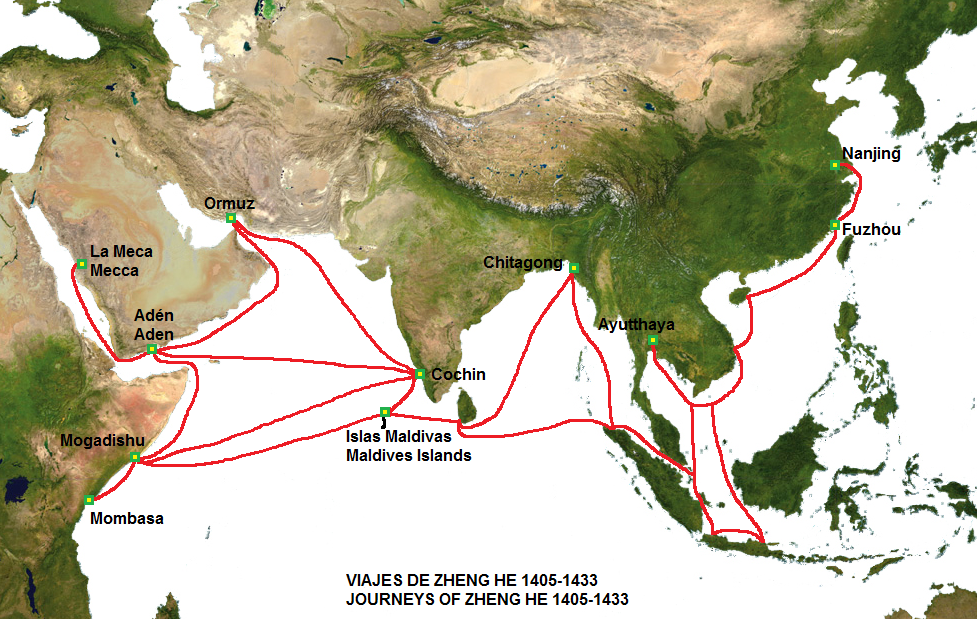
During his fourth expedition as part of the Ming treasure voyages, Chinese explorer Zheng He visited Sri Lanka. Zheng He, a formidable mariner of the Ming dynasty, was leading a grand fleet comprising hundreds of ships and thousands of men. The primary objective of these voyages was to establish Chinese trading presence, collect tributes, and display the power and wealth of the Ming dynasty.
On this expedition, Zheng He's fleet set anchor in the port city known today as Galle. Sri Lanka, strategically situated along the maritime Silk Road, was an important nexus for trade, bridging the East and West. Rich in resources such as cinnamon and precious gems, Sri Lanka attracted traders from diverse regions.
The arrival of Zheng He's fleet on Sri Lankan shores had a significant impact on local geopolitics. The then ruler of Sri Lanka, King Alagakkonara, perceived the Chinese fleet as both a threat and an opportunity. Diplomatic engagements were initiated, involving the exchange of gifts and negotiations. However, tensions soon surfaced owing to differing expectations—Zheng He sought allegiance and tribute to the Ming emperor, which was resisted by the local king.
This visit wasn't merely a diplomatic or commercial venture; it also led to a brief military confrontation. Despite initial hostility, this clash resolved with the establishment of improved diplomatic ties. The Chinese influence in Sri Lanka grew subsequently, aided by the cultural exchanges that took place. Artifacts, inscriptions, and historical records document these exchanges.
Zheng He's voyages underscored the importance of maritime routes and international diplomacy, leaving an enduring legacy on the regions he visited, including Sri Lanka. These interactions also facilitated the spread of Chinese culture and led to the establishment of overseas diaspora communities.
#TradeRoutes #MaritimeHistory #SriLanka #ChineseExplorers #Diplomacy #CulturalExchange #MoofLife
View details1412
Parakramabahu VI, ascending to power in the region of Sri Lanka, established the Kingdom of Kotte by consolidating fragmented territories through political alliances and military campaigns. His ascent marked the unification of various regional factions, solidifying a cohesive administration that facilitated increased trade, cultural exchanges, and territorial control.
Under Parakramabahu VI, the Kingdom of Kotte saw the reorganization of the administrative structure. This systematic approach led to more efficient governance and stability within the kingdom, enhancing both local and international trade prospects, especially with South Asian and Southeast Asian partners. The kingdom became a significant hub of commerce, particularly noted for its flourishing spice trade, which played a vital role in its economic prosperity.
The establishment of the Kingdom of Kotte resulted in the advancement of infrastructure with the construction of fortifications, temples, and irrigation systems, which were critical for agricultural productivity. Parakramabahu VI's reign also prioritized cultural pursuits, sponsoring the arts and literature, thus fostering a rich cultural heritage that influenced subsequent generations.
Moreover, the consolidation and expansion under his rule made Kotte a formidable force in the region, enhancing its political leverage and historical significance. The kingdom's strengthened defenses and strategic trade networks positioned it as a prominent player in the Indian Ocean trade routes.
The establishment of Kotte by Parakramabahu VI is a critical event that shaped the socio-economic and cultural landscape of Sri Lanka, providing a foundation for later developments in the region. It underscores the transformative impact of strategic leadership and territorial unity.
#MoofLife #SriLankaHistory #KingdomOfKotte #ParakramabahuVI #TradeAndCommerce #CultureAndHeritage #PoliticalUnity
View details1410
During the reign of Parakramabahu VI in ancient Sri Lanka, the island was a pivotal maritime hub connecting trade between East and West. Ma Huan, a Chinese traveler and translator, visited Sri Lanka as part of the fleet commanded by Admiral Zheng He. This expedition was part of the Ming Dynasty's effort to expand its maritime influence and create diplomatic and commercial ties.
Ma Huan’s journey to Sri Lanka was significant for several reasons. As a linguist and chronicler, Ma Huan documented his observations in great detail, providing valuable insights into the island’s socio-economic conditions. He wrote about the flourishing ports, the abundance of precious gemstones, and the vibrant trade networks. Additionally, he noted the presence of various religious practices and the rich cultural tapestry woven from Buddhist, Hindu, and indigenous traditions.
The King of Kotte, Parakramabahu VI, welcomed the Chinese expedition with ceremonial hospitality, strengthening diplomatic relations between China and Sri Lanka. This exchange demonstrated Sri Lanka’s strategic importance in the Indian Ocean trade routes and highlighted the mutual benefits of engagement. Ma Huan's travel accounts later influenced future navigators and provided a unique perspective on Southeast Asian maritime trade and cultural exchanges.
The chronicles written by Ma Huan serve as crucial historical documents. They shed light on the socio-political landscape of Sri Lanka during Parakramabahu VI's rule and underscore the island's significance in global trade routes of that period. The impact of these visits extended to enriching academic knowledge and providing documentary evidence for historians and researchers studying early global interactions.
The detailed descriptions by Ma Huan of Sri Lanka's trade, culture, and society provide contemporary researchers a rare glimpse into the past, contributing to a deeper understanding of ancient global connecting points. They underscore the legacy of Sri Lanka’s historical importance and the lasting impact of early international diplomacy.
#MoofLife #SriLanka #ZhengHe #MaHuan #ParakramabahuVI #MaritimeTrade #Diplomacy #CulturalExchange #History
View details1348
The siege of Gampola marked a pivotal point in the political landscape of Sri Lanka. During this period, the Pandyan forces, hailing from the Southern part of the Indian subcontinent, launched an aggressive campaign against the Kingdom of Gampola. This strategic kingdom was situated in the central highlands of Sri Lanka, a region known for its defensible terrain and political significance.
The Pandyan incursion was not an isolated event but rather part of the Pandyas' broader imperial ambitions in the region. Driven by the desire to control the rich resources and trade routes of Sri Lanka, the Pandyas utilized superior military tactics and manpower. The siege of Gampola eventually succeeded due to sustained pressure and logistical advantages held by the invaders.
Following the fall of Gampola, the once-stable Kingdom of Jaffna in the north faced increased vulnerability. The Kingdom of Jaffna had been a significant regional power, maintaining its influence through maritime trade and political alliances. The Pandyan forces, capitalizing on their previous victory, subsequently moved to assert their dominance over Jaffna. The fall of Gampola effectively served as a catalyst for the power vacuum which led to the decline and eventual fall of the Jaffna Kingdom.
The impact of this siege was far-reaching. It disrupted the established socio-political order, leading to considerable changes in governance and regional control. The subjugation by the Pandyan forces led to shifts in trade routes, economic decline, and the reorganization of local power structures. Additionally, this event underscored the interconnectedness of South Asian geopolitics, as local kingdoms were often caught in the broader struggles between larger empires.
Historical records and archaeological evidence suggest that this period marked the end of an era for both Gampola and Jaffna, paving the way for new governance and cultural influences from the Indian mainland. The siege of Gampola by Pandyan forces, culminating in the fall of the Jaffna Kingdom, remains a critical episode in the history of Sri Lanka, reflecting the dynamic and often tumultuous nature of medieval South Asian politics.
#SriLankaHistory #MedievalAsia #PandyanEmpire #Gampola #JaffnaKingdom #HistoricalEvents #MoofLife
View details