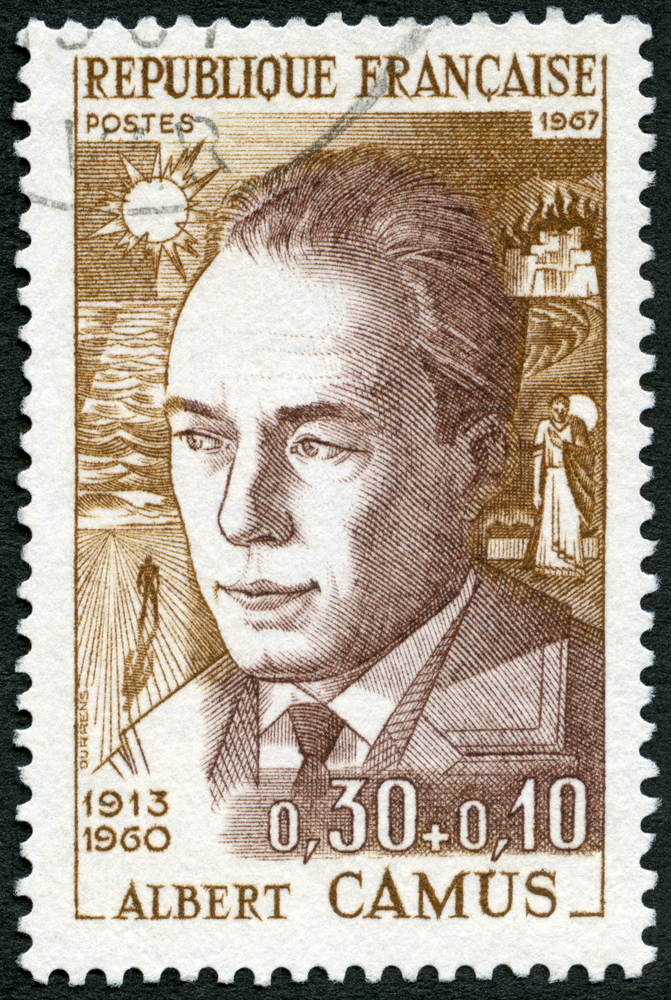
Life cover image

Albert Camus

verified-icon
The Absurdist Philosopher
Explore Albert Camus’s life from Algiers to Nobel Prize fame - key books like The Stranger and The Plague, his philosophy of the Absurd, and his lasting legacy. Albert Camus (1913–1960) was a French-Algerian novelist, essayist, journalist, and playwright whose work became a defining voice of 20th-century literature and moral thought. Best known for The Stranger (1942), The Plague (1947), and The Fall (1956), Camus explored how people search for meaning in a world that can feel indifferent - an idea he developed through his philosophy of the Absurd and the ethical response he called revolt (not despair, but a clear-eyed commitment to human dignity). In 1957, he received the Nobel Prize in Literature for a body of work that illuminated “the problems of the human conscience in our times.” Early Life in Algeria: Camus was born on 7 November 1913 in Mondovi (French Algeria). His father was killed in World War I when Camus was still an infant, and he grew up in modest circumstances in Algiers with his mother and extended family. A turning point came through education: his primary-school teacher Louis Germain helped him win a scholarship to the Algiers lycée, opening a path into literature, philosophy, and public life. He later studied philosophy at the University of Algiers, but recurring illness (tuberculosis) disrupted his health and early plans. Writer, Journalist, and Resistance Voice: Camus began his career in Algeria as a journalist and theatre figure, then moved to France as Europe entered the upheaval of World War II. During the German occupation, he joined the French Resistance and wrote for the underground press; after liberation, he became closely associated with the newspaper Combat, where his writing responded to the moral demands of the time. By 1947, he withdrew from day-to-day political journalism and focused on fiction, essays, and theatre - while continuing to address questions of violence, justice, freedom, and responsibility. The “Absurd” and the Ethics of Revolt - Camus is often linked with existentialism, but he famously resisted being labeled an “existentialist.” His most enduring ideas are: • The Absurd: the tension between the human desire for meaning and an indifferent universe. • Revolt: a refusal to give in to nihilism - choosing solidarity, limits, and moral courage even without guaranteed answers. These ideas run through his essays and stories, where characters are tested by ordinary routines, social judgment, political conflict, and sudden crisis - forcing readers to ask what integrity looks like when certainty is impossible. Major Works and What They Represent - Camus’s landmark works form a powerful “timeline of ideas”: • The Stranger (1942): a sharp, unsettling portrait of alienation and social judgment; a gateway into Camus’s thinking on the Absurd. • The Myth of Sisyphus (1942): his classic essay on the Absurd and how to live without false hope. • The Plague (1947): an allegorical novel of collective endurance, moral choice, and human solidarity in the face of disaster. • The Rebel (1951): a major essay on rebellion, political violence, and the danger of ideologies that justify cruelty. • The Fall (1956): a dark, brilliant monologue on guilt, self-deception, and moral performance. • Plays such as Caligula: showing his lifelong commitment to theatre and to moral questions staged as conflict and choice. Nobel Prize and Final Years: In 1957, Camus received the Nobel Prize in Literature - one of the most prominent recognitions of his era. He continued writing and planning new work, including an autobiographical project, while remaining deeply concerned with the political turmoil connected to his homeland and the ethics of violence and justice. Death and Legacy: Camus died on 4 January 1960, aged 46, in a car crash near Sens, France, while traveling with his friend and publisher Michel Gallimard. His early death cemented a powerful legacy: Camus remains a global reference point for readers seeking clarity about conscience, courage, and the human condition - especially in times of crisis, conflict, and uncertainty. Quick Facts: • Full name: Albert Camus • Birthplace: Mondovi, French Algeria (now Algeria) • Died in: Near Sens, France • Known for: The Stranger, The Plague, The Fall • Core ideas: Absurd, revolt, moral responsibility • Major award: Nobel Prize in Literature (1957)
#AlbertCamus #Existentialism #Philosophy #Absurdism #NobelPrize #FrenchLiterature #TheStranger #ThePlague #Literature
Life Classification : Philosopher , Novelist , Dramatist , World federalist
Life Id : PL6102793951308
Verified Name : albert-camus
Life Type : Person Life
Birth : 1913-Nov-07
Death : 1960-Jan-04 ( at the age of 46 )
Life Editor(s) : History Editorial Network (HEN)
Life Privacy : Public
Subscription : Elite
Created On: 2024-11-03 | Updated On: 2026-01-25
Media Credit: | Background Image: William A. Morgan
Related Lives

Mahatma Gandhi

Indian lawyer, anti-colonial nationalist

Joe Biden

46th president of the United States

Jesse Jackson

Civil rights activist and politician