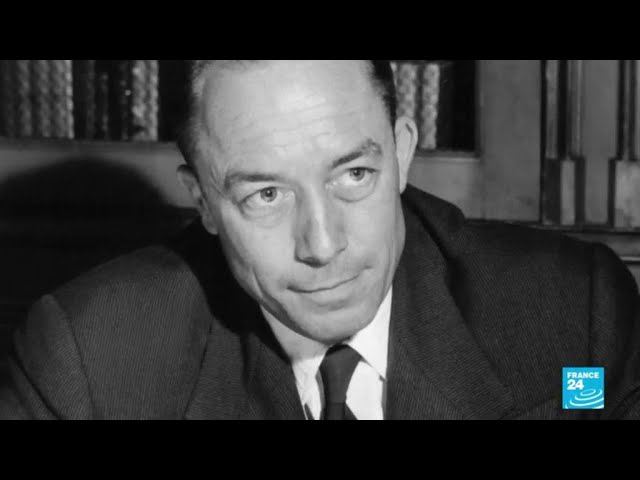
French-Algerian Nobel laureate Albert Camus dies tragically in car accident at 46.
France

Literature
Tragedy
4 min read
Updated By: History Editorial Network (HEN)
Published:
Albert Camus, a French-Algerian philosopher, author, and journalist, met an untimely death due to a car accident. Camus, known for his contributions to existentialist and absurdist philosophy, was awarded the Nobel Prize in Literature in 1957. He was traveling with his publisher and friend, Michel Gallimard, in a Facel Vega, a luxury sports car. The car crashed into a tree on a long, straight road in the small town of Villeblevin, in the department of Yonne, France.
Camus' death shocked the literary and intellectual community. He was only 46 years old and at the height of his creative powers. His works, such as "The Stranger," "The Plague," and "The Myth of Sisyphus," had a significant impact on 20th-century thought and literature. The accident abruptly cut short what many believed would be an even more illustrious career.
Police reports indicated that the crash was due to over-speeding. The car’s tire marks showed no signs of braking, indicating that Gallimard may have lost control of the vehicle. Gallimard survived initially but succumbed to his injuries a few days later. Among the wreckage, a briefcase containing an unfinished manuscript titled "The First Man" was recovered. This work would later be posthumously published and recognized as a valuable addition to Camus' oeuvre.
Camus' death led to an outpouring of grief and reflection, not only in France but internationally. He had been a voice of reason during tumultuous times, speaking out against totalitarianism, colonialism, and war. His philosophy of the absurd, which focused on the conflict between humans' desire to find meaning in life and the indifferent universe, resonated deeply with readers.
#AlbertCamus #Philosophy #Existentialism #Absurdism #Literature #TragicLoss #MoofLife
Primary Reference
TIL Albert Camus had a life long fear of automobiles. When he ...
Explore the Life Moments of
 AI Twin