
India

The Land of Diversity and Vibrant Culture.
Related Lives

Academy Awards
The Oscars

Burundi
The Land of a Thousand Hills

Nobel Prize in Literature
Inspiring through literature

Rugby World Cup
International Rournament in Rugby

Benin
The Jewel of West African Culture.

Australia
The Land Down Under

Arkansas
The Natural State

Japan
The Land of the Rising Sun

1782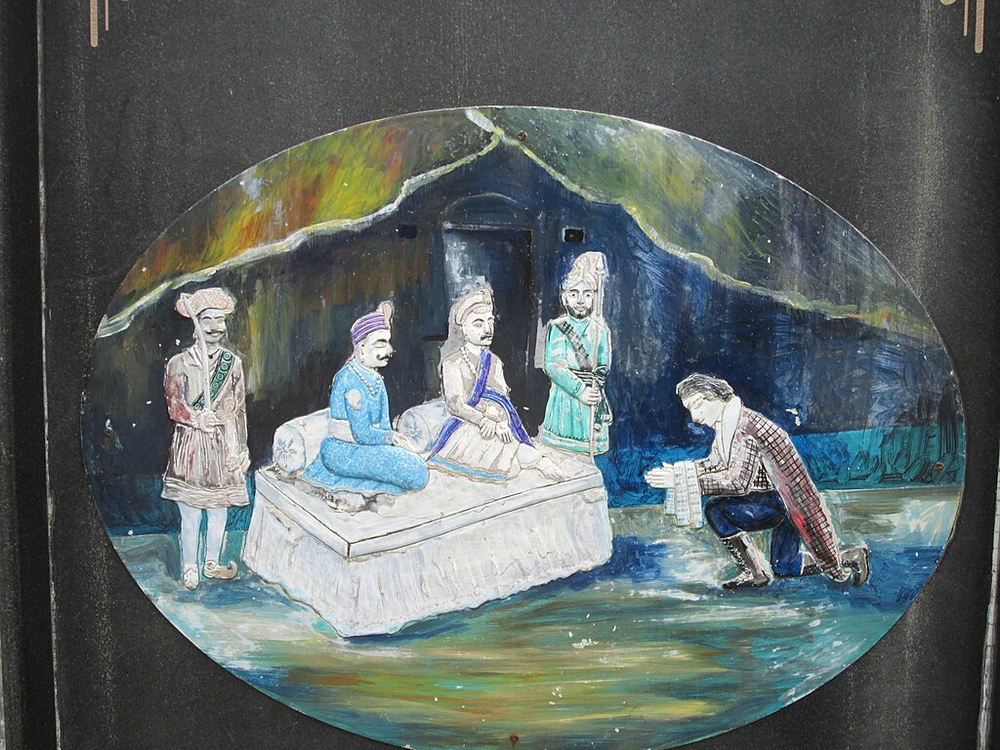
In 1782, the Treaty of Salbai was concluded between the Maratha Empire and the British East India Company. The Marathas, a dominant power in India, had been engaging in multiple conflicts with the British. The Treaty of Salbai brought an end to the First Anglo-Maratha War, establishing peace and territorial boundaries. The Marathas agreed to cede territories to the British, ensuring a more stable relationship between the two powers.
The treaty also included provisions for prisoner exchanges and outlined mechanisms for dispute resolution. For the British East India Company, the treaty provided a strategic advantage by solidifying their control over key regions and securing trade routes. This agreement marked a significant moment in the colonial history of India, as it reshaped power dynamics in the region.
The Treaty of Salbai had long-lasting implications for both the Maratha Empire and the British East India Company. It not only redefined territorial control and influence but also set the stage for future engagements between the two powers. The treaty demonstrated the diplomatic prowess of the Marathas in negotiating with the British, while also showcasing the expanding reach of the East India Company in India.
Overall, the Treaty of Salbai was a pivotal event that had far-reaching consequences for India's political landscape. It highlighted the complexities of colonial interactions and the strategies employed by both indigenous powers and foreign entities to protect their interests. The treaty laid the groundwork for future alliances and conflicts, shaping the course of Indian history in the years to come.
#MarathaEmpire #EastIndiaCompany #ColonialIndia
View details1770
The Great Bengal famine had a catastrophic impact on the region, leading to the estimated deaths of around 10 million people. The famine was a result of both a failed monsoon and the exploitative policies of the East India Company, which exacerbated the already dire situation.
Warren Hastings' report in 1772 revealed the extent of the tragedy, stating that a third of the population in the affected area had perished due to starvation. The combination of natural disaster and colonial policies created a perfect storm, leaving millions to suffer and die from lack of food and resources.
The East India Company's focus on profit and extraction of resources from the region, without regard for the well-being of the local population, worsened the effects of the famine. The failure of the monsoon further devastated the agrarian economy, leading to widespread crop failures and food shortages.
The consequences of the famine were far-reaching, with communities decimated, families torn apart, and long-lasting impacts on the social and economic fabric of the region. The scale of the tragedy highlighted the vulnerability of the population to both natural disasters and exploitative colonial practices.
In the aftermath of the Great Bengal famine, efforts were made to provide relief and aid to the affected population, but the loss of life and suffering endured by millions during that time left a lasting scar on the history of the region.
#BengalFamine #EastIndiaCompany #ColonialExploitation #NaturalDisaster #HumanTragedy
View details1767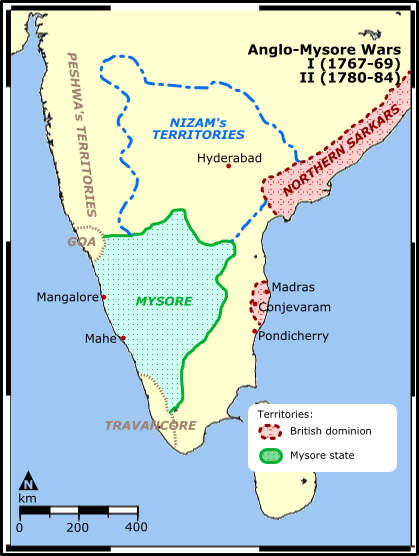
The First Anglo-Mysore War marked a pivotal conflict between the British East India Company and the Kingdom of Mysore. It was ignited by the strained political landscape and the ambition for territorial expansion in southern India. The Kingdom of Mysore, under the rule of Hyder Ali, sought to assert its dominance in the region, challenging the growing influence of the British trading company.
The war unfolded as a series of military engagements, with both sides deploying their forces strategically. The British, with their superior resources and naval power, initially gained ground. However, Hyder Ali's guerilla warfare tactics and knowledge of the terrain posed significant challenges for the British forces. The conflict escalated, leading to a stalemate that ultimately resulted in the Treaty of Madras, signaling the end of hostilities.
The impact of the First Anglo-Mysore War was profound. It highlighted the complexities of colonial power dynamics in India and set the stage for future conflicts between the British and Indian kingdoms. The British East India Company emerged with a reinforced foothold in southern India, while Mysore faced territorial losses and economic strain.
The repercussions of the war reverberated beyond the battlefield, shaping diplomatic relations and power struggles in the Indian subcontinent. The resilience and military acumen displayed by Hyder Ali during the conflict solidified Mysore's reputation as a formidable opponent against colonial incursions.
In retrospect, the First Anglo-Mysore War serves as a defining chapter in the annals of Indian colonial history. It underscores the clash of interests and ambitions that characterized the era of European expansion in the region. The legacy of this conflict endures through its impact on regional power dynamics and the enduring struggle for sovereignty and independence.
#AngloMysoreWar #BritishEastIndiaCompany #KingdomOfMysore #ColonialConflict #HyderAli
View details1765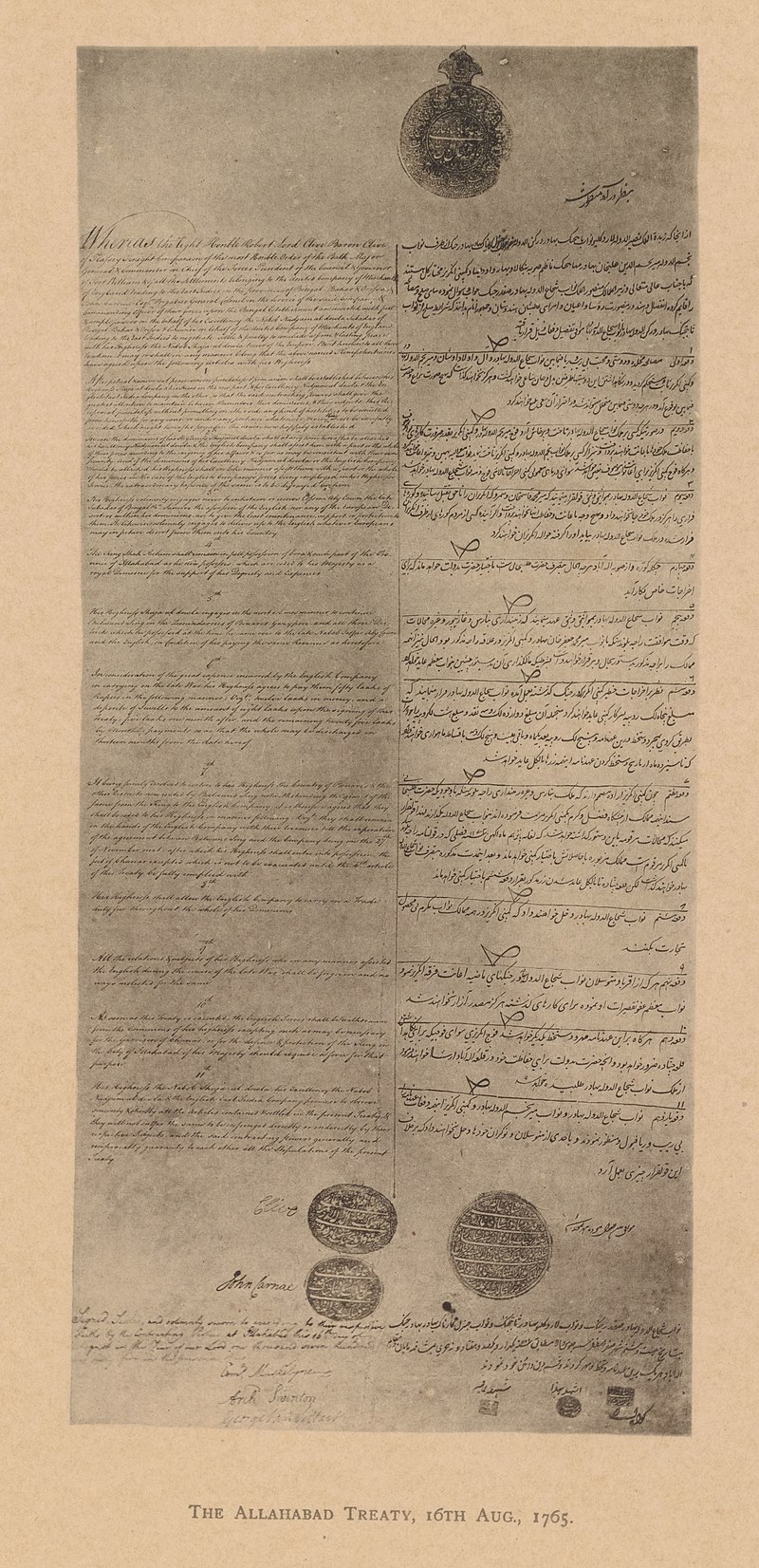
During the Treaty of Allahabad, the Mughal Emperor Shah Alam II and the British East India Company formalized an agreement that altered the course of Indian history. It came at a time when the once-powerful Mughal Empire was in decline, and the British were steadily expanding their influence across the subcontinent. The treaty granted the East India Company the diwani rights, enabling them to collect revenue in the provinces of Bengal, Bihar, and Orissa.
The treaty marked a significant shift in power dynamics, as it effectively placed the Company in a position of economic authority over a vast territory, while the Mughal Emperor retained nominal sovereignty. With the diwani rights, the Company gained immense financial control, further strengthening its grip on the region. This paved the way for British colonial rule in India, as they gradually extended their dominion over other parts of the country.
Additionally, the Treaty of Allahabad led to a resurgence of the East India Company's influence in India, solidifying their position as a dominant force in the subcontinent. It also highlighted the deteriorating power of the Mughal Empire, which had once been a formidable political entity in the region. The treaty's repercussions reverberated throughout Indian history, shaping the trajectory of British colonization and the eventual struggle for independence.
In conclusion, the Treaty of Allahabad was a pivotal moment that marked the ascendance of the British East India Company in India and the decline of the Mughal Empire. It set the stage for British colonial rule and fundamentally altered the socio-political landscape of the subcontinent. #TreatyofAllahabad #BritishEastIndiaCompany #MughalEmpire #IndianHistory
View details1764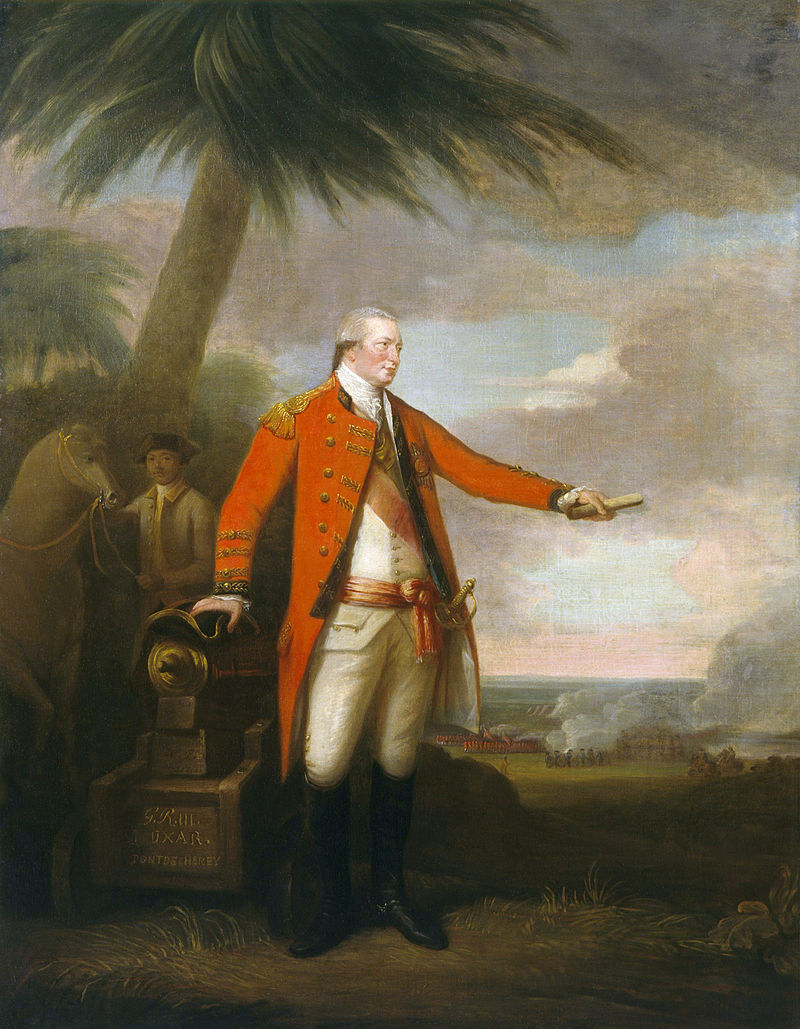
The Battle of Buxar was a decisive conflict that took place in which British forces emerged victorious against an alliance formed by the Mughal Empire, the Nawab of Bengal, and the Nawab of Oudh. The battle occurred near the town of Buxar in present-day Bihar, India. The backdrop of the war was the ongoing struggle for supremacy in the Indian subcontinent, as the British East India Company sought to expand its influence and control over the region.
The British forces, led by Major Hector Munro, were able to defeat the combined armies of the Mughal, Bengal, and Oudh forces, despite being significantly outnumbered. The superior military tactics and firepower of the British, including the effective use of artillery, played a crucial role in securing their victory. The defeat of the allied forces at Buxar marked a turning point in the history of British colonization in India, as it paved the way for the company to establish its dominance over large parts of the country in the years to come.
Following the resounding victory at Buxar, the British were able to strengthen their position in India by securing favorable treaties with the defeated powers. The Treaty of Allahabad, signed in the aftermath of the battle, granted the British East India Company the right to collect revenue in Bengal, Bihar, and Orissa. This laid the foundation for the company's further expansion and consolidation of power in the region, ultimately leading to the establishment of British colonial rule in India.
The Battle of Buxar had far-reaching implications for the political landscape of India, as it marked the beginning of British ascendancy and the decline of Mughal authority. The outcome of the battle also highlighted the effectiveness of Western military strategies and technology in a traditionally warfare scenario. The legacy of the battle continues to be felt in modern India, as it played a significant role in shaping the country's history and trajectory.
#BattleOfBuxar #BritishVictory #EastIndiaCompany #ColonialExpansion #TreatyOfAllahabad #MughalEmpire #IndianSubcontinent
View details1761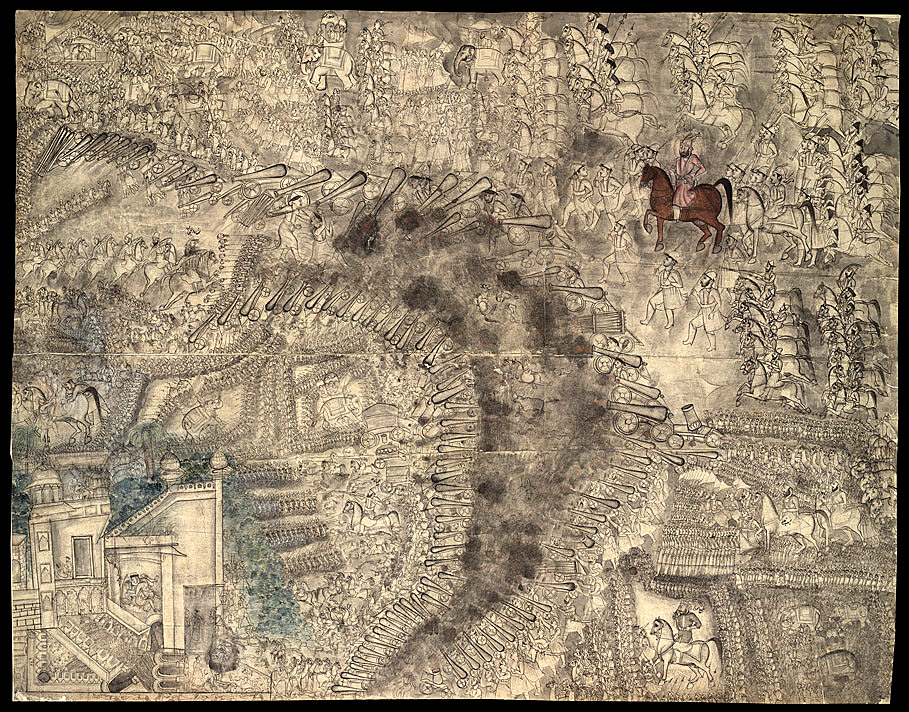
In the 18th century, the Maratha Empire was a dominant force in India, expanding its territories and influence. However, the rise of the Durrani Empire under the leadership of Ahmad Shah Abdali posed a significant threat to the Marathas' power. The escalating tensions between the two empires eventually led to a decisive battle at Panipat.
The Third Battle of Panipat was fought between the Marathas, led by Sadashivrao Bhau, and the Durrani Empire, led by Ahmad Shah Abdali. The Marathas had a massive army, but they were met with fierce resistance and strategic warfare from Abdali's forces. The battle was intense and brutal, resulting in heavy casualties on both sides.
Despite putting up a valiant fight, the Marathas suffered a devastating defeat at Panipat. The loss had a profound impact on the Maratha Empire, crippling its military power and shattering its confidence. The Durrani Empire emerged victorious, solidifying its position in northern India.
The Third Battle of Panipat is considered one of the largest and bloodiest battles in Indian history. It marked the end of Maratha expansion and the beginning of Durrani dominance in the region. The aftermath of the battle also paved the way for the eventual decline of the Maratha Empire.
The repercussions of the Third Battle of Panipat were far-reaching and enduring. It reshaped the political landscape of India, with the Marathas losing their stronghold and the Durrani Empire asserting its authority. The battle remains a poignant reminder of the brutal realities of warfare and the shifting powers in the Indian subcontinent.
#MarathaEmpire #DurraniEmpire #BattleofPanipat #AhmadShahAbdali #SadashivraoBhau #IndianHistory #MilitaryConflict
View details1760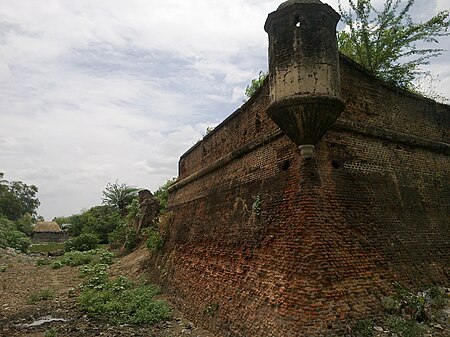
The Battle at Wandewash was a pivotal military engagement between British and French forces in India. The conflict arose as part of the larger war involving European powers vying for control over Indian territories and trade routes. The French, under the leadership of General Lally, sought to expand their influence, while the British aimed to secure their dominance in the region.
The British troops, commanded by Colonel Eyre Coote, utilized superior tactics and strategy to outmaneuver the French forces. Despite facing initial setbacks, including being outnumbered, the British ultimately emerged victorious. The French suffered heavy casualties and were forced to retreat, effectively surrendering their hold on the Carnatic region to the British.
The outcome of the Battle at Wandewash had far-reaching consequences for the power dynamics in India. It solidified British control over the Carnatic, bolstering their position as a dominant force in the region. The defeat of the French dealt a significant blow to their ambitions in India and ultimately contributed to their decline in the subcontinent.
The British victory at Wandewash marked a turning point in the struggle for supremacy in India, paving the way for further British expansion and consolidation of power. The battle highlighted the effectiveness of British military tactics and leadership, solidifying their reputation as a formidable force in Indian conflicts.
#BattleAtWandewash #BritishVictory #ColonialConflict #IndianHistory
View details1758
In the 18th century, the Maratha Empire, under the leadership of Raghunathrao and Mahadaji Shinde, clashed with the Durrani Empire in the Battle of Attock. The Marathas emerged victorious in this military engagement, capturing the strategic city of Attock.
The Maratha Empire, a dominant power in India during this period, sought to expand its influence and control over key territories. The Durrani Empire, ruled by Ahmad Shah Abdali, posed a threat to the Maratha expansion plans. The Battle of Attock was a crucial confrontation between these two formidable forces.
Raghunathrao and Mahadaji Shinde led the Maratha forces with strategic acumen and military prowess. Their coordinated efforts and tactical maneuvers enabled the Marathas to gain the upper hand in the battle. The capture of Attock was a significant achievement for the Maratha Empire, as it not only secured a vital stronghold but also dealt a blow to the Durrani Empire's power in the region.
The aftermath of the Battle of Attock reshaped the political landscape in India. The Maratha Empire's triumph bolstered its position as a dominant force in the subcontinent, while the Durrani Empire faced setbacks in its attempts to assert control over the region. The capture of Attock marked a turning point in the power struggle between these two empires.
The Battle of Attock underscores the military prowess and strategic vision of the Maratha Empire under the leadership of Raghunathrao and Mahadaji Shinde. Their victory in this battle not only secured territorial gains but also demonstrated the Marathas' ability to withstand external threats and assert their dominance in the region.
#MarathaEmpire #DurraniEmpire #BattleOfAttock #Raghunathrao #MahadajiShinde #IndiaHistoricalBattle
View details1757
The Third Carnatic War (1757-1763) was a significant conflict in India, primarily fought between the British East India Company and the French East India Company. It was part of the larger Seven Years' War (1756-1763), which was a global conflict involving major European powers. The war marked the culmination of a series of conflicts known as the Carnatic Wars, which were fought in the Carnatic region of southern India. The Third Carnatic War played a crucial role in establishing British dominance in India, significantly impacting the region's political and economic landscape.
Background
The Carnatic Wars were driven by the rivalry between the British and French East India Companies, both of which sought to expand their influence and control over trade in India. The first two Carnatic Wars (1746-1748 and 1749-1754) had already set the stage for a decisive showdown. By the mid-18th century, the Carnatic region, encompassing parts of modern-day Tamil Nadu and Andhra Pradesh, had become a battleground for these competing colonial powers.
Key Figures
Robert Clive: A key British military officer and strategist, Clive had previously secured British interests in the region through victories in earlier conflicts.
Thomas Arthur, Comte de Lally: The French commander sent to India with reinforcements to bolster French positions and reclaim lost territories.
Major Battles and Events
Battle of Wandiwash (1760)
One of the pivotal battles of the Third Carnatic War was the Battle of Wandiwash, fought on January 22, 1760. The British forces, commanded by Sir Eyre Coote, decisively defeated the French troops led by Count de Lally. This battle was significant as it effectively ended French military power in southern India and marked a turning point in the war.
Siege of Pondicherry (1760-1761)
Following their victory at Wandiwash, the British laid siege to the French stronghold of Pondicherry. The siege lasted from October 1760 to January 1761, culminating in the fall of Pondicherry. This defeat deprived the French of their principal base in India and significantly weakened their position in the region.
Outcome and Significance
The Treaty of Paris (1763) formally ended the Third Carnatic War and the Seven Years' War. Under the treaty's terms, France ceded its territories in India to the British, retaining only a few minor enclaves for trading purposes. The French influence in India was drastically reduced, while the British emerged as the dominant colonial power on the subcontinent.
Impact on India
The Third Carnatic War had far-reaching consequences for India. It marked the beginning of British supremacy in the region, paving the way for the eventual establishment of British colonial rule. The consolidation of British power laid the foundation for the expansion of their control over other parts of India, ultimately leading to the establishment of the British Raj in the 19th century.
#MomentsOfLife #MoofLife_Moment #MoofLife #ThirdCarnaticWar #BritishIndia #FrenchIndia #ColonialHistory #BattleOfWandiwash #IndianHistory #SevenYearsWar #HistoricalEvents
View detailsThe Battle of Plassey marked a crucial turning point in the history of colonial India when the British East India Company secured control over Bengal. The conflict arose due to the political instability within the Bengal region, prompting the Company to intervene in the power struggle between the Nawab of Bengal, Siraj-ud-Daulah, and his discontented nobles.
The British, under the leadership of Robert Clive, seized the opportunity to advance their influence in the region by forming alliances with local officials who were opposed to the Nawab. The decisive battle took place near the village of Plassey, where the British forces, although significantly outnumbered, employed superior military tactics and cunning strategies to secure a resounding victory.
The aftermath of the Battle of Plassey was monumental. The defeat of Siraj-ud-Daulah and the establishment of a puppet ruler allowed the East India Company to gain control over the prosperous province of Bengal. This victory paved the way for the Company to expand its dominion in India, leading to the eventual colonization of the entire subcontinent.
The Battle of Plassey symbolizes the beginning of British colonial rule in India, marking a significant shift in the balance of power in the region. The economic exploitation, cultural subjugation, and political dominance that followed reshaped the social fabric of India for centuries to come. The event serves as a stark reminder of the impact of colonialism on the indigenous populations and the lasting consequences of foreign intervention in regional affairs.
#BattleOfPlassey #BritishEastIndiaCompany #Colonialism #ColonialIndia #RobertClive #Bengal #BritishColonialRule #EastIndiaCompany #ColonialImpact #IndianHistory
View details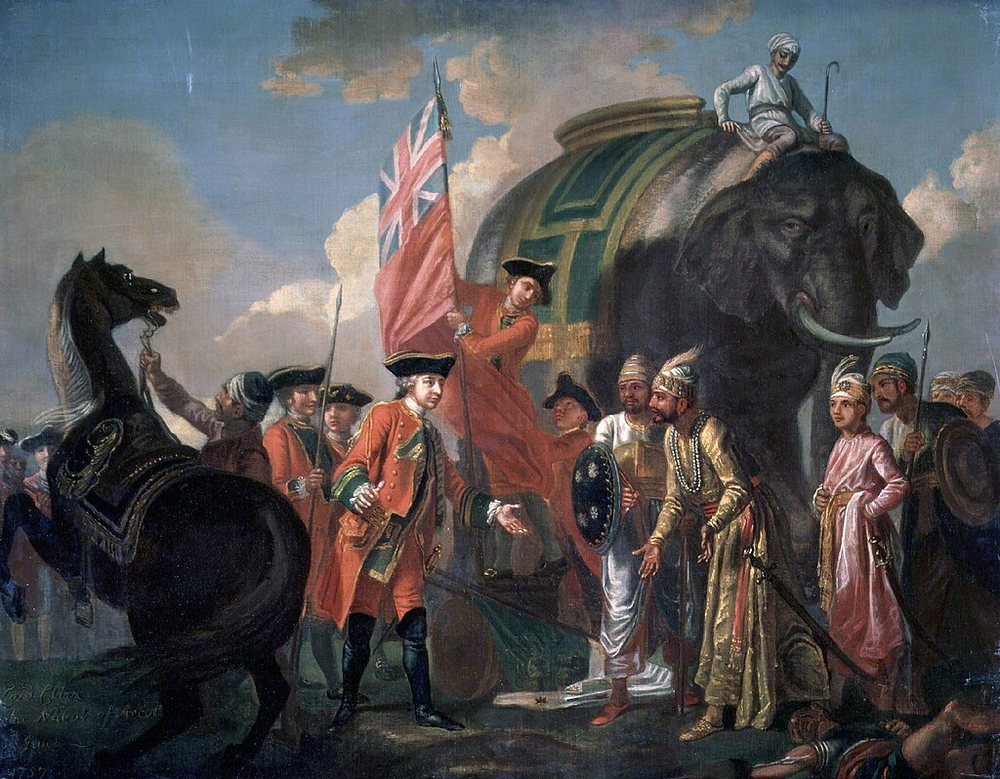
1696
In 1696, the Danish East India Company established Danish India, a colony that encompassed the towns of Tranquebar, Serampore, and the Nicobar Islands. The aim was to participate in the lucrative trade routes of the Indian Ocean region. The colony became a vital trading post for the Danish, enabling them to engage in commerce with India, Southeast Asia, and other European colonies in the region.
One of the most significant impacts of Danish India was the cultural exchange that took place between the Danish settlers and the local Indian population. This exchange influenced various aspects of society, including architecture, cuisine, and language. The Danish also played a role in the development of education and printing in the region, leaving a lasting legacy.
The strategic location of Danish India also played a crucial role in regional politics and trade dynamics. The colony's presence helped the Danish establish themselves as key players in the Indian Ocean trade network. They competed with other European powers such as the British, French, and Dutch for control over valuable resources and trade routes.
Despite facing challenges such as competition from other European colonizers and conflicts with local rulers, Danish India flourished for over two centuries. However, in the early 19th century, the colony faced economic difficulties and was eventually sold to the British in 1845.
The establishment of Danish India marked a significant chapter in the history of colonialism in the Indian subcontinent. It highlighted the complexities of cross-cultural interactions and the impact of European powers on indigenous societies. The legacy of Danish India lives on in the historical buildings, traditions, and cultural exchanges that continue to shape the region to this day.
#DanishIndia #Colonialism #CulturalExchange #Trade #IndianOcean #EuropeanPowers
View details1665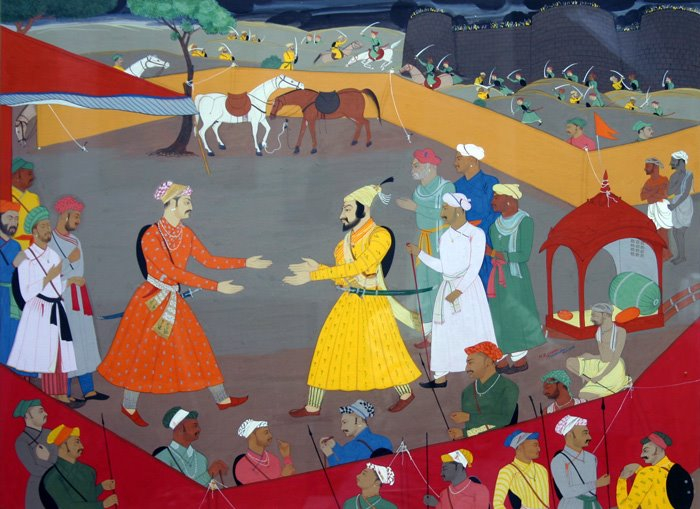
During the incident known as the Treaty of Purandar, Sambhaji, the ruler of the Maratha Empire, was forced to sign a treaty with the Mughal Empire under Aurangzeb's reign. The treaty was signed after a series of military defeats suffered by the Marathas against the Mughals.
The Treaty of Purandar led to the Marathas ceding 23 forts to the Mughals, including the strategically important fort of Purandar. In return, Sambhaji was granted territories in the Konkan region. Moreover, the Marathas were required to provide military assistance to the Mughals whenever needed.
The treaty not only weakened the Maratha Empire but also established the Mughal Empire's dominance in the Deccan region. This event marked a significant shift in power dynamics in India during that period. It also highlighted the Mughals' attempts to expand their influence over the various regions of the subcontinent.
Despite the treaty, hostilities between the Marathas and the Mughals continued, eventually leading to the resumption of conflicts between the two powers.
#TreatyofPurandar #MarathaEmpire #MughalEmpire #PowerDynamics #DeccanRegion #HistoricalEvent #IndiaHistory
View details1661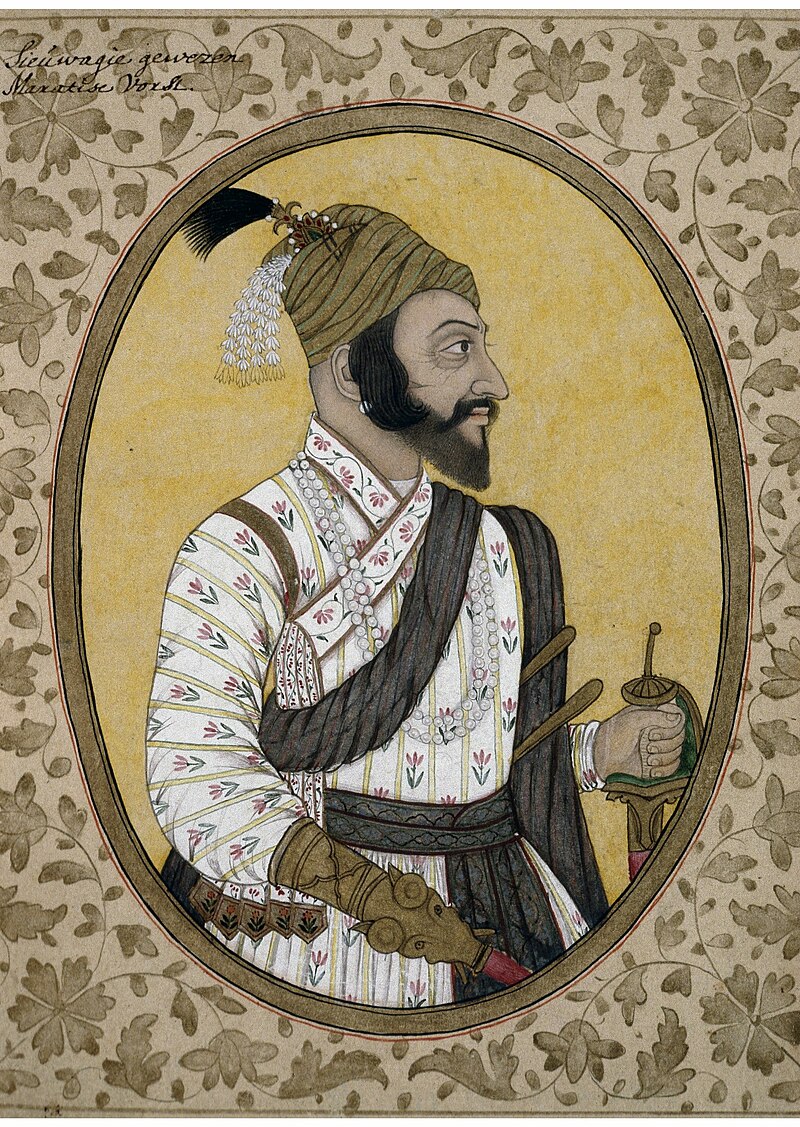
In the Battle of Umberkhind, the Marathas, led by Chhatrapati Shivaji Maharaj, emerged victorious over the forces of the Mughal Empire. The battle took place as part of the ongoing conflict between the Marathas and the Mughals for control over the region.
Chhatrapati Shivaji Maharaj, a skilled military strategist, utilized guerrilla warfare tactics to outsmart the larger and more organized Mughal forces. The Marathas, well-versed in the terrain, launched a surprise attack on the Mughals as they marched through the narrow pass of Umberkhind. This strategic advantage, along with the bravery and determination of the Maratha soldiers, led to a decisive victory.
The defeat of the Mughal forces at Umberkhind was a significant turning point in the conflict between the Marathas and the Mughals. It not only bolstered the confidence of the Marathas but also demonstrated their resilience and military prowess. The victory enhanced the reputation of Chhatrapati Shivaji Maharaj as a formidable leader and warrior.
Furthermore, the Battle of Umberkhind solidified the Maratha presence in the region and enabled them to expand their influence. It marked a shift in the balance of power, diminishing the authority of the Mughal Empire in the Deccan region.
The legacy of the Battle of Umberkhind endures as a symbol of the Maratha resistance against the Mughal dominance and as a testament to the valor and strategic acumen of Chhatrapati Shivaji Maharaj and his army.
#MarathaEmpire #ChhatrapatiShivajiMaharaj #MughalEmpire #BattleofUmberkhind #MilitaryHistory #DeccanRegion
View details1658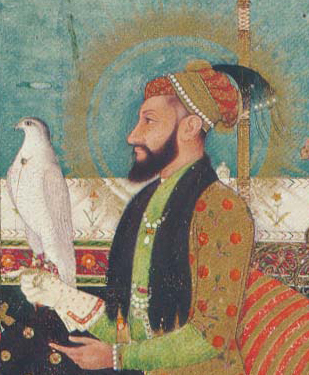
Aurangzeb, the sixth Mughal Emperor of India, ascended to the throne after a fierce battle for succession following his father Shah Jahan's illness. He ruled over a vast and diverse empire, stretching from present-day Afghanistan to the Deccan Plateau in southern India. Aurangzeb was known for his strong military prowess and ambitious expansionist policies, which led to the empire reaching its greatest territorial extent under his rule.
During his reign, Aurangzeb implemented strict Islamic policies, which sparked religious tensions and conflict across different regions of the empire. Despite his military victories and territorial conquests, Aurangzeb faced challenges in governing such a vast and culturally varied empire. The financial strain of wars and administrative challenges eventually weakened the empire, leading to its gradual decline after Aurangzeb's death.
Aurangzeb's expansion of the Mughal Empire had a profound impact on the political landscape of the Indian subcontinent. The annexation of new territories brought wealth and resources to the empire, but it also strained its administrative capacity and alienated diverse ethnic and religious groups. The empire's territorial extent under Aurangzeb's rule set the stage for future conflicts and power struggles among regional rulers and foreign invaders.
The legacy of Aurangzeb's reign is complex, with historians offering differing perspectives on his rule. While some view him as a ruthless and intolerant ruler, others see him as a devout leader who strengthened the empire through his military conquests. Regardless of these debates, Aurangzeb's expansion of the Mughal Empire remains a significant chapter in the history of India and the wider South Asian region.
#MughalEmpire #Aurangzeb #Expansion #IndianHistory
View details1639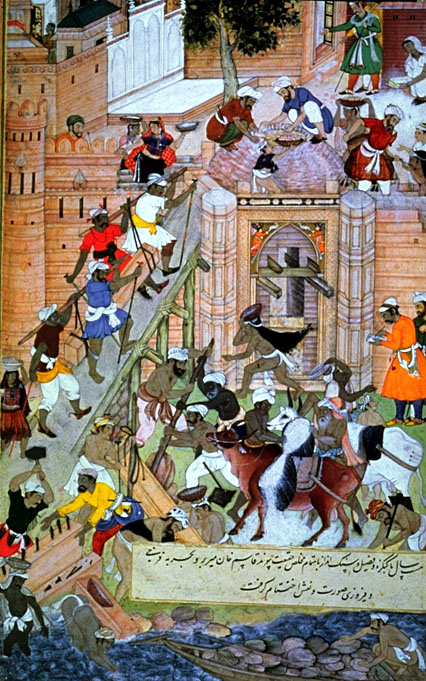
During Akbar's reign, the construction of Agra Fort began in 1565. The fort was strategically located on the banks of the Yamuna River, surrounded by massive walls that stood as a symbol of strength and power. Its architecture blended elements of Islamic, Persian, and Indian styles, showcasing Akbar's vision of combining different cultures.
Agra Fort served as the main residence of the Mughal emperors until 1638 when the capital was shifted to Delhi. The fort's construction was a strategic move by Akbar to strengthen his empire's defenses and control over the region. It also served as a military stronghold, administrative center, and luxurious palace for the royal family.
The fort's significance extended beyond its military and administrative functions. It housed several exquisite palaces, mosques, and gardens, reflecting the grandeur and opulence of the Mughal era. The famous Diwan-i-Khas and Diwan-i-Aam were built within its walls, playing essential roles in governance and diplomacy.
Agra Fort's impact was not limited to architectural marvels; it also bore witness to significant historical events. The fort was a symbol of Mughal power and authority, where lavish ceremonies, royal decrees, and diplomatic meetings took place. Its history was marked by both grandeur and turbulent times, witnessing the rise and fall of various emperors.
Today, Agra Fort stands as a UNESCO World Heritage Site, attracting millions of tourists each year. Its imposing red sandstone walls and intricate marble structures continue to captivate visitors, offering a glimpse into India's rich and diverse history during the Mughal era.
#AgraFort #Akbar #MughalEmpire #HistoricalArchitecture #CulturalHeritage #UNESCO #IndiaTourism
View details1632
The construction of the Taj Mahal in Agra began with the Mughal Emperor Shah Jahan commissioning the iconic monument in memory of his beloved wife, Mumtaz Mahal. The architectural masterpiece was designed by the architect Ustad Ahmad Lahauri and involved skilled craftsmen from various parts of the Mughal Empire.
The Taj Mahal is a symbol of enduring love and is renowned for its stunning white marble structure with intricate carvings and inlaid precious stones. The complex includes a mosque, guest house, and gardens, all meticulously planned to create a harmonious and symmetrical layout.
The construction of the Taj Mahal had a significant impact on the artistic and architectural landscape of India, blending Persian, Islamic, and Indian influences seamlessly. The monument stands as a testament to the grandeur and sophistication of Mughal architecture.
Over the centuries, the Taj Mahal has become a UNESCO World Heritage site and a universally recognized symbol of love and beauty. It attracts millions of visitors from around the world, marveling at its ethereal beauty and historical significance.
#TajMahal #MughalArchitecture #LoveStory #UNESCOWorldHeritage #SymbolOfBeauty
View details1575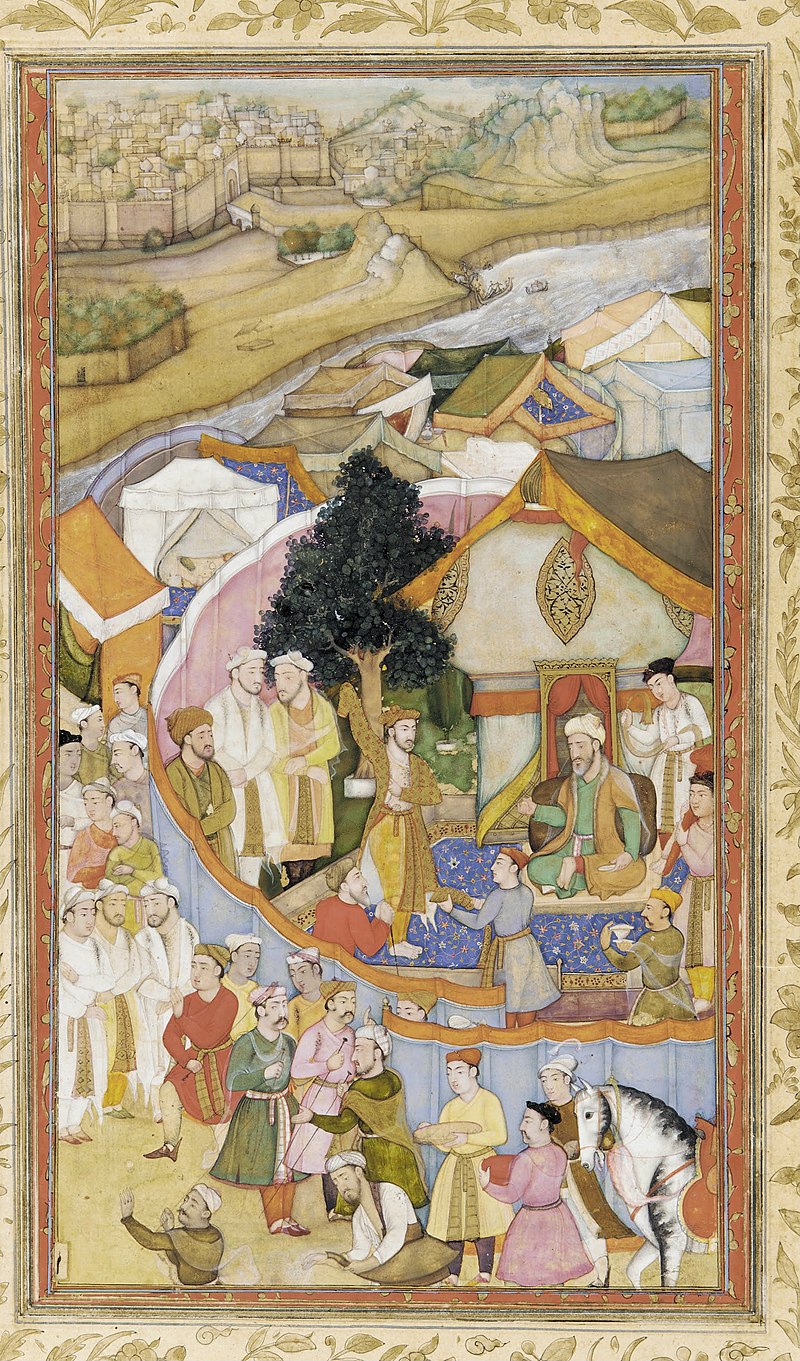
The Battle of Tukaroi marked a significant clash between two powerful forces in Indian history. It was fought between the Mughal Empire, led by Emperor Akbar, and the Afghan chieftains, led by Baz Bahadur. The battle unfolded in the region of Tukaroi, present-day Uttar Pradesh.
The conflict arose due to the Afghan chieftains' desire to challenge Mughal dominance in the region. Baz Bahadur, supported by allies such as Daud Khan, rallied his forces to face the Mughal army in a bid to assert his authority. On the other side, Emperor Akbar, known for his military prowess and strategic acumen, aimed to quell the Afghan resistance and solidify Mughal control over the area.
The battle was fierce and prolonged, with both sides displaying valor and tactical skill. However, despite the Afghan chieftains' initial advantage in the rough terrain of Tukaroi, the Mughal forces eventually gained the upper hand. Emperor Akbar's superior military tactics and well-disciplined army proved pivotal in securing a decisive victory over the Afghan coalition.
The outcome of the Battle of Tukaroi had far-reaching consequences. It not only reaffirmed Mughal supremacy in the region but also dealt a significant blow to the Afghan chieftains' aspirations of independence. The defeat at Tukaroi weakened the Afghan resistance and bolstered Emperor Akbar's authority, further consolidating the Mughal Empire's hold over Northern India.
In the annals of Indian history, the Battle of Tukaroi stands as a defining moment that shaped the power dynamics of the era. It exemplifies the fierce territorial struggles and geopolitical rivalries that characterized the Mughal period, underscoring the importance of military strength and strategic vision in shaping the course of events.
#BattleofTukaroi #MughalEmpire #AfghanChieftains #EmperorAkbar #IndianHistory
View details1556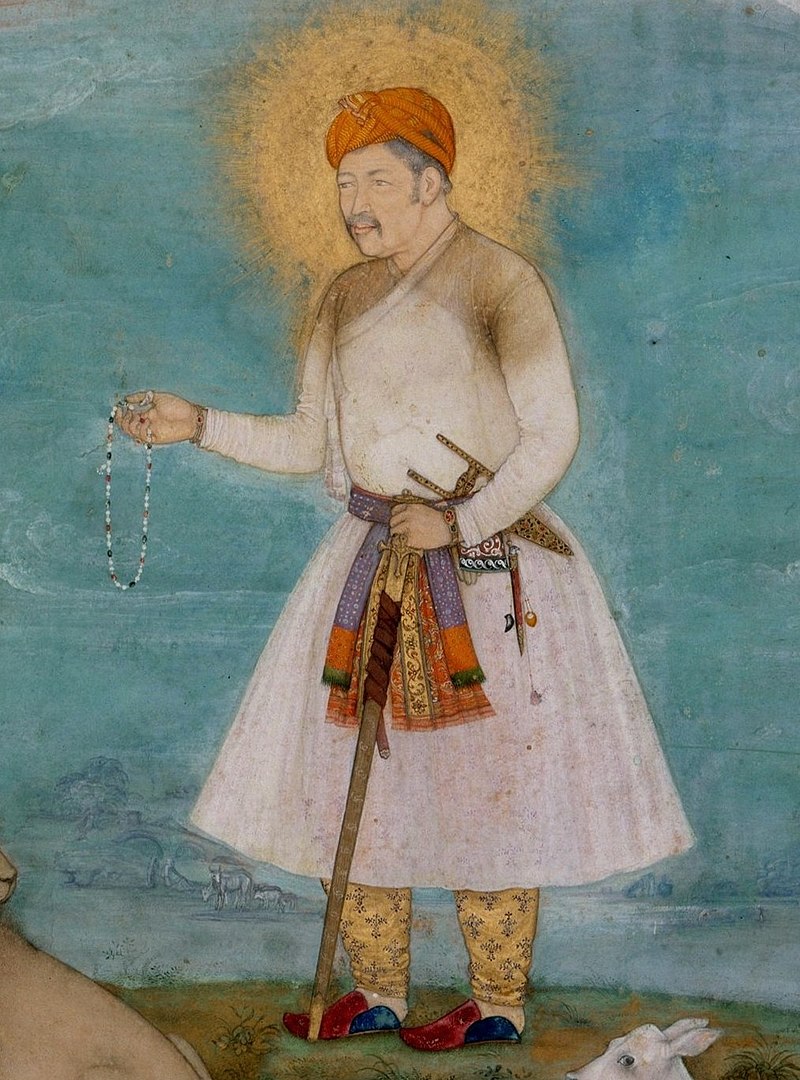
In 1556, a pivotal event unfolded in India when Akbar ascended to the throne as the third Mughal Emperor at the mere age of 13. Despite his youth, Akbar showcased early signs of leadership and wisdom that would define his reign. His grandfather, Babur, had established the Mughal Empire in the Indian subcontinent, and his father, Humayun, had reclaimed the throne after years of exile.
Akbar's accession marked a turning point for the Mughal Empire. His reign was characterized by military conquests, cultural achievements, and religious tolerance. He implemented administrative reforms, centralized the government, and fostered a sense of unity among the diverse peoples of his empire. Akbar's policies promoted religious harmony, as he welcomed people of all faiths into his administration and abolished discriminatory taxes on non-Muslims.
Under Akbar's rule, the Mughal Empire flourished. The arts, literature, and architecture thrived, with notable figures like Abu'l-Fazl and Tansen gracing his court. Akbar's patronage of the arts and his promotion of a syncretic cultural ethos left a lasting impact on Indian history.
Akbar's reign expanded the Mughal Empire's territory significantly, as he employed innovative military strategies and diplomacy to consolidate his power. His victories in battles like the Second Battle of Panipat solidified his reputation as a formidable warrior and strategist.
Akbar's legacy as a visionary ruler and administrator endures to this day. His policies laid the foundation for the Mughal Empire's golden age, and his inclusive approach to governance set a precedent for future rulers in India.
#AkbarTheGreat #MughalEmpire #IndianHistory #CulturalHarmony #MilitaryConquests
View details1540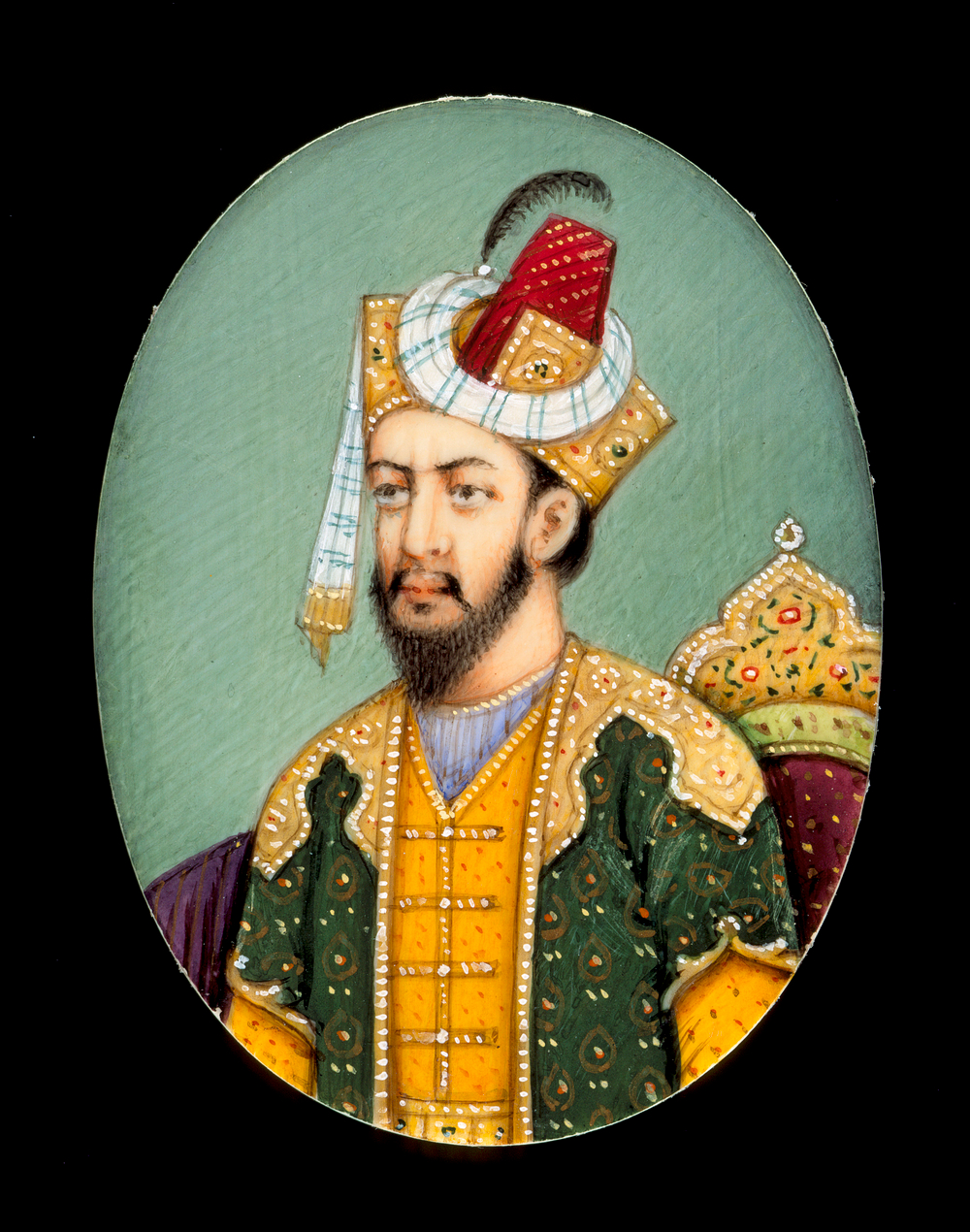
The Battle of Kannauj took place between the forces of Humayun, the Mughal Emperor, and Sher Shah Suri, the Afghan ruler. The conflict arose as both leaders vied for control over the rich lands of the Ganges plain. Humayun, seeking to consolidate his empire, faced a formidable opponent in Sher Shah Suri, who had ambitions of establishing his rule in the region. The two armies clashed in a fierce battle, where strategic maneuvers and superior tactics led to Humayun's complete defeat.
The defeat at Kannauj proved to be a turning point for Humayun, as he lost not only the battle but also the Mughal empire to the Afghan forces. He was forced to retreat and spent the next 12 years in exile, wandering through various lands seeking support to reclaim his lost kingdom. Sher Shah Suri emerged victorious, establishing the Suri Dynasty in place of the Mughals, marking a significant shift in power dynamics in the region.
During his exile, Humayun faced numerous challenges, including internal strife among his brothers, lack of resources, and shifting allegiances of local rulers. Despite these obstacles, he persevered in his quest to regain his throne, eventually succeeding with the help of Persian Safavid Shah Tahmasp.
The Battle of Kannauj and its aftermath highlight the fragility of power and the ever-changing landscape of politics in medieval India. It showcases the resilience and determination of Humayun in the face of adversity, as well as the strategic prowess of Sher Shah Suri in seizing the opportunity to establish his rule. The consequences of this decisive battle reverberated throughout the region, shaping the course of history for years to come.
#BattleofKannauj #Humayun #SherShahSuri #MughalEmpire #SuriDynasty #IndiaHistory
View details1530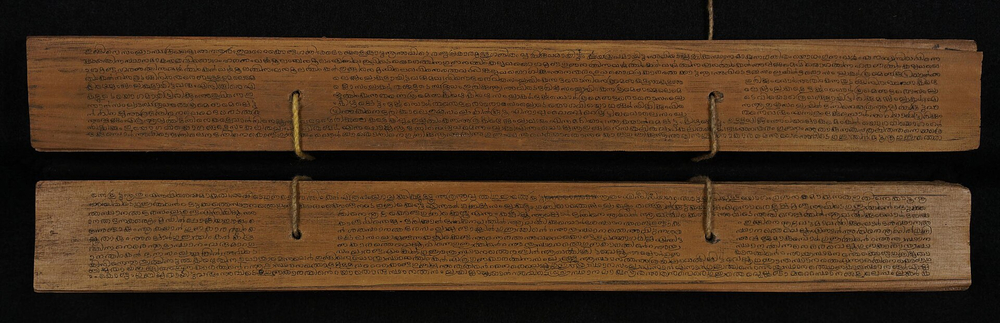
In 1530, astronomer-mathematician Jyeṣṭhadeva of the Kerala school of astronomy and mathematics crafted the Yuktibhāṣā, a prominent treatise in Malayalam on mathematics and astronomy. This accomplishment took place in Kerala, a region known for its rich tradition of mathematical and astronomical advancements.
The Kerala school of astronomy and mathematics flourished during this period, blending indigenous mathematical techniques with foreign concepts. Jyeṣṭhadeva's Yuktibhāṣā contributed significantly to the school's legacy by synthesizing various mathematical and astronomical theories, making them accessible in the local language of Malayalam. This move democratized knowledge and facilitated the transmission of complex ideas to a wider audience.
The Yuktibhāṣā delved into diverse subjects, such as arithmetic, algebra, geometry, and astronomy. Through this treatise, Jyeṣṭhadeva elucidated intricate mathematical problems and astronomical phenomena, showcasing his expertise and innovative thinking. The work not only advanced mathematical knowledge in Kerala but also influenced scholars in other parts of India and beyond.
Jyeṣṭhadeva's contribution to the Kerala school of astronomy and mathematics solidified his position as a key figure in the history of Indian mathematics. His work laid the foundation for future scholars to build upon, ensuring the continuity of mathematical and astronomical progress in the region.
The Yuktibhāṣā remains a testament to Jyeṣṭhadeva's intellectual prowess and the vibrant scientific milieu of Kerala during that era. It stands as a milestone in the history of Indian mathematics, reflecting the intersection of different cultures and the relentless pursuit of knowledge.
#Jyeṣṭhadeva #KeralaSchool #Mathematics #Astronomy #Yuktibhāṣā
View details1527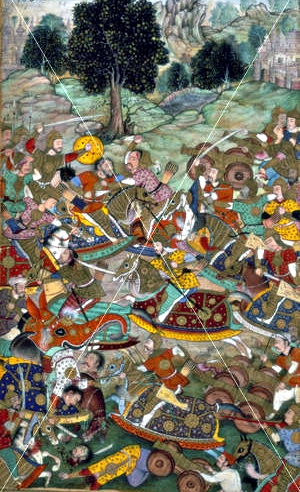
The Battle of Khanwa marked a decisive moment in the history of India when Mughal Emperor Babur clashed with the brave warriors of the Rajput Confederacy. Babur, a descendant of Timur and Genghis Khan, had his eyes set on expanding his empire across the Indian subcontinent. On the other hand, the Rajput Confederacy, comprising warriors from various Rajput kingdoms, stood united to defend their land and honor.
The battle took place on the plains of Khanwa, where both sides displayed remarkable valor and military tactics. Despite being outnumbered, Babur's superior artillery and disciplined army turned the tide in his favor. The Rajput warriors fought fiercely, but they were eventually overwhelmed by the Mughal forces. The battle concluded with a decisive victory for Babur, solidifying his foothold in northern India.
The impact of the Battle of Khanwa was profound. It marked the beginning of Mughal dominance in the region and paved the way for the establishment of the Mughal Empire in India. The defeat of the Rajput Confederacy shattered the myth of invincibility surrounding the Rajput warriors and showcased the military prowess of the Mughals. Babur's victory at Khanwa laid the foundation for his successors to further expand and consolidate the empire in the centuries to come.
The Battle of Khanwa remains a significant event in Indian history, highlighting the clash of two powerful forces and the transformation of the political landscape in the region. It symbolizes the relentless ambition of the Mughals to conquer and unify India, as well as the resilience and valor of the Rajput warriors who fought bravely to defend their land and honor.
#BattleofKhanwa #MughalEmpire #RajputConfederacy #IndianHistory #MilitaryHistory
View details1526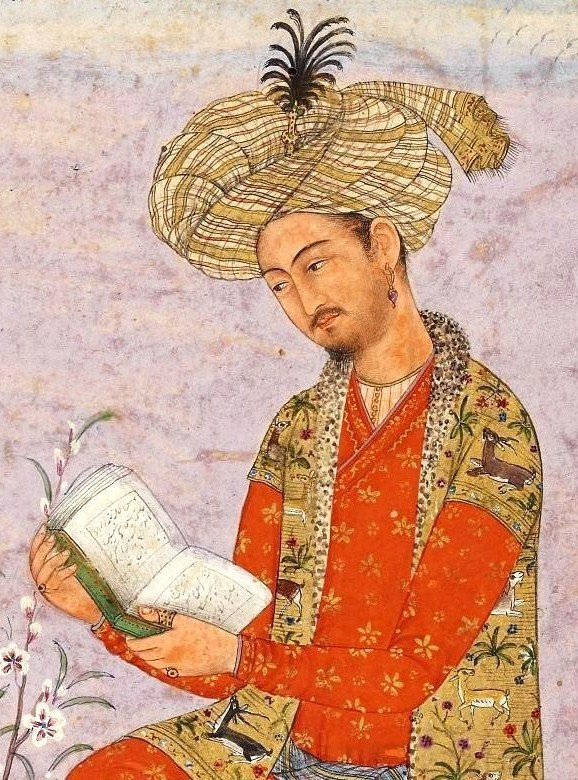
In 1526, the First Battle of Panipat marked the establishment of the Mughal Empire in India by Babur. Descended from Timur and Genghis Khan, Babur aimed to expand his territories from Central Asia into the Indian subcontinent. The battle against Ibrahim Lodhi, the Sultan of Delhi, resulted in Babur's victory, despite being outnumbered.
The impact of Babur's triumph at Panipat was profound. It signaled the beginning of Mughal rule in India, which would last for over three centuries. Babur's military tactics, notably effective use of firearms and artillery, reshaped warfare in the region. The victory also enabled Babur to lay claim to the rich resources and fertile lands of northern India, strengthening his foothold in the subcontinent.
Following his victory, Babur swiftly consolidated his power, capturing key cities such as Delhi and Agra. He established a centralized administration, introducing reforms in taxation and governance. Babur's military prowess and strategic acumen allowed him to overcome regional rivals and solidify his hold over the newly formed Mughal Empire.
The establishment of the Mughal Empire by Babur after the First Battle of Panipat laid the foundation for a dynasty that would leave a lasting impact on Indian history. The Mughals would foster cultural and artistic achievements, including the construction of iconic structures like the Taj Mahal. Babur's descendants, such as Akbar the Great and Shah Jahan, would further expand and beautify the empire, creating a golden age of prosperity and cultural flourishing in India.
#MughalEmpire #Babur #FirstBattleofPanipat #IndianHistory #Dynasty #CulturalFlourishing
View details1520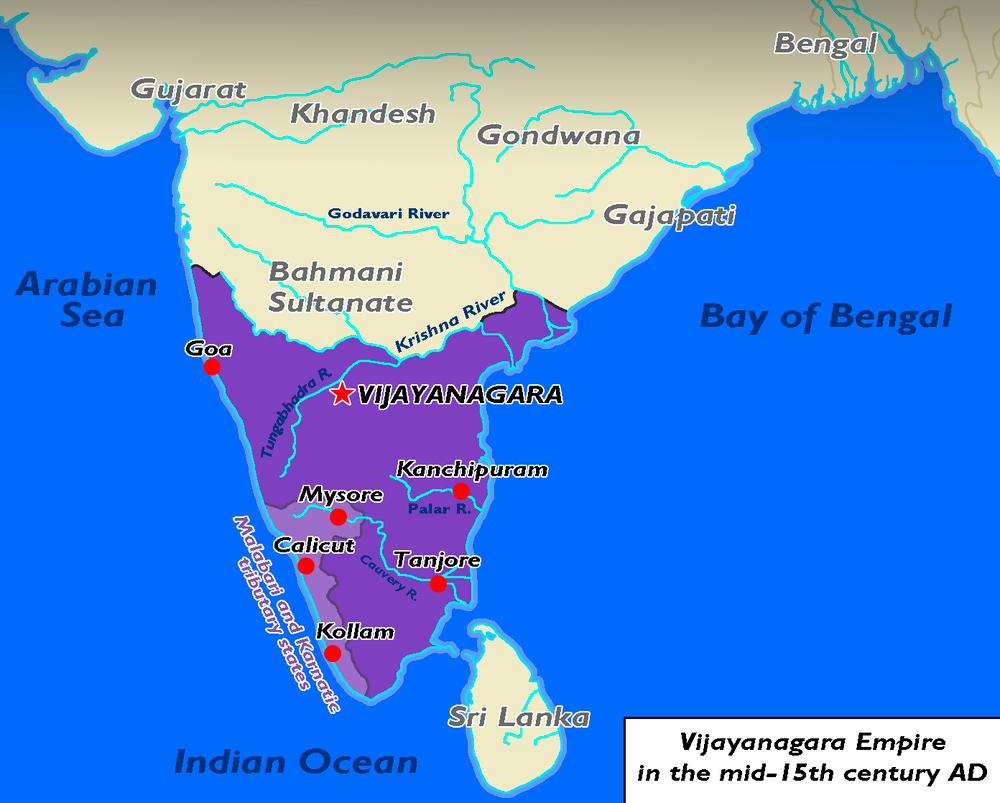
In the early 16th century, the Vijayanagara Empire, under the rule of Krishnadevaraya, clashed with the Sultanate of Bijapur in a decisive battle at Raichur. The Vijayanagara Empire, spanning large parts of Southern India, was a powerful Hindu kingdom known for its military strength and rich cultural heritage. On the other side, the Sultanate of Bijapur, one of the Deccan Sultanates, posed a significant threat to Vijayanagara's dominance in the region.
The Battle of Raichur was a significant military confrontation between the two powers, resulting in a resounding victory for the Vijayanagara Empire. Under the leadership of Krishnadevaraya, Vijayanagara's forces strategically outmaneuvered the Bijapur army, leading to a decisive defeat for the Sultanate. The victory at Raichur solidified the Vijayanagara Empire's position as a dominant force in Southern India and weakened the influence of the Sultanate of Bijapur in the region.
The impact of this battle reverberated beyond the military realm. It not only secured Vijayanagara's territorial integrity but also showcased Krishnadevaraya's prowess as a skilled military strategist and leader. The defeat of the Sultanate of Bijapur in the Battle of Raichur marked a significant chapter in the history of the Vijayanagara Empire, further establishing its reputation as a formidable power in Southern India.
The Battle of Raichur serves as a testament to the military strength and strategic acumen of the Vijayanagara Empire under Krishnadevaraya's rule. It stands as a landmark event in the history of medieval India, highlighting the complex power dynamics and territorial conflicts that shaped the region during that time. #VijayanagaraEmpire #BattleofRaichur #Krishnadevaraya #SultanateofBijapur #MedievalIndia #MilitaryHistory.
View details1517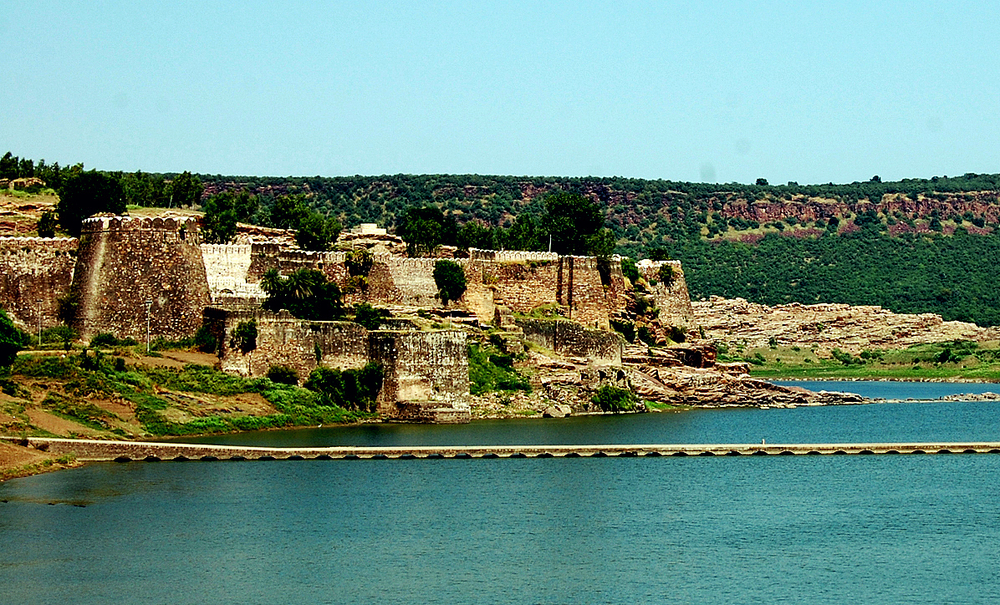
The Battle of Gagron saw the Kingdom of Mewar, led by Rana Sanga, achieve a significant victory over the Malwa Sultanate and Gujarat Sultanate. The battle marked a turning point in the power dynamics of the region as Mewar successfully obtained control of Malwa.
Rana Sanga, known for his military prowess and strategic acumen, sought to expand the territorial influence of Mewar. The Malwa Sultanate and Gujarat Sultanate, both powerful entities in their own right, posed a threat to Mewar's ambitions. In a carefully planned campaign, Rana Sanga marshaled his forces and confronted the combined armies of Malwa and Gujarat at the strategic location of Gagron.
Despite being outnumbered, the forces of Mewar displayed superior tactics and resilience on the battlefield. Rana Sanga's leadership played a crucial role in rallying his troops and securing a decisive victory. The defeat of the Malwa Sultanate and Gujarat Sultanate cemented Mewar's dominance in the region and expanded its territorial control to include Malwa.
The aftermath of the Battle of Gagron reshaped the political landscape of central India. Mewar emerged as a formidable power, consolidating its control over Malwa and asserting its dominance over neighboring states. The victory enhanced Rana Sanga's reputation as a skilled military commander and bolstered the prestige of the Kingdom of Mewar.
The Battle of Gagron stands as a testament to the strategic vision and martial capabilities of Rana Sanga and the Kingdom of Mewar. It marked a significant chapter in the history of medieval India, illustrating the shifting tides of power and influence among rival kingdoms.
#RanaSanga #KingdomofMewar #BattleofGagron #MalwaSultanate #GujaratSultanate #MewarEmpire #MedievalIndia
View details1510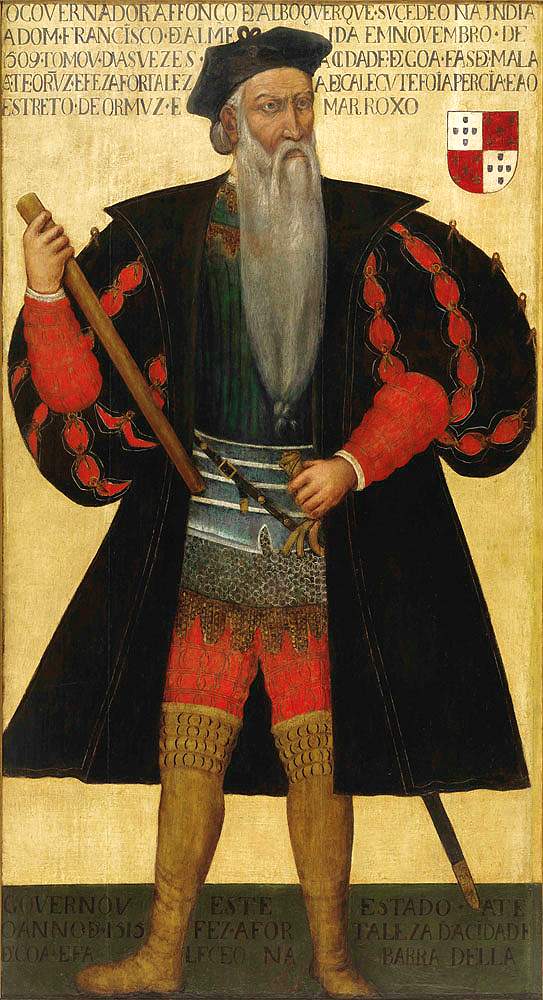
In the early 16th century, Portuguese colonization in India unfolded as a strategic move to dominate the lucrative spice trade routes. Led by Afonso de Albuquerque, the Portuguese violently seized the thriving Indian city of Goa from the Sultan of Bijapur's rule. This conquest marked the establishment of the first Portuguese colony in India.
Goa's strategic location on the western coast enabled the Portuguese to control trade in the region, becoming a crucial hub for the spice trade. The Portuguese introduced Christianity, European architectural styles, and governance systems to the region, leaving a lasting impact on Goan culture.
The Portuguese fortified Goa, constructing churches, administrative buildings, and homes that reflected their architectural influence. They also implemented policies to promote Catholicism, leading to the conversion of many locals. Goa became the capital of Portuguese India, playing a central role in their expanding maritime empire.
The colony's impact extended beyond Goa, influencing the development of trade networks between Europe and Asia. The Portuguese dominance in the Indian Ocean region significantly altered the dynamics of global trade, shaping the course of history.
Despite facing resistance from the local population and competing European powers, the Portuguese maintained control over Goa for over four centuries until its eventual annexation by India in 1961. The colonial legacy is still visible in Goa, evident in its architecture, cuisine, and religious practices.
The establishment of the Portuguese colony in Goa symbolizes a significant chapter in India's history, marked by cultural exchange, economic exploitation, and political dominance. It serves as a reminder of the complexities of colonialism and its enduring impact on societies.
#PortugueseColonization #Goa #SpiceTrade #CulturalExchange #ColonialLegacy #GlobalTrade
View details1509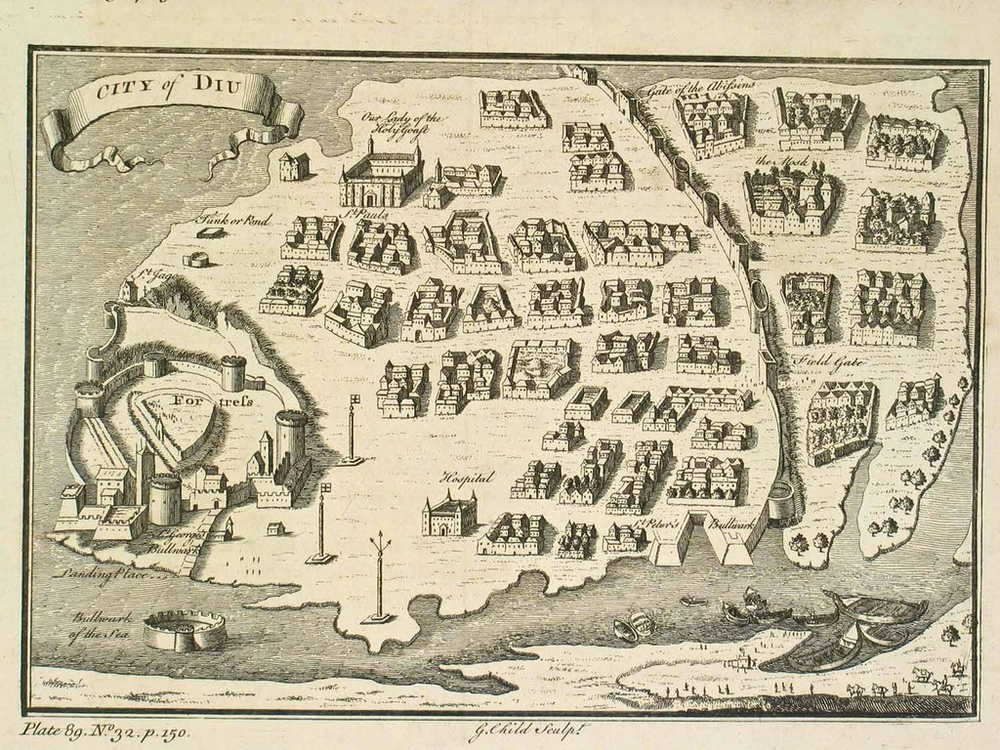
The Battle of Diu unfolded as a pivotal juncture in history, showcasing the maritime supremacy of the European powers in the Asian waters. It marked a decisive shift in the balance of power as the Portuguese fleet, led by Admiral Lourenço de Almeida, clashed with a joint alliance of the Sultan of Gujarat, the Mamluk Sultanate of Egypt, the Ottoman Empire, and the Zamorin of Calicut. The battle took place off the coast of Diu, a strategic port in western India.
The Portuguese armada, equipped with advanced artillery and superior tactics, decisively defeated the allied forces, securing their dominance in the region. This triumph solidified Portuguese control over key trade routes and bolstered their influence in the lucrative spice trade. The Battle of Diu also demonstrated the effectiveness of European naval technology and strategy, heralding a new era of European expansion and colonialism in Asia.
The aftermath of the battle saw the Portuguese establish a strong foothold in the Indian Ocean, enabling them to exert control over trade networks and establish a network of fortified settlements along the coast. This marked the beginning of European colonization in the region and paved the way for subsequent European powers to follow suit.
Overall, the Battle of Diu was a watershed moment that reshaped the political and economic landscape of Asia, heralding the dawn of European dominance in the maritime arena.
#BattleofDiu #EuropeanExpansion #Colonialism #MaritimeSupremacy
View details1508
The Christian-Islamic power struggle that originated in Europe and the Middle East extended its reach into the Indian Ocean during the Battle of Chaul amidst the Portuguese-Mamluk War. The clash between the Portuguese naval forces, led by admiral Dom Lourenço de Almeida, and the joint fleet of the Egyptian Mamluks and the Gujarat Sultanate, marked a significant turn in the regional power dynamics.
The Portuguese sought to extend their influence in the lucrative Indian Ocean trade network by establishing naval dominance, while the Mamluks and the Sultanate aimed to defend their territories and control over key trade routes. The battle took place near the port of Chaul, a strategic location for maritime trade, with both sides deploying advanced naval tactics and weaponry.
Despite being outnumbered, the Portuguese fleet effectively utilized their superior firepower and maneuverability to secure a decisive victory. The Battle of Chaul showcased the military prowess of the Portuguese and their ability to challenge the established Islamic powers in the region. The outcome of the battle had far-reaching consequences, weakening the Mamluks and the Gujarat Sultanate's hold over the Indian Ocean trade routes and paving the way for Portuguese dominance.
The Battle of Chaul exemplifies the complex intersection of political, economic, and religious interests that defined the power dynamics in the Indian Ocean region during this period. It underscored the strategic importance of maritime supremacy in controlling trade and exerting influence over distant lands.
#PortugueseMamlukWar #Chaul #IndianOceanTrade #PowerStruggle #HistoricNavalBattle #RegionalInfluence
View details1503
Portuguese sailors arrived in India in search of trade opportunities and a sea route to the lucrative spice markets. They set their sights on the Kingdom of Cochin, strategically located on the Malabar Coast. The ruler of Cochin, impressed by the Portuguese firepower, welcomed them and even allowed them to build a fort on the Arabian Sea coast.
The Portuguese soon established the first European settlement in India with Cochin as their base. They gained a stronghold on the lucrative spice trade, particularly in pepper and ginger. This move not only expanded their empire but also paved the way for colonialism in the Indian subcontinent.
The Portuguese influence in Cochin brought about significant changes in the region. They introduced European technology, architecture, and Christianity to the local population. The Portuguese also left their mark on the cuisine and language of the area.
The takeover of the Kingdom of Cochin by the Portuguese had a lasting impact on the history of India. It marked the beginning of European colonialism in the country and set the stage for future conflicts and power struggles. The Portuguese dominance in Cochin lasted for centuries, until they were eventually ousted by the Dutch and later the British.
Today, the legacy of the Portuguese presence in Cochin can still be seen in the architecture of the city, the traditions of its people, and the blend of cultures that make up its identity.
#PortugueseExploration #EuropeanColonialism #SpiceTrade #CochinHistory #ColonialLegacy #CulturalExchange #GlobalTrade
View details1451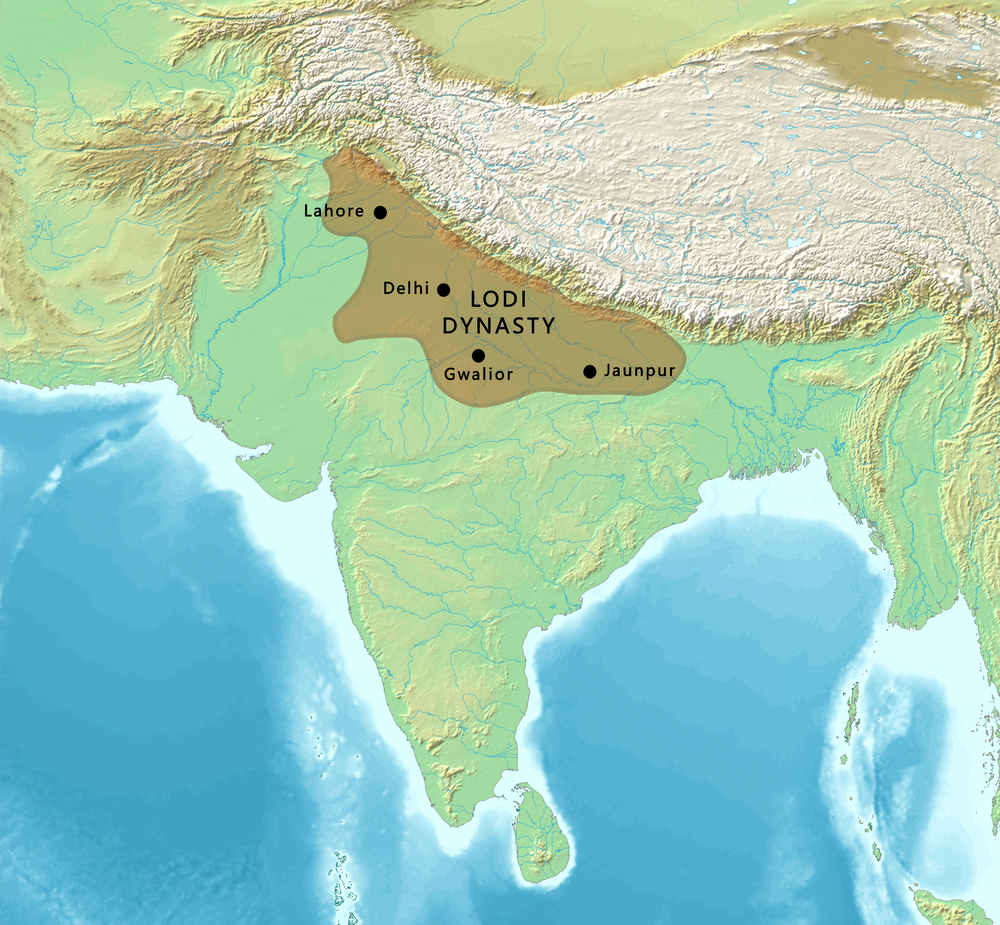
The rise of the Lodi dynasty marked a significant shift in the ruling power in Delhi. After the decline of the Sayyid dynasty, Bahlul Lodi emerged as a prominent Pashtun noble. His prowess in battle and strategic alliances helped him ascend to the throne, eventually establishing the Lodi dynasty in Delhi.
Under the rule of the Lodis, there was a consolidation of power and the establishment of a more centralized administration. Bahlul Lodi and his successors focused on expanding their empire, leading successful military campaigns to annex territories and strengthen their influence in the region. They also promoted cultural exchange, with the flourishing of art, architecture, and literature during their rule.
The Lodi dynasty faced challenges from neighboring powers, particularly the expanding Mughal Empire under Babur. The Battle of Panipat in which Ibrahim Lodi, the last ruler of the dynasty, was defeated by Babur in 1526, marked the end of the Lodi dynasty in Delhi.
The legacy of the Lodi dynasty continues to resonate in India's history, with their rule representing a period of political and cultural dynamism in Delhi and the surrounding regions. Their contributions to art and architecture, such as the construction of the Lodi Gardens in Delhi, stand as a testament to their patronage of cultural endeavors.
Overall, the ascension of the Lodi dynasty in Delhi brought about significant political and cultural changes in the region. Their rule was characterized by military prowess, territorial expansion, and cultural patronage. Despite facing eventual defeat at the hands of the Mughals, the Lodis left a lasting impact on the history of India.
#LodiDynasty #Delhi #IndianHistory #CulturalPatronage #MilitaryExpansion
View details1446
Rana Kumbha, the ruler of Mewar, faced Mahmud Khalji in the Battle of Banas. The conflict arose due to territorial disputes and Mahmud Khalji's ambition to expand his kingdom. Rana Kumbha, known for his strategic brilliance and skilled army, was determined to defend his land.
The Battle of Banas unfolded with intense fighting and tactical maneuvers from both sides. Mahmud Khalji, confident in his larger army, underestimated Rana Kumbha's forces. However, Rana Kumbha's troops displayed remarkable courage and resilience, turning the tide of the battle in their favor.
The decisive moment came when Rana Kumbha's army launched a coordinated attack, catching Mahmud Khalji's forces off guard. The Mewar soldiers fought fiercely, and their determination paid off as they inflicted significant losses on Khalji's army. In a stunning turn of events, Rana Kumbha emerged victorious, securing Mewar's sovereignty and defending its borders.
The outcome of the Battle of Banas had far-reaching consequences. It not only solidified Rana Kumbha's reputation as a formidable ruler but also reinforced Mewar's position as a region resistant to external threats. Mahmud Khalji's defeat served as a warning to other ambitious rulers eyeing Mewar's territories, establishing a sense of respect for Rana Kumbha's military strength.
In the aftermath of the battle, Rana Kumbha's legacy endured as a symbol of valor and determination. His victory in the face of adversity became a source of inspiration for future generations, highlighting the importance of strategic acumen and steadfast leadership in safeguarding territorial integrity.
#RanaKumbha #BattleofBanas #Mewar #MahmudKhalji #MilitaryHistory #IndianRulers #Victory #StrategicBrilliance
View details