Jyeṣṭhadeva's Yuktibhāṣā: Kerala's Math & Astronomy
Science
4 min read
Updated By: History Editorial Network (HEN)
Published:
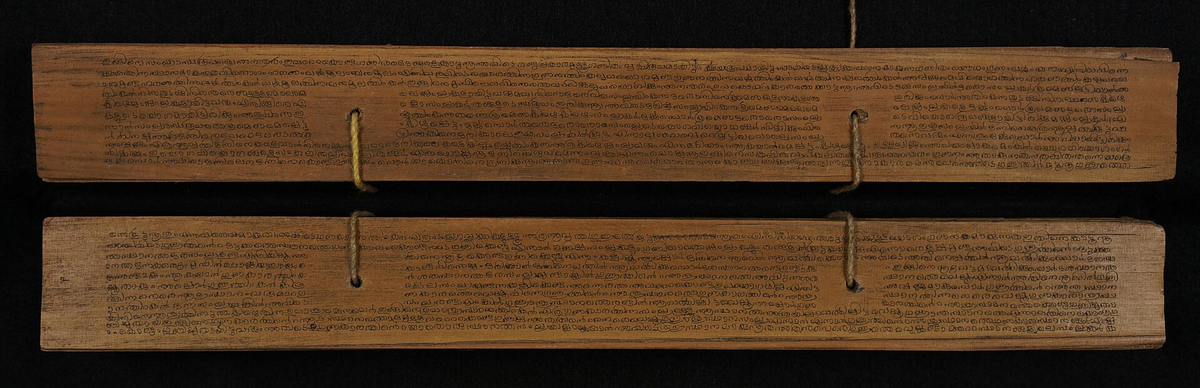
In 1530, astronomer-mathematician Jyeṣṭhadeva of the Kerala school of astronomy and mathematics crafted the Yuktibhāṣā, a prominent treatise in Malayalam on mathematics and astronomy. This accomplishment took place in Kerala, a region known for its rich tradition of mathematical and astronomical advancements.
The Kerala school of astronomy and mathematics flourished during this period, blending indigenous mathematical techniques with foreign concepts. Jyeṣṭhadeva's Yuktibhāṣā contributed significantly to the school's legacy by synthesizing various mathematical and astronomical theories, making them accessible in the local language of Malayalam. This move democratized knowledge and facilitated the transmission of complex ideas to a wider audience.
The Yuktibhāṣā delved into diverse subjects, such as arithmetic, algebra, geometry, and astronomy. Through this treatise, Jyeṣṭhadeva elucidated intricate mathematical problems and astronomical phenomena, showcasing his expertise and innovative thinking. The work not only advanced mathematical knowledge in Kerala but also influenced scholars in other parts of India and beyond.
Jyeṣṭhadeva's contribution to the Kerala school of astronomy and mathematics solidified his position as a key figure in the history of Indian mathematics. His work laid the foundation for future scholars to build upon, ensuring the continuity of mathematical and astronomical progress in the region.
The Yuktibhāṣā remains a testament to Jyeṣṭhadeva's intellectual prowess and the vibrant scientific milieu of Kerala during that era. It stands as a milestone in the history of Indian mathematics, reflecting the intersection of different cultures and the relentless pursuit of knowledge.
#Jyeṣṭhadeva #KeralaSchool #Mathematics #Astronomy #Yuktibhāṣā

Explore the Life Moments of
 AI Twin