Building Agra Fort: Akbar's Vision and Legacy
Cultural Heritage
4 min read
Updated By: History Editorial Network (HEN)
Published:
Updated:
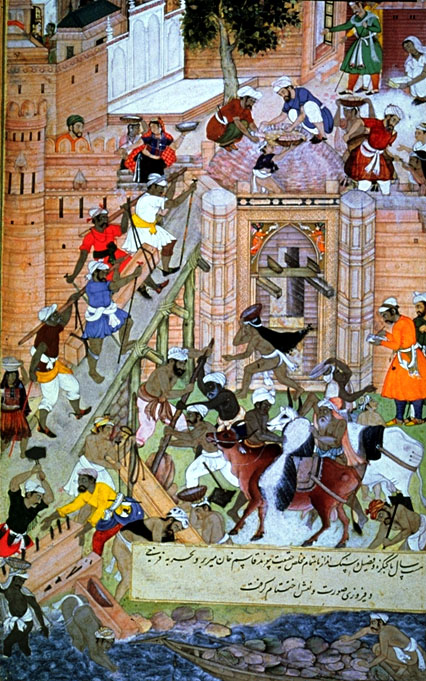
During Akbar's reign, the construction of Agra Fort began in 1565. The fort was strategically located on the banks of the Yamuna River, surrounded by massive walls that stood as a symbol of strength and power. Its architecture blended elements of Islamic, Persian, and Indian styles, showcasing Akbar's vision of combining different cultures.
Agra Fort served as the main residence of the Mughal emperors until 1638 when the capital was shifted to Delhi. The fort's construction was a strategic move by Akbar to strengthen his empire's defenses and control over the region. It also served as a military stronghold, administrative center, and luxurious palace for the royal family.
The fort's significance extended beyond its military and administrative functions. It housed several exquisite palaces, mosques, and gardens, reflecting the grandeur and opulence of the Mughal era. The famous Diwan-i-Khas and Diwan-i-Aam were built within its walls, playing essential roles in governance and diplomacy.
Agra Fort's impact was not limited to architectural marvels; it also bore witness to significant historical events. The fort was a symbol of Mughal power and authority, where lavish ceremonies, royal decrees, and diplomatic meetings took place. Its history was marked by both grandeur and turbulent times, witnessing the rise and fall of various emperors.
Today, Agra Fort stands as a UNESCO World Heritage Site, attracting millions of tourists each year. Its imposing red sandstone walls and intricate marble structures continue to captivate visitors, offering a glimpse into India's rich and diverse history during the Mughal era.
#AgraFort #Akbar #MughalEmpire #HistoricalArchitecture #CulturalHeritage #UNESCO #IndiaTourism

Explore the Life Moments of
 AI Twin