
Super Bowl

The Annual NFL Championship Game
Related Lives

Saint Lucia
The Gem of the Caribbean.

Croatia
Land of a Thousand Islands

Russia–United States relations
History of Diplomatic Relationship

Indonesia
The Emerald of the Equator

Prime Minister of the United Kingdom
The Head of Government

China
Land of Silk

United Kingdom
Great Britain

Iran
The Land of Persia

1996
Super Bowl XXX saw the Dallas Cowboys claim victory over the Pittsburgh Steelers with a score of 27-17 at Sun Devil Stadium in Tempe, Arizona. This game marked the Cowboys' fifth Super Bowl title, tying them with the San Francisco 49ers for the most championships at that time. The matchup was notable as it featured two teams with rich histories and passionate fanbases.
The Cowboys were led by head coach Barry Switzer and had a potent offense helmed by quarterback Troy Aikman, running back Emmitt Smith, and wide receiver Michael Irvin. On the other side, the Pittsburgh Steelers, with coach Bill Cowher, featured a strong defense, known as the "Blitzburgh" defense, and were driven by quarterback Neil O'Donnell and running back Bam Morris.
Key moments included Cowboys cornerback Larry Brown intercepting two of O'Donnell's passes, earning him the Super Bowl MVP honors. These turnovers were critical in shifting the momentum in favor of Dallas. Emmitt Smith contributed significantly with two rushing touchdowns, solidifying his reputation as one of the game's great running backs.
The Steelers managed to keep the game competitive, narrowing the score to 20-17 in the fourth quarter. However, their hopes were dashed when Brown's second interception set up Smith's clinching touchdown. The victory solidified the Cowboys' dominance in the 1990s, where they secured three championships in four years.
Statistically, Aikman completed 15 of 23 passes for 209 yards and one touchdown. Emmitt Smith carried the ball 18 times for 49 yards and two touchdowns. For the Steelers, O'Donnell completed 28 of 49 passes for 239 yards, but his three interceptions proved costly. The Cowboys' defense held the Steelers' rushing attack to just 103 yards.
The win had a significant impact on the Cowboys' legacy in the NFL, enhancing their status as one of the premier franchises in the league. It was a moment of triumph for the team and its supporters, etching another chapter in the storied history of the Dallas Cowboys.
#SuperBowl #DallasCowboys #PittsburghSteelers #NFLHistory #MoofLife
View details1995
During Super Bowl XXIX, the San Francisco 49ers defeated the San Diego Chargers with a score of 49–26 at Joe Robbie Stadium in Miami, Florida. This game marked the 49ers' fifth Super Bowl victory, asserting their dominance in the NFL. The match showcased the talents of 49ers quarterback Steve Young, who delivered a record-setting performance, throwing six touchdown passes, surpassing the previous record held by Joe Montana.
Young's exemplary display resulted in him being named Super Bowl MVP. The game was notable for the 49ers' explosive offense, which gained 455 yards, highlighting their efficiency and strategic prowess. The first quarter set the pace, with the 49ers scoring three touchdowns within the first eight minutes.
Despite the Chargers' efforts, led by quarterback Stan Humphries, they could not match the 49ers' offensive strength. The Chargers scored three touchdowns and two field goals, but turnovers and missed opportunities plagued their gameplay. This Super Bowl was a testament to the disparity in team performance levels, with the 49ers executing their plays flawlessly.
The victory had significant implications for the NFL and contributed to the storied legacy of the San Francisco 49ers. It underscored the importance of strong leadership and peak performance in achieving success in high-stakes environments. Additionally, this win solidified Steve Young’s reputation as one of the elite quarterbacks in the league, stepping out of the shadow of his predecessor, Joe Montana.
The game drew substantial viewership and fan engagement, further embedding it in the annals of Super Bowl history. The 49ers' tactical superiority and player excellence set a benchmark for future teams aiming for the championship.
#SuperBowlXXIX #49ersVictory #NFLHistory #SteveYoungMVP #FootballLegends #MoofLife
View details1994
Super Bowl XXVIII saw the Dallas Cowboys face off against the Buffalo Bills at the Georgia Dome in Atlanta, Georgia. The match concluded with a decisive victory for the Cowboys, who defeated the Bills 30–13. This marked the Cowboys' fourth Super Bowl win and the second consecutive championship for the team.
The first half of the game suggested a close contest, with Buffalo leading 13–6. However, the second half unfolded differently as the Cowboys' offense shifted gears, scoring 24 unanswered points. Emmitt Smith, the game's MVP, played a pivotal role, rushing for 132 yards and two touchdowns. This performance cemented Smith's reputation as one of the league's premier running backs.
The Bills, making their fourth consecutive Super Bowl appearance, were unable to break their streak of defeat in this series, highlighting challenges in their gameplay. The turnover battle was a critical factor; the Bills committed five turnovers, including a key fumble returned for a touchdown by Cowboys’ defensive end James Washington.
From a broader perspective, this match emphasized the prowess of the Cowboys’ roster, including Troy Aikman, Michael Irvin, and their formidable defense. The victory solidified Dallas's dominance in the early 1990s NFL and contributed to the longstanding legacy of coach Jimmy Johnson.
The event was not just a fixture in the world of sports but also a spectacle of entertainment, featuring a halftime show led by country music artist Clint Black among others, reflecting the growing cultural cachet of the Super Bowl.
This game underlined the importance of strategic plays, individual excellence, and the impact of turnovers in determining the outcome of high-stakes matches. It also showcased the Cowboys' effective utilization of their star players in clinching critical victories on prominent stages.
The legacy of this game continues to be referenced in discussions about NFL dominance, the significance of teamwork, and the psychological warfare of consecutive championships and losses.
#SuperBowlXXVIII #DallasCowboys #BuffaloBills #EmmittSmith #NFLHistory #MoofLife
View details1993
The game, played at the Rose Bowl in Pasadena, California, saw the Dallas Cowboys clinch a decisive victory over the Buffalo Bills with a final score of 52-17. This win marked the Cowboys' return to the forefront of NFL superiority after a long period without a title. The game was notable for its high score and several turnovers by the Buffalo Bills, which the Cowboys capitalized on efficiently.
Dallas Cowboys' quarterback Troy Aikman orchestrated the offense with precision, throwing for 273 yards and four touchdowns. His performance earned him the Super Bowl MVP award. The Cowboys' defense, led by players like Charles Haley and Ken Norton Jr., forced a total of nine turnovers—four interceptions and five fumbles—stifling the Bills' offense throughout the game.
On Buffalo's side, quarterback Jim Kelly struggled under the pressure of the Cowboys' defense. Injuries and mistakes plagued his offensive unit, resulting in a steep climb to recovery that they never achieved during the game. Their efforts included a touchdown by Don Beebe, but it wasn't enough to counterbalance their errors.
The victory added to the Cowboys' legacy, making it their third Super Bowl title, and solidified the coaching acumen of Jimmy Johnson. For the Bills, this game represented their third consecutive Super Bowl loss, underscoring a period of near-misses despite consistent season performances.
The game was a pivotal event in NFL history, highlighting the peaks of team performance and the impacts of high-pressure play on turnovers. It showcased the strategic excellence of the Dallas Cowboys and the resilience under stress of players and coaches, anchoring it as a memorable point in professional football records.
#SuperBowlXXVII #DallasCowboys #BuffaloBills #NFLHistory #MooofLife
View details1992
The Washington Redskins faced off against the Buffalo Bills at the Metrodome in Minneapolis, Minnesota, during Super Bowl XXVI. This clash of NFL titans resulted in a definitive victory for the Redskins, who secured a 37-24 win over the Bills. The match served as a crucial chapter in NFL history, marking the third Super Bowl title for Washington Redskins' franchise.
Joe Gibbs, the esteemed head coach of the Redskins, orchestrated a well-balanced team that showcased both a potent offense and a resolute defense. Quarterback Mark Rypien delivered a pivotal performance, throwing for 292 yards and two touchdowns, which earned him the Super Bowl MVP award.
Barry Word's powerful rushes and a nimble receiving corps, led by Art Monk and Gary Clark, provided the Redskins with a consistent offensive edge. Their defense complemented this effort by effectively neutralizing the Bills' celebrated 'K-Gun' no-huddle offense. Buffalo Bills' quarterback Jim Kelly, despite passing for 275 yards, struggled against the resilient Redskins' defense, which resulted in four interceptions and was sacked four times.
The game was characterized not only by individual brilliance but also strategic excellence. Washington's early lead, accentuated by a 17-0 halftime score, set a challenging precedent for the Bills. While Buffalo attempted a comeback in the second half, their efforts were thwarted by untimely turnovers and Washington's clock management and situational awareness.
From a statistical standpoint, Washington Redskins held significant advantages in total yards (417 compared to 283 for the Bills) and time of possession. These dynamics underscored their control throughout the game and highlighted the execution of their game plan.
Super Bowl XXVI reaffirmed the strategic prowess and competitive spirit emblematic of the NFL's premier teams. The Redskins' victory provided a lasting moment for their fans and fortified their legacy within the league's storied championship history.
#FootballHistory #SuperBowlXXVI #WashingtonRedskins #BuffaloBills #NFLChampionship #MoofLife
View details1991
In one of the most tightly contested Super Bowl championships held at Tampa Stadium in Tampa, Florida, the New York Giants emerged victorious against the Buffalo Bills with a narrow 20-19 win. The game was significant due to its dramatic finish and strategic significance.
The first half saw the Bills taking a 12-10 lead into halftime. Jim Kelly, the Bills' quarterback, led a fast-paced, no-huddle offense that had been highly effective throughout the season. However, the New York Giants' strategy, focused on time of possession, was designed to counteract this high-powered offense. The Giants kept possession for over 40 minutes, reducing the opportunities for the Bills' offense to score.
Giants' running back Ottis Anderson played a crucial role, rushing for over 100 yards and scoring a touchdown. Quarterback Jeff Hostetler, stepping in for the injured Phil Simms, managed the game effectively, making critical plays to maintain drives and keep the defense off the field.
The climax of the game came in the final seconds when Bills' kicker Scott Norwood attempted a 47-yard field goal that went wide right, sealing the Giants' victory. This miss is among the most memorable in Super Bowl history.
The impact of this game was multifaceted. For the Giants, it marked their second Super Bowl championship in five years, solidifying their position as one of the dominant teams of that era. On the other hand, it was the first of four consecutive Super Bowl losses for the Bills, establishing them as a team that could reach the pinnacle game but struggling to secure the championship.
#SuperBowl #NFL #NewYorkGiants #BuffaloBills #Football #MoofLife
View details1990
In a monumental showdown at the Louisiana Superdome in New Orleans, the San Francisco 49ers faced off against the Denver Broncos in Super Bowl XXIV. The game ended with the 49ers securing a decisive victory, defeating the Broncos 55–10. This victory marked the 49ers' fourth Super Bowl title.
San Francisco's quarterback, Joe Montana, played a pivotal role in the team's success, completing 22 of 29 passes for 297 yards and five touchdowns. His performance earned him the Super Bowl MVP award. Montana's primary target, wide receiver Jerry Rice, contributed significantly by catching seven passes for 148 yards and three touchdowns. The 49ers’ offensive onslaught set a then-Super Bowl record for points scored in a game.
The game's outcome was largely decided by halftime, with the 49ers leading 27–3. Their relentless pace continued through the second half, culminating in a dominant performance that left the Broncos struggling to keep up. San Francisco's defense was equally impressive, effectively containing Denver's offense, led by quarterback John Elway. Elway was limited to 108 passing yards, no touchdowns, and two interceptions.
The 45-point margin of victory set a record for the largest win in Super Bowl history, a testament to San Francisco's dominance throughout the game. The 49ers’ comprehensive display highlighted their status as one of the NFL's elite teams, showcasing a balance of offensive prowess and defensive strength.
This victory solidified the 49ers' dynasty in the late 1980s and early 1990s, emphasizing their strategic execution and elite player talent. For the Broncos, it was a humbling defeat, marking their third Super Bowl loss in four years, which they would not overcome until their championship win later in the decade.
#SuperBowlXXIV #49ers #DenverBroncos #JoeMontana #JerryRice #NFLHistory #FootballDominance #MoofLife
View details1989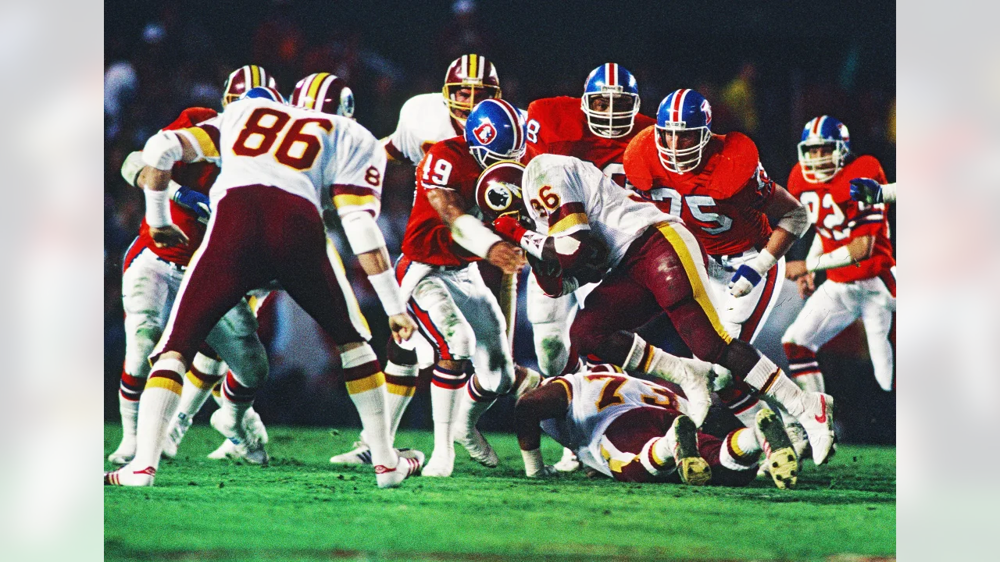
Super Bowl XXIII saw the San Francisco 49ers secure a victory against the Cincinnati Bengals with a final score of 20-16. The game took place at Joe Robbie Stadium in Miami, Florida. For the 49ers, it was their third Super Bowl title, marking another significant achievement in the franchise's history.
The game featured key performances such as that of quarterback Joe Montana, who completed 23 of 36 passes for 357 yards. His pivotal moment came during the final drive, with the 49ers trailing 16-13. Montana orchestrated a memorable 92-yard drive that ended with a 10-yard touchdown pass to John Taylor, proving his skill in high-pressure situations.
On the defensive side, linebacker Charles Haley was a crucial player, contributing significantly to stifling the Bengals' offense. Wide receiver Jerry Rice was named the Super Bowl MVP, having made 11 catches for 215 yards and one touchdown.
This victory cemented the 49ers' status as a dominant team of the era and influenced the future of NFL game strategy, especially concerning the execution of two-minute drills. The Bengals, despite their strong performance and close game, fell just short of their first Super Bowl title, with their efforts particularly noted in a commendable defensive showing.
The impact of the game extends beyond the scoreline, showcasing the tension and excitement that defines the Super Bowl. It remains a memorable moment in NFL history, reflecting the competitive spirit and tactical sophistication of the sport.
#SuperBowlXXIII #49ers #Bengals #NFLHistory #ChampionMindset #GameWinningDrive #ClutchPerformance #MoofLife
View details1988
The Washington Redskins triumphed over the Denver Broncos with a decisive 42–10 victory at Jack Murphy Stadium in San Diego, California, during Super Bowl XXII. Leading up to the game, the Broncos were considered strong competitors with quarterback John Elway at the helm. Elway's performance had been integral to the Broncos' postseason success. Conversely, the Redskins, led by quarterback Doug Williams, had demonstrated remarkable resilience throughout the season despite injuries and lineup changes.
The game's narrative quickly changed when Doug Williams delivered an extraordinary performance. After a slow start, the Redskins erupted in the second quarter, scoring a record 35 points, the most ever scored by a team in a single quarter in Super Bowl history. Williams threw for 340 yards and four touchdowns, becoming the first African American quarterback to win a Super Bowl and earn the Most Valuable Player award. His accomplishment shattered racial barriers within the sport and inspired future generations.
The Redskins' ground game also shone through, with rookie running back Timmy Smith rushing for a then-record 204 yards and two touchdowns. The defensive unit effectively contained the Broncos' offense, limiting Elway's ability to make significant plays.
The Redskins' victory was impactful, as it demonstrated the football team's strategic prowess and ability to adapt and overcome adversities. This win marked Washington's second Super Bowl championship, reinforcing the franchise's status within NFL history.
#SuperBowlXXII #WashingtonRedskins #DenverBroncos #DougWilliams #NFLHistory #MoofLife
View details1987
The New York Giants clinched their first Super Bowl title by defeating the Denver Broncos with a 39-20 victory at the Rose Bowl in Pasadena, California. This game marked a pivotal moment for the Giants franchise. The Giants, under head coach Bill Parcells, had a strong season leading them to this championship encounter. Quarterback Phil Simms played a crucial role, setting a then-record Super Bowl completion percentage of 88%, connecting on 22 of 25 attempts for 268 yards. His performance earned him the Super Bowl MVP award.
The game began with the Broncos taking an early 10-9 lead by halftime, but the Giants made a dramatic turnaround in the second half, scoring 30 points. Key players included running back Joe Morris, who contributed significantly to the ground game, and wide receiver Mark Bavaro, instrumental in the passing attack. The Giants' defense, led by players such as Lawrence Taylor and Carl Banks, successfully contained the Broncos' offense, particularly neutralizing their star quarterback, John Elway.
This victory solidified the Giants' status in the NFL, demonstrating their strategic defensive and offensive capabilities. The win had a lasting impact on the team, instilling a legacy that contributed to the overall history of the NFL.
#SuperBowlXXI #GiantsWin #BroncosGame #NFLHistory #MoofLife
View details1986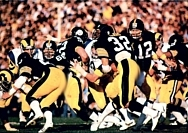
Super Bowl XX took place at Louisiana Superdome in New Orleans, featuring the Chicago Bears and the New England Patriots. This matchup was notable as the Chicago Bears dominated the Patriots with a decisive 46-10 victory, marking one of the most dominant performances in Super Bowl history. The Bears' defense, known as the "46 Defense," played a critical role in their success, a scheme designed by their innovative defensive coordinator Buddy Ryan.
Coached by Mike Ditka, the Bears finished their regular season with a strong 15-1 record, which showcased their formidable defense and efficient offense. In this game, their defense limited the Patriots to a total of seven rushing yards, a Super Bowl record. Linebacker Richard Dent was instrumental in this defensive performance and was named the Super Bowl MVP, contributing with 1.5 sacks, two forced fumbles, and a blocked pass.
The Bears' offense, orchestrated by quarterback Jim McMahon, was effective and balanced. Running back and seasoned veteran Walter Payton bolstered the ground game, although the Patriots managed to contain him to 61 rushing yards. However, the Bears' different offensive plays, including a memorable rushing touchdown by defensive lineman William "The Refrigerator" Perry, kept the scoring momentum in their favor.
The Patriots, under coach Raymond Berry, concluded their regular season as a Wild Card team with an 11-5 record and entered the Super Bowl after unexpected victories over higher-seeded teams in the AFC playoffs. However, their journey ended abruptly against the Bears' superior force. Their quarterback, Tony Eason, struggled significantly, completing zero passes in six attempts and being replaced by Steve Grogan, who had limited success against the relentless Chicago defense.
This Super Bowl victory not only secured the Bears their first championship since the NFL-AFL merger but also etched this game in history with one of the most lopsided scores in a Super Bowl. The impact of this victory was profound, sparking a lasting legacy for the Chicago Bears and their fans. The game remains an emblematic showcase of defensive prowess and strategic mastery in NFL history.
#SuperBowl #ChicagoBears #NewEnglandPatriots #NFLHistory #MoofLife
View details1985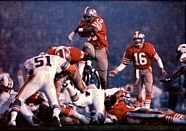
Super Bowl XIX saw the San Francisco 49ers clinch victory over the Miami Dolphins with a 38–16 win at Stanford Stadium in Stanford, California. The 49ers, coached by Bill Walsh, showcased a well-rounded team performance that overwhelmed the Dolphins, led by Coach Don Shula. This matchup was particularly notable for the duel between quarterbacks Joe Montana and Dan Marino. Both had stellar seasons, making the game a highly anticipated event.
The 49ers’ offense set the pace early, effectively mixing both pass and run plays, which kept the Dolphins’ defense off balance. Joe Montana threw for 331 yards and three touchdowns, completing 24 of 35 passes. His ability to connect with key receivers like Dwight Clark and Roger Craig, who scored three touchdowns, proved critical.
Defensively, the 49ers managed to contain Dan Marino, the Dolphins' prolific passer who had set numerous records during the regular season. Despite Marino’s efforts, completing 29 of 50 passes for 318 yards and one touchdown, the 49ers’ defense, led by players such as Ronnie Lott and Fred Dean, held firm. The pass rush disrupted Marino’s rhythm, limiting the Dolphins’ normally potent offense.
The 49ers’ victory marked their second Super Bowl title, reinforcing the team's status as one of the NFL’s dominant forces. This game was significant in establishing the legacy of Joe Montana, who was named Super Bowl MVP for the second time. His performance underlined his reputation as a top-tier quarterback in high-pressure situations.
The event also had broader implications for the NFL, showcasing the league's growing popularity. The large viewership indicated the Super Bowl’s status as a major sporting spectacle in the United States.
#SuperBowlXIX #49ersVictory #DolphinsGame #MontanaVsMarino #NFLHistory #MoofLife
View details1984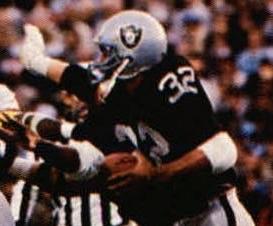
The Los Angeles Raiders faced the Washington Redskins in Super Bowl XVIII at Tampa Stadium in Tampa, Florida. The game was marked by a dominant performance by the Raiders, resulting in a 38-9 victory over the defending champions, Washington Redskins. This was the Raiders' third Super Bowl win.
The Raiders established an early lead and maintained control throughout the game. A pivotal moment occurred when linebacker Jack Squirek intercepted a pass from Redskins quarterback Joe Theismann, returning it five yards for a touchdown, contributing significantly to the Raiders'
View details1983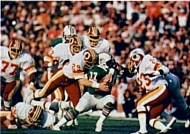
Super Bowl XVII saw the Washington Redskins defeat the Miami Dolphins with a final score of 27–17 at the Rose Bowl in Pasadena, California. This game marked a rematch between the two teams, who had previously met in Super Bowl VII. The Redskins, led by coach Joe Gibbs and quarterback Joe Theismann, were seeking their first Super Bowl victory.
The Dolphins started strong with a 76-yard touchdown run by running back David Woodley, followed by a field goal, putting them ahead 10-0 in the first quarter. However, the Redskins responded with a touchdown run from fullback John Riggins and a field goal before halftime, ending the second quarter with the Dolphins leading 17-10.
The game’s defining moment came in the fourth quarter, with the Redskins down by three points. On a crucial 4th-and-1 situation, John Riggins executed a pivotal 43-yard touchdown run, breaking through several tackles, which gave the Redskins a lead they never relinquished. This play is remembered as one of the most iconic in Super Bowl history. Riggins received the Super Bowl MVP award for his performance, having carried the ball 38 times for 166 yards and a touchdown.
The Redskins’ defense also played a critical role, stifling the Dolphins’ offense and preventing any scoring in the second half. The team’s overall strategy and execution established their dominance and secured their place in NFL history.
This victory had a lasting impact on the Redskins’ franchise, solidifying coach Joe Gibbs' legacy and laying the foundation for continued success in the following years. It also highlighted John Riggins' exceptional talent and cemented his place among the greats in NFL history.
Statistics from the game emphasized the Redskins' dominance on the ground, with 276 rushing yards compared to the Dolphins' 96. The game drew significant attention, with millions of viewers tuning in, showcasing the widespread popularity of the NFL and the Super Bowl as a major sporting event.
#SuperBowlXVII #WashingtonRedskins #MiamiDolphins #NFLHistory #JohnRiggins #JoeGibbs #MVP #MoofLife
View details1982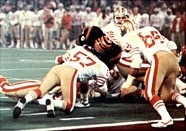
In a highly anticipated matchup at the Pontiac Silverdome in Pontiac, Michigan, the San Francisco 49ers emerged victorious over the Cincinnati Bengals with a final score of 26-21. This event marked the 49ers' first-ever Super Bowl win, signaling the beginning of a new era in NFL history.
The game started with the 49ers establishing a strong lead, scoring 20 points in the first half while keeping the Bengals to zero. The 49ers' defense, orchestrated by defensive coordinator George Seifert, played a crucial role, forcing four turnovers and limiting the Bengals' offensive opportunities. However, Cincinnati staged a remarkable comeback in the second half, led by quarterback Ken Anderson, who ended the game with 300 passing yards and two touchdowns.
Joe Montana, the 49ers' quarterback, earned the MVP title. Montana's performance included 157 passing yards with one touchdown, showing remarkable poise and leadership on the field. His connection with receivers like Dwight Clark and the strategic ground game managed by running back Ricky Patton allowed the 49ers to maintain their edge.
Head coach Bill Walsh's innovative use of the West Coast offense was on full display, underscoring his strategic prowess. Under his guidance, the 49ers executed their game plan with precision, laying down a blueprint for their future successes.
The impact of this game extended beyond the field. It marked the rise of the 49ers as a formidable dynasty in the NFL during the 1980s. The victory garnered widespread attention and significantly boosted the franchise's popularity, setting the stage for their future championship runs.
Key statistics include San Francisco's total of 275 yards and Cincinnati's 356 yards. Despite outgaining the 49ers in total yards, the Bengals' turnovers proved costly. The 49ers' defense was instrumental in securing the win, underscoring the importance of a balanced and opportunistic defense in football success.
#SuperBowl #NFLHistory #49ers #Bengals #Championship #FootballLegacy #SportsMilestones #MoofLife
View details1981
Super Bowl XV saw the Oakland Raiders secure a victory over the Philadelphia Eagles with a 27-10 win at the Louisiana Superdome in New Orleans. The Raiders, coached by Tom Flores, made a notable impact by becoming the first wild-card team to win the Super Bowl, which marked a significant milestone in NFL history.
Quarterback Jim Plunkett played a pivotal role, completing 13 of 21 passes for 261 yards and three touchdowns. His performance earned him the Super Bowl MVP title. Cliff Branch and Kenny King were standout players, with Branch catching a 29-yard touchdown pass and King setting a Super Bowl record with an 80-yard touchdown reception.
The Raiders' defense was equally effective, intercepting Eagles' quarterback Ron Jaworski three times and limiting their offensive opportunities. Linebacker Rod Martin made history with three interceptions, a Super Bowl record that still stands.
This victory was the second Super Bowl win for the Raiders franchise and underscored their place in the NFL as a dominant and resilient team. It also highlighted the importance of strategic plays and strong defensive capabilities.
#MoofLife #SuperBowlChampionships #NFLHistory #OaklandRaiders #PhiladelphiaEagles #TomFlores #JimPlunkett
View details1980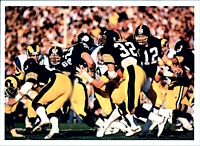
Super Bowl XIV brought together the Pittsburgh Steelers and the Los Angeles Rams in a contest held at the Rose Bowl in Pasadena, California. The Steelers, under the leadership of coach Chuck Noll, were striving for their fourth championship title. Conversely, the Rams, making their first Super Bowl appearance, aimed to seize their inaugural triumph.
The game witnessed a sequence of competitive play, with the Rams taking a narrow lead multiple times. Nonetheless, the Steelers' experience and strategic execution proved decisive. Steelers' quarterback Terry Bradshaw delivered a remarkable performance, amassing 309 passing yards and securing two touchdowns. John Stallworth, a key wide receiver, caught a pivotal 73-yard touchdown pass that shifted the momentum in favor of the Steelers. Running back Franco Harris also contributed significantly with 46 rushing yards and two touchdowns.
During the final quarter, the Steelers' defense intensified, effectively halting the Rams' offensive efforts. The game concluded with the Steelers prevailing 31–19. This victory elevated the Steelers to a record-holding four Super Bowl titles, reinforcing their dominance in the NFL during the late 1970s and early 1980s.
The match is notably marked by the resilience and tactical prowess exhibited by both teams. It highlighted how a seasoned team like the Steelers could leverage experience and talent to achieve victory against a determined opponent. The encounter also showcased the tactical brilliance of the coaching staff and the crucial role of strategic plays in determining the outcome of high-stakes games.
#PittsburghSteelers #LosAngelesRams #NFLHistory #SuperBowlXIV #MoofLife
View details1979
Super Bowl XIII was held at the Miami Orange Bowl in Miami, Florida, where the Pittsburgh Steelers faced the Dallas Cowboys. The Steelers emerged victorious, defeating the Cowboys with a score of 35–31. This win marked Pittsburgh’s third Super Bowl championship. The game is often highlighted due to its intense competitiveness, individual standout performances, and the historical significance of the teams involved.
The game featured a roster of legendary players, including Steelers' quarterback Terry Bradshaw, who was named Super Bowl MVP after passing for 318 yards and four touchdowns. Franco Harris and Rocky Bleier contributed to the Steelers' ground game, while wide receiver Lynn Swann made crucial plays that facilitated Pittsburgh's offensive strategy. The Cowboys, led by quarterback Roger Staubach, put up a strong fight, with Staubach throwing for 228 yards and three touchdowns. Despite their efforts, they fell short against a resilient Steelers team.
This Super Bowl is also remembered for various memorable moments such as critical turnovers and impactful plays. One significant example is Cowboys' tight end Jackie Smith's dropped pass in the end zone, which could have altered the outcome of the game. The game remained close throughout, with both teams exhibiting strategic prowess and relentless efforts on both offense and defense.
Statistics from the game emphasize its storied nature. The Steelers gained 333 total yards to the Cowboys' 330, showcasing the closely matched skill levels of both teams. Pittsburgh’s defense, known as the "Steel Curtain," was instrumental in their victory, applying pressure and securing critical stops when needed.
The impact of this game extended beyond the field, influencing the legacies of players and shaping the narratives of both franchises. The Steelers reinforced their status as a dominant team of the era, while the Cowboys solidified their reputation as formidable contenders.
#SteelersWin #CowboysBattle #SuperBowlXIII #NFLHistory #MoofLife
View details1978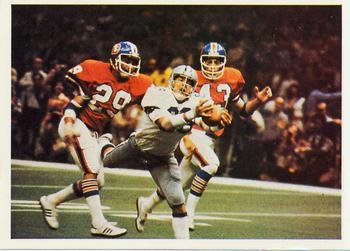
The Dallas Cowboys faced the Denver Broncos in Super Bowl XII at the Louisiana Superdome in New Orleans, Louisiana. The Cowboys emerged victorious with a commanding 27-10 win over the Broncos. This championship marked the Cowboys' second Super Bowl title.
The game was noted for its defensive prowess, particularly by the Cowboys. Dallas's defense was dominant, intercepting Denver quarterback Craig Morton four times and recovering four Broncos fumbles, significantly contributing to the outcome. The Cowboys' defense was so impactful that two defensive players, Harvey Martin and Randy White, were named co-MVPs, a unique occurrence in Super Bowl history.
Quarterback Roger Staubach led the Cowboys' offense efficiently. He completed 17 of 25 passes for 183 yards and a touchdown. Wide receiver Butch Johnson made a notable contribution with a spectacular touchdown catch.
On the Broncos' side, their performance was marred by turnovers. Despite the presence of their standout player, running back Lonnie Perrin, they could not overcome the relentless Cowboys' defense.
Ultimately, the Cowboys' combination of strong defense and effective offense established their dominance in the game. The victory solidified the Cowboys' reputation as one of the NFL's premier teams, influencing their standing in subsequent seasons and cementing their legacy in the league.
#SuperBowlXII #DallasCowboys #DenverBroncos #NFLHistory #MoofLife
View details1977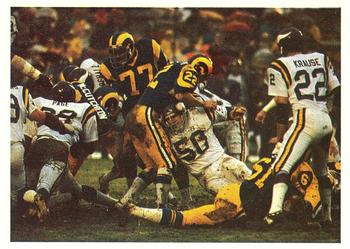
Super Bowl XI saw the Oakland Raiders triumph over the Minnesota Vikings with a final score of 32-14, taking place at the Rose Bowl in Pasadena, California. This victory marked the first Super Bowl win for the Raiders, establishing them as a dominant force in the National Football League (NFL). The game was characterized by the strong performance of the Raiders’ offensive and defensive teams, highlighting their strategic superiority.
The Raiders, coached by John Madden, demonstrated a well-balanced offensive strategy, accumulating significant yardage both in the air and on the ground. Quarterback Ken Stabler led the passing game efficiently, while running back Clarence Davis provided crucial support with his rushing yards. The consistent performance by wide receiver Fred Biletnikoff, who was named Super Bowl MVP, played a pivotal role in the Raiders' scoring drives.
The Vikings, despite entering the game with high expectations, struggled to match the Raiders' intensity. The Minnesota defense, although resilient, could not contain the Raiders' offensive plays. The Raiders’ defense, led by Jack Tatum and Willie Hall, stifled the Vikings' offense, limiting their scoring opportunities. Key interceptions and aggressive play by the Raiders’ defense further contributed to Minnesota’s struggle to gain momentum.
Super Bowl XI not only cemented the Raiders’ place in NFL history but also had a significant impact on the careers of players and coaches involved. For John Madden, this victory underscored his reputation as an exceptional coach. For the players, particularly Stabler and Biletnikoff, their performances became an essential part of their professional legacy.
The aftermath of the game saw an outpouring of support and recognition for the Raiders from fans and sports analysts alike. This victory highlighted the tactical brilliance of the team and set a standard for future NFL championship games.
#SuperBowlXI #OaklandRaiders #MinnesotaVikings #NFLHistory #JohnMadden #KenStabler #FredBiletnikoff #MoofLife
View details1976
Super Bowl X was a pivotal event in the history of the National Football League. The Pittsburgh Steelers faced off against the Dallas Cowboys at the Miami Orange Bowl in Miami, Florida. The teams were both strong contenders, with the Steelers recently emerging as a dominant force in the NFL and the Cowboys known for their consistent performances.
The game was marked by its competitive nature and pivotal plays. The Steelers, known for their formidable defense dubbed the "Steel Curtain," managed to intercept Dallas quarterback Roger Staubach three times, significantly influencing the game's outcome. The Steelers' offense, led by quarterback Terry Bradshaw, was efficient and effective, with Bradshaw throwing for 209 yards and two touchdowns. One of the most memorable plays was Bradshaw's decisive 64-yard touchdown pass to Lynn Swann, a moment that greatly contributed to Swann being named the game's MVP.
The game concluded with the Steelers defeating the Cowboys 21-17, securing Pittsburgh's second Super Bowl title. The victory solidified the Steelers' emerging dynasty in the NFL and underscored the significance of strong defensive play combined with timely offensive execution. The impact of this game was profound as it further heightened the Steelers' team legacy and underscored the competitive spirit of the Super Bowl.
#SuperBowlX #Steelers #Cowboys #NFLHistory #MoofLife
View details1975
The ninth installment of the Super Bowl saw the Pittsburgh Steelers go up against the Minnesota Vikings at Tulane Stadium in New Orleans, Louisiana. This event marked the Steelers' first Super Bowl appearance, while the Vikings were participating in their third.
The game was characterized by the dominance of the Steelers' defense and their strong running game. Pittsburgh's defense, known as the "Steel Curtain," played a crucial role in the outcome. They limited the Vikings to only 119 total yards and four first downs throughout the game. Pittsburgh linebacker Jack Lambert and defensive tackle Joe Greene were particularly effective in neutralizing Minnesota's offensive efforts.
The scoring began with a safety in the second quarter when Minnesota's quarterback, Fran Tarkenton, fumbled the ball in the end zone due to pressure from Pittsburgh's defense. This gave the Steelers a 2-0 lead. Later, running back Franco Harris initially struggled but broke through with a 9-yard touchdown run. Harris finished the game with 158 rushing yards on 34 carries, earning him the Super Bowl MVP honors.
The Vikings struggled to maintain possession and ball control, turning the ball over five times, which included three interceptions thrown by Tarkenton. Pittsburgh capitalized on these errors; placekicker Roy Gerela added two field goals of 18 and 24 yards, sealing the game in favor of the Steelers.
Minnesota's only touchdown came late in the fourth quarter with a blocked punt return. Nonetheless, their attempt at a comeback was too little, too late. The defense-heavy game finished with a 16–6 scoreline, marking the beginning of the Steelers' dominance in the NFL during the 1970s, where they would go on to secure multiple championships.
This victory was pivotal for the Pittsburgh Steelers, establishing them as a formidable force in professional football and lending significant momentum to their storied franchise.
#SteelersVictory #SuperBowlHistory #NFL #PittsburghSteelers #MoofLife
View details1974
Super Bowl VIII featured a match-up between the Miami Dolphins and the Minnesota Vikings at Rice Stadium in Houston, Texas. The Miami Dolphins, the defending champions, were aiming for consecutive Super Bowl victories. Known for their strong running game, the Dolphins were led by head coach Don Shula. The Minnesota Vikings, led by head coach Bud Grant, were making their first Super Bowl appearance.
The game was dominated by the Dolphins' running attack. Fullback Larry Csonka delivered an outstanding performance, rushing for 145 yards on 33 carries and scoring two touchdowns. This helped Miami control the game and the clock. The Dolphins scored early, with a 5-yard touchdown run by Csonka in the first quarter. In the second quarter, running back Jim Kiick added a 1-yard touchdown, giving the Dolphins a 14-0 lead at halftime.
Miami's defense, known as the 'No Name Defense,' effectively neutralized Minnesota's offense, preventing them from establishing any rhythm. Quarterback Fran Tarkenton and the Vikings struggled against the well-prepared Dolphins defense. The only points for Minnesota came from a 4-yard touchdown run by Tarkenton in the third quarter.
Quarterback Bob Griese managed the game efficiently for the Dolphins, completing 6 of 7 passes for 73 yards. Miami extended their lead with Csonka’s second touchdown run and a 28-yard field goal by Garo Yepremian, closing the game at 24-7. The Dolphins' strategy of running the ball and playing solid defense proved successful.
Larry Csonka was named the game's Most Valuable Player (MVP) for his dominant rushing performance. Miami’s victory secured their second consecutive championship, establishing them as one of the premiere teams of that era. The defeat was a disappointing outcome for the Vikings, who continued to seek their first Super Bowl win in future seasons.
#SuperBowlVIII #MiamiDolphins #MinnesotaVikings #NFLHistory #MoofLife
View details1973
Super Bowl VII saw the Miami Dolphins face off against the Washington Redskins at the Los Angeles Memorial Coliseum in Los Angeles, California. In a game dominated by defense, the Dolphins emerged victorious with a score of 14–7. The Dolphins' victory secured their place in NFL history, as they completed a perfect season with no losses, finishing with a 17-0 record. This achievement is the first and only undefeated season in the modern NFL era.
The Dolphins' head coach, Don Shula, played a pivotal role in this historic win. Key contributions came from players such as quarterback Bob Griese, who managed the game effectively, and running back Larry Csonka, who provided a reliable ground attack. Miami’s defense, known as the "No-Name Defense", held the Redskins scoreless for most of the game until a late touchdown.
Washington’s George Allen coached a team that struggled offensively. Despite the efforts of quarterback Billy Kilmer and wide receiver Charley Taylor, the Redskins could not penetrate the Dolphins’ defense effectively. Their only score came from an unusual play where Miami’s kicker Garo Yepremian infamously fumbled a field goal attempt that led to a touchdown for the Redskins, making the final score closer than the game suggested.
The significance of this game extends beyond the final score. Miami's victory not only established them as champions but also set a standard for excellence that future teams would strive to match. The undefeated season has become a benchmark for success in professional football.
This moment remains a pivotal milestone in NFL history, enshrining the 1972 Miami Dolphins as one of the greatest teams.
#SuperBowlVII #MiamiDolphins #WashingtonRedskins #LosAngelesMemorialColiseum #NFLHistory #PerfectSeason #MoofLife
View details1972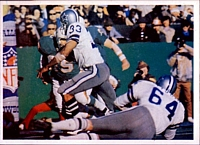
In the history of American football, the Dallas Cowboys claimed their first Super Bowl championship with a decisive victory over the Miami Dolphins. Taking place at Tulane Stadium in New Orleans, Louisiana, this game marked a significant milestone for the Cowboys franchise, solidifying their rise in the NFL. The Cowboys' defense, known as the "Doomsday Defense," proved impenetrable, allowing the Dolphins to only secure a field goal throughout the game.
Dallas quarterback Roger Staubach, who would later be named the game’s Most Valuable Player, demonstrated exceptional skill and composure, completing 12 of 19 passes for 119 yards and two touchdowns. The Cowboys' offense balanced a strong running game, led by Duane Thomas with 95 rushing yards, with Staubach’s efficient passing. This holistic approach overwhelmed the Dolphins, who struggled to mount any significant offense.
The game's outcome was largely influenced by the Cowboys' meticulous preparation and strategic execution. The Dallas defense forced three turnovers, consistently putting their offense in favorable positions. Miami, despite their efforts, could not penetrate the Cowboys' defensive line, leading to their sole scoring play being a field goal by Garo Yepremian in the second quarter.
This Super Bowl was a pivotal moment for the NFL, showcasing the emergence of the Cowboys as a formidable team. It also highlighted the coaching prowess of Tom Landry, whose leadership and innovation were instrumental in the victory. The performance of the Cowboys during this game is often cited in discussions about top Super Bowl performances due to their dominance on both sides of the ball.
In terms of historical impact, this victory elevated the Cowboys in NFL lore, contributing to their moniker, "America's Team." The win also set the stage for future successes and established a legacy for players like Roger Staubach and Tom Landry.
#MoofLife #SuperBowlVI #DallasCowboys #MiamiDolphins #NFLChamps
View details1971
The Baltimore Colts and the Dallas Cowboys faced off in Super Bowl V at the Miami Orange Bowl in Miami, Florida. The game, a closely contested battle, ended with a victory for the Colts, who won 16–13. This game is known for its defensive struggle and numerous turnovers. Both teams combined for a Super Bowl record 11 turnovers, contributing to the game's alternate name, "The Blunder Bowl."
The Colts' Jim O'Brien secured the win with a 32-yard field goal in the final seconds, making it one of the more dramatic finishes in Super Bowl history. Tom Nowatzke's 2-yard touchdown run and O'Brien's earlier 18-yard field goal were Baltimore's other scoring plays. Mike Curtis and Jerry Logan both had key interceptions that helped turn the tide in favor of the Colts.
Dallas's points came from a 7-yard touchdown catch by Duane Thomas thrown by Craig Morton and two field goals from Mike Clark. The game's Most Valuable Player (MVP) was awarded to Chuck Howley, a linebacker from the Cowboys, marking the first time a defensive player and a member of the losing team received the MVP honor.
This victory was an important milestone for the Baltimore Colts, reinstating their prominence in professional football. It had a significant impact on players’ careers, particularly for Colts players like Johnny Unitas and Jim O'Brien. The win also catalyzed further developments in both teams' strategies and rosters in the following seasons.
#SuperBowlV #BaltimoreColts #DallasCowboys #NFLHistory #MoofLife
View details1970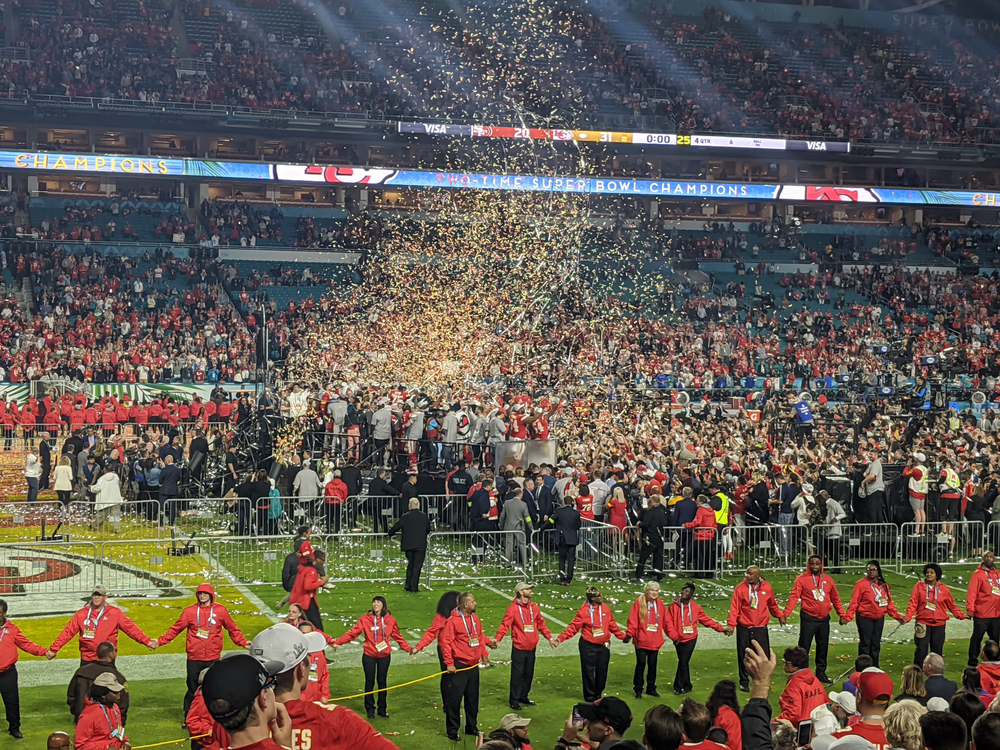
Super Bowl IV saw the Kansas City Chiefs face off against the Minnesota Vikings at Tulane Stadium in New Orleans, Louisiana. The Chiefs' victory over the Vikings ended with a score of 23-7. Kansas City’s defense proved to be a formidable force, constraining Minnesota's offense throughout the game. The Chiefs’ coach, Hank Stram, became well known for his mic’d up remarks on the sidelines, famously saying "Just keep matriculating the ball down the field, boys."
Kansas City’s quarterback, Len Dawson, led the team effectively, completing key passes that contributed significantly to their win. He completed 12 of 17 passes for 142 yards and one touchdown, earning the Super Bowl MVP award for his performance. The Chiefs’ running game was also strong, with Mike Garrett scoring a pivotal rushing touchdown.
Minnesota's notable defense, known as the "Purple People Eaters," struggled to contain the Chiefs' offensive strategies and could not generate enough offensive momentum to counter Kansas City's attacks. Vikings’ quarterback Joe Kapp faced constant pressure, limiting his effectiveness and leading to three interceptions during the match.
This game highlighted the American Football League’s (AFL) competitive abilities, as it marked the final AFL season before the AFL-NFL merger, with the Chiefs' victory underscoring the parity between the leagues. The win for Kansas City also further consolidated the Chiefs' status in the world of professional football, reinforcing the team’s legacy.
#ChiefsWin #SuperBowlIV #NFLHistory #VikingsDefeat #MoofLife
View details1969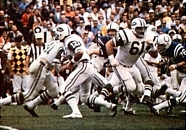
Super Bowl III took place at the Miami Orange Bowl in Miami, Florida, where the New York Jets faced off against the Baltimore Colts. The game was notable for its underdog story, as the Jets were heavy underdogs against the NFL champion Colts. However, Jets quarterback Joe Namath made a bold guarantee that his team would win, which garnered significant media attention.
The Jets delivered an unexpected performance, defeating the Colts 16–7. Namath executed an efficient game plan, completing 17 of 28 passes for 206 yards, and earned the MVP award for his leadership. The Jets’ defense also played a crucial role, intercepting Colts quarterback Earl Morrall three times.
This victory had a lasting impact on professional football, legitimizing the American Football League (AFL) in its competition with the NFL. It led to the eventual merger of the two leagues, forming the modern NFL. The Jets' win demonstrated that AFL teams could compete at the highest level, altering the perceived balance of power in professional football.
Key statistics from the game included Matt Snell's contributions, as he rushed for 121 yards and scored the game's only touchdown. Jim Turner kicked three field goals, adding to the Jets' score. The Colts managed only one touchdown, with Johnny Unitas eventually replacing Morrall, but it was too late to change the outcome.
#SuperBowlIII #NYJets #BaltimoreColts #NFLHistory #FootballLegend #MoofLife
View details1968
The Green Bay Packers and Oakland Raiders faced off at Miami Orange Bowl for what was to be the second Super Bowl championship. The Packers, led by legendary coach Vince Lombardi, entered the game having previously won the first Super Bowl. They aimed to solidify their dominance in the burgeoning era of the NFL.
Quarterback Bart Starr guided the Packers with precision, completing 13 out of 24 passes for 202 yards and one touchdown. Running back Donny Anderson complemented the air attack by rushing for 48 yards on 18 carries, adding a critical touchdown. Backup running back Ben Wilson further contributed to the ground game, showing the depth of the Packers' roster.
The Packers defense proved formidable, effectively containing the Raiders’ offense led by quarterback Daryle Lamonica. Despite Lamonica throwing for 208 yards, the aggressive Green Bay defense limited Oakland's scoring opportunities, securing three interceptions.
A crucial moment came when Herb Adderley intercepted a pass and returned it 60 yards for a touchdown, sealing the fate of the game. This defensive play epitomized the Packers' overall control and execution throughout the match. Kicker Don Chandler contributed significantly, successfully completing all four field goal attempts, demonstrating the special team's reliability.
The culmination of these factors led to the Packers defeating the Raiders with a final score of 33-14. This victory affirmed the dominance of the Packers in the NFL and etched Vince Lombardi’s name into the annals of football lore. This win marked a strong statement by the NFL in its competition with the AFL, a rivalry that was a focal point during this period.
The impact of this game extended beyond the win itself. It represented the integration and growing popularity of professional football in American culture, leading the way toward the NFL becoming the preeminent football league in the world. The strategies and gameplay observed during this match continued to influence coaching and playing styles in subsequent years.
#SuperBowlII #GreenBayPackers #NFLHistory #FootballLegacy #MoofLife
View details1967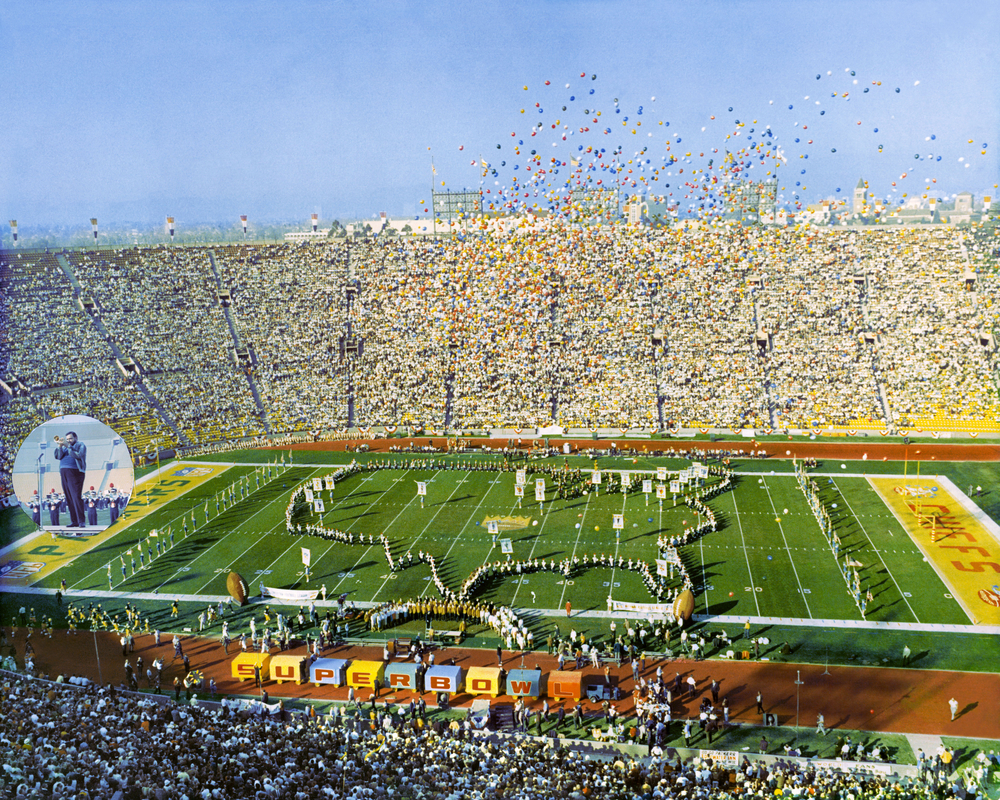
The inaugural Super Bowl took place at the Los Angeles Memorial Coliseum, marking a historic event in professional football. The Green Bay Packers, coached by Vince Lombardi, faced off against the Kansas City Chiefs, led by Hank Stram. This game was the first of its kind, representing a clash between the National Football League (NFL) and the American Football League (AFL).
The Packers, coming off a dominant season, were heavily favored. They did not disappoint, securing a decisive 35-10 victory. Green Bay's Bart Starr, who was named the Most Valuable Player, passed for 250 yards and two touchdowns. Max McGee, a wide receiver for the Packers, was another standout player, accounting for seven receptions and 138 yards, including two touchdowns.
On the Chiefs’ side, Len Dawson had a respectable performance with 210 passing yards and one touchdown. The game remained competitive in the first half, with the Packers leading 14-10 at halftime. However, Green Bay's defense, anchored by players like Willie Davis and Ray Nitschke, stifled Kansas City in the second half, preventing any further scoring.
The significance of this game extended beyond the final score. It demonstrated the superiority of the NFL teams over their AFL counterparts, setting a competitive standard for future Super Bowls. The event garnered significant attention nationwide, drawing a television audience of over 60 million viewers, which was a considerable figure at the time.
Super Bowl I laid the groundwork for the merging of the NFL and AFL, which occurred shortly thereafter, unifying the two leagues. This game is often credited with contributing to the growth and popularity of professional football in the United States, paving the way for the Super Bowl to become the premier sporting event it is today.
By establishing a high level of play and competition, the Green Bay Packers’ victory in this first championship set a benchmark for excellence in the realm of professional football.
#SuperBowlI #GreenBayPackers #KansasCityChiefs #NFL #AFL #MoofLife
View details