
Equatorial Guinea

The Pearl of Central Africa
About
#EquatorialGuinea
#EquatorialGuinea_Timeline
#EquatorialGuinea_History
#EquatorialGuinea_History_Timeline
Life Classification
Country
Life ID
EL1825624933793
Verified Name
equatorial-guinea
Life Type
Entity Life
Life Editor(s)
History Editorial Network (HEN)
Life Privacy
Public
Subscription
Elite
Created On
2025-01-06
Updated On
2026-02-06
Connect
Related Lives

Canadian Federal Election
Canada Decides
World War I
The Great War
Serbia
The Heart of the Balkans
Philippines
Pearl of the Orient Seas
Russia
The Slavic Giant
Central African Republic
The Heart of Africa.

Mauritius
Island Rythms
Netherlands
The Land of Tulips and Windmills

2026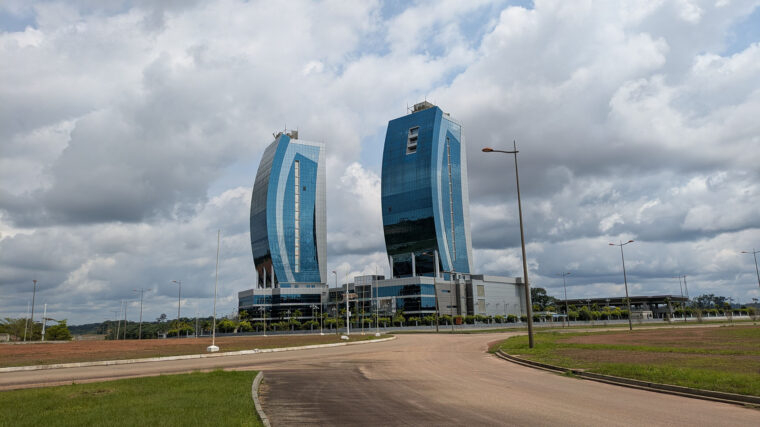
On January 3, 2026, Equatorial Guinea officially relocated its national capital from Malabo to Ciudad de la Paz following a presidential decree signed by President Teodoro Obiang Nguema Mbasogo. Malabo-the former capital-sits on Bioko Island, while Ciudad de la Paz is located on the mainland in Djibloho Province (Río Muni region), marking a major administrative shift from an island-based capital to an inland seat of government.
The move formalized a long-running national plan that has been under development since 2008, with Ciudad de la Paz built as a purpose-planned administrative center. Reported specifications for the new capital include an urban footprint of about 81.5 km² and a relatively small reported resident population (around 2,000 as of 2022), reflecting its role as a developing government hub rather than a mature metropolitan center at the time of designation. The declaration reshapes how national institutions are geographically organized and affects government operations, infrastructure planning, and international diplomatic logistics tied to the country’s seat of power.
View details2025
The World Bank has published its 2025 Economic Update on Equatorial Guinea, focusing on sustainable wealth management and strategies for long-term economic stability. The report examines the country’s economic performance, highlighting the importance of diversifying revenue sources beyond oil and gas, which have historically dominated its economy. It emphasizes the need for prudent fiscal policies, investment in human capital, and development of infrastructure to support sustainable growth. The update also assesses social indicators, governance frameworks, and the effectiveness of current resource management, offering recommendations to ensure that the country’s natural wealth benefits both present and future generations.
The publication carries significant implications for policymakers, investors, and international partners. By outlining strategies for sustainable wealth management, the World Bank aims to encourage reforms that promote economic resilience, reduce dependency on volatile commodities, and foster inclusive growth. The report underscores the role of transparency, institutional capacity, and environmental considerations in long-term planning, particularly in managing resource revenues responsibly. Overall, the 2025 Economic Update provides a roadmap for Equatorial Guinea to strengthen its economic foundations, improve public welfare, and integrate sustainability into national development, highlighting the broader relevance of responsible resource governance in similar resource-rich nations.
View details2022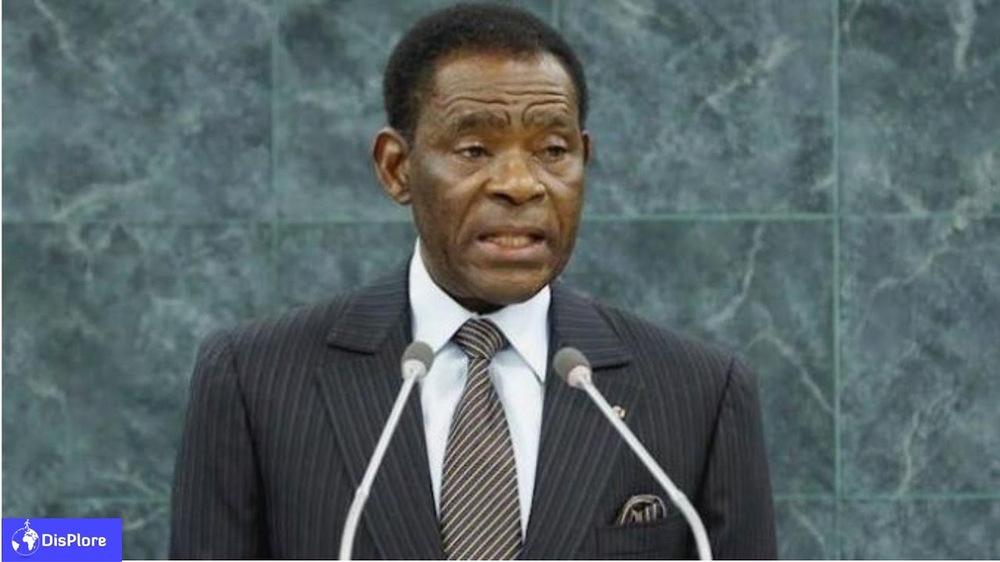
In November 2022, Teodoro Obiang Nguema Mbasogo was re-elected as the President of Equatorial Guinea during the general election, securing an overwhelming 99.7% of the votes cast. This election, however, was marred by significant controversy, as opposition parties and various international observers raised serious allegations of electoral fraud. Obiang, who has been in power since 1979, is known for his authoritarian rule and has faced criticism for human rights abuses and lack of political freedoms in the country. His re-election continues a long-standing trend of dominance in Equatorial Guinea's political landscape, where dissent is often suppressed. The international community has expressed concerns regarding the integrity of the electoral process, highlighting the need for reforms to ensure fair and transparent elections in the future. As the longest-serving leader in Africa, Obiang's administration has been characterized by a mix of economic growth driven by oil revenues and widespread poverty among the population. The political climate in Equatorial Guinea remains tense, with calls for change growing louder amid ongoing allegations of corruption and mismanagement. The implications of this election will likely resonate within the region, as neighboring countries observe the unfolding political dynamics in Equatorial Guinea. #mooflife #mof #MomentOfLife #EquatorialGuinea #TeodoroObiang #ElectionFraud #AfricanPolitics #AuthoritarianRegime
View detailsIn the aftermath of the 2022 general elections, the political landscape in Equatorial Guinea has solidified under the dominance of President Teodoro Obiang's Democratic Party of Equatorial Guinea (PDGE). The PDGE has successfully secured all 100 seats in the Chamber of Deputies and the Senate, effectively eliminating any significant opposition within the country. The opposition, primarily represented by the social-democratic Convergence for Social Democracy, operates largely from Spain, highlighting the challenges faced by dissenting voices in Equatorial Guinea. The political environment is further complicated by the state control of most media outlets, which limits the dissemination of alternative viewpoints. Notably, the private television channels, owned by the Asonga group, are linked to the president's family, raising concerns about media independence and freedom of expression. This consolidation of power raises questions about the future of democracy and political pluralism in Equatorial Guinea, as the absence of a robust opposition and independent media creates a challenging environment for political discourse and civic engagement. #mooflife #mof #MomentOfLife #EquatorialGuinea #Pdge #TeodoroObiang #PoliticalLandscape #MediaControl
View details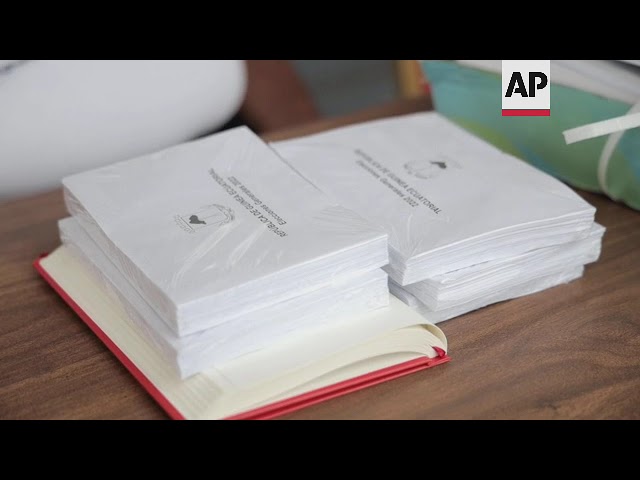
2021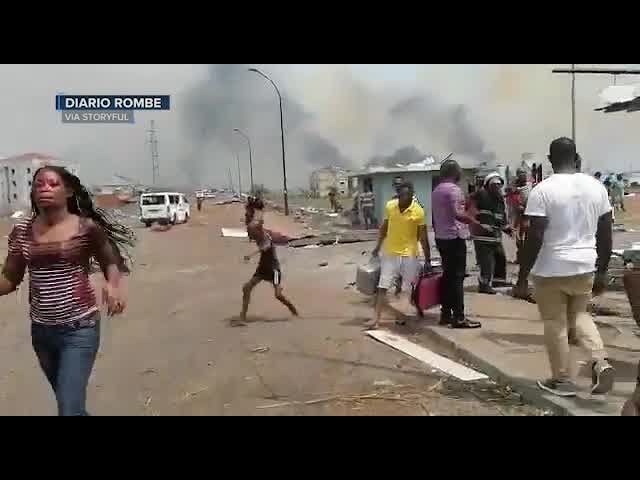
On March 7, 2021, a tragic incident occurred at a military base near the city of Bata, Equatorial Guinea, resulting in significant loss of life and numerous injuries. The explosions, attributed to munitions stored at the facility, led to the deaths of 98 individuals and left approximately 600 others injured. Many of the injured were promptly treated at local hospitals, highlighting the urgent need for medical assistance in the aftermath of the disaster. This incident raised concerns regarding the safety protocols in place for handling munitions and the overall security of military installations in the region. The government faced scrutiny over its preparedness and response to such emergencies, as well as the implications for public safety in surrounding communities. The Bata explosions serve as a stark reminder of the potential dangers associated with military operations and the importance of stringent safety measures to prevent similar tragedies in the future. #mooflife #mof #MomentOfLife #BataExplosions #EquatorialGuinea #MilitaryBaseIncident #MunitionSafety #PublicSafety
View details2017
In 2018, Equatorial Guinea achieved a significant milestone in its diplomatic history by being elected as a non-permanent member of the United Nations Security Council for the term 2018-2019. This election marked a pivotal moment for the nation, allowing it to participate in discussions and decisions that shape global peace and security. As a member of the Security Council, Equatorial Guinea had the opportunity to influence international policies and collaborate with other member states on pressing global issues. The election was seen as a recognition of the country's growing role in international affairs, despite its domestic challenges. The tenure provided Equatorial Guinea with a platform to advocate for African interests and contribute to the dialogue on security matters affecting the continent. This period also coincided with ongoing scrutiny of the country's governance, particularly under the long-standing leadership of President Teodoro Obiang Nguema Mbasogo, who has been in power since 1979. The Security Council membership was a chance for Equatorial Guinea to enhance its international standing and engage more actively in multilateral diplomacy, reflecting its aspirations on the global stage. #mooflife #mof #MomentOfLife #EquatorialGuinea #UnSecurityCouncil #InternationalRelations #Diplomacy #TeodoroObiang
View details2016
In June 2016, Equatorial Guinea was officially selected to host the 12th African Games, scheduled for 2019. This decision marked a significant milestone for the nation, which has a history of hosting major sporting events, including the 2012 African Cup of Nations in partnership with Gabon and the 2015 edition of the tournament. Additionally, Equatorial Guinea hosted the 2008 Women's African Football Championship, showcasing their capability in organizing large-scale sports events. The country has also made strides in women's football, with their national team qualifying for the 2011 World Cup in Germany. Hosting the African Games is expected to enhance the country's sports infrastructure and promote athletic talent across the continent. The event will bring together athletes from various African nations, fostering unity and sportsmanship while providing a platform for emerging talents to shine on an international stage. As preparations for the Games progress, Equatorial Guinea aims to deliver a memorable experience for participants and spectators alike, further solidifying its reputation as a key player in African sports. #mooflife #mof #MomentOfLife #AfricanGames #EquatorialGuinea #SportsEvents #Athletics #2019
View details2015
Equatorial Guinea had the honor of hosting the 2015 edition of the African Cup of Nations (AFCON), a prestigious tournament that showcases the best of African football. This event marked a significant moment for the nation, as it was the second time Equatorial Guinea hosted the tournament, having previously co-hosted the 2012 AFCON with Gabon. The 2015 tournament featured 16 teams competing for the coveted title, with matches held in various cities across the country, including the capital, Malabo, and the city of Bata. The tournament not only highlighted the country's growing reputation in the world of sports but also provided an opportunity to boost tourism and local economies. The successful organization of the event demonstrated Equatorial Guinea's capability to host large-scale international sporting events, further solidifying its position in African football. Additionally, the country has a rich history in hosting football tournaments, having previously hosted the 2008 Women's African Football Championship, which they won, and the women's national team qualifying for the 2011 World Cup in Germany. In June 2016, Equatorial Guinea was also selected to host the 12th African Games in 2019, showcasing its ongoing commitment to promoting sports and athletic excellence in the region. #mooflife #mof #MomentOfLife #AfricanCupOfNations #EquatorialGuinea #Afcon2015 #AfricanFootball #SportsEvents
View details2014
In July 2014, during the tenth summit held in Dili, Equatorial Guinea was officially admitted as a member of the Community of Portuguese Language Countries (CPLP). This significant milestone was contingent upon two critical preconditions: the abolition of the death penalty and the commitment to promote Portuguese as an official language within the country. The inclusion of Equatorial Guinea in the CPLP marks a pivotal moment for the nation, as it seeks to strengthen its cultural ties with other Portuguese-speaking countries. The government has also initiated plans for the construction of Portuguese language cultural centers in the cities of Bata and Malabo, which will serve as hubs for language education and cultural exchange. This move not only reflects Equatorial Guinea's dedication to fostering a multilingual society but also enhances its engagement with the broader CPLP community, which includes countries such as Brazil, Portugal, and Mozambique. The CPLP aims to promote collaboration in various fields, including education, culture, and economic development, and Equatorial Guinea's membership is expected to contribute positively to these objectives. #mooflife #mof #MomentOfLife #EquatorialGuinea #Cplp #PortugueseLanguage #CulturalCenters #DeathPenaltyAbolition
View details2013
On the night of 24 June 2013, the headquarters of the Convergence for Social Democracy (CPDS) in Malabo, Equatorial Guinea, became the focal point of a tense standoff between opposition members and government forces. This confrontation arose shortly after the controversial elections held on 26 May, which the CPDS deemed unfair and undemocratic. In response to the electoral outcome, the CPDS announced plans for a peaceful protest scheduled for 25 June. However, the Interior Minister, Clemente Engonga, denied authorization for the demonstration, citing concerns that it could lead to instability in the country. Despite the government's refusal, the CPDS asserted their constitutional right to protest and decided to proceed with their plans. In a show of force, heavily armed police surrounded the CPDS headquarters, effectively blocking members from leaving the premises. This aggressive action resulted in the detention of several CPDS members, raising significant concerns about the state of political freedoms and human rights in Equatorial Guinea. The incident highlighted the ongoing tensions between the government and opposition parties, as well as the challenges faced by those advocating for democratic reforms in the country. #mooflife #mof #MomentOfLife #Cpds #EquatorialGuinea #Protest #HumanRights #PoliticalFreedom
View detailsThe combined elections held on 26 May 2013 in Equatorial Guinea marked a significant political event, as they encompassed the senate, lower house, and mayoral contests in a single electoral package. As with previous elections, the opposition parties denounced the legitimacy of the electoral process, claiming it was marred by irregularities and a lack of transparency. The ruling party, the Democratic Party of Equatorial Guinea (PDGE), led by President Teodoro Obiang Nguema Mbasogo, emerged victorious once again, consolidating its grip on power. During this electoral period, the PDGE also conducted internal elections, which were later annulled, raising further questions about the party's internal democracy. Notably, the authorities arrested Clara Nsegue Eyi and Natalia Angue Edjodjomo, coordinators of the Movimiento de Protesta Popular (People's Protest Movement), on 13 May 2013. Their arrest was a response to their calls for a peaceful protest against the electoral process, highlighting the government's intolerance towards dissent and opposition voices. This election cycle underscored the ongoing political tensions in Equatorial Guinea, where the ruling party continues to face criticism for its authoritarian practices and suppression of political freedoms. #mooflife #mof #MomentOfLife #EquatorialGuinea #2013Elections #Pdge #PoliticalProtest #TeodoroObiang
View details2011
In November 2011, a significant political development occurred with the approval of a new constitution. This constitution was passed through a vote that took place without prior disclosure of its text or content to the public, raising concerns about transparency and democratic processes. The new constitutional framework imposed a limit on the presidency, allowing a maximum of two seven-year terms for the president, who would serve as both the head of state and head of government, effectively eliminating the role of the prime minister. Additionally, the constitution introduced the position of a vice president and mandated the establishment of a 70-member senate, which would consist of 55 senators. However, the government later contravened this constitutional provision by appointing two vice presidents, highlighting issues of governance and adherence to constitutional law. This development has sparked discussions about the implications for political stability and the rule of law in the country. #mooflife #mof #MomentOfLife #Constitution #PoliticalReform #Governance #Democracy #Legislation
View details2010
The women's national team of Equatorial Guinea made history by qualifying for the 2011 FIFA Women's World Cup held in Germany. This achievement marked a significant milestone for women's football in the country, showcasing the growth and development of the sport in Equatorial Guinea. The team's qualification was a result of their impressive performances in the African qualifiers, where they demonstrated skill, determination, and teamwork. This success not only elevated the profile of women's football in Equatorial Guinea but also inspired a new generation of female athletes in the region. The 2011 World Cup provided the team with a global platform to compete against some of the best teams in the world, further enhancing their experience and exposure. Equatorial Guinea's commitment to women's football was also evident in their hosting of the 2008 Women's African Football Championship, which they won, solidifying their status as a competitive force in African women's football. As the nation continues to invest in sports, the legacy of the women's national team serves as a beacon of hope and inspiration for future athletes. #mooflife #mof #MomentOfLife #EquatorialGuinea #Women'sWorldCup2011 #Women'sFootball #AfricanFootball #SportsDevelopment
View detailsIn 2010, President Teodoro Obiang Nguema Mbasogo of Equatorial Guinea re-appointed Ignacio Milam Tang as Prime Minister, continuing a longstanding political relationship that has characterized the governance of the nation. This decision came after Obiang's re-election in 2009, which was recognized by the African Union as compliant with electoral law, despite ongoing concerns regarding the democratic process in the country. The re-appointment of Milam Tang was seen as a strategic move to maintain stability within the government and ensure continuity in the administration's policies. Under Tang's leadership, the government has faced various challenges, including issues related to human rights and governance, which have drawn criticism from international observers. The political landscape in Equatorial Guinea remains complex, with the government often accused of suppressing dissent and limiting political freedoms. As the country navigates its political future, the roles of leaders like Obiang and Tang will be pivotal in shaping the direction of Equatorial Guinea's governance and its relations with the international community. #mooflife #mof #MomentOfLife #EquatorialGuinea #TeodoroObiang #IgnacioMilamTang #PoliticalStability #HumanRights
View details2009
In 2009, Teodoro Obiang Nguema Mbasogo was re-elected as the President of Equatorial Guinea, marking another term in his long-standing rule since 1979. The election was characterized by the African Union's endorsement, which deemed the electoral process 'in line with electoral law'. This endorsement, however, has been met with skepticism by various international observers and human rights organizations, who have raised concerns about the fairness and transparency of the electoral process in the country. Following his re-election, Obiang continued to consolidate power by reappointing Ignacio Milam Tang as Prime Minister in 2010. This move was seen as a strategy to maintain stability within his administration and ensure loyalty among key government officials. Despite the official narrative of democratic processes, the political landscape in Equatorial Guinea remains heavily criticized for its lack of genuine democratic practices, including allegations of illegal detentions and suppression of dissent. The international community continues to monitor the situation closely, advocating for reforms that promote human rights and democratic governance in the region. #mooflife #mof #MomentOfLife #TeodoroObiang #EquatorialGuinea #2009Election #AfricanUnion #HumanRights
View details2008
In 2008, Equatorial Guinea was selected to host the Women's African Football Championship, marking a significant milestone in the country's sports history. The tournament showcased the best of women's football across the continent, and Equatorial Guinea not only hosted the event but also emerged victorious, claiming the championship title. This achievement highlighted the growth and development of women's football in the region and placed Equatorial Guinea on the map as a competitive force in the sport. The success of the tournament paved the way for the national women's team, which later qualified for the 2011 FIFA Women's World Cup in Germany, further elevating the profile of women's football in the country. The 2008 championship was a pivotal moment that inspired future generations of female athletes in Equatorial Guinea and demonstrated the potential for hosting international sporting events. The legacy of this tournament continues to influence the development of women's sports in the nation, fostering a culture of athletic excellence and empowerment for women in sports. #mooflife #mof #MomentOfLife #Women'sAfricanFootballChampionship #EquatorialGuinea #Women'sFootball #AfricanSports #2011WorldCupQualification
View detailsIn 2008, Equatorial Guinea made significant strides towards enhancing its transparency in the extractive industries by obtaining candidate status for the Extractive Industries Transparency Initiative (EITI) on February 22. This initiative aims to promote open and accountable management of natural resources, which is crucial for countries rich in oil and minerals. Equatorial Guinea's application for EITI compliance was a step towards aligning with global standards of transparency and governance in the extractive sector. However, the journey towards full compliance faced challenges when the EITI Board declined the country's request to extend the deadline for validation. This decision underscored the importance of adhering to the EITI's rigorous standards and timelines, which are designed to ensure that countries not only commit to transparency but also follow through with the necessary reforms and reporting mechanisms. The EITI process is vital for Equatorial Guinea, as it seeks to improve its international reputation and attract foreign investment by demonstrating a commitment to transparency and accountability in its oil and gas sectors. #mooflife #mof #MomentOfLife #EquatorialGuinea #Eiti #Transparency #ExtractiveIndustries #Governance
View details2000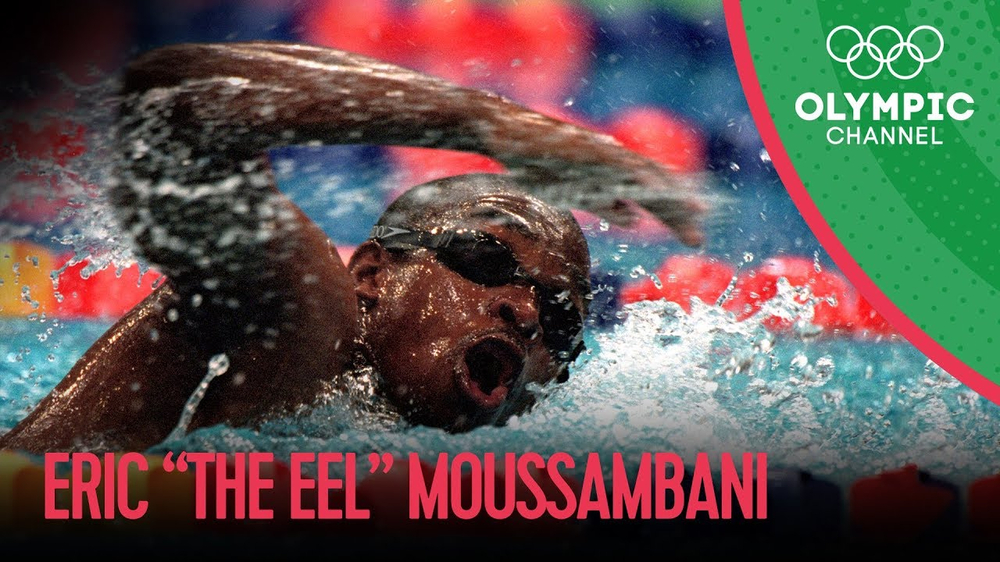
The 2000 Summer Olympics, held in Sydney, Australia, showcased a diverse array of athletes from around the globe, including notable swimmers from Equatorial Guinea. Among them were Eric Moussambani, affectionately known as 'Eric the Eel', and Paula Barila Bolopa, dubbed 'Paula the Crawler'. Eric Moussambani gained international fame during the men's 100-meter freestyle event, where he competed despite having limited training facilities and experience. His slow but determined swim captured the hearts of spectators, making him a symbol of perseverance and the Olympic spirit. Paula Barila Bolopa also made her mark by competing in the women's 100-meter freestyle, representing her country with pride. Both athletes highlighted the importance of participation and the Olympic ideals of inclusivity and sportsmanship. Their stories continue to inspire aspiring swimmers and athletes from underrepresented nations, proving that the Olympics is not just about winning medals but also about the journey and the courage to compete on the world stage. #mooflife #mof #MomentOfLife #2000SummerOlympics #EricMoussambani #PaulaBarilaBolopa #EquatorialGuineaSwimmers #OlympicSpirit
View details1995
In 1995, Mobil, an American oil company, made a significant discovery of oil in Equatorial Guinea, which marked the beginning of a new economic era for the country. Following this discovery, Equatorial Guinea experienced rapid economic growth fueled by its oil wealth. However, despite the influx of revenue, the benefits have not been equitably distributed among the population. The country ranks low on the United Nations Human Development Index, highlighting the disparity between national wealth and the well-being of its citizens. Alarmingly, 7.9% of children in Equatorial Guinea die before reaching the age of five, and over 50% of the population lacks access to clean drinking water. These statistics underscore the critical challenges faced by the nation. Furthermore, President Teodoro Obiang has been widely criticized for allegedly using the country's oil revenues to enrich himself and his associates, raising concerns about governance and accountability. This situation calls for urgent attention to ensure that the wealth generated from natural resources translates into tangible benefits for the people of Equatorial Guinea. #mooflife #mof #MomentOfLife #EquatorialGuinea #Mobil #OilDiscovery #TeodoroObiang #HumanDevelopmentIndex
View details1985
On January 1, 1985, Equatorial Guinea made a significant economic transition by becoming the first non-Francophone African nation to join the franc zone. This pivotal move involved the adoption of the CFA franc as its official currency, replacing the ekwele, which had been previously tied to the Spanish peseta. This change marked a new chapter in Equatorial Guinea's economic history, as it sought to stabilize its currency and enhance trade relations with other countries in the franc zone. Prior to its independence from Spain, Equatorial Guinea's economy was primarily based on the export of cocoa, coffee, and timber, with Spain being its main trading partner. By aligning itself with the franc zone, Equatorial Guinea aimed to foster economic growth and integration within the broader West and Central African economic landscape, leveraging the stability of the CFA franc to attract foreign investment and improve its trade dynamics. This strategic decision not only reflected the country's aspirations for economic development but also highlighted its unique position as a bridge between Francophone and non-Francophone African nations. #mooflife #mof #MomentOfLife #EquatorialGuinea #CfaFranc #FrancZone #AfricanEconomy #CurrencyTransition
View details1979
On August 3, 1979, Teodoro Obiang, the nephew of the then-dictator Macías Nguema, orchestrated a coup d'état that resulted in the overthrow of his uncle's regime in Equatorial Guinea. This violent power struggle marked the beginning of a tumultuous period characterized by civil unrest and conflict, lasting over two weeks. The coup was fueled by widespread discontent with Nguema's brutal governance, which had led to severe human rights abuses and economic decline. Following the coup, Nguema was captured, tried, and executed, effectively ending his tyrannical rule. Teodoro Obiang then assumed the presidency, promising a shift towards a less violent administration. However, his leadership has been characterized as authoritarian, continuing the legacy of oppression established by his uncle. Obiang's regime has faced criticism for human rights violations and lack of political freedoms, despite some efforts to stabilize the nation. The events of 1979 remain a pivotal moment in Equatorial Guinea's history, shaping its political landscape for decades to come. #mooflife #mof #MomentOfLife #TeodoroObiang #MacíasNguema #EquatorialGuinea #CoupD'état #AuthoritarianRegime
View details1969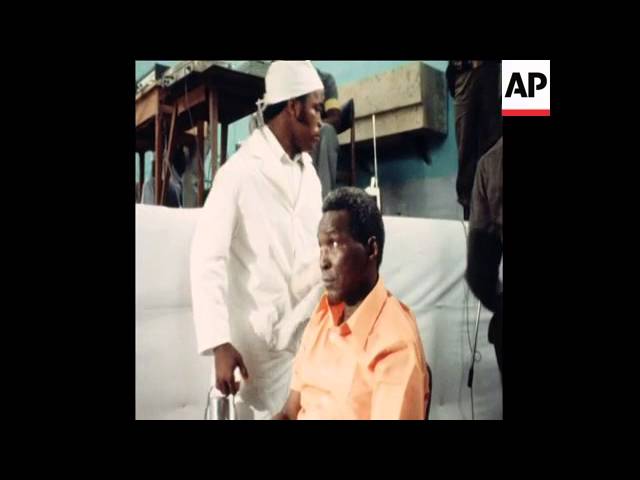
The Execution of Alleged Coup-Plotters on Christmas Eve 1969: A Political Purge in Equatorial Guinea
On Christmas Eve in 1969, a significant and tragic event unfolded in Equatorial Guinea under the regime of President Francisco Macías Nguema. Following a complaint from the Public Prosecutor regarding 'excesses and maltreatment' by government officials, Macías initiated a brutal purge that resulted in the execution of approximately 150 alleged coup-plotters. These individuals were primarily political opponents, and their execution marked a dark chapter in the nation's history, highlighting the extreme measures taken by Macías to eliminate dissent and consolidate his power. This purge was not an isolated incident; it was part of a broader strategy employed by Macías to establish a totalitarian regime. In July 1970, he further solidified his grip on power by outlawing all opposition political parties, effectively silencing any form of political dissent. By 1972, he declared himself president for life, reinforcing his authoritarian rule. Macías's regime was characterized by a break from traditional alliances, as
View details1968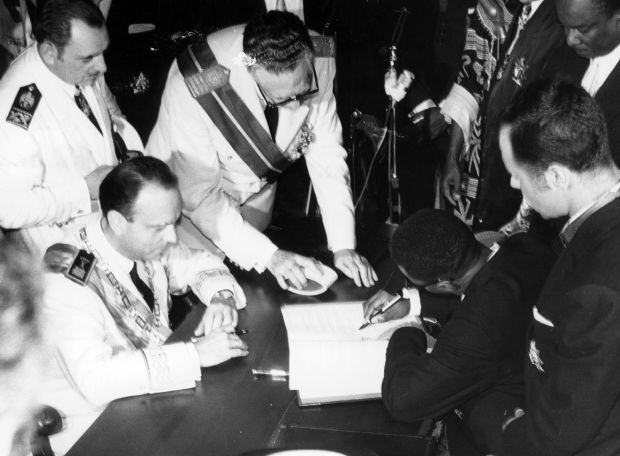
Equatorial Guinea gained its independence from Spain on October 12, 1968, marking a significant turning point in the nation's history. However, the post-independence era was marred by the brutal dictatorship of President Francisco Macías Nguema, who ruled with an iron fist. In 1972, he declared himself president for life, leading to widespread human rights abuses and political repression. His regime was characterized by violence and fear, resulting in the deaths of thousands of citizens. In 1979, Nguema was overthrown in a coup led by his nephew, Teodoro Obiang Nguema Mbasogo, who has since maintained power and is recognized as one of the longest-serving leaders in Africa. Obiang's government has also been criticized for its authoritarian practices and lack of democratic freedoms. Despite these challenges, Equatorial Guinea has experienced economic growth, particularly since the mid-1990s, when it emerged as one of sub-Saharan Africa's largest oil producers. This newfound wealth has not translated into widespread prosperity for its citizens, as issues of corruption and inequality persist. The political landscape remains complex, with ongoing calls for reform and greater accountability in governance. #mooflife #mof #MomentOfLife #EquatorialGuinea #Independence #FranciscoMacíasNguema #TeodoroObiangNguemaMbasogo #OilProduction
View detailsIn 1972, Francisco Macías Nguema, the first President of Equatorial Guinea, declared himself president for life, solidifying his grip on power following the country's independence from Spain in 1968. His regime was notorious for its severe human rights abuses, including widespread repression, political persecution, and the elimination of dissent. Nguema's rule was characterized by a cult of personality, where he positioned himself as the sole leader and authority in the nation. His government was marked by arbitrary arrests, torture, and executions of perceived opponents, leading to a climate of fear among the populace. The economic situation deteriorated under his leadership, with mismanagement and corruption rampant. In 1979, Nguema was overthrown in a coup led by his nephew, Teodoro Obiang Nguema Mbasogo, who has since maintained a similar authoritarian rule. Despite the change in leadership, the legacy of Nguema's dictatorship continues to impact Equatorial Guinea, which has become one of sub-Saharan Africa's largest oil producers since the mid-1990s. However, the wealth generated from oil has not translated into improved living conditions for the majority of the population, as the country remains plagued by poverty and human rights violations. #mooflife #mof #MomentOfLife #FranciscoMacíasNguema #EquatorialGuinea #Dictatorship #HumanRightsAbuses #TeodoroObiangNguemaMbasogo
View details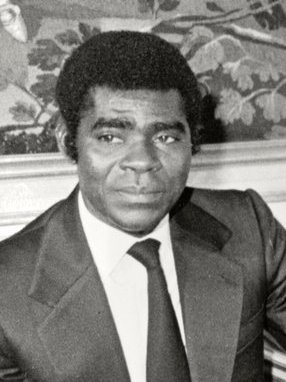
1967
On 27 October 1967, Spain convened a constitutional convention aimed at drafting a new constitution for an independent Equatorial Guinea, following recommendations from a UN Commission that had toured the country in 1966. This significant event was attended by 41 local delegates representing various ethnic groups and 25 Spanish officials. The conference highlighted the complex ethnic dynamics within Equatorial Guinea, particularly the divisions among the African delegates. The Fernandinos and Bubi communities expressed concerns about potential marginalization and the loss of their privileges, fearing being 'swamped' by the majority Fang population. In contrast, the Río Muni Fang nationalists sought to assert their political influence in the new governance structure. This convention marked a pivotal moment in Equatorial Guinea's journey towards independence, as it laid the groundwork for the establishment of a constitutional framework that would govern the newly sovereign nation. #mooflife #mof #MomentOfLife #EquatorialGuinea #ConstitutionalConvention #1967 #SpanishColonialism #AfricanNationalism
View details1965
In 1965, the United Nations General Assembly took significant steps towards the decolonization of Equatorial Guinea by passing two resolutions that mandated Spain to grant independence to the territory. This action was a response to the increasing pressure from the international community and the rising tide of nationalism within the colony. The resolutions highlighted the UN's commitment to self-determination and the end of colonial rule. In reaction to these developments, the Spanish government announced plans to hold a constitutional convention on 27 October 1967, aimed at negotiating a new constitution for an independent Equatorial Guinea. This move was seen as a crucial step towards fulfilling the UN's directives and addressing the aspirations of the Equatorial Guinean people for autonomy and self-governance. The resolutions of 1965 marked a pivotal moment in the history of Equatorial Guinea, setting the stage for its eventual independence in 1968, and underscoring the role of international organizations in the decolonization process during the mid-20th century. #mooflife #mof #MomentOfLife #EquatorialGuinea #UnGeneralAssembly #Decolonization #Spain #Independence
View details1963
On 9 August 1963, a significant decision was made regarding the future of Equatorial Guinea, which was subsequently approved by a referendum held on 15 December 1963. This decision granted the territory a measure of autonomy and facilitated the rise of a moderate political group known as the Movimiento de Unión Nacional de Guinea Ecuatorial (MUNGE). However, the implementation of this autonomy was largely unsuccessful, as the political landscape was fraught with challenges. As pressure for change mounted from the United Nations, Madrid found itself increasingly compelled to respond to the growing currents of nationalism within the territory. In 1965, the UN General Assembly passed two resolutions demanding that Spain grant independence to Equatorial Guinea. This marked a pivotal moment in the decolonization process, highlighting the international community's commitment to self-determination and the end of colonial rule. By 1966, the situation had evolved further, leading to significant discussions about the future governance of the territory and its eventual path towards full independence. #mooflife #mof #MomentOfLife #EquatorialGuinea #Munge #Autonomy #Decolonization #UnResolutions
View details1936
The Spanish Civil War, which erupted in 1936, had significant repercussions for Equatorial Guinea, particularly in the Río Muni enclave. Amidst the turmoil, a faction of 150 Spanish expatriates, including key political figures such as the Governor-General and Vice-Governor-General, established a socialist party known as the Popular Front. This party emerged as a counterforce to the interests of the plantation owners on Fernando Pó Island, highlighting the socio-political tensions within the colony. In response to the escalating conflict in Spain, Francisco Franco, the leader of the Nationalist forces, issued orders for military intervention in Equatorial Guinea. By September 1936, Nationalist troops, supported by Falangist elements from Fernando Pó, successfully seized control of Río Muni. This strategic move was aimed at consolidating Franco's power and suppressing any opposition, thereby ensuring the Nationalists' dominance in the region. The takeover marked a pivotal moment in the colonial history of Equatorial Guinea, as it not only reflected the broader implications of the Spanish Civil War but also set the stage for future political developments in the territory. The actions taken during this period would have lasting effects on the governance and socio-economic landscape of Equatorial Guinea, influencing its trajectory well beyond the war's conclusion. #mooflife #mof #MomentOfLife #SpanishCivilWar #EquatorialGuinea #NationalistForces #FranciscoFranco #RíoMuni
View details1930
The end of the Labour Treaty with Liberia in 1930 marked a significant shift in the labor dynamics of Fernando Po, an island that was part of Spanish Guinea. Between 1914 and 1930, approximately 10,000 Liberians migrated to Fernando Po under this treaty, providing essential labor for the island's burgeoning cacao and coffee plantations. The treaty facilitated a steady influx of workers, which was crucial for the agricultural economy that relied heavily on these crops. However, the cessation of the treaty in 1930 left planters in a precarious position as they suddenly lost a vital source of labor. In response to this labor shortage, planters began to seek alternative sources of workers, turning their attention to Río Muni, the mainland part of Spanish Guinea. This transition not only affected the labor market but also highlighted the interconnectedness of colonial economies in West Africa. The reliance on immigrant contract labor from Liberia, Nigeria, and Cameroon underscored the broader patterns of migration and labor exploitation during this period. The shift in labor sourcing after 1930 illustrates the challenges faced by colonial economies when faced with abrupt changes in labor availability, prompting planters to adapt quickly to maintain productivity in their agricultural sectors. #mooflife #mof #MomentOfLife #LabourTreaty #Liberia #FernandoPo #SpanishGuinea #ColonialEconomy
View details1917
By the late nineteenth century, the Bubi people of Equatorial Guinea found themselves under the protective influence of Spanish Claretian missionaries. These missionaries played a crucial role in safeguarding the Bubi from the exploitative demands of plantation owners. They organized the Bubi into small mission theocracies, drawing parallels to the Jesuit reductions in Paraguay, which aimed to provide a structured and supportive community for the indigenous people. The Bubi's struggle for autonomy was marked by two significant insurrections in 1898 and 1910, both of which protested against the conscription of forced labor for the plantations. However, the situation took a drastic turn in 1917 when the Bubi were disarmed, leaving them vulnerable and dependent on the missionaries for support and guidance. This disarmament not only stripped the Bubi of their means of self-defense but also reinforced their reliance on the missionaries, who had become their primary source of assistance in a rapidly changing socio-political landscape. The legacy of this period is a complex interplay of cultural influence, dependency, and the struggle for autonomy that continues to shape the Bubi community today. #mooflife #mof #MomentOfLife #Bubi #EquatorialGuinea #SpanishMissionaries #ColonialHistory #ForcedLabor
View details