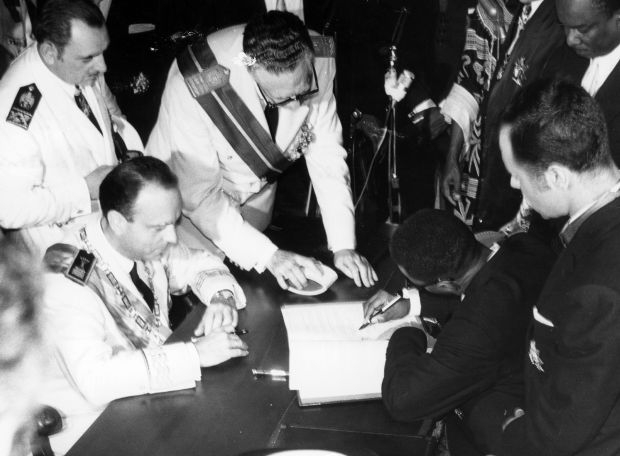
Equatorial Guinea gained its independence from Spain
Equatorial Guinea
Politics
Independence Movements
3 min read
Updated By: History Editorial Network (HEN)
Published:
Updated:
Equatorial Guinea gained its independence from Spain on October 12, 1968, marking a significant turning point in the nation's history. However, the post-independence era was marred by the brutal dictatorship of President Francisco Macías Nguema, who ruled with an iron fist. In 1972, he declared himself president for life, leading to widespread human rights abuses and political repression. His regime was characterized by violence and fear, resulting in the deaths of thousands of citizens. In 1979, Nguema was overthrown in a coup led by his nephew, Teodoro Obiang Nguema Mbasogo, who has since maintained power and is recognized as one of the longest-serving leaders in Africa. Obiang's government has also been criticized for its authoritarian practices and lack of democratic freedoms. Despite these challenges, Equatorial Guinea has experienced economic growth, particularly since the mid-1990s, when it emerged as one of sub-Saharan Africa's largest oil producers. This newfound wealth has not translated into widespread prosperity for its citizens, as issues of corruption and inequality persist. The political landscape remains complex, with ongoing calls for reform and greater accountability in governance. #mooflife #mof #MomentOfLife #EquatorialGuinea #Independence #FranciscoMacíasNguema #TeodoroObiangNguemaMbasogo #OilProduction

Explore the Life Moments of
 AI Twin