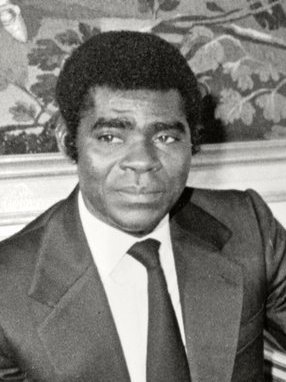
Francisco Macías Nguema declared himself president for life
Equatorial Guinea
Political Science
Leadership
3 min read
Updated By: History Editorial Network (HEN)
Published:
Updated:
In 1972, Francisco Macías Nguema, the first President of Equatorial Guinea, declared himself president for life, solidifying his grip on power following the country's independence from Spain in 1968. His regime was notorious for its severe human rights abuses, including widespread repression, political persecution, and the elimination of dissent. Nguema's rule was characterized by a cult of personality, where he positioned himself as the sole leader and authority in the nation. His government was marked by arbitrary arrests, torture, and executions of perceived opponents, leading to a climate of fear among the populace. The economic situation deteriorated under his leadership, with mismanagement and corruption rampant. In 1979, Nguema was overthrown in a coup led by his nephew, Teodoro Obiang Nguema Mbasogo, who has since maintained a similar authoritarian rule. Despite the change in leadership, the legacy of Nguema's dictatorship continues to impact Equatorial Guinea, which has become one of sub-Saharan Africa's largest oil producers since the mid-1990s. However, the wealth generated from oil has not translated into improved living conditions for the majority of the population, as the country remains plagued by poverty and human rights violations. #mooflife #mof #MomentOfLife #FranciscoMacíasNguema #EquatorialGuinea #Dictatorship #HumanRightsAbuses #TeodoroObiangNguemaMbasogo

Explore the Life Moments of
 AI Twin