
Indonesia

The Emerald of the Equator
Related Lives

Kenya
The Cradle of Humankind

Dominican Republic
A Caribbean Paradise

Adventure Movies
Where courage meets the unknown

Luxembourg
The Gibraltar of the North

China
Land of Silk

Poland
The Land of a Thousand Lakes

Norway
Land of Fjords and Northern Lights

Bhutan
Land of the Thunder Dragon

0716
In the region of Central Java, an influential entity known as the Mataram Kingdom emerged as a notable power in the early medieval period. This formation marked a transition from scattered, small communities to a centralized polity capable of exerting control and influence over a significant portion of Java. The realm was primarily a Hindu kingdom, with its rulers adhering to and promoting the Hindu-Buddhist cultural traditions and religious practices of the time.
The establishment of Mataram Kingdom was closely linked with its agrarian economy, which was highly dependent on rice cultivation. The fertile volcanic soil of Central Java supported intensive rice farming, which, in turn, sustained a growing population and facilitated the accumulation of surplus wealth. This economic base allowed the kingdom to support a strong military, administrative infrastructure, and religious institutions.
Throughout its existence, the Mataram Kingdom witnessed several dynastic changes and differentiated phases of development. The early phase, known for the Sanjaya Dynasty, laid the political and cultural foundations. This laid the groundwork for monumental temple architecture, including the construction of temples such as the early sanctuaries in Dieng Plateau.
The influence of the Mataram Kingdom spread through both military conquests and diplomatic efforts, creating a network of alliances and subordinate states. It played a pivotal role in shaping the socio-political dynamics of Java and its surrounding areas. Additionally, the kingdom's patronage of the arts, literature, and religion contributed to the increased sophistication of Javanese culture.
Archaeological and epigraphical evidence has provided insights into the administrative organization and governance of Mataram, revealing a structured and hierarchical society. Temples, inscriptions, and artifacts from this period are indicative of the kingdom’s cultural and religious activities, which had a lasting influence on Javanese civilization.
By establishing a centralized authority in Central Java, the Mataram Kingdom significantly impacted the historical trajectory of Indonesia. It fostered an environment where religious and cultural practices could flourish, ultimately laying the groundwork for subsequent Javanese polities and cultural heritage.
#MataramKingdom #JavaHistory #CulturalLegacy #AncientJava #MoofLife
View details0683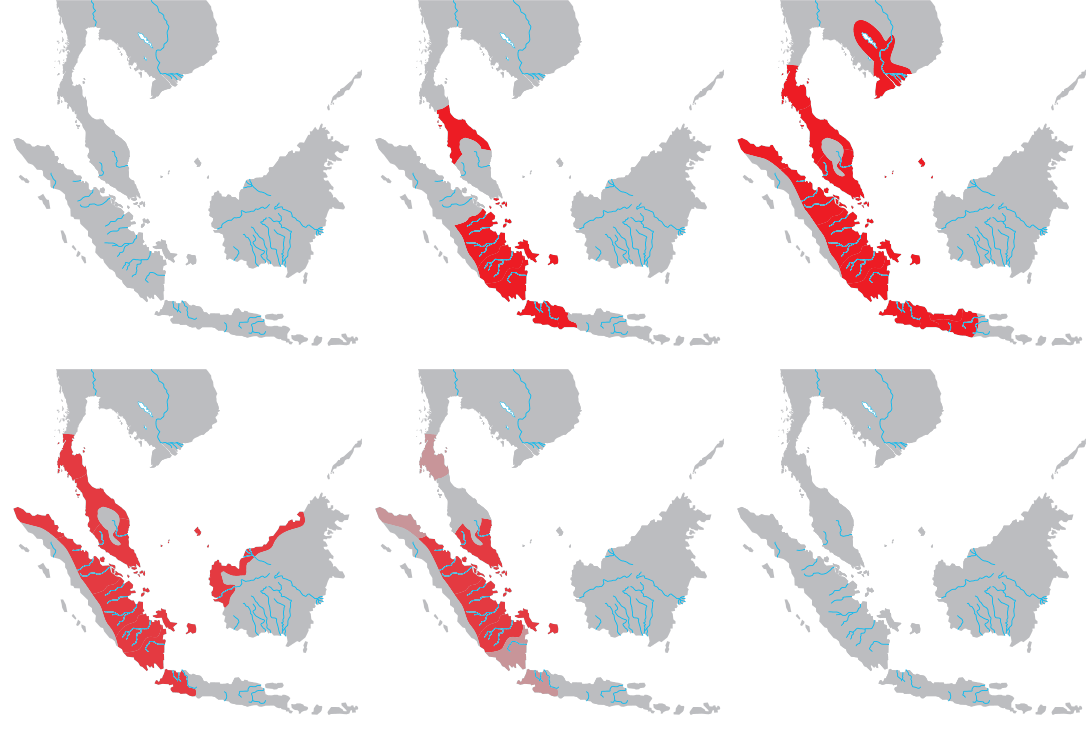
In the late 7th century, the establishment of the Srivijaya Kingdom marked a pivotal development in the history of Southeast Asia, particularly in the Indonesian region of Sumatra. Srivijaya emerged as a major maritime and commercial power, orchestrating the dynamics of trade and politics in the region for several centuries.
At its inception, the Srivijaya Kingdom leveraged its strategic location along the Malacca Strait, a crucial maritime trade route connecting the Indian Ocean and the South China Sea. This advantageous positioning allowed Srivijaya to become a central hub for international traders, linking the empires of the Indian subcontinent, China, and the myriad of smaller polities within the Indonesian archipelago.
Srivijaya's rise can be attributed to its strong naval capabilities, coupled with a keen understanding of maritime commerce. The kingdom adeptly managed the complex web of sea routes, ensuring safe passage for merchant ships, which in turn solidified its influence over the region's economic activities. The kingdom's port city of Palembang became one of the busiest and most prosperous port cities of the time, where goods such as spices, gold, silver, and silk were exchanged.
Furthermore, Srivijaya's rulers invested in the enhancement of religious and cultural institutions. As a Mahayana Buddhist kingdom, it fostered Buddhism's spread across the region, establishing monasteries and educational centers that attracted pilgrims and scholars from across Asia. This contributed to the diffusion of religious and cultural practices, influencing the region's social structure and traditions.
Archaeological findings, such as inscriptions found in various parts of Sumatra and the Malay Peninsula, provide insight into the extent of Srivijaya's influence. These artifacts, replete with references to trade activities and religious endowments, underscore the kingdom's prominence.
The establishment of Srivijaya had profound implications on the regional power dynamics. By controlling vital maritime chokepoints, Srivijaya wielded substantial influence over regional and even global trade networks. This dominance not only secured economic prosperity but also played a significant role in shaping the political landscape of Southeast Asia, serving as a prototype for subsequent maritime polities in the region.
The legacy of the Srivijaya Kingdom is still palpable in the cultural and historical narratives of Indonesia and broader Southeast Asia. Its establishment serves as a crucial chapter in understanding the historical interplay between trade, politics, and culture in the region.
#SrivijayaKingdom #SoutheastAsiaMaritime #IndonesianHistory #MoofLife
View details0450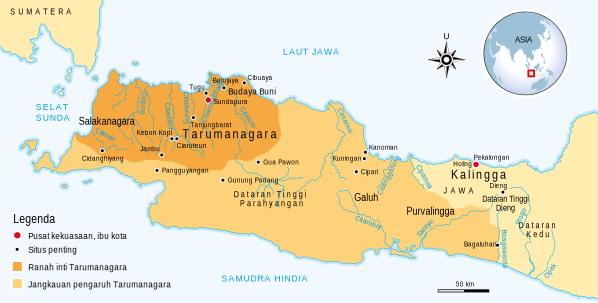
In a period marked by shifting power dynamics and the rise of localized kingdoms in the region, the establishment of the Tarumanagara Kingdom in West Java stands out. Its foundation is attributed to the efforts of its first ruler, King Purnawarman, who carved a domain that integrated a diverse population of Sundanese and other ethnic groups.
The strategic significance of Tarumanagara lay in its fertile lands and access to vital trade routes. The kingdom's economy thrived on an effective agricultural base and burgeoning trade networks that linked it to larger Indian Ocean commercial activities. Tarumanagara became a key player in these networks, trading not only local commodities such as rice, spices, and timber but also acquiring significant cultural and technological influences from neighboring civilizations, especially those from the Indian subcontinent.
One of the defining aspects of Tarumanagara's early development was its administrative and engineering accomplishments. King Purnawarman's rule witnessed the construction of sophisticated irrigation systems, as evidenced by the Tugu inscription, which detailed the excavation of a canal named Gomati. This ambitious project exemplified advanced understanding of hydraulic engineering, significantly boosting agricultural output and securing the kingdom’s food supply.
The political impact of the kingdom's founding was also notable, as it helped to consolidate smaller local thalassocracies and tribal entities into a more structured and centralized polity. This consolidation enabled greater stability and facilitated the spread of Hinduism within the territory, marking an era of religious and cultural transformation.
Tarumanagara's influence extended into subsequent periods, contributing to the emergence of future Javanese and Sundanese polities. Its legacy in terms of governance, trade, and cultural amalgamation paved the way for the prosperity of future states in the archipelago.
#Tarumanagara #WestJava #IndonesiaHistory #EarlyKingdoms #TradeRoutes #IrrigationProjects #CulturalAmalgamation #MoofLife
View details