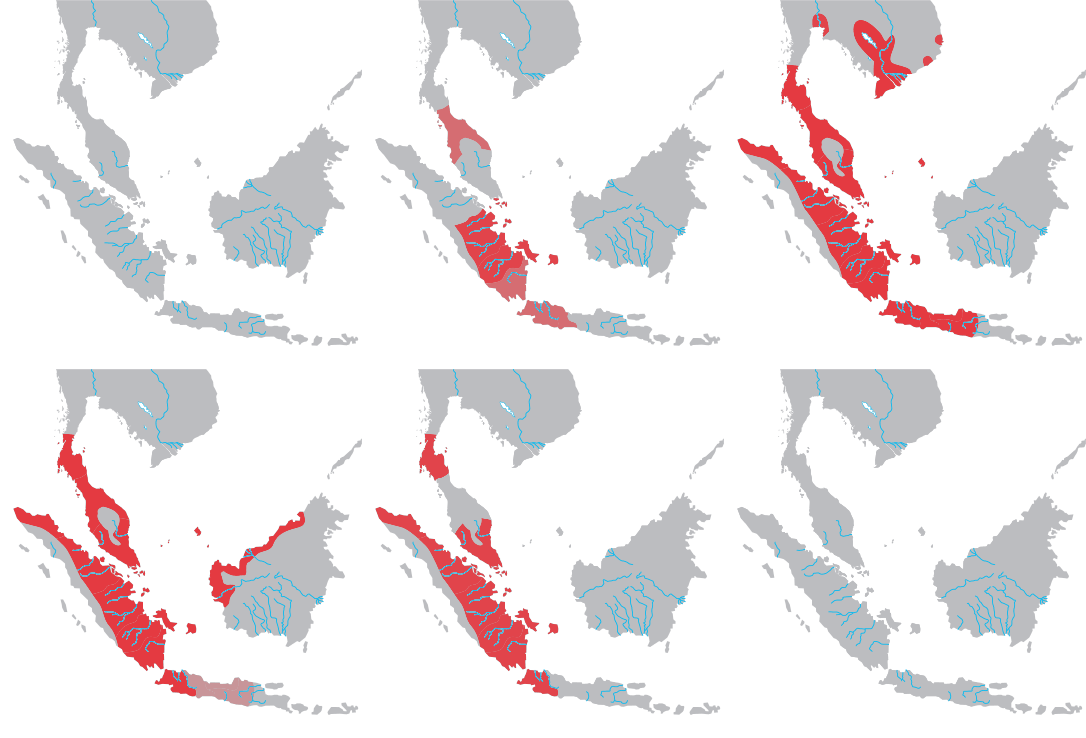
Srivijaya Kingdom Founded in Sumatra.
Indonesia

Global Trade
6 min read
Updated By: History Editorial Network (HEN)
Published:
In the late 7th century, the establishment of the Srivijaya Kingdom marked a pivotal development in the history of Southeast Asia, particularly in the Indonesian region of Sumatra. Srivijaya emerged as a major maritime and commercial power, orchestrating the dynamics of trade and politics in the region for several centuries.
At its inception, the Srivijaya Kingdom leveraged its strategic location along the Malacca Strait, a crucial maritime trade route connecting the Indian Ocean and the South China Sea. This advantageous positioning allowed Srivijaya to become a central hub for international traders, linking the empires of the Indian subcontinent, China, and the myriad of smaller polities within the Indonesian archipelago.
Srivijaya's rise can be attributed to its strong naval capabilities, coupled with a keen understanding of maritime commerce. The kingdom adeptly managed the complex web of sea routes, ensuring safe passage for merchant ships, which in turn solidified its influence over the region's economic activities. The kingdom's port city of Palembang became one of the busiest and most prosperous port cities of the time, where goods such as spices, gold, silver, and silk were exchanged.
Furthermore, Srivijaya's rulers invested in the enhancement of religious and cultural institutions. As a Mahayana Buddhist kingdom, it fostered Buddhism's spread across the region, establishing monasteries and educational centers that attracted pilgrims and scholars from across Asia. This contributed to the diffusion of religious and cultural practices, influencing the region's social structure and traditions.
Archaeological findings, such as inscriptions found in various parts of Sumatra and the Malay Peninsula, provide insight into the extent of Srivijaya's influence. These artifacts, replete with references to trade activities and religious endowments, underscore the kingdom's prominence.
The establishment of Srivijaya had profound implications on the regional power dynamics. By controlling vital maritime chokepoints, Srivijaya wielded substantial influence over regional and even global trade networks. This dominance not only secured economic prosperity but also played a significant role in shaping the political landscape of Southeast Asia, serving as a prototype for subsequent maritime polities in the region.
The legacy of the Srivijaya Kingdom is still palpable in the cultural and historical narratives of Indonesia and broader Southeast Asia. Its establishment serves as a crucial chapter in understanding the historical interplay between trade, politics, and culture in the region.
#SrivijayaKingdom #SoutheastAsiaMaritime #IndonesianHistory #MoofLife
Primary Reference
Srivijaya - Wikipedia

Explore the Life Moments of
 AI Twin