
Saudi Arabia

A Land of Heritage and Innovation
Related Lives

World War I
The Great War

Serbia
The Heart of the Balkans

Philippines
Pearl of the Orient Seas

History of Quantam computing
Whispers of the Quantum Realm

Arkansas
The Natural State

Chile
Land of poets and penguins.

Ghana
Culture-Warmth-Rhythm

Bahrain
The Pearl of the Gulf

0632
In the city of Medina, Prophet Muhammad passed away after falling ill for several days. His death marked a pivotal moment for the Muslim community, as he was not only their spiritual leader but also their political guide. With his demise, a period of mourning engulfed Medina, and his followers were deeply saddened by the loss of their beloved Prophet.
The passing of Prophet Muhammad had a profound impact on the Muslim world, as it led to a succession crisis. This ultimately resulted in the appointment of Abu Bakr as the first caliph, marking the beginning of the Rashidun Caliphate. The death of Prophet Muhammad also solidified the teachings and revelations of Islam, as they were compiled into the Quran to ensure their preservation for future generations.
The city of Medina, where Prophet Muhammad took his last breath, became a place of pilgrimage for Muslims from all over the world. His tomb, located in the Prophet's Mosque, continues to be a sacred site visited by millions of Muslims each year. The legacy of Prophet Muhammad lives on through his teachings, which continue to guide and inspire Muslims to this day.
#Medina #ProphetMuhammad #IslamicHistory #RashidunCaliphate
View details0630
The Conquest of Mecca by the Muslims, under the leadership of Prophet Muhammad, marked a pivotal moment in Islamic history. Prior to the conquest, the Muslims faced persecution and hostility from the people of Mecca for many years. In the sixth year of Hijra, Prophet Muhammad and his followers sought to peacefully perform pilgrimage to the Kaaba in Mecca but were prevented from doing so.
In response, a peace treaty known as the Treaty of Hudaybiyyah was established between the Muslims and the Quraysh tribe of Mecca. However, the treaty was violated by the Quraysh, leading to the conquest of Mecca by the Muslims. Prophet Muhammad, with a large army, marched into Mecca without bloodshed and peacefully reclaimed the city.
The conquest of Mecca had a profound impact on the spread of Islam. It signaled the end of idolatry in the city and the establishment of Islam as the dominant faith. Many Meccans embraced Islam following the conquest, leading to the unification of the Arabian Peninsula under the banner of Islam.
Furthermore, the conquest of Mecca demonstrated Prophet Muhammad's commitment to forgiveness and mercy. Despite years of persecution, he forgave those who had wronged him and his followers, setting a powerful example of compassion and reconciliation.
The conquest of Mecca remains a significant event in Islamic history, symbolizing the triumph of faith over adversity and the eventual spread of Islam throughout the region. It serves as a reminder of the importance of perseverance, forgiveness, and unity in the face of challenges.
#ConquestOfMecca #ProphetMuhammad #IslamicHistory #PeacefulVictory #SpreadOfIslam #Unity
View details625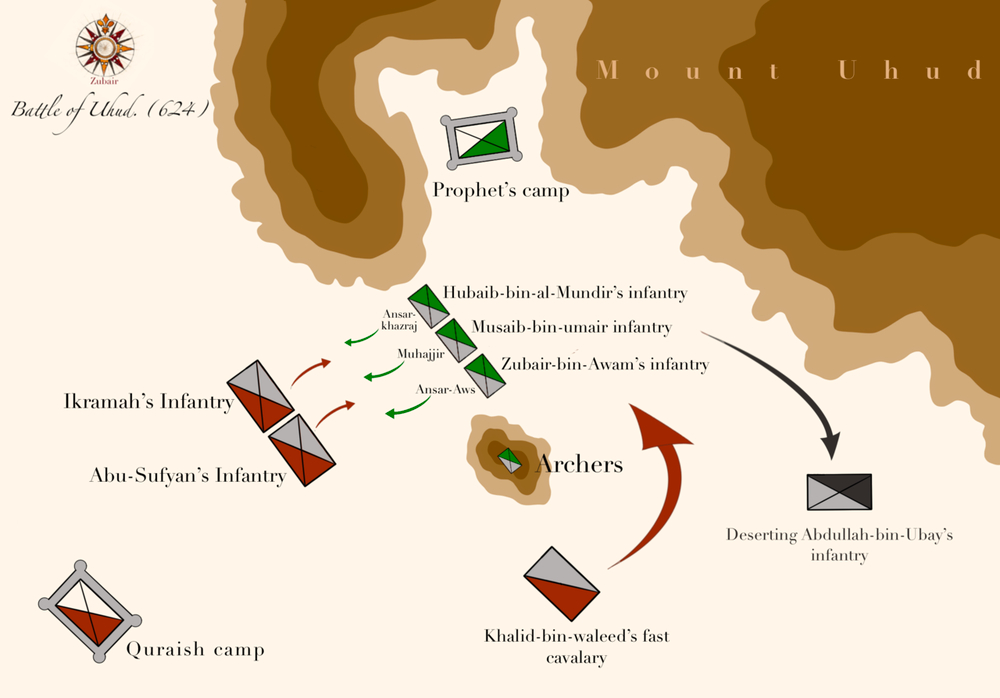
The Battle of Uhud transpired between the Muslims of Medina and the Quraysh of Mecca, marking a crucial moment in Islamic history. Following the prior victory at the Battle of Badr, the Muslims faced a retaliatory attack from the Quraysh to avenge their losses. Led by Prophet Muhammad, the Muslim army positioned itself on the slopes of Mount Uhud. Despite initial success, a strategic error led to a turning point in the battle when a group of archers left their designated post, allowing the enemy to attack from the rear. This unforeseen event resulted in chaos and confusion among the Muslim ranks.
The battle concluded with heavy casualties on both sides, and although the Muslims ultimately maintained control of Medina, the Quraysh forces claimed a tactical victory. The loss at Uhud served as a critical lesson for the Muslim community, emphasizing the importance of discipline, unity, and adherence to strategic plans in times of conflict. The event also highlighted the resilience and steadfastness of the early Muslim community in the face of adversity.
The Battle of Uhud remains a significant chapter in Islamic history, symbolizing the challenges and sacrifices endured by the early Muslims in defending their faith and community. The lessons learned from Uhud continue to resonate in contemporary Islamic teachings, emphasizing the values of perseverance, faith, and unity in times of adversity.
#BattleofUhud #Medina #Quraysh #ProphetMuhammad #IslamicHistory #Unity #Resilience #Sacrifice #LessonLearned
View details624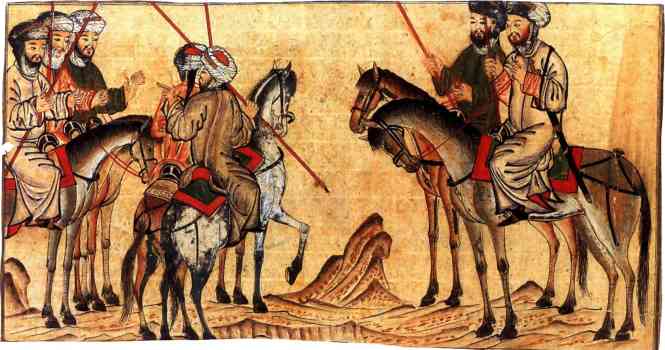
In the early days of Islam, tensions between the Muslim community in Medina and the Quraysh tribe in Mecca were escalating. The Quraysh, staunchly opposed to the new faith, sought to crush the Muslims and their growing influence.
The Battle of Badr marked the first major confrontation between these two factions. Despite being outnumbered and ill-equipped, the Muslims, under the leadership of Prophet Muhammad, were able to secure a decisive victory. This unexpected outcome not only boosted the morale of the Muslim forces but also established their credibility as a formidable military power.
The impact of the Battle of Badr reverberated far beyond the battlefield. It instilled a sense of unity and solidarity among the Muslims, strengthening their resolve to defend their faith and community. The Quraysh, on the other hand, suffered a significant blow to their prestige and influence in the region.
Moreover, the spoils of war captured by the Muslims during the battle provided much-needed resources for their growing community. This newfound wealth enabled them to bolster their defenses and support the less fortunate among them.
The Battle of Badr stands as a pivotal moment in the early history of Islam, shaping the dynamics of power in the Arabian Peninsula. It demonstrated the resolve and resilience of the Muslim community in the face of adversity and set the stage for future conflicts and conquests.
#BattleOfBadr #MuslimsVsQuraysh #ProphetMuhammad #UnityAndSolidarity #SpoilsOfWar #IslamicHistory #SaudiArabia
View details622
In 622, Prophet Muhammad embarked on the Hijra, migrating from Mecca to Medina with his followers. This event marked the beginning of the Islamic calendar. Prior to the Hijra, the Muslim community faced persecution in Mecca due to their beliefs. The city of Medina offered them refuge and a chance to practice their faith freely.
The Hijra was a turning point in the history of Islam, as it not only saved the Muslim community from harm but also established the first Islamic state in Medina. Prophet Muhammad's leadership and guidance during this journey were pivotal in shaping the future of Islam. The migration also solidified the bonds between the early Muslim converts known as the Muhajirun and the residents of Medina known as the Ansar.
The establishment of the Islamic calendar based on the Hijra symbolizes the significance of this event in Islam. The calendar marks the beginning of a new era for Muslims worldwide, emphasizing the importance of faith, unity, and resilience in the face of adversity. The Hijra served as a foundation for the Muslim community to grow and thrive, spreading the teachings of Islam far and wide.
Today, the Hijra continues to hold immense significance for Muslims, serving as a reminder of the challenges faced by the early Muslim community and the strength they demonstrated in the face of adversity. It is a celebration of faith, courage, and perseverance, inspiring believers to uphold the values and teachings of Islam.
#Hijra #ProphetMuhammad #IslamicCalendar #Medina #Muhajirun #Ansar #Faith #Unity #Resilience #Islam
View details0610
The arrival of Islam in the Arabian Peninsula was marked by the first revelation to Prophet Muhammad. Born in Mecca, a bustling trading city, Muhammad spent much time in contemplation in the mountains surrounding the city. At the age of 40, while he was meditating in the Cave of Hira, the angel Gabriel appeared and revealed the first verses of the Quran, marking the beginning of his prophethood.
The impact of this event was profound and far-reaching. It laid the foundation for the emergence of Islam as a monotheistic faith, challenging the existing beliefs in multiple deities. The message of Islam emphasized social justice, compassion, and the worship of one God, which resonated with many in the Arabian Peninsula. Despite initial resistance from the Quraysh tribe, Muhammad's message gradually gained followers, leading to the formation of the first Muslim community in Mecca.
The revelation to Prophet Muhammad marked a significant shift in the religious landscape of the Arabian Peninsula. It sparked a spiritual and social revolution by uniting disparate tribes under the banner of Islam. The teachings of the Quran promoted equality among believers and emphasized the importance of charity and moral conduct. The migration to Medina, known as the Hijra, further solidified the Muslim community and laid the groundwork for the establishment of the first Islamic state.
The event of the first revelation to Prophet Muhammad serves as a pivotal moment in the history of Islam and the Arabian Peninsula. It signifies the beginning of a new era characterized by monotheism, social justice, and moral guidance. The legacy of this event continues to resonate in the hearts of millions of Muslims worldwide, shaping their beliefs and practices to this day.
#Islam #ProphetMuhammad #ArabianPeninsula #FirstRevelation #Mecca #Hijra
View details