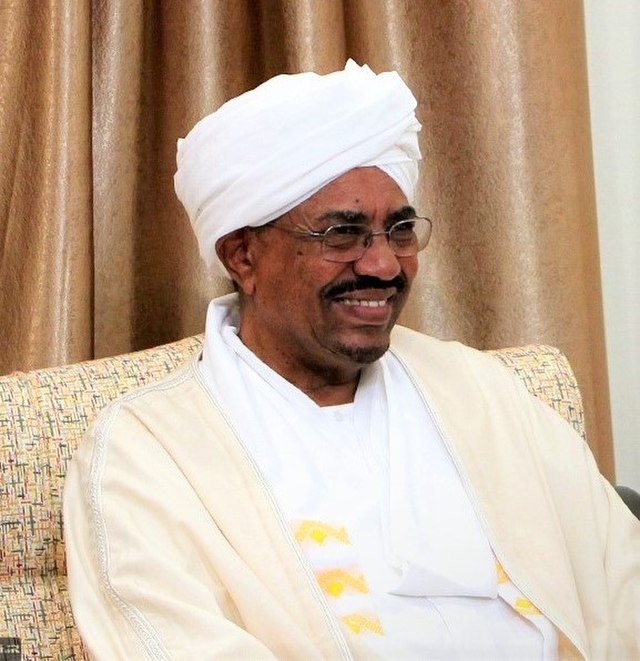
General Omar al-Bashir's appointment as president of Sudan.
Sudan
Political
Global Trade
5 min read
Updated By: History Editorial Network (HEN)
Published:
In a pivotal political development, Omar al-Bashir was appointed as the President of Sudan following a military coup. His ascension to power came after a series of complex political maneuvers and unrest. Sudan, a country deeply entrenched in a civil war that has raged since the mid-20th century, saw al-Bashir's leadership as an attempt to stabilize the nation. The country had been fraught with socio-economic challenges, regional disparities, and ethnic tensions.
Before assuming the presidency, Omar al-Bashir was a career military officer. He played a prominent role in the 1989 coup that overthrew the democratically elected government of Prime Minister Sadiq al-Mahdi. Al-Bashir's new role as president effectively consolidated significant executive powers within the military junta, which he led. His appointment aligned with the Revolutionary Command Council for National Salvation's goals, a body he chaired, pointing towards a restructured government aimed at tightening military control and curbing political dissent.
The impact of al-Bashir's presidency on Sudan was profound. His administration navigated through congruent themes of authoritarian governance, sharia law imposition, and attempts at economic reform. Sudan underwent severe economic sanctions under his regime, primarily due to allegations of sponsoring terrorism and human rights abuses. His approach to governance had long-lasting implications on Sudan's political landscape, international relations, and socio-economic conditions.
Statistically, Sudan under al-Bashir faced substantial human rights critiques. Reports from international human rights organizations highlighted issues such as suppression of political opposition, restrictions on freedom of speech, and the forceful handling of insurgencies, notably in Darfur. Infrastructural developments and certain economic reforms were noted during his tenure, although marred by allegations of corruption and nepotism.
The appointment of Omar al-Bashir as Sudan's president marked a critical juncture, reflecting the intersection of military power with national governance. It stood as a testament to the broader narrative of Sudan's struggle with governance, conflict, and the quest for peace and stability.
#SudanPolitics #OmaralBashir #MilitaryCoup #LeadershipChange #HumanRights #SudanEconomy #MoofLife

Explore the Life Moments of
 AI Twin