Decline of Ancient Christian Kingdom in Sudan
Sudan

CulturalShift
5 min read
Updated By: History Editorial Network (HEN)
Published:
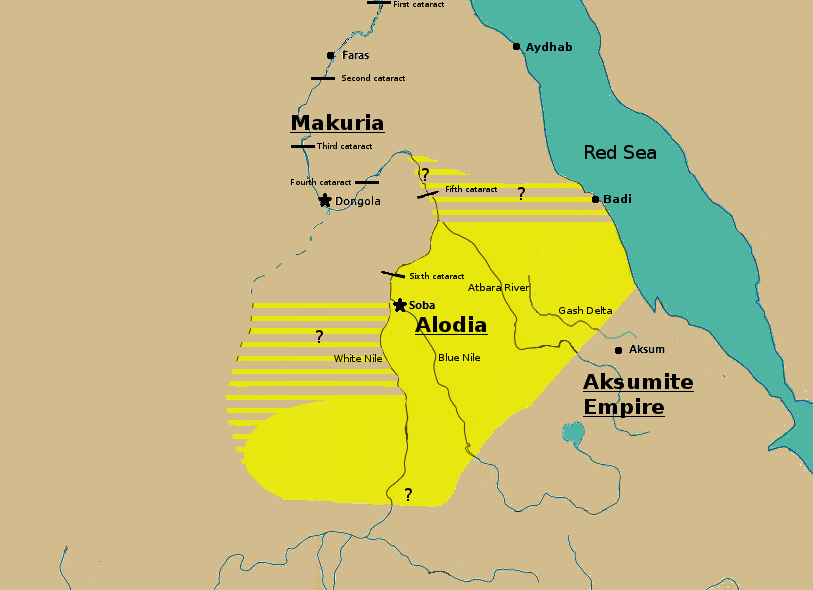
The decline of the Christian kingdom of Alodia in Sudan marks a crucial turning point in the region's history. Located in what is now Sudan, Alodia had been a significant Christian kingdom for centuries. It formed part of the larger Nubian Christian civilization, which included the kingdoms of Makuria and Nobatia. The kingdom was known for its distinctive form of Nubian Christianity, cultural achievements, and network of relationships that extended across Africa and the Middle East.
Multiple factors contributed to Alodia’s eventual downfall. These included internal strife, economic difficulties, and external pressures. The kingdom faced increasing incursions from Muslim nomadic tribes from the north, who sought to expand their territory. These incursions were coupled with intermittent periods of drought and famine, which weakened the kingdom's agrarian-based economy.
The Islamic kingdom of Funj, rising to prominence south of Alodia, played a significant role in its ultimate collapse. The Funj overcame Alodia's defenses and captured the central areas of the kingdom. This decisive action led to the disintegration of Alodian political structures. The inhabitants were either assimilated into the new ruling systems or displaced.
The collapse had far-reaching consequences. With the end of Alodia, the Christian presence in Nubia significantly diminished. The region underwent a rapid process of Islamization and Arabization, which led to substantial cultural and religious shifts. Many of the Christian traditions and architectural achievements were either abandoned or repurposed. The remnants of Christian Nubia faded into history, altering the cultural and religious landscape of Sudan permanently.
The demographic impact included the displacement of populations and the blending of ethnic groups, which redefined the social fabric of the region. The economy also shifted as the new rulers established different trade networks and production systems oriented towards the Islamic world.
Thus, the transformation witnessed in this period set the stage for the modern history of Sudan. The shift from a predominantly Christian kingdom to an Islamic sultanate exemplifies the dynamic changes that shaped the face of northeastern Africa.
#MoofLife #SudaneseHistory #CulturalShift #Islamization #DynasticChange #AncientSudan #Alodia
Explore the Life Moments of
 AI Twin