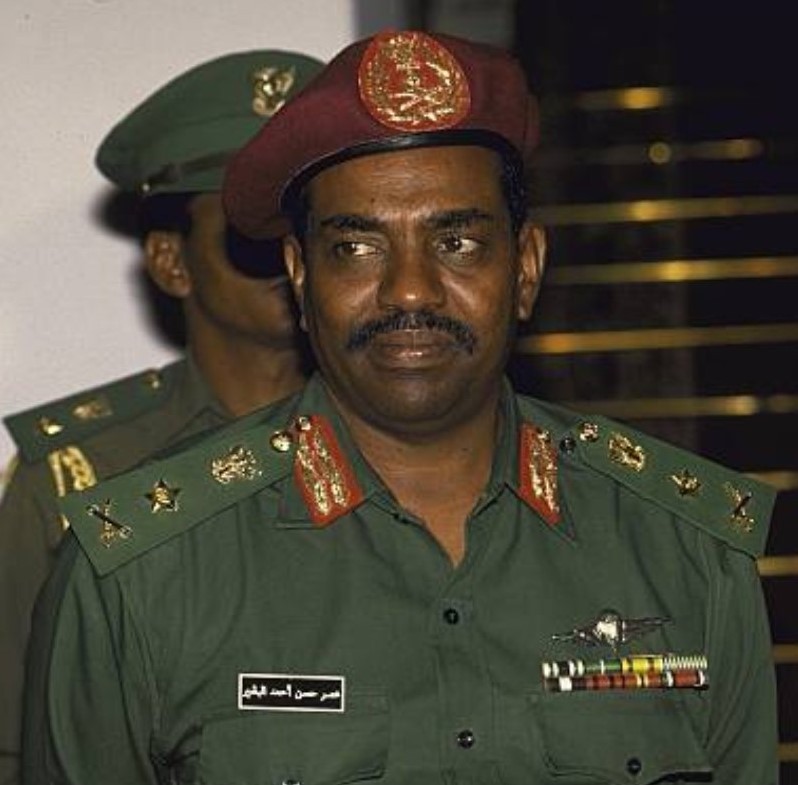
Rise to power: Omar al-Bashir's military coup
Sudan
Political
SocialImpact
6 min read
Updated By: History Editorial Network (HEN)
Published:
Omar al-Bashir, a military officer, orchestrated a coup in Sudan that led to his ascent to power. The socio-political climate preceding this event was marked by significant instability. Sudan grappled with economic difficulties, internal conflicts, and dissatisfaction with the existing government led by Prime Minister Sadiq al-Mahdi. The country faced tensions due to the long-standing civil war between the northern government and southern rebels, alongside economic stagnation compounded by drought and famine.
Al-Bashir, leveraging support from the military and the National Islamic Front (NIF), seized control through a bloodless coup. The transitional military council dissolved the Sudanese parliament and suspended the constitution, signaling a shift from democratic governance to military rule.
Domestic and international reactions were mixed. Some Sudanese citizens, frustrated by the government’s inefficacies, initially supported the takeover. Others, particularly political opponents and civil society groups, condemned the undemocratic change in power. Internationally, the coup sparked concern about Sudan’s direction under military and Islamist influence, leading to strained diplomatic relations and sanctions.
Under al-Bashir’s rule, Sudan underwent profound changes. He imposed strict Islamic laws, aligning closely with the NIF’s ideology. This policy shift exacerbated the civil war, deepening the north-south divide. His administration was characterized by allegations of human rights abuses, including the suppression of political dissent, and reports of genocide in the Darfur region. Despite this, al-Bashir managed to retain control through a combination of political maneuvering and military strength.
Economic policies under al-Bashir’s government focused on oil exploitation, leading to some economic growth. However, the benefits were unevenly distributed, leading to continued poverty and underdevelopment in many regions. The international community remained wary, with Sudan facing various sanctions that hampered broader economic progress.
The legacy of this coup remains contentious. While some view al-Bashir's regime as one that brought a semblance of stability to a fractured nation, others see it as a period marked by authoritarianism and human rights violations. This power shift set the stage for future political dynamics in Sudan, influencing both its internal policies and foreign relations in subsequent decades.
#SudanHistory #MilitaryCoup #OmarAlBashir #PoliticalChange #SocialImpact #MoofLife

Explore the Life Moments of
 AI Twin