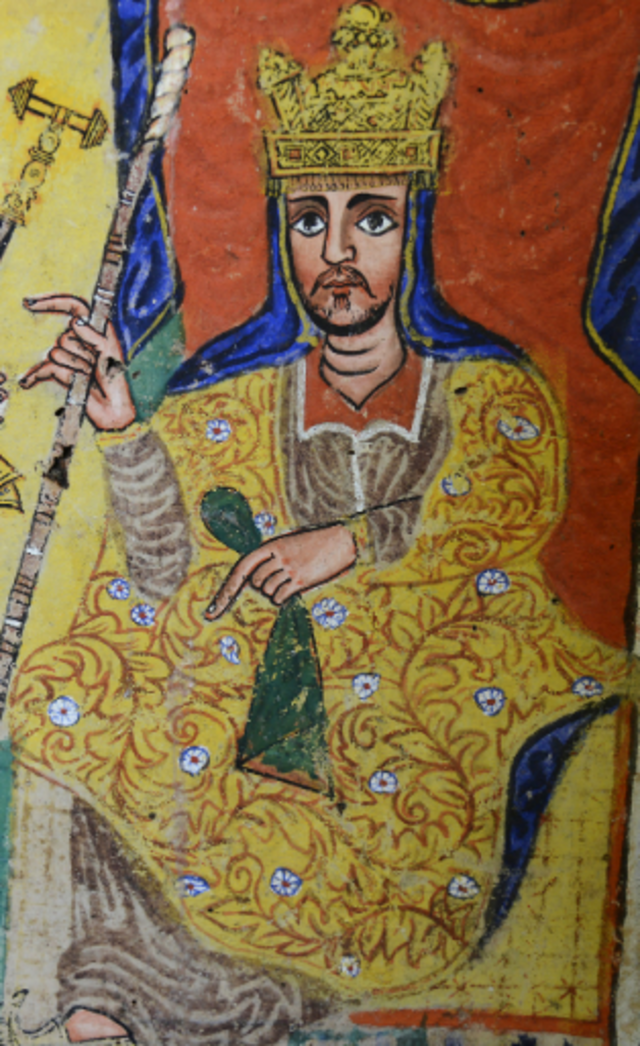
Impact of King Ezana's Conversion on Christianity in Axum and surrounding regions.
Sudan

Event
Religion
5 min read
Updated By: History Editorial Network (HEN)
Published:
King Ezana of Axum ascended to the throne of the Kingdom of Axum, located in present-day Ethiopia and Eritrea, during a period when the region was characterized by intricate trade networks and diverse cultures. Geographically advantageous, Axum functioned as a middle ground between the Roman Empire and India, facilitating extensive commercial exchanges. Its strategic location boosted its prominence across northeastern Africa and fueled its diverse cultural influx.
King Ezana's conversion to Christianity was primarily influenced by his tutor, a captured Syrian Christian named Frumentius. Frumentius, who had significant influence over the young king, introduced him to the teachings of Christianity. Under Frumentius’ guidance, King Ezana not only embraced the new faith but also declared Christianity as the state religion of Axum. Consequently, Frumentius was ordained as the first Bishop of Axum by the Patriarch of Alexandria, making Axum one of the earliest Christian states in the world.
The impact of this conversion extended far beyond Axum's borders, significantly affecting regions like modern-day Sudan. Christianity began to spread along the trade routes, influencing local Nubian leaders and eventually leading to the establishment of Christian kingdoms, including Nobatia, Makuria, and Alodia. These kingdoms flourished and maintained a Christian identity for several centuries amidst the Islamic expansion in the surrounding areas.
The Christianization of the region influenced various aspects of society, including architecture, language, governance, and cultural practices. Churches and monasteries were constructed, many of which were adorned with unique art forms combining local and Byzantine influences. This period also marked the translation of religious texts into Ge'ez, the classical language of Ethiopia, thereby enriching the literary heritage of the region.
Religious transformation played a pivotal role in shaping the cultural and political landscape of northeastern Africa. The establishment of Christian states laid the foundation for intricate networks of religious and educational institutions, fostering a shared cultural and religious identity that persisted despite later political upheavals.
#Conversion #KingEzana #Axum #Christianity #Sudan #Nubia #HistoricEvent #MoofLife

Explore the Life Moments of
 AI Twin