
President of Chad

Head of the State
About
#President
#Chad
#Leadership
#
#PresidentOfChad
Life Classification
Head of state and government of Chad
Life ID
EL4549992694777
Verified Name
president-of-chad
Life Type
Entity Life
Life Editor(s)
History Editorial Network (HEN)
Life Privacy
Public
Subscription
Elite
Created On
2024-04-30
Updated On
2025-12-19
Connect
Related Lives
Angola
Land of contrasts, from bustling cities to breathtaking landscapes.

Roman Republic
Res Publica Romana

President of the Republic of Panama
Head of the State
Liechtenstein
The Jewel of the Alps
Cuba
The Jewel of the Caribbean

Arkansas
The Natural State
Central African Republic
The Heart of Africa.

Sweden
The Land of the Midnight Sun

2021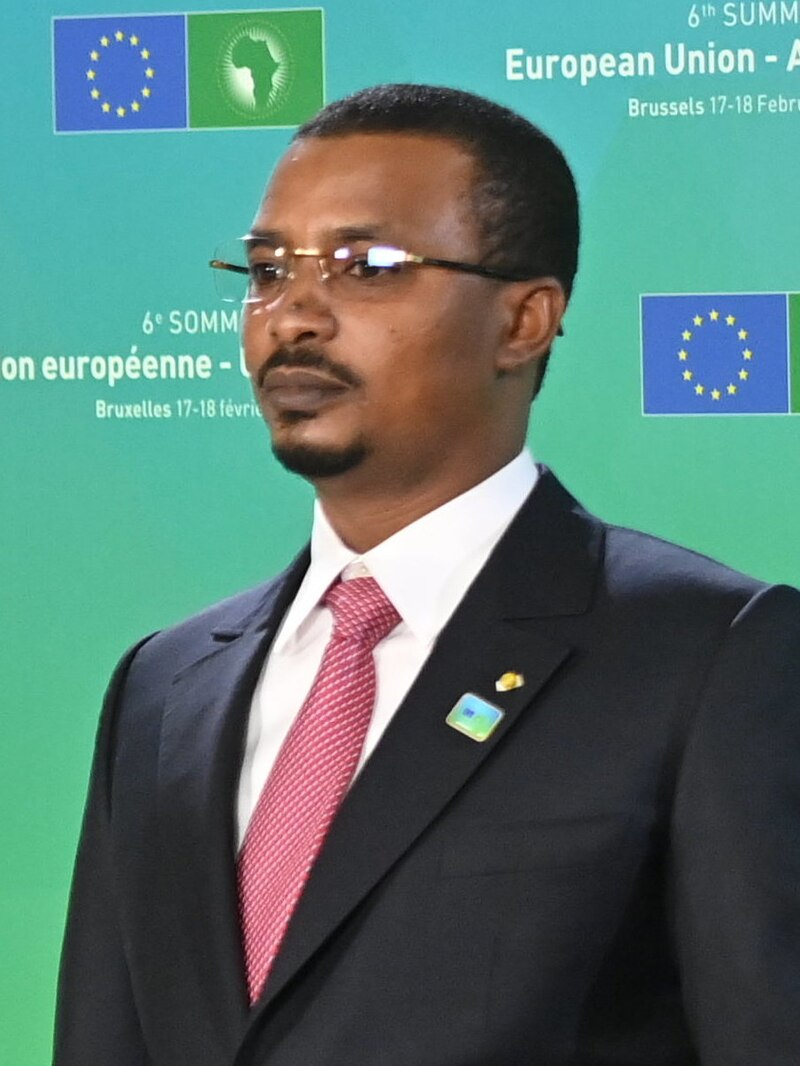
On April 20, 2021, Mahamat Déby assumed the presidency of Chad following the death of his father, Idriss Déby, who had been the President of Chad since 1990. Idriss Déby died from injuries sustained while commanding his army in fighting against rebel forces in the north of the country. Mahamat, at that time a four-star general, took over the leadership of the country under the title of "President of the Transitional Military Council."
The Transitional Military Council, led by Mahamat Déby, announced it would oversee an 18-month transition to democratic elections. Mahamat Déby's rise to power was seen as a continuation of his father's rule and raised questions about the future of democracy in Chad. This transition was not without controversy as it was seen by some as a military coup, bypassing the constitutional provisions for succession.
This moment is a critical one in Chad's recent history, potentially shaping the country's governance, its democratic processes, and its internal and regional stability.
#Chad #MahamatDéby #TransitionalMilitaryCouncil #IdrissDéby #ChadianPolitics #AfricanLeadership
View details1990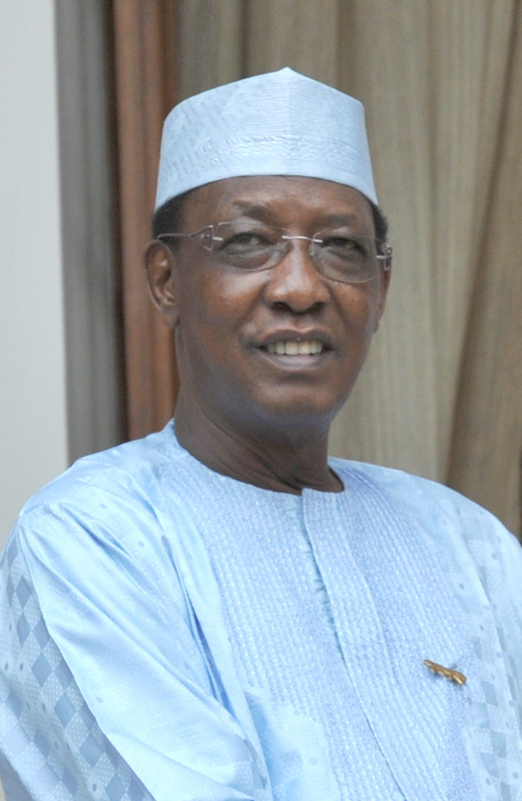
Idriss Déby, born in 1952, seized power in Chad on 12/2/1990, leading the Patriotic Salvation Movement. He ruled for 30 years and 4 months until his death on 20-Apr-2021. Coming from a military background, Déby's presidency brought stability to Chad initially through authoritarian rule. He faced numerous rebellions and coup attempts during his time in office. Déby also played a significant role in regional security issues, contributing troops to peacekeeping missions.
Under Déby's leadership, Chad saw years of economic growth driven by oil production, but the benefits were not evenly distributed. Human rights abuses and restrictions on political freedoms were reported during his tenure. His death in 2021 marked the end of an era in Chadian politics, leaving a power vacuum and uncertainty about the country's future.
Déby's legacy is complex, with supporters crediting him for maintaining stability and economic growth, while critics highlight his authoritarian tendencies and poor human rights record. His long rule symbolizes the challenges faced by many African nations in balancing development, security, and governance.
#IdrissDéby #Chad #PatrioticSalvationMovement #PoliticalStability #Legacy #RegionalSecurity #Authoritarianism
View details1982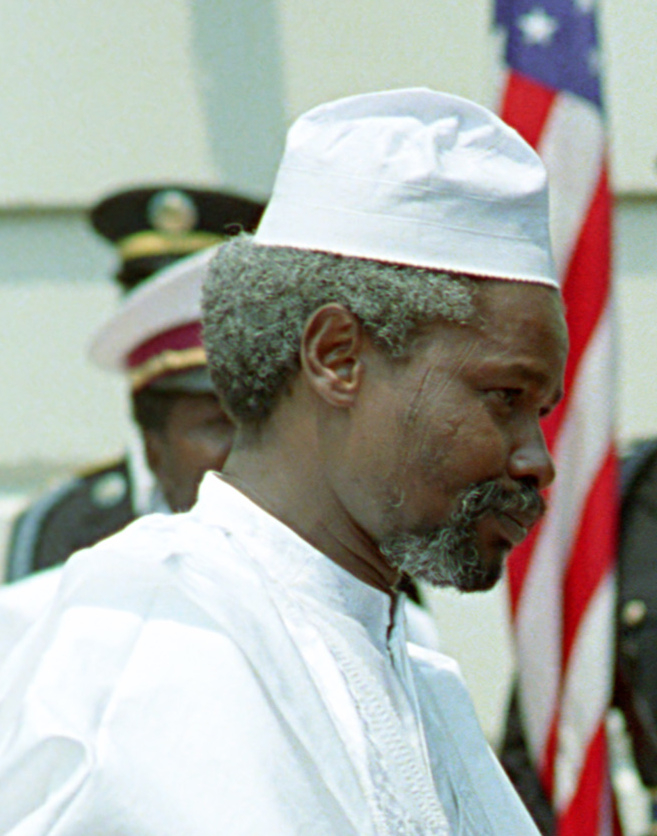
In 6/7/1982, Hissène Habré, the President of Chad, was in power. Habré, born in 1942, led the country for 8 years and 5 months until he left office on 02-Dec-1990. He was affiliated with the political parties FAN and UNIR.
During his presidency, Habré's regime was marked by accusations of human rights violations, including political repression and torture. His rule was characterized by a focus on security and military operations to maintain control over the country. Habré's administration also faced internal dissent and rebel movements seeking to overthrow his government.
Habré's time in office saw a mix of stability and turmoil for Chad. While he managed to keep the country relatively secure from external threats, his authoritarian methods and alleged abuses of power garnered significant criticism both domestically and internationally.
Overall, Habré's presidency left a complicated legacy in Chad, with debates continuing about the balance between security and human rights during his time in power. His rule ultimately came to an end in 1990 amid growing opposition and international pressure.
#HissèneHabré #ChadPresident #PoliticalLegacy #HumanRights #Authoritarianism
View details1979
Goukouni Oueddei began his second term as President of Chad in March 1979. Born in 1944, he was a member of the political party FROLINAT–FAP. Oueddei's presidency lasted for 2 years and 9 months until June 1982.
During his time in office, Chad faced political instability and armed conflicts, including clashes between different factions and foreign interventions. Oueddei's leadership was marked by attempts to navigate these turbulent times and maintain control over the country.
The presidency of Goukouni Oueddei had a significant impact on Chad's political landscape and internal dynamics. His tenure was a period of transition and uncertainty, with power struggles and shifting alliances shaping the country's trajectory.
Overall, Goukouni Oueddei's second term as President of Chad was a challenging period characterized by internal strife and external pressures. His time in office reflected the complex realities of governance in a country plagued by conflict and instability.
#Chad #GoukouniOueddei #FROLINATFAP #PoliticalInstability #ArmedConflicts
View detailsLol Mahamat Choua, born in 1939, served as President of Chad for a brief period of 4 months and 5 days in 1979. He was a member of the National Liberation Front of Chad (FROLINAT) and later founded the Chadian People's Revolutionary Movement (MPLT).
Choua's presidency came during a tumultuous time in Chad's political history, following the civil war that led to the overthrow of President Félix Malloum. Despite his short time in office, Choua made efforts to stabilize the country and reconcile factions within the government.
However, Choua's presidency was cut short when Goukouni Oueddei, leader of another faction within the Chadian government, seized power in a bloodless coup on September 3, 1979. Choua was placed under house arrest and later went into exile in France.
The transition from Choua's presidency to Oueddei's leadership marked a significant shift in Chad's political landscape, with implications for the country's ongoing conflicts and power struggles.
#Chad #President #PoliticalHistory #MPLT #FROLINAT
View detailsBorn in 1944, Goukouni Oueddei became the President of Chad for a brief period of 1 month and 6 days. He was a member of the political party FROLINAT–FAP. Oueddei's presidency came during a tumultuous time in Chad's history, marked by political instability and frequent changes in leadership.
His short time in office was characterized by internal strife and power struggles. Despite his limited tenure, Oueddei's presidency had a significant impact on the political landscape of Chad. His leadership style and political decisions shaped the trajectory of the country's governance during that period.
Oueddei's presidency ended on 29-Apr-1979, marking the conclusion of his brief stint as the Head of State of Chad. His legacy, though short-lived, remains a point of interest for historians and political analysts studying Chad's political history.
#GoukouniOueddei #ChadPresident #FROLINATFAP #ChadHistory #PoliticalInstability
View details1975
Félix Malloum, born in 1932, was a military figure who served as the President of Chad from 1975 until March 1979. His presidency was characterized by political instability and conflict, with Chad facing numerous internal challenges during his time in office.
Malloum's leadership was marked by his attempt to navigate the complex tribal and regional divisions within Chad. His tenure saw increased tensions between different ethnic groups and rebel factions, leading to a period of civil unrest and violence in the country.
Despite his efforts to maintain stability, Malloum's presidency ultimately came to an end in 1979 when he was overthrown in a coup led by Hissène Habré. Following his ousting, Malloum went into exile and remained outside of Chad for the remainder of his life.
The legacy of Félix Malloum's presidency is one of a turbulent and challenging time in Chad's history, marked by internal strife and political upheaval. His brief time in office reflects the broader struggles that the country faced in the post-independence era, as different factions vied for power and influence within the fledgling nation.
#FélixMalloum #ChadPresident #PoliticalInstability #CivilUnrest #MilitaryLeadership
View detailsNoël Milarew Odingar was a significant military figure in Chad, serving prominently as the Chief of Staff of the Chadian Armed Forces. Born on December 23, 1932, in Fort Archambault (now Sarh), Chad, Odingar's military career was closely linked with the turbulent political landscape of his country. His rise within the military ranks paralleled Chad's journey through repeated conflicts and coups following its independence from France in 1960.
Odingar played a pivotal role during the most intense periods of the Chadian Civil War, which began in 1965. He became Chief of Staff in 1975, a position he used to exert considerable influence on Chad's military strategies against various rebel groups. His tenure saw the interplay of external influences, notably from Libya and France, reflecting the geopolitical significance of Chad during the Cold War era.#Chad #MilitaryPresident #ShortLivedPresidency #PoliticalInstability
View details1960
Born in 1918, François Tombalbaye served as the President of Chad for over 14 years until his death in 1975. He was a key figure in the Chadian political landscape, being one of the founders of the Chadian Progressive Party (PPT) and later leading the National Movement for the Cultural and Social Revolution (MNRCS).
During his time in office, Tombalbaye faced internal conflicts and external pressures, including challenges from various rebel groups. His policies often fueled ethnic tensions within the country, leading to unrest and resistance to his leadership.
Tombalbaye's regime was characterized by authoritarian rule and suppression of dissent, with accusations of human rights abuses being leveled against his government. Despite some efforts to modernize the country and improve infrastructure, his tenure was marked by instability and political repression.
His abrupt departure from office in April 1975, followed by his death, left a power vacuum in Chad and further destabilized the political situation.
In conclusion, François Tombalbaye's presidency left a mixed legacy, with his rule marred by authoritarianism and internal strife. His impact on Chad's political development and social dynamics continues to be analyzed and debated by historians and political analysts. #FrançoisTombalbaye #ChadPresident #PoliticalLegacy
View details