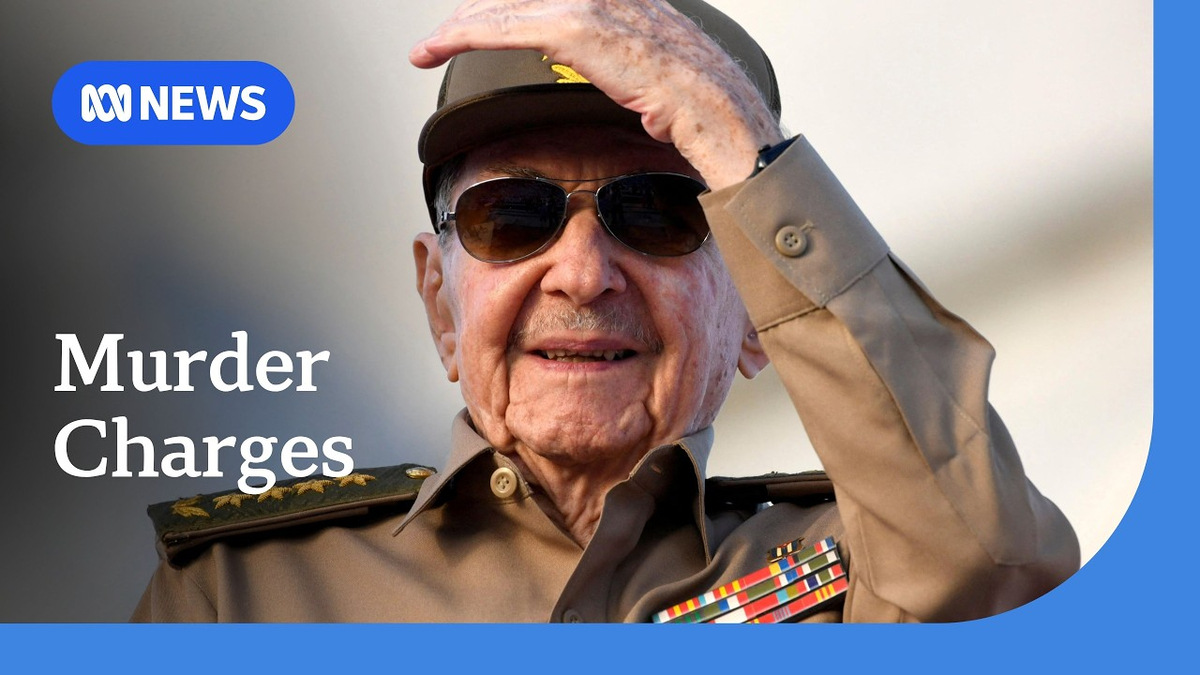
United States Indicts Former Cuban President Raúl Castro on Murder and Terrorism-Related Charges
United States and Cuba
Criminal Indictment
Political Controversy
U.S.-Cuba Relations
Diplomatic Tension
6 min read
Updated By: History Editorial Network (HEN)
Published:
On 20/05/2026, the United States Department of Justice unsealed a superseding indictment against former Cuban President Raúl Castro and five co-defendants, accusing them of crimes including conspiracy to kill U.S. nationals, murder, and destruction of aircraft. The indictment marked one of the most high-profile legal actions ever taken by the United States against a former Cuban head of state and intensified already strained relations between Washington and Havana.
Raúl Castro, who was 94 years old at the time of the indictment, served as President of Cuba from 2008 to 2018 and remained a central political figure in the Cuban government for decades following the revolution led by his brother Fidel Castro. U.S. prosecutors alleged that Castro and the other accused individuals were connected to actions involving the downing of civilian aircraft and attacks resulting in the deaths of U.S. citizens. The superseding indictment expanded on earlier legal proceedings tied to longstanding investigations into incidents involving anti-Castro organizations and U.S.-Cuba tensions dating back decades.
The charges included conspiracy to murder U.S. nationals, destruction of aircraft resulting in death, and related criminal offenses under U.S. federal law. The Department of Justice stated that the case was being pursued under statutes allowing prosecution for acts targeting U.S. citizens and aircraft, regardless of where the alleged crimes occurred. Legal experts noted that the indictment was largely symbolic in practical terms because Cuba does not extradite its citizens to the United States, making any future prosecution dependent on major geopolitical developments.
The announcement drew immediate international attention because of Raúl Castro’s historic role in Cuban politics and the broader legacy of Cold War-era conflict between the United States and Cuba. Cuban officials strongly condemned the indictment, describing it as politically motivated and rejecting the legitimacy of the accusations. The case also renewed debate over unresolved historical disputes tied to exile groups, aviation incidents, and U.S.-Cuba relations spanning several decades.
Raúl Castro formally succeeded Fidel Castro as Cuba’s president in 2008 after previously serving for many years as defense minister and second-in-command within the Cuban government. Although he stepped down from the presidency in 2018 and later retired from formal Communist Party leadership, he remained one of the most recognizable figures associated with the Cuban revolutionary state.
Why This Moment Matters :
The indictment represented a rare instance of the United States formally charging a former foreign head of state with terrorism-related and homicide offenses connected to historical geopolitical conflict. The legal action also highlighted the continuing influence of unresolved Cold War disputes on modern U.S.-Cuba relations.
#RaulCastro
#Cuba
#UnitedStates
#USDOJ
#CubanPolitics
#DepartmentOfJustice
#InternationalLaw
Explore the Life Moments of
 AI Twin