Boeing B-17 Flying Fortress: World War II Heavy Bomber Used by the U.S. Army Air Forces
Europe, United States
Economy
Technology
6 min read
Updated By: History Editorial Network (HEN)
Published:
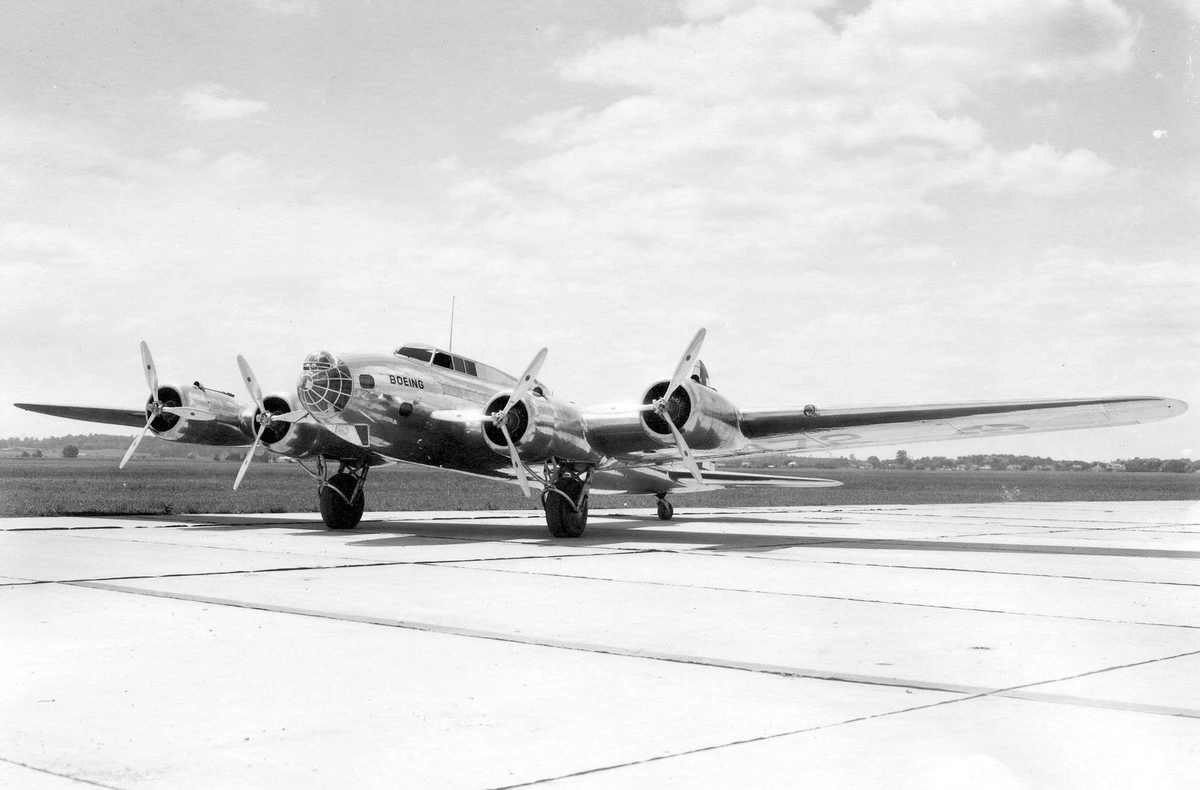
The Boeing B-17 Flying Fortress was a four-engine heavy bomber developed in the United States during the 1930s and widely used by the U.S. Army Air Forces during World War II. The aircraft was designed by the Boeing Company in response to a 1934 requirement from the U.S. Army Air Corps for a long-range bomber capable of carrying a substantial bomb load over extended distances. The prototype, known as the Model 299, first flew on 28/07/1935 from Boeing Field in Seattle, Washington.
The aircraft earned the name “Flying Fortress” due to its heavy defensive armament and multiple gun positions placed around the aircraft. Early production versions carried several .50-caliber machine guns, and later variants increased this number to as many as 13 guns, positioned in nose, dorsal, ventral, ball turret, and tail stations. The B-17 typically had a crew of 10, including pilots, navigators, bombardiers, gunners, and engineers. Powered by four Wright R-1820 Cyclone radial engines, the bomber could reach speeds of around 287 mph (462 km/h) and had a combat range of more than 2,000 miles (3,200 km) depending on load and configuration.
Mass production began in the late 1930s, and several major variants were produced, including the B-17E, B-17F, and B-17G. During World War II, the aircraft was widely used by the U.S. Army Air Forces in the European Theater of Operations. Units such as the Eighth Air Force, based in England, conducted large daylight bombing missions against industrial, transportation, and military targets in Germany and occupied Europe. These missions often involved formations of dozens or hundreds of B-17 aircraft flying together to provide mutual defensive firepower.
Between 1936 and 1945, more than 12,700 B-17 aircraft were produced. The aircraft became known for its ability to sustain damage and still return to base, with numerous documented cases of heavily damaged bombers completing missions or landing safely. In addition to the United States, the bomber was also operated by the Royal Air Force and several other Allied forces for bombing, reconnaissance, and transport duties.
By the end of World War II in 1945, the B-17 had flown hundreds of thousands of combat sorties and dropped large quantities of bombs during Allied bombing campaigns in Europe. After the war, many aircraft were retired or converted for other roles such as search and rescue, aerial mapping, and firefighting. Today, a small number of B-17 aircraft remain preserved in museums or maintained in flying condition for historical demonstrations.
#B17FlyingFortress #WorldWarII #MilitaryAviation #Boeing #AviationHistory
#B17FlyingFortress
#WorldWarII
#MilitaryAviation
#Boeing
#AviationHistory
Primary Reference
Boeing B-17 Flying Fortress

Explore the Life Moments of
 AI Twin