Lockheed F-94 Starfire: Early U.S. Air Force Jet Interceptor Development
United States
Economy
Technology
5 min read
Updated By: History Editorial Network (HEN)
Published:
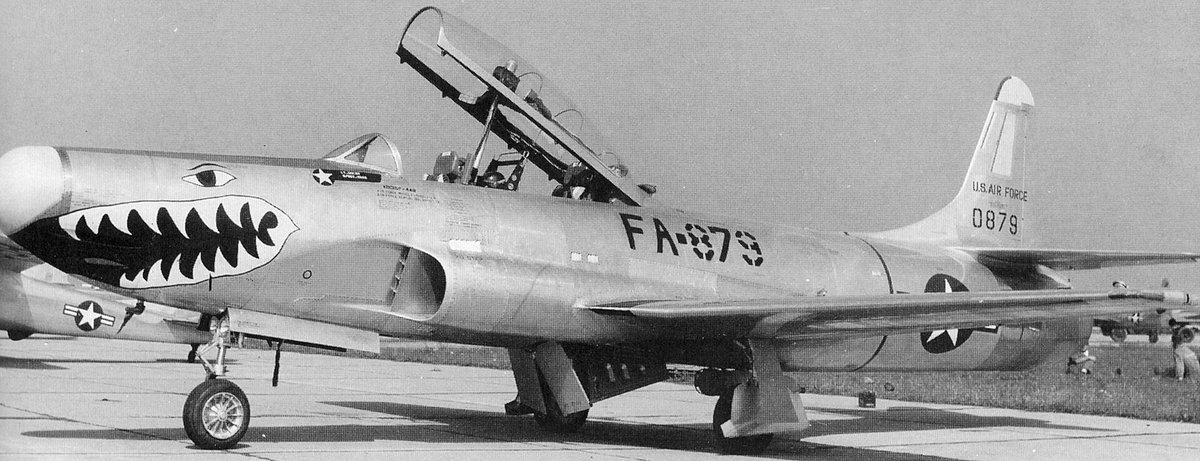
The Lockheed F-94 Starfire was one of the first operational jet-powered interceptors used by the United States Air Force during the early Cold War period. The aircraft made its first flight on 16/04/1949 at Burbank, California, United States, beginning a testing and development phase aimed at creating an all-weather interceptor capable of defending against potential bomber threats. The aircraft was developed by Lockheed Corporation as a modified version of the T-33 Shooting Star training aircraft, which itself was derived from the earlier F-80 Shooting Star jet fighter.
The prototype, designated YF-94, was equipped with a Pratt & Whitney J48 turbojet engine fitted with an afterburner, providing improved thrust compared to earlier jet fighters. A key feature of the Starfire was the inclusion of airborne interception radar, allowing the aircraft to detect and engage targets during night or poor weather conditions. The two-seat cockpit configuration allowed one crew member to operate the radar while the pilot flew the aircraft. The first flight was conducted by Lockheed test pilot Tony LeVier, a well-known company pilot involved in several early jet aircraft programs.
Following testing, the aircraft entered service with the U.S. Air Force in 1950 as the F-94A Starfire. The interceptor was armed with .50-caliber machine guns in the nose in early variants and later versions included rocket armament mounted in the nose or wing pods. The Starfire was designed primarily for air defense missions and was deployed during the early years of the Cold War, including operational use during the Korean War beginning in 1950. During the conflict, the aircraft performed night interception and air defense missions.
Production of the F-94 family continued through the early 1950s, with multiple variants such as the F-94B and F-94C developed with improved avionics and performance. In total, over 850 aircraft were produced. The Starfire served as an important step in the development of radar-equipped jet interceptors and contributed to the evolution of U.S. air defense aircraft during the early Cold War era.
#F94Starfire #Lockheed #JetInterceptor #ColdWarAviation #AviationHistory
#F94Starfire
#Lockheed
#JetInterceptor
#ColdWarAviation
Primary Reference
Lockheed F-94 Starfire

Explore the Life Moments of
 AI Twin