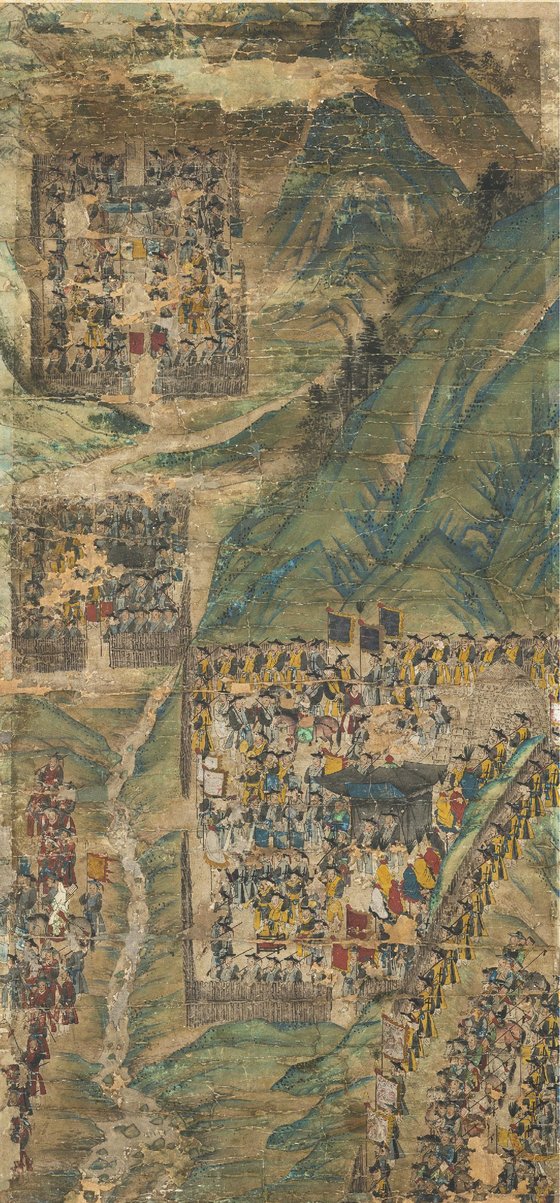
Rebellion of Hong Gyeong-rae against the Joseon Dynasty
South Korea

Political
4 min read
Updated By: History Editorial Network (HEN)
Published:
Hong Gyeong-rae, a military commander, led a militia uprising in defiance of the Joseon Dynasty's rule. Born into a prestigious family, Hong Gyeong-rae saw the corrupt practices of the ruling class and felt compelled to act. Gathering supporters discontent with the government's policies, they plotted to challenge the existing order.
The uprising took the Joseon Dynasty by surprise, as the militia's initial attacks were swift and strategic. Hong Gyeong-rae's forces managed to seize control of key locations and disrupt the imperial court's authority. The rebellion spread fear among the ruling elite and sparked a wave of uncertainty across the region.
Despite initial success, the tide turned against Hong Gyeong-rae as the Joseon Dynasty rallied its forces and launched a fierce counterattack. The militia, outnumbered and outmatched in resources, eventually succumbed to the government's superior military might. In the aftermath of the uprising, Hong Gyeong-rae was captured and executed, signaling the end of the rebellion.
The impact of the militia uprising by Hong Gyeong-rae against the Joseon Dynasty reverberated throughout the kingdom. It exposed the vulnerabilities of the ruling regime and highlighted the simmering discontent among the populace. The government, shaken by the challenge to its authority, implemented stricter measures to prevent future insurrections and consolidate its power.
The event serves as a reminder of the complexities of power dynamics in feudal societies and the dangers of unchecked authoritarian rule. It also underscores the enduring struggle for justice and equality in the face of oppressive governance. #HongGyeongrae #JoseonDynasty #MilitiaUprising #SouthKorea #Rebellion

Explore the Life Moments of
 AI Twin