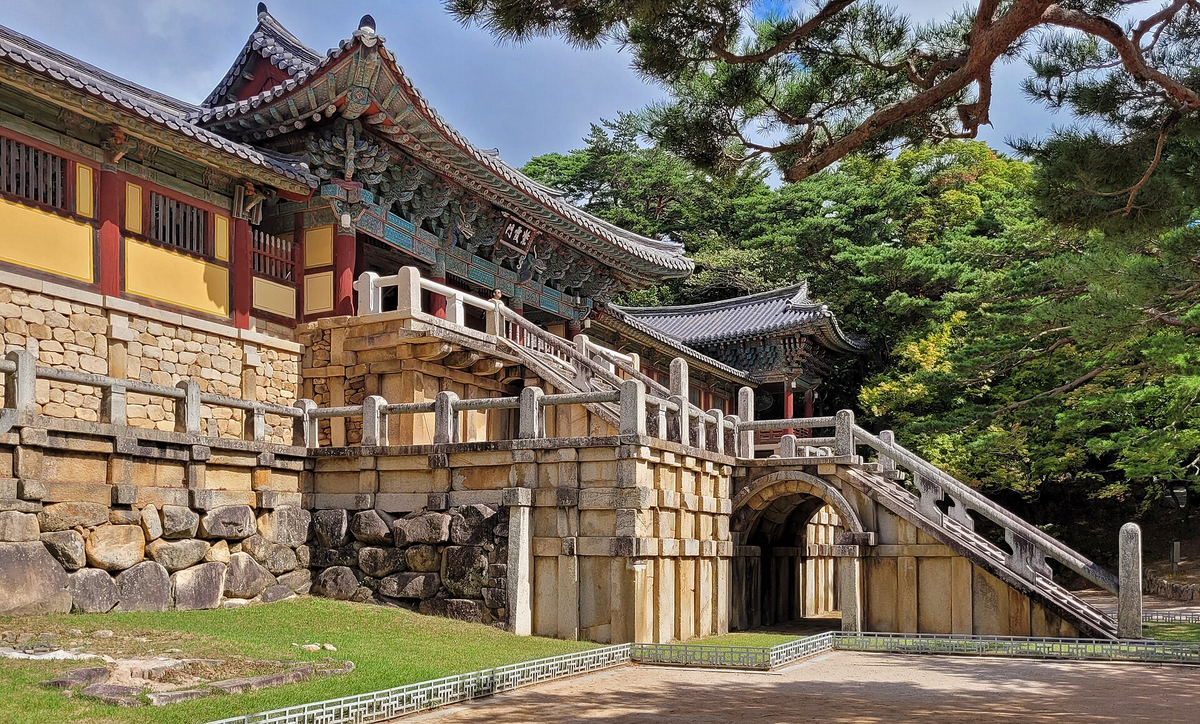
Construction of Bulguksa Temple
South Korea

Cultural
Religious
4 min read
Updated By: History Editorial Network (HEN)
Published:
The construction of the Bulguksa Temple began in the mid-8th century under the Silla dynasty in Gyeongju, South Korea. The temple was established by Prime Minister Kim Daeseong to honor his parents and pray for their well-being in the afterlife. The intricate design and architectural features of Bulguksa Temple showcased the advanced engineering and artistic skills of the Silla kingdom.
The temple complex consists of several buildings, including Daeungjeon Hall, Geungnakjeon Hall, and Gwaneumjeon Hall, surrounded by beautiful gardens and pagodas. The layout of the temple reflects Buddhist cosmology and principles, creating a sacred space for meditation and worship.
Bulguksa Temple served as a center for Buddhist practice and education, attracting scholars, monks, and pilgrims from across East Asia. It played a crucial role in the spread of Buddhism in the region and contributed to the cultural exchange between Korea, China, and Japan.
In recognition of its historical and architectural significance, Bulguksa Temple was designated as a UNESCO World Heritage Site. The preservation and restoration efforts have ensured that this ancient complex remains a symbol of Korean cultural heritage and a popular destination for tourists and spiritual seekers.
Today, Bulguksa Temple continues to be an active place of worship and a pilgrimage site for Buddhists. Its serene atmosphere, stunning surroundings, and cultural importance make it a must-visit destination for those interested in history, spirituality, and architecture.
#BulguksaTemple #UNESCOWorldHeritage #KoreanCulture #Buddhism

Explore the Life Moments of
 AI Twin