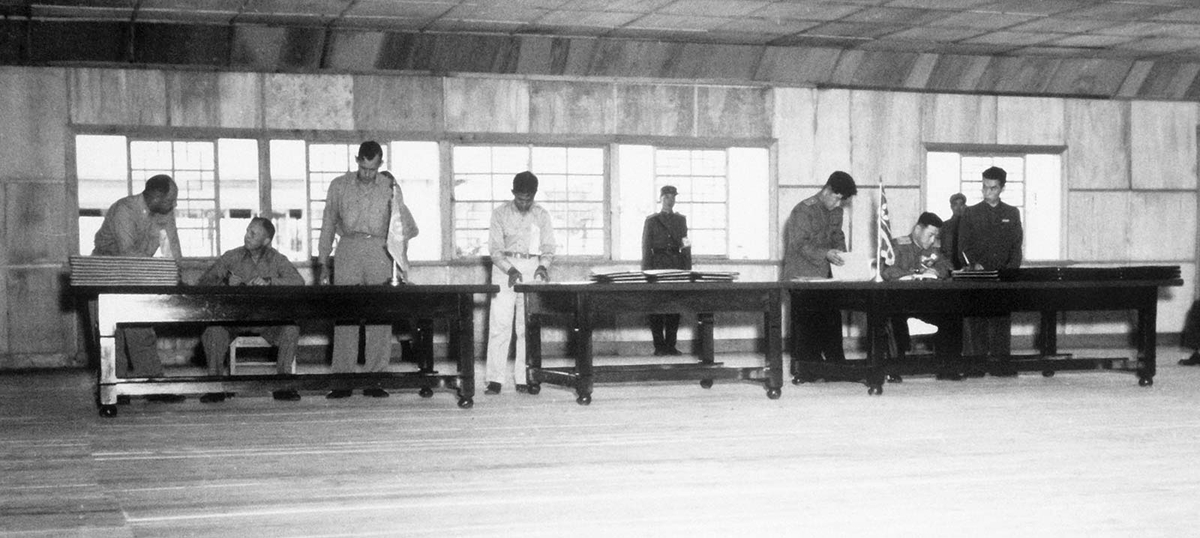
Armistice Agreement Ends Korean War
South Korea

Political
Global Trade
4 min read
Updated By: History Editorial Network (HEN)
Published:
The Armistice Agreement was signed between North Korea, China, and the United Nations Command, effectively bringing the Korean War to a halt. The conflict began in 1950 when North Korea invaded South Korea, prompting the United Nations to intervene in support of the South, while China backed the North. The war resulted in significant loss of life and destruction.
After years of fierce fighting and negotiations, the Armistice Agreement was reached, establishing a ceasefire along the 38th parallel, creating the Korean Demilitarized Zone. This agreement did not constitute a peace treaty but rather a temporary cessation of hostilities. It aimed to pave the way for further discussions to achieve a lasting peace on the Korean Peninsula.
The impact of the Armistice Agreement was profound, as it brought an end to the active fighting and restored a semblance of peace to the region. However, it also left the two Koreas technically still at war, with tensions persisting to the present day. The agreement allowed for the exchange of prisoners of war and set up mechanisms for monitoring the ceasefire.
Despite the cessation of hostilities, the Korean War left deep scars on the Korean Peninsula, with families divided and a lasting legacy of mistrust between North and South Korea. The signing of the Armistice Agreement marked a turning point in the conflict, bringing an end to the intense fighting that had ravaged the region for years.
#KoreanWar #ArmisticeAgreement #KoreanPeninsula #DMZ #NorthKorea #SouthKorea
Explore the Life Moments of
 AI Twin