
War Technology

Innovation born from war
Related Lives

Wimbledon Championships
Tennis Tournament

Vietnam
Land of the ascending dragon.

Gambia
The Smiling Coast of Africa

Feminism
Heartbeat of Social Change

Iraq
The Cradle of Civilization

Sweden
The Land of the Midnight Sun

European Union
United in Diversity

Bahrain
The Pearl of the Gulf

0221
During the Qin Dynasty, the standardization of the crossbow marked a major leap in military technology and strategy in ancient China. Unlike traditional bows, the crossbow could be operated with less training and physical strength, allowing common soldiers to deliver powerful, precise shots from a distance. By implementing standardized parts and mass production, the Qin army ensured that crossbows could be quickly manufactured and easily repaired or replaced. This efficiency and accessibility turned the crossbow into a powerful equalizer on the battlefield, enabling a wider section of the population to participate effectively in warfare.
Evidence of this military innovation is vividly preserved in the Terra-cotta Army, where many life-sized warrior statues are depicted with realistic crossbows, showcasing the standardized design used by Qin soldiers. The crossbows featured bronze mechanisms and were crafted with consistent dimensions, allowing parts to be interchanged—a remarkable feat for the time. This technological and logistical achievement helped the Qin Dynasty establish dominance across vast territories, setting the foundation for future Chinese military prowess and the unification of China under a centralized imperial rule.
\#MomentsOfLife #MoofLife\_Moment #MoofLife #AncientChina #QinDynasty #CrossbowRevolution #TerraCottaArmy #MilitaryInnovation #HistoryInArms
View details0400 BCE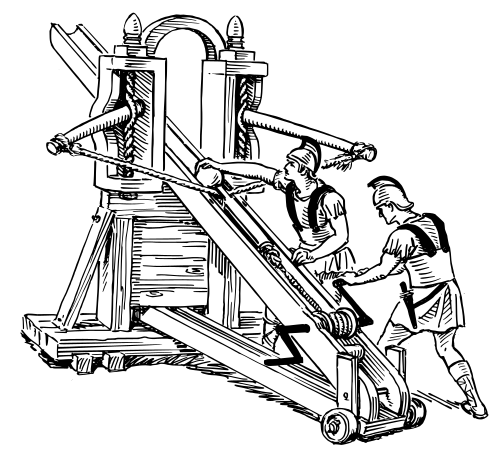
The ballista, developed around 400 BCE, was one of the most formidable siege weapons of the ancient world, functioning much like a massive crossbow. Powered by torsion from twisted ropes or sinews, it launched heavy bolts or stones with deadly precision over considerable distances. Originating in Greek warfare and later perfected by the Romans, the ballista combined engineering ingenuity with battlefield practicality. It was particularly effective during sieges, where it could target enemy fortifications, troops, or even pick off commanders from afar with terrifying accuracy.
More than just a tool of destruction, the ballista represented the increasing sophistication of military engineering in the classical world. Its use signaled a shift in ancient combat, where power and precision could overcome brute strength. The weapon required skilled operators and careful calibration, highlighting the value of technical knowledge in war. As both a symbol and a tool of siege warfare, the ballista paved the way for future developments in artillery and remains an iconic example of early military innovation.
\#MomentsOfLife #MoofLife\_Moment #MoofLife #AncientWarfare #Ballista #SiegeWeapons #MilitaryInnovation #HistoryOfWar
View details0600 BCE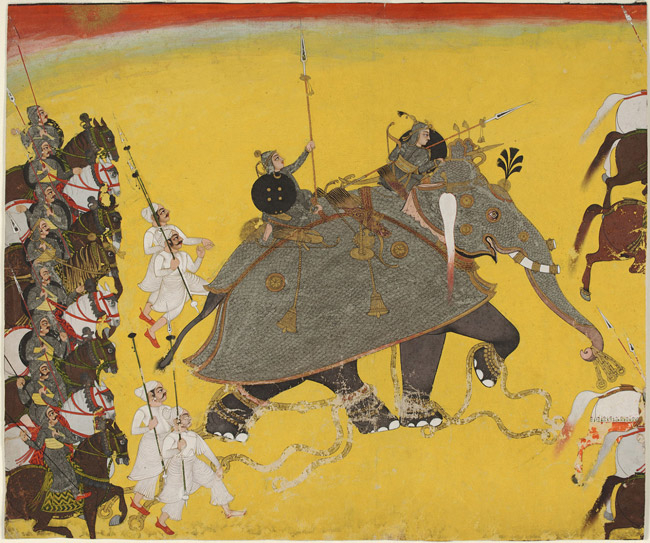
The use of war elephants in India dates back to ancient times and represents one of the most striking examples of military innovation in early warfare. These majestic animals were trained and armored to serve as living tanks on the battlefield. Capable of carrying warriors and weapons, elephants could charge enemy lines with immense force, trample foot soldiers, and sow chaos among cavalry. Indian armies recognized the psychological and tactical advantages of these beasts, employing them as both offensive weapons and symbols of royal power and might.
Indian texts and historical records, including accounts from the Maurya Empire and later classical sources, describe the integral role elephants played in military campaigns. Under leaders like Chandragupta Maurya, war elephants formed a crucial component of the army, often deciding the outcome of major battles. These animals were not only tools of war but also emblems of prestige and divine strength. The legacy of Indian war elephants eventually spread beyond the subcontinent, influencing military strategies in Southeast Asia and even in parts of the Mediterranean world.
\#MomentsOfLife #MoofLife\_Moment #MoofLife #AncientIndia #WarElephants #MauryaEmpire #MilitaryHistory #EpicBattles #ElephantPower
View details1200 BCE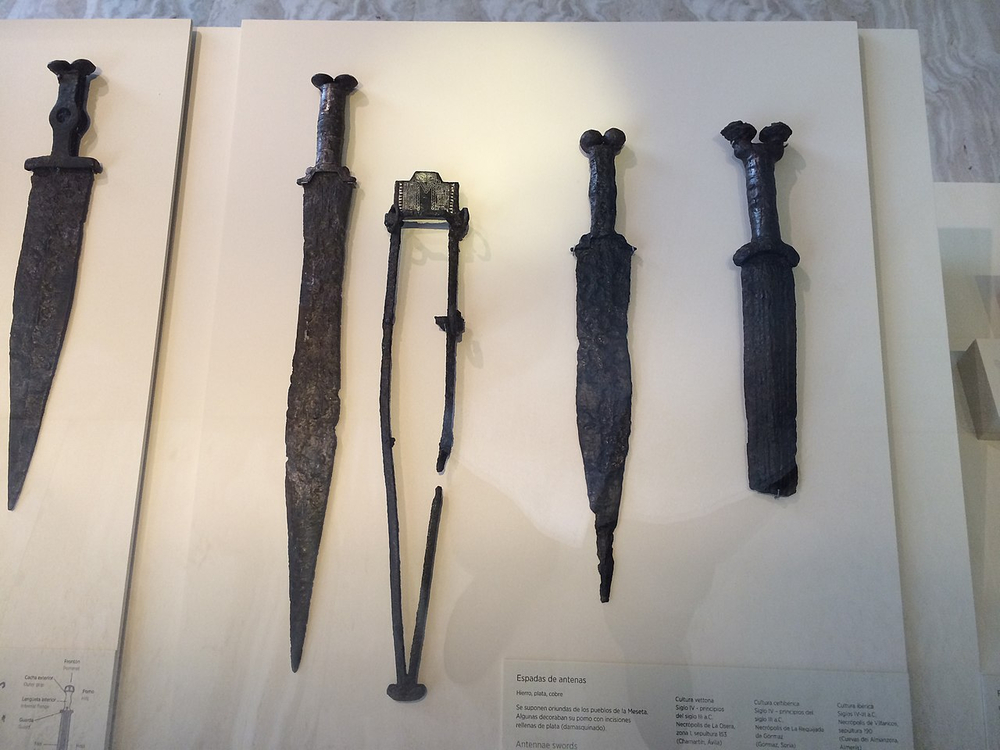
Around 1200 BCE, the dawn of the Iron Age brought a dramatic transformation in warfare and societal structure. Unlike bronze, which required tin—a relatively rare and geographically limited resource—iron was more abundant and accessible. This shift allowed for the widespread production of stronger, more durable, and cheaper weapons. The transition from bronze to iron revolutionized the battlefield, enabling larger armies to be equipped more effectively and empowering states with enhanced military capabilities.
The Assyrians and Hittites were among the earliest civilizations to master iron weaponry. The Hittites, centered in Anatolia, are credited with some of the earliest innovations in iron smelting, while the Assyrians capitalized on this advancement to build a formidable, disciplined military force. Iron swords, spears, and armor not only proved superior in battle but also became symbols of technological and political power. This era marked the rise of empires whose dominance was largely built on the strength of their iron arsenals, forever altering the course of ancient history.
\#MomentsOfLife #MoofLife\_Moment #MoofLife #IronAge #AncientEmpires #Assyrians #Hittites #HistoricalTurningPoints #WeaponEvolution
View details3000 BCE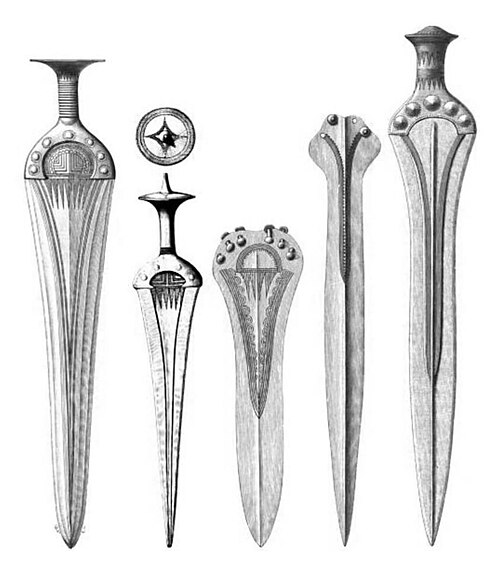
The advent of bronze weaponry around 3000 BCE marked a revolutionary phase in the evolution of warfare and technological advancement. Bronze, a metal alloy made by combining copper and tin, offered superior strength and durability compared to earlier materials like stone or pure copper. This innovation allowed early civilizations to craft more efficient and deadly weapons, fundamentally changing how conflicts were fought. It was a turning point that signaled the emergence of organized military systems and laid the foundation for complex warfare among early states and tribal societies.
In Mesopotamia, particularly within the Sumerian civilization, the production of bronze tools and weapons flourished. Artifacts such as bronze battle axes, daggers, and spearheads have been uncovered in ancient cities like Ur and Lagash. These weapons not only demonstrate the metallurgical skills of the time but also hint at the violent realities of early urban life. Skeletal remains bearing distinct cut marks provide chilling evidence of combat and interpersonal violence, showing that the use of bronze extended beyond utility into the realm of survival and dominance. The Bronze Age did not just bring stronger tools—it ushered in a new era of power and conflict.
\#MomentsOfLife #MoofLife\_Moment #MoofLife #BronzeAge #AncientWeapons #MesopotamianHistory #SumerianCivilization #EarlyWarfare
View details