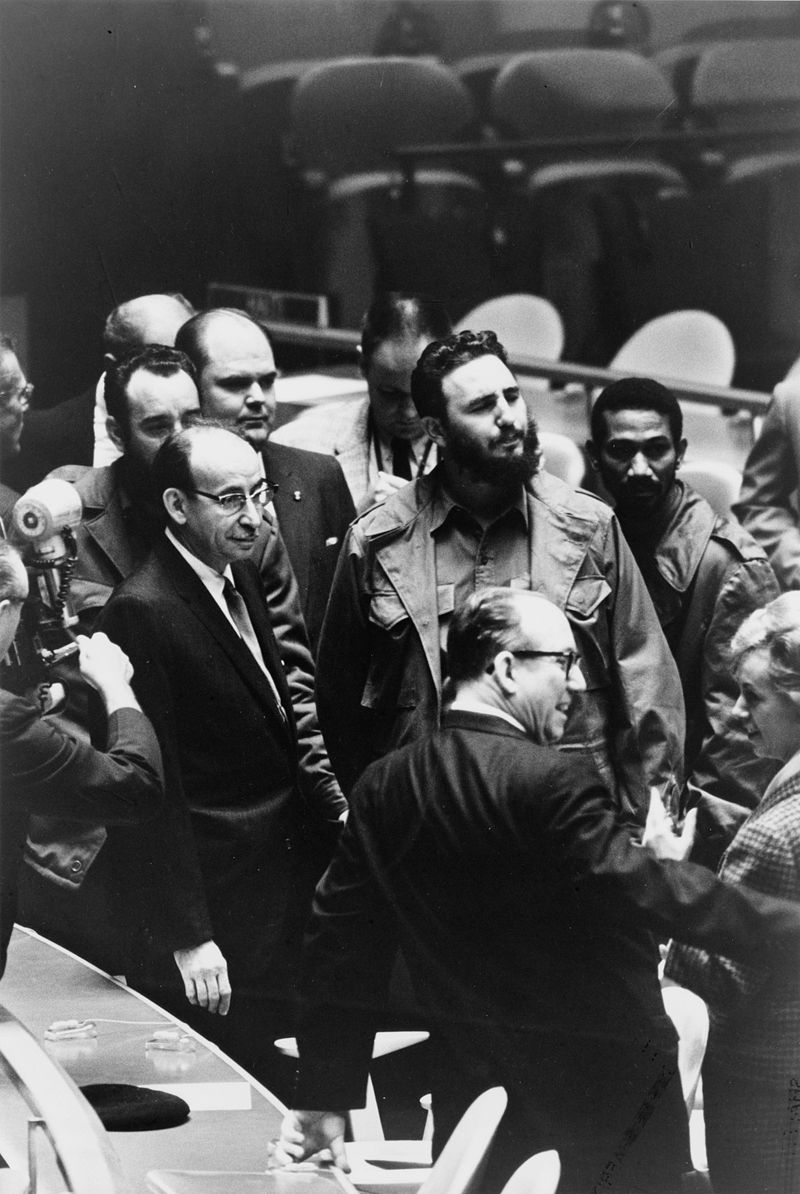
Fidel Castro : Leader of Cuba
Cuba

Political
Global Trade
3 min read
Updated By: History Editorial Network (HEN)
Published:
After the passing of his brother, Fidel Castro assumed the presidency of Cuba, bringing an end to his sibling's over four-decade-long rule. Fidel, a prominent figure in Cuban politics for years, took on the presidency amidst some controversy, with critics highlighting concerns over the Castro family's continuous hold on power.
Fidel's presidency marked a continuation of the socialist policies and centralized governance that defined his brother's tenure. Throughout his rule, Cuba faced a mix of challenges and developments, maintaining a complex relationship with the United States while also solidifying alliances with other nations.
Under Fidel's leadership, Cuba experienced shifts in its economy and international relations, showing resilience despite facing hardships such as economic embargoes and political isolation. His presidency stirred both admiration and criticism, with supporters praising his efforts in social welfare and anti-imperialistic stance, while detractors pointed to restrictions on freedoms and human rights.
Fidel Castro's presidency symbolized an era defined by revolutionary ideologies and defiance against external pressures, leaving a lasting impact on Cuba's history and global politics. #FidelCastro #Cuba #RevolutionaryLeader #Socialism
Explore the Life Moments of
 AI Twin