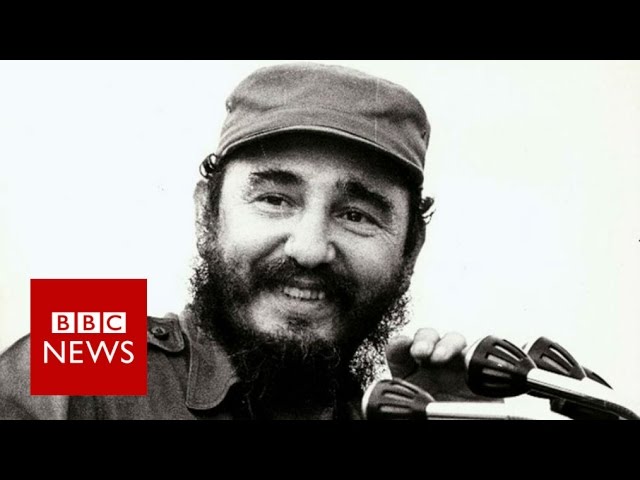
The death of Fidel Castro
Cuba

Political
Cuba
Castro
10 min read
Updated By: History Editorial Network (HEN)
Published:
The death of Fidel Castro on November 25, 2016, marked the end of an era for Cuba and the world. Castro, the revolutionary leader who had ruled Cuba for nearly five decades, left a complex legacy that continues to influence the country's political, economic, and social landscape.
Early Life and Rise to Power
Fidel Alejandro Castro Ruz was born on August 13, 1926, in Birán, Cuba. He grew up in a relatively affluent family and attended prestigious schools. Castro studied law at the University of Havana, where he became politically active and began to develop his revolutionary ideology.
In 1953, Castro led a failed attack on the Moncada Barracks, an event considered the beginning of the Cuban Revolution. Although imprisoned, he used his trial to gain attention, famously declaring, "History will absolve me." After being released in 1955, he went into exile in Mexico, where he met Ernesto "Che" Guevara and planned the next phase of the revolution.
The Cuban Revolution
In 1956, Castro and a small group of revolutionaries returned to Cuba on the yacht Granma, launching a guerrilla campaign against the U.S.-backed dictator Fulgencio Batista. After two years of warfare, Batista fled the country on January 1, 1959, and Castro's forces took control. Castro assumed power, initially as Prime Minister and later as President, and established a socialist state.
Leadership and Policies
Fidel Castro's rule was marked by significant social and economic reforms, including the nationalization of industries, land redistribution, and the establishment of universal healthcare and education systems. These policies improved literacy rates and healthcare outcomes, earning Cuba international recognition.
However, Castro's regime was also characterized by political repression, censorship, and the persecution of dissenters. Relations with the United States deteriorated rapidly, leading to the Bay of Pigs invasion in 1961 and the Cuban Missile Crisis in 1962, which brought the world to the brink of nuclear war.
Legacy and Controversy
Castro's legacy is polarizing. Supporters laud his achievements in healthcare, education, and social equality, as well as his defiance of U.S. hegemony. Critics point to human rights abuses, economic mismanagement, and the lack of political freedoms. Under Castro, Cuba became an ally of the Soviet Union, receiving substantial economic aid, which helped sustain the economy but also tied it to the fluctuations of the Cold War.
The collapse of the Soviet Union in 1991 plunged Cuba into an economic crisis known as the "Special Period," marked by severe shortages and hardships. Despite this, Castro maintained his grip on power, adapting the economy to survive through limited market reforms and opening up to tourism and remittances from Cubans abroad.
Transition of Power
In July 2006, Fidel Castro underwent surgery and temporarily transferred power to his younger brother, Raúl Castro. In 2008, due to ongoing health issues, Fidel officially stepped down as President, and Raúl succeeded him, marking the first time since the revolution that Fidel was not in charge. Raúl implemented a series of economic reforms aimed at modernizing the Cuban economy while maintaining the socialist system.
Death and Reaction
Fidel Castro died on November 25, 2016, at the age of 90. His death elicited a wide range of reactions. In Cuba, the government declared nine days of mourning, during which public activities were suspended, and citizens paid their respects. Massive crowds gathered to honor him, reflecting the deep respect and admiration he commanded among many Cubans.
International reactions were mixed. World leaders from countries allied with Cuba, such as Russia, China, and various Latin American nations, praised Castro's leadership and contributions. In contrast, Cuban exiles and critics in the United States and elsewhere expressed relief, seeing his death as the end of an oppressive era.
Conclusion
Fidel Castro's death marked a significant historical moment, closing a chapter on one of the 20th century's most influential and controversial figures. His revolutionary zeal, charisma, and defiance of global powers left an indelible mark on Cuba and the world. The debates over his legacy, reflecting the broader ideological divides of the Cold War era, continue to shape perceptions of his impact. As Cuba moves forward, the influence of Fidel Castro's policies and vision will remain a fundamental part of its national identity.
#MomentsOfLife #MoofLife_Moment #MoofLife #FidelCastro #CubanRevolution #CubanHistory
Primary Reference
Death and state funeral of Fidel Castro
Explore the Life Moments of
 AI Twin