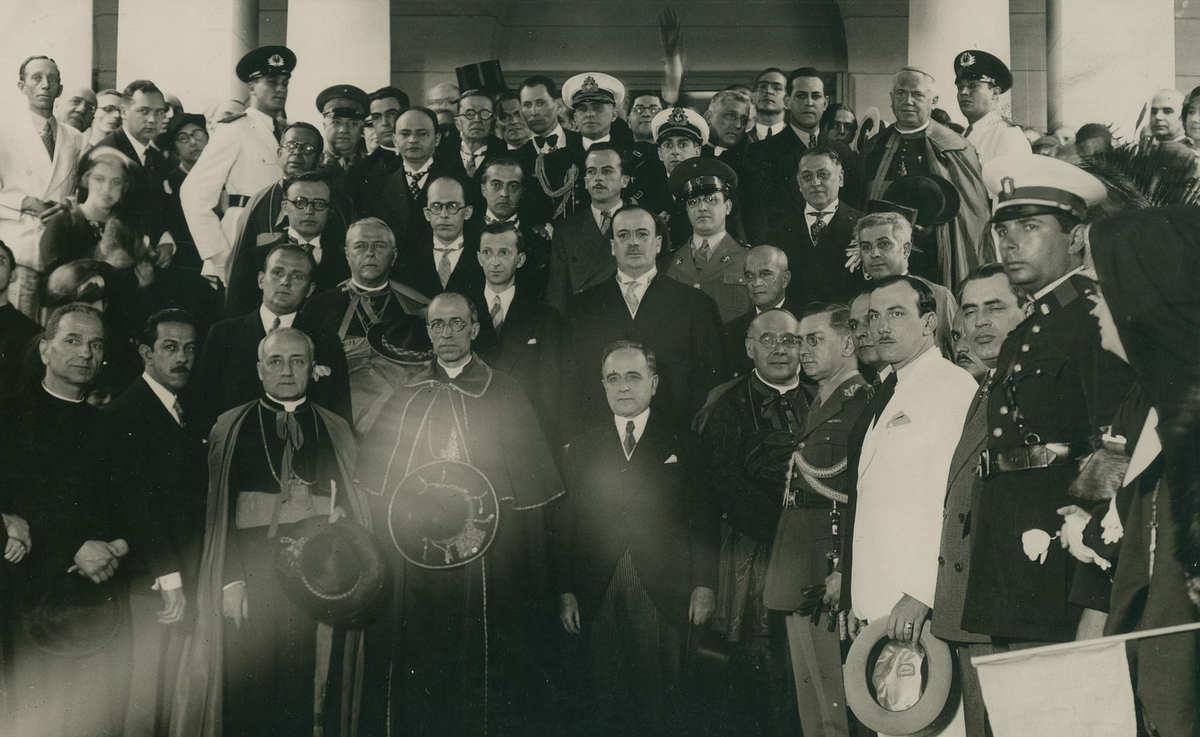
Transition to Vargas Era: Fall of the Old Republic
Brazil
Political
Social Reforms
3 min read
Updated By: History Editorial Network (HEN)
Published:
Following widespread discontent with the political elite, the Old Republic in Brazil came to an end in 1930, marking the beginning of the Vargas Era. Getúlio Vargas, a populist leader, rose to power after a bloodless coup d'état. Vargas promised to address the economic and social inequalities that had plagued the country.
The Vargas Era brought about significant changes, including the centralization of power in the federal government, industrialization initiatives, and labor reforms. Vargas's government implemented social welfare programs and labor laws that improved the lives of many Brazilians. However, his regime was also marked by authoritarianism and censorship.
The end of the Old Republic and the rise of Vargas had a lasting impact on Brazil's political landscape. It set the stage for a more centralized and interventionist government, shifting power away from the traditional oligarchies. The Vargas Era marked a period of transformation and modernization in Brazil, laying the groundwork for future developments in the country's economy and society.
#Brazil #VargasEra #PoliticalTransformation #SocialReforms

Explore the Life Moments of
 AI Twin