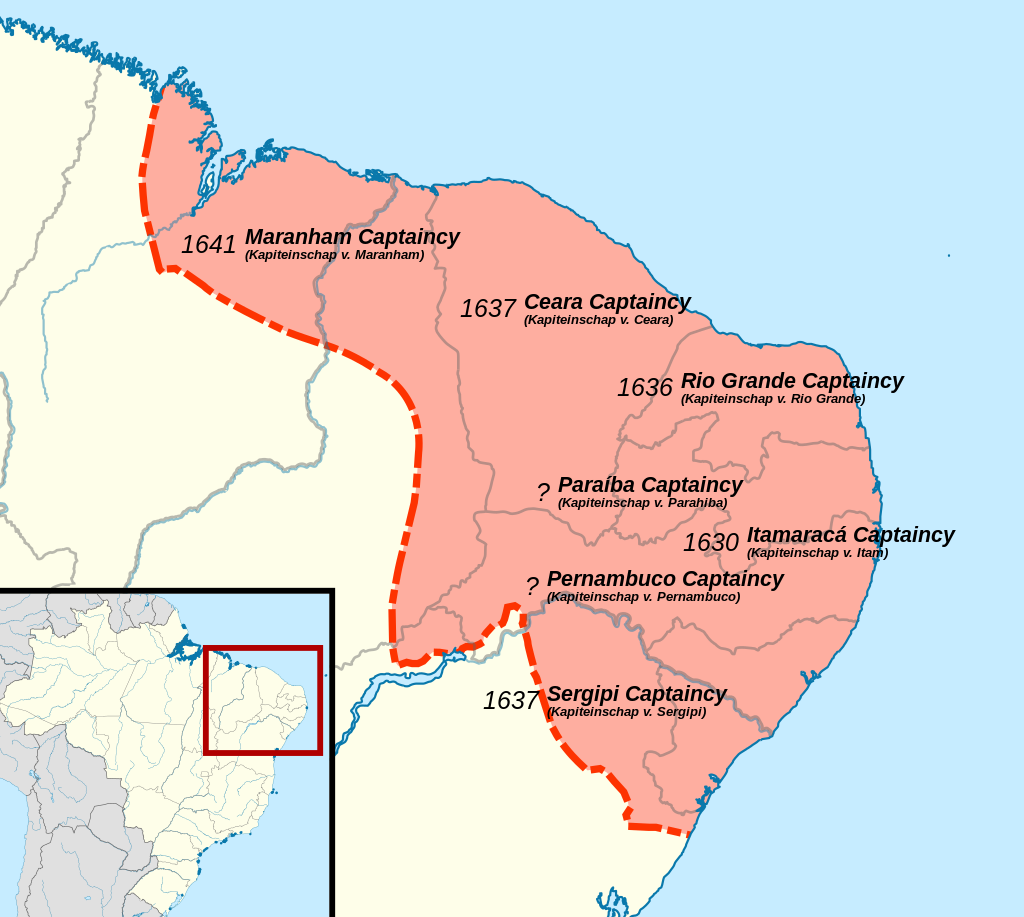
Dutch Colony New Holland in Pernambuco
Brazil

Global Trade
3 min read
Updated By: History Editorial Network (HEN)
Published:
In February 1630, the Dutch established the colony of New Holland in Pernambuco, Brazil. This move was part of the Dutch West India Company's ambition to expand its influence in the region, driven by the lucrative sugar trade. Pernambuco was a strategic location due to its fertile lands and thriving sugar plantations.
The Dutch presence in Pernambuco had a significant impact on the local economy and society. They introduced new agricultural techniques, such as irrigation systems and crop diversification, that improved productivity. The Dutch also promoted religious tolerance, attracting a diverse population to the colony.
However, their rule was marked by resistance from the Portuguese and local inhabitants, leading to conflicts and uprisings. The Dutch faced challenges in maintaining control over the colony, eventually losing it to the Portuguese in a series of battles.
The establishment of the Dutch colony of New Holland in Pernambuco reflects the complex history of colonization in Brazil, highlighting the competition between European powers for territory and resources in the New World.
#DutchColonization #PernambucoHistory #BrazilianColonialPeriod

Explore the Life Moments of
 AI Twin