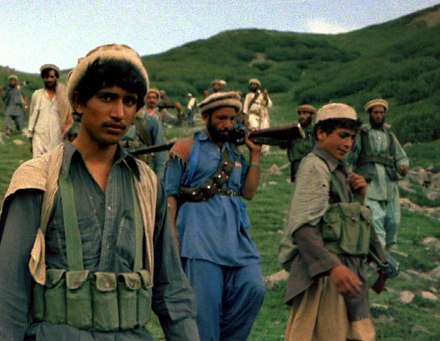
Intensifying Mujahideen resistance challenges Soviet forces in Afghan war.
Afghanistan
Political
Global Trade
3 min read
Updated By: History Editorial Network (HEN)
Published:
During the Mujahideen resistance against Soviet forces in Afghanistan, rebel groups fought against the Soviet invasion to preserve their country's independence and resist communist ideology. The Mujahideen, comprising various Afghan tribal factions, received support from the United States, Pakistan, and Saudi Arabia.
This resistance movement aimed to drive out Soviet forces, leading to a prolonged and bloody conflict. The guerrilla tactics used by the Mujahideen, coupled with the harsh terrain of Afghanistan, posed significant challenges for the better-equipped Soviet military. The conflict resulted in massive destruction and loss of lives in the region.
The Mujahideen's tenacious resistance played a crucial role in wearing down the Soviet forces over time. The conflict also had far-reaching consequences, eventually contributing to the Soviet Union's decision to withdraw its troops from Afghanistan. The aftermath of the war, however, led to internal strife and power struggles among different Mujahideen factions, further destabilizing the country.
The Mujahideen resistance against Soviet forces in Afghanistan symbolized a determined struggle for freedom and self-determination. The conflict's legacy continues to impact Afghanistan's political landscape and serves as a reminder of the high costs of foreign intervention in the region. #Afghanistan #Mujahideen #SovietForces #ResistanceMovement #ForeignIntervention
Explore the Life Moments of
 AI Twin