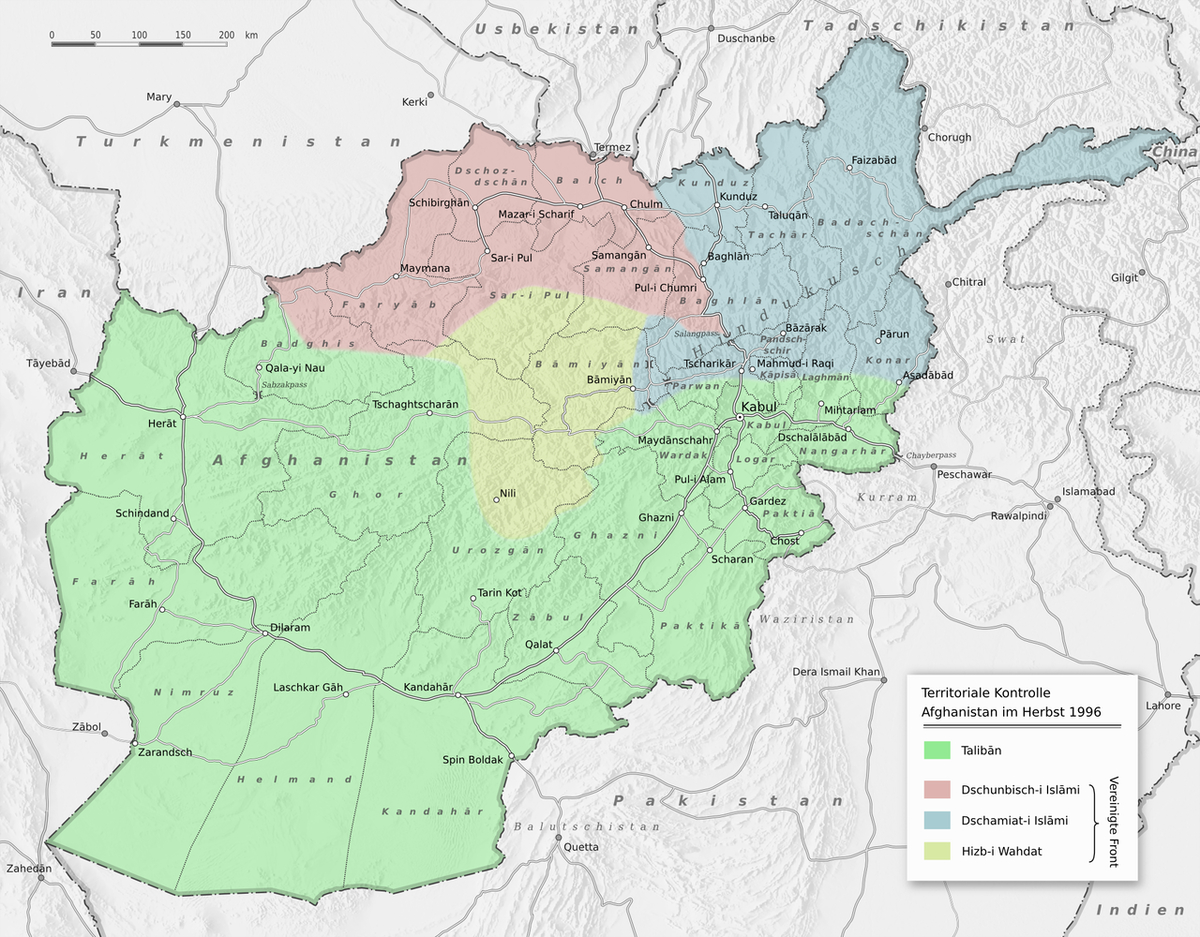
Taliban seizes Kabul, solidifying control and governance in the country.
Afghanistan

Political
War
Terrorism
3 min read
Updated By: History Editorial Network (HEN)
Published:
The Taliban's capture of Kabul marked a turning point in Afghanistan's history. Coming to power following years of conflict, the Taliban swiftly established their rule over the capital city. Their rise to power was fueled by a promise to restore order and implement strict Islamic law. The capture of Kabul signaled the beginning of the Taliban's oppressive regime, characterized by harsh Sharia law, fundamentalist ideology, and restrictions on women's rights.
The impact of the Taliban's rule was profound and far-reaching. Public executions, amputations, and strict enforcement of their interpretation of Islamic law became common. Women were particularly affected, facing severe limitations on their freedom, education, and employment opportunities. The Taliban's rule also led to international isolation, with many countries condemning their human rights abuses and harboring concerns over the harboring of terrorist groups.
The capture of Kabul by the Taliban serves as a stark reminder of the challenges faced by the people of Afghanistan. It represents a period of extreme repression and violence, highlighting the need for efforts to promote peace, stability, and respect for human rights in the region.
#Taliban #Kabul #Afghanistan #IslamicLaw #HumanRights #Conflict
Explore the Life Moments of
 AI Twin