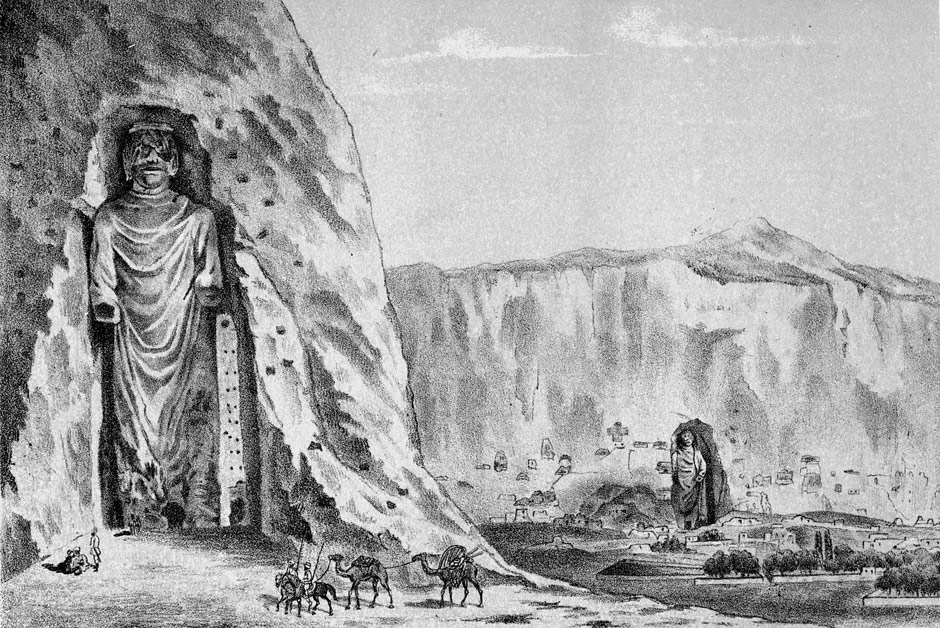
The larger of the Buddhas of Bamiyan, known as the "Western Buddha" built
Afghanistan
Technology
Religion
Architecture
Construction
9 min read
Updated By: History Editorial Network (HEN)
Published:
In the scenic Bamiyan Valley of central Afghanistan, towering sandstone cliffs once housed two monumental statues of Buddha, known collectively as the Buddhas of Bamiyan. The larger of these statues, referred to as the "Western Buddha," was constructed around 618 CE. This impressive statue stood approximately 55 meters (180 feet) tall and was an iconic symbol of the region's rich Buddhist heritage.
Historical and Cultural Context
The Bamiyan Valley
The Bamiyan Valley was a crucial crossroads along the Silk Road, the ancient network of trade routes that connected the East and West. This strategic location facilitated the exchange of goods, cultures, and religions, making Bamiyan a melting pot of diverse influences. By the 6th and 7th centuries, the valley had become a major center of Buddhist monasticism, attracting pilgrims, scholars, and artisans from across Asia.
Buddhist Patronage
The construction of the Western Buddha occurred during a period of substantial Buddhist patronage in the region. The Buddhist community in Bamiyan was thriving, supported by local rulers who embraced the religion and its associated artistic and cultural practices. This environment fostered the creation of numerous religious monuments, including the Western Buddha.
Construction and Artistic Significance
Architectural Techniques
The construction of the Western Buddha was an engineering marvel of its time. Artisans carved the statue directly into the sandstone cliff face, utilizing a combination of rock-cut and relief techniques. The statue's form was initially shaped from the rock, after which layers of stucco were applied to refine the details and create a smooth surface. The stucco was then painted, though much of this color has not survived the passage of time.
Artistic Features
The Western Buddha exemplified the artistic style of the Gandhara civilization, characterized by a fusion of Greek, Persian, and Indian influences. This synthesis produced a distinctive aesthetic that combined naturalistic features with traditional Buddhist iconography. The statue's calm expression, intricate drapery, and majestic posture were designed to convey both spiritual serenity and the grandeur of the Buddha.
Historical Significance
Religious and Cultural Hub
The completion of the Western Buddha solidified Bamiyan's status as a major Buddhist religious and cultural hub. Monasteries, chapels, and stupas dotted the valley, and the statues served as focal points for religious activities and pilgrimage. The Buddhas of Bamiyan were not only spiritual symbols but also cultural beacons that attracted visitors from across the Buddhist world.
Dynastic Support
The construction of the Western Buddha around 618 CE took place during the reign of local rulers who were supportive of Buddhism. These rulers played a crucial role in fostering an environment where such monumental projects could be undertaken. Their patronage ensured that the artistic and religious traditions of the region were preserved and promoted.
Destruction and Legacy
Tragic Loss
The Western Buddha, along with its smaller counterpart, the Eastern Buddha, stood for over a millennium as symbols of Afghanistan's rich cultural heritage. However, in March 2001, the Taliban government, adhering to a strict interpretation of Islamic law, ordered the destruction of the Buddhas of Bamiyan. Using explosives, the statues were reduced to rubble, an act that drew widespread international condemnation and represented a devastating loss to global cultural heritage.
Preservation Efforts
Despite their destruction, the Buddhas of Bamiyan continue to hold significant cultural and historical importance. International efforts, led by organizations such as UNESCO, have aimed at preserving the site and exploring possibilities for restoration. The niches where the statues once stood serve as poignant reminders of the valley's historical and cultural legacy.
The larger "Western Buddha" of Bamiyan, built around 618 CE, remains a symbol of Afghanistan's historical significance as a center of Buddhist art and culture. The statue's legacy endures, embodying the resilience of cultural heritage and the enduring spirit of artistic and religious expression in the face of adversity.
#MomentsOfLife #MoofLife_Moment #MoofLife #BuddhasOfBamiyan #CulturalHeritage #Buddhism #SilkRoadHistory #GandharaArt #AfghanistanHistory

Explore the Life Moments of
 AI Twin