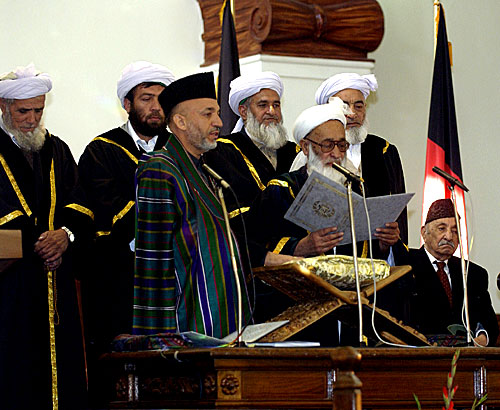
The 2004 Afghan presidential election
Afghanistan
Political
7 min read
Updated By: History Editorial Network (HEN)
Published:
The 2004 Afghan presidential election was a landmark event in the history of Afghanistan, marking the first time in the country's history that the president was chosen through a democratic process. Held on October 9, 2004, this election was a significant milestone for Afghanistan's fledgling democracy following the fall of the Taliban regime in 2001.
Background
After the U.S.-led invasion in late 2001 that ousted the Taliban, Afghanistan was in a period of political and social reconstruction. The Bonn Agreement, signed in December 2001, laid the groundwork for establishing a new government framework, culminating in the adoption of a new constitution in January 2004. The 2004 presidential election was a critical step in this transition, aiming to legitimize the government and promote stability.
Candidates and Campaign
The election featured 18 candidates, with Hamid Karzai, the interim president who had led the transitional government since 2002, being the frontrunner. Karzai, a Pashtun from the Popalzai tribe, was widely recognized both domestically and internationally. His primary challengers included Yunus Qanuni, a prominent Tajik politician and former Minister of Education, and Abdul Rashid Dostum, a well-known Uzbek warlord.
The campaign period was fraught with challenges, including security concerns and logistical issues. The Taliban and other insurgent groups actively sought to disrupt the process, leading to a climate of fear and uncertainty. Despite these threats, candidates traveled across the country to garner support, though their reach was often limited by the dangerous security situation.
Election Day
On election day, millions of Afghans defied threats of violence to cast their votes. Voter turnout was estimated at around 70%, reflecting a strong desire among the populace to participate in the democratic process. However, the day was not without issues. Reports of electoral fraud and administrative problems, such as indelible ink washing off voters' fingers, marred the proceedings. These issues led some candidates to call for the election to be annulled, but an independent panel reviewed the complaints and ultimately upheld the election results.
Results
Hamid Karzai emerged victorious, securing approximately 55.4% of the vote, which allowed him to avoid a runoff. Yunus Qanuni came in second with about 16.3%, and Abdul Rashid Dostum garnered around 10%. Karzai's win was a crucial endorsement of his leadership and vision for Afghanistan, despite the allegations of fraud and irregularities.
Significance and Aftermath
The 2004 election was a pivotal moment for Afghanistan. It represented a significant shift from decades of conflict and authoritarian rule towards a more democratic governance structure. While the election did not resolve all of Afghanistan's challenges, it provided a foundation for further political development and international engagement.
However, the road ahead remained fraught with difficulties. The elected government had to deal with persistent security threats from insurgent groups, rampant corruption, and the need for substantial economic and infrastructural development. Nonetheless, the election was a crucial step in legitimizing the Afghan government and providing hope for a more democratic future.
#AfghanistanElections #HamidKarzai #DemocracyInAfghanistan #MomentsOfLife #MoofLife_Moment #MoofLife
Primary Reference
2004 Afghan presidential election
Explore the Life Moments of
 AI Twin