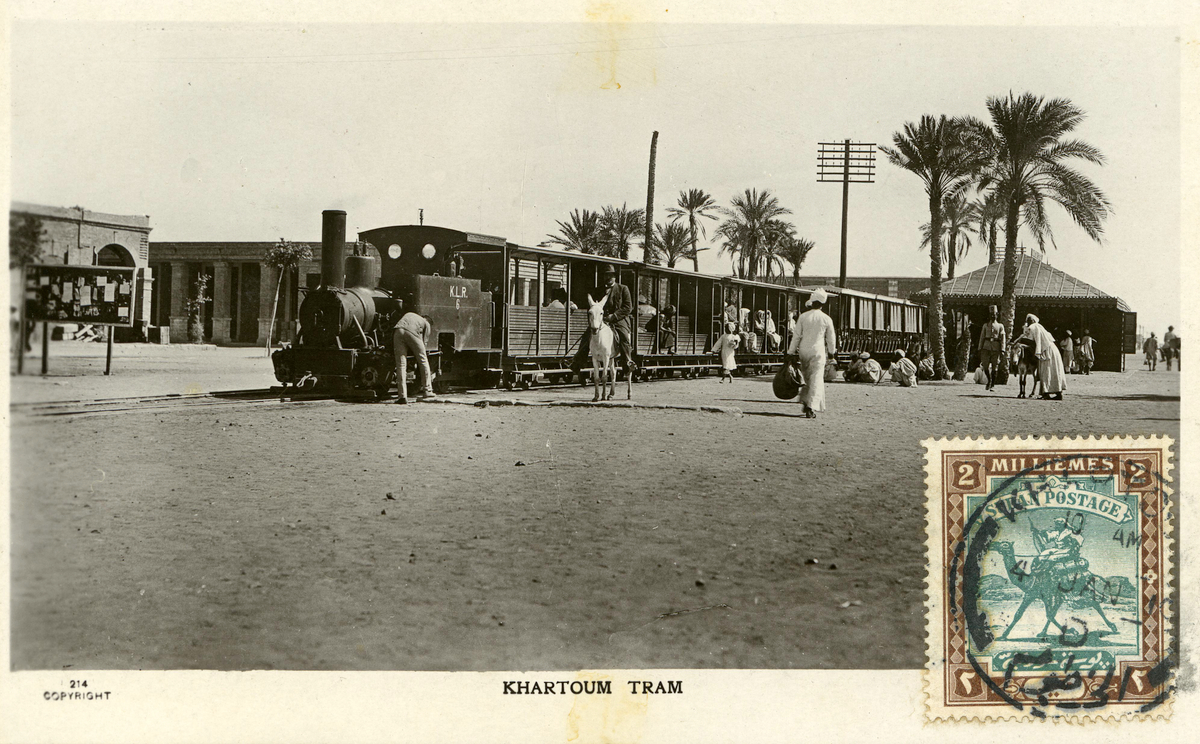
British Building Military Railway in Sudan
Sudan
Colonialism
5 min read
Updated By: History Editorial Network (HEN)
Published:
The British undertook the construction of the Sudan Military Railway as part of their campaign to expand their influence and control in Sudan. The railway construction was primarily driven by strategic military needs, aimed at facilitating troop movements and supply lines during the Mahdist War. This conflict, which pitted the British and Egyptian forces against the Mahdist Sudanese, necessitated efficient logistics and transportation.
The railway line commenced from Wadi Halfa, near the Egyptian border, and extended towards the Sudanese hinterlands. It played a critical role in the British campaign by significantly reducing travel time for troops and military supplies, which would otherwise have had to traverse harsh desert terrain. Steam engines and flatcars transported soldiers, weapons, food, and medical supplies over vast distances, thus streamlining the logistics of the British military operations.
The railway also had substantial implications beyond the immediate military context. For industrialists and colonial administrators, it represented an essential tool for economic exploitation. While local populations endured the ramifications of colonial policies influencing their traditional ways of life, the railway ostensibly facilitated the extraction and export of Sudan’s natural resources to British markets.
Statistical accounts from that period indicate that the railway stretched several hundred miles, making it one of the longer military railways constructed under British colonial rule. Reports recorded the employment of thousands of local laborers, often under dire conditions, which underscored the arduous and grueling efforts involved in constructing the railway through demanding desert landscapes.
Upon completion, this infrastructure also contributed to the establishment of further colonial administration outposts and settlements. The British subsequently extended their reach over Sudan, laying the groundwork for long-term colonial rule. The railway became a symbol of British engineering prowess and colonial ambition, forever altering the infrastructural and socio-economic landscape of Sudan.
With these consecutive developments, the Sudan Military Railway became a pivotal factor in shaping the colonial history and future trajectory of the region.
#MoofLife #SudanHistory #Colonialism #BritishEmpire #MahdistWar #MilitaryLogistics #RailwayConstruction #EconomicExploitation

Explore the Life Moments of
 AI Twin