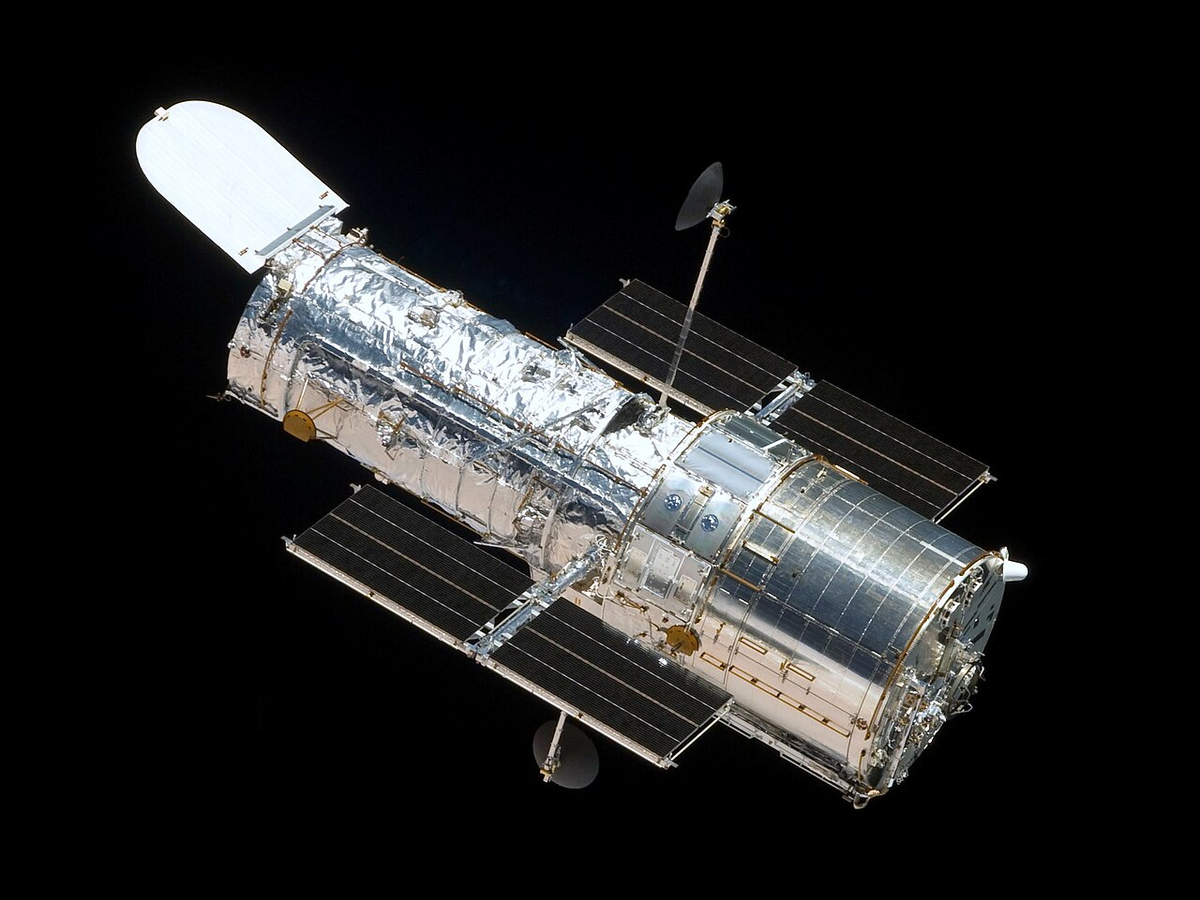
First telescope designed to be repaired in space
United States of America
Space Exploration
Astronomy
Telescopes
4 min read
Updated By: History Editorial Network (HEN)
Published:
Updated:
The Hubble Space Telescope, a collaborative project between NASA and the European Space Agency (ESA), marked a pivotal advancement in space observation technology. It was specifically engineered to allow for servicing and repairs while in orbit, a feature that was unprecedented at the time. This capability was crucial as it enabled the telescope to maintain and enhance its operational efficiency over the years. The design included access points for astronauts to perform repairs and upgrades, which significantly extended the telescope's lifespan and improved its scientific output. Hubble's ability to be serviced in space has allowed for multiple missions to upgrade its instruments, ensuring that it remains at the forefront of astronomical research.
The impact of the Hubble Space Telescope on the field of astronomy has been profound. It has provided invaluable data that has led to numerous discoveries, including insights into the rate of expansion of the universe, the existence of exoplanets, and detailed observations of distant galaxies. Hubble's observations have contributed to a better understanding of cosmic phenomena and have been instrumental in shaping modern astrophysics. The telescope has captured stunning images that have not only advanced scientific knowledge but have also inspired public interest in space exploration. The ongoing legacy of Hubble continues to influence the design and operation of future space telescopes, reinforcing the importance of repairable technology in space missions.
#mooflife
#MomentOfLife
#HubbleSpaceTelescope
#Nasa
#Esa
#SpaceExploration
#Astronomy
Primary Reference
Hubble Space Telescope

Explore the Life Moments of
 AI Twin