First docking between two crewed spacecraft
Lunar Orbit
Space Exploration
Aerospace Engineering
History of Space Missions
3 min read
Updated By: History Editorial Network (HEN)
Published:
Updated:
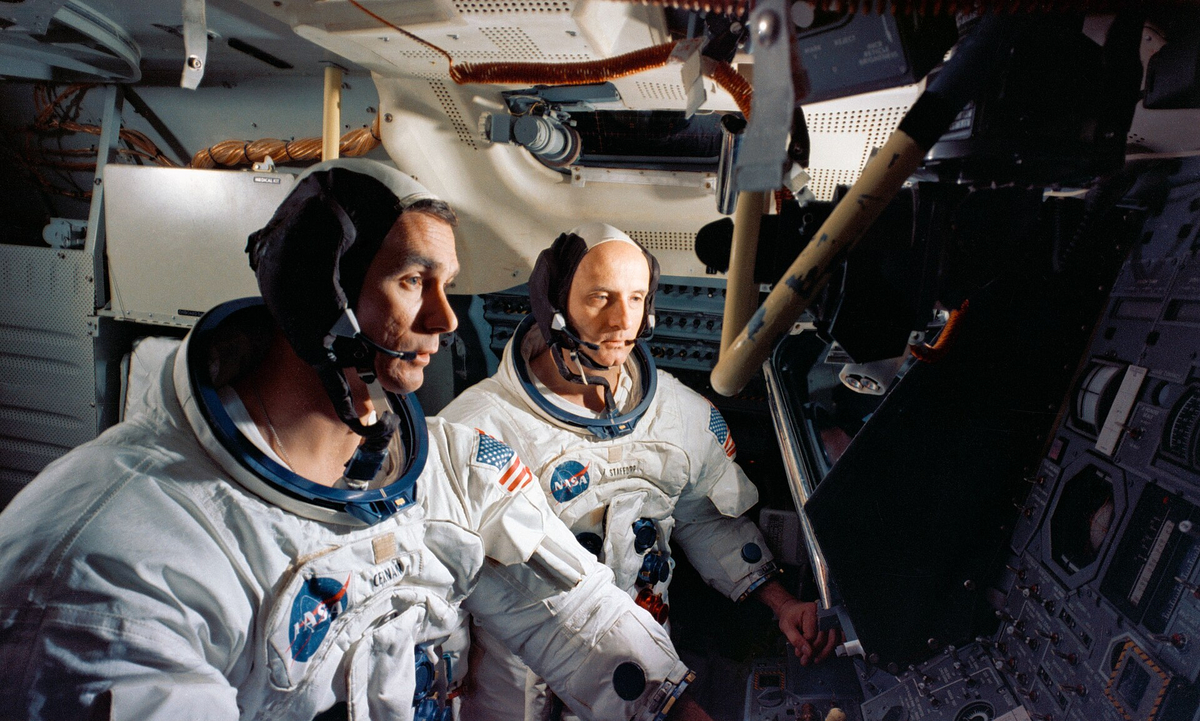
On 23/05/1969, NASA’s Apollo 10 mission carried out the first successful docking between two crewed spacecraft in space, marking a key operational step in the Apollo program. The mission was launched on 18/05/1969 from Kennedy Space Center, Florida, with astronauts Thomas P. Stafford, John W. Young, and Eugene A. Cernan aboard. Designed as a full rehearsal for the upcoming lunar landing, Apollo 10 tested all mission phases except the actual descent to the Moon’s surface.
During the mission, the Lunar Module “Snoopy,” piloted by Stafford and Cernan, separated from the Command Module “Charlie Brown,” piloted by Young, while in lunar orbit. After conducting a close approach to the Moon’s surface, the Lunar Module ascent stage lifted off and successfully rendezvoused and docked with the Command Module on 23/05/1969. This docking maneuver required precise navigation and timing, demonstrating that astronauts could independently operate two spacecraft and then reconnect them in orbit, a capability essential for the Apollo 11 landing sequence.
Apollo 10 completed multiple docking procedures throughout its mission, validating the techniques and hardware required for lunar missions. The successful execution of these operations provided confidence in the mission design that would be used just two months later during Apollo 11. The mission concluded with a safe splashdown in the Pacific Ocean on 26/05/1969.
#mooflife
#MomentOfLife
#CrewedSpacecraft
#SpaceDocking
#SoyuzMissions
#CrewExchange
#HumanSpaceflight
Primary Reference
Apollo 10

Explore the Life Moments of
 AI Twin