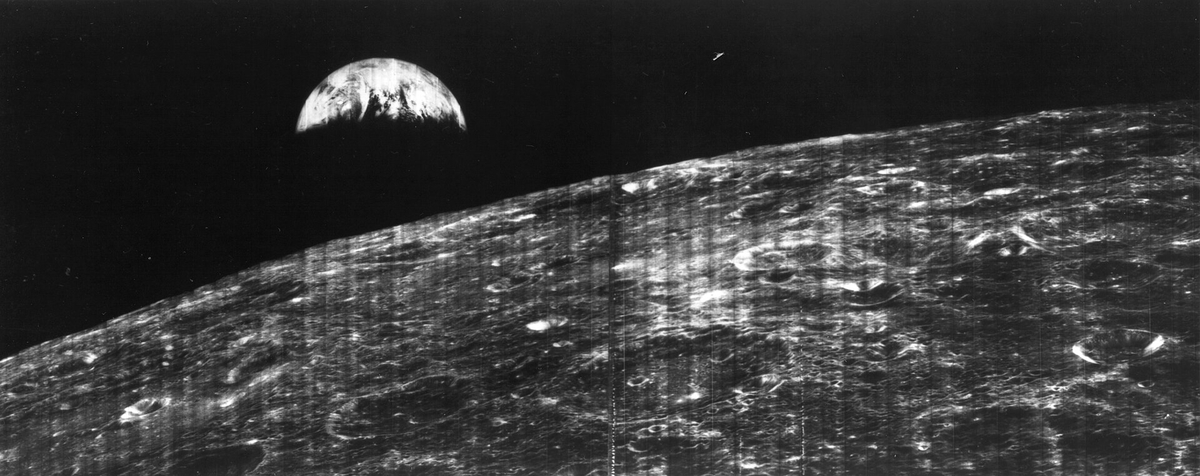
First picture of Earth from another astronomical object
United States of America
Space Exploration
Astronomy
Lunar Missions
4 min read
Updated By: History Editorial Network (HEN)
Published:
Updated:
NASA's Lunar Orbiter 1 played a crucial role in space exploration by capturing the first image of Earth from another astronomical object, specifically the Moon. This achievement marked a significant milestone in the history of space photography and planetary exploration. The Lunar Orbiter program was initiated to provide detailed images of the Moon's surface, which were essential for planning future manned missions. The successful operation of Lunar Orbiter 1 not only provided the first visual evidence of Earth from the Moon but also contributed to the mapping of the lunar surface, enhancing our understanding of the Moon's geography and geology. The images captured by the spacecraft were instrumental in identifying potential landing sites for subsequent Apollo missions, thereby influencing the trajectory of human space exploration. The ability to view Earth from the Moon offered a new perspective on our planet, highlighting its fragility and isolation in the vastness of space. This event underscored the importance of international cooperation in space exploration and the technological advancements that made such missions possible. The data and images returned by Lunar Orbiter 1 laid the groundwork for future lunar exploration and provided a foundation for the scientific community to study the Moon in greater detail. The impact of this achievement continues to resonate in contemporary space missions, as it set a precedent for capturing images of Earth from various celestial bodies, fostering a deeper appreciation for our planet's place in the universe.
#mooflife
#MomentOfLife
#LunarOrbiter1
#EarthFromMoon
#SpaceExploration
#Nasa
#FirstImageOfEarth
Primary Reference
Lunar Orbiter 1

Explore the Life Moments of
 AI Twin