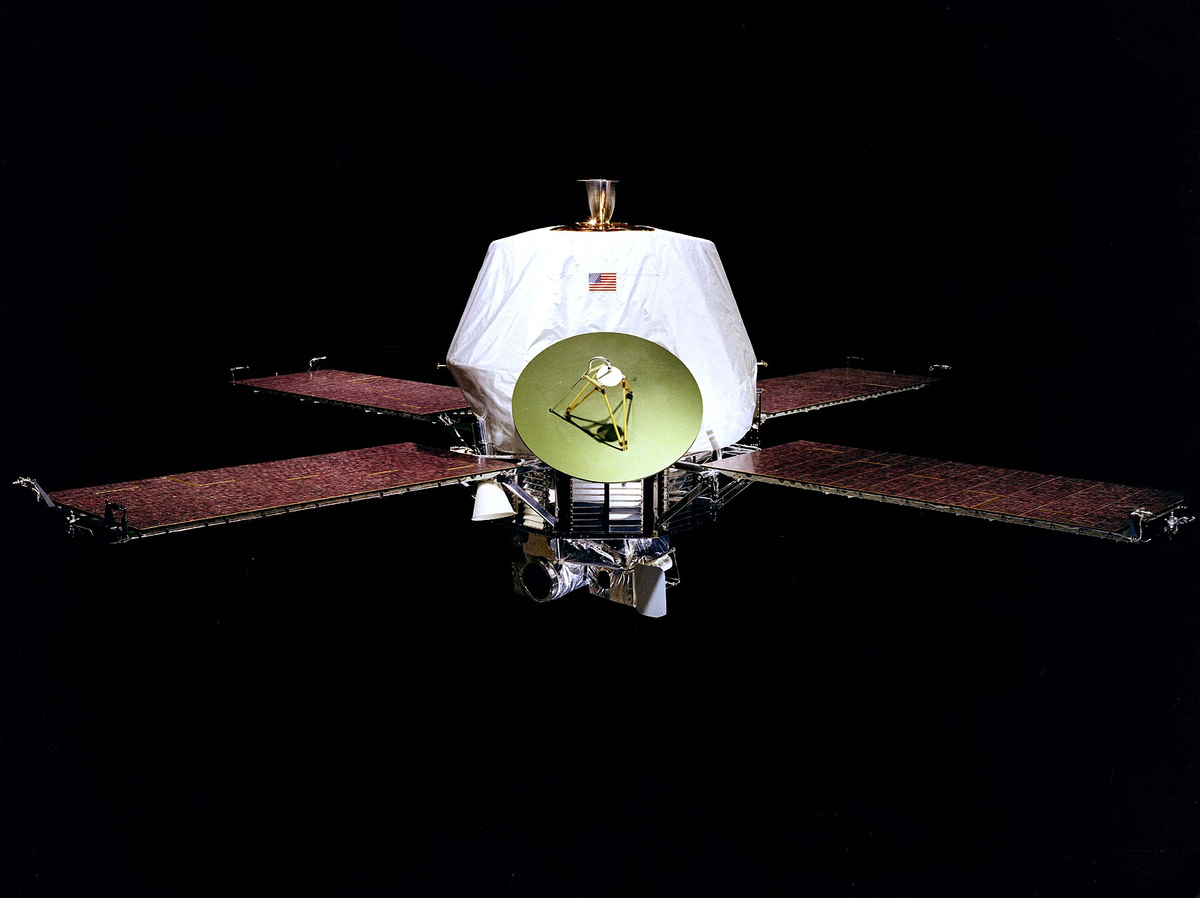
First spacecraft to orbit another planet
Mars orbit
Space Exploration
Mars Missions
NASA History
3 min read
Updated By: History Editorial Network (HEN)
Published:
Updated:
On 14/11/1971 (UTC), NASA’s Mariner 9 became the first spacecraft in history to successfully enter orbit around another planet, establishing orbit around Mars and marking a major advancement in planetary exploration. The spacecraft had been launched on 30/05/1971 and reached Mars after a journey of nearly six months.
Upon arrival, Mariner 9 encountered Mars during a global dust storm that initially obscured nearly all surface features. Rather than limiting the mission, the orbiter continued operating and waited as the dust gradually settled. Over the course of its mission, Mariner 9 transmitted more than 7,000 images, providing the first comprehensive view of the Martian surface from orbit.
The data revealed major geological structures, including Olympus Mons, the largest volcano in the Solar System, and Valles Marineris, a vast canyon system stretching thousands of kilometers. The spacecraft also identified dried river channels and erosion patterns, offering evidence that liquid water may have existed on Mars in the past. In addition to surface imaging, Mariner 9 studied the Martian atmosphere, weather systems, and the planet’s moons, Phobos and Deimos.
Mariner 9 operated until October 1972, far exceeding earlier flyby missions in both duration and scope. Its success demonstrated the effectiveness of orbital missions for sustained observation, allowing scientists to study seasonal changes and large-scale planetary features over time.
#mooflife
#MomentOfLife
#Mariner9
#MarsExploration
#Nasa
#SpacecraftHistory
#PlanetaryScience
Primary Reference
Mariner 9

Explore the Life Moments of
 AI Twin