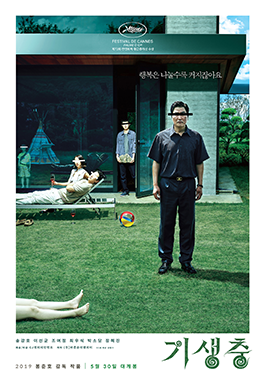
The South Korean film Parasite becomes the first Korean film to receive an Academy award and and the first non–English language film to win Best Picture
South Korea

Entertainment
AcademyAwards
Oscar
8 min read
Updated By: History Editorial Network (HEN)
Published:
On February 9, 2020, South Korean cinema made a historic mark on the global stage when "Parasite," directed by Bong Joon-ho, became the first Korean film to win an Academy Award and the first non-English language film to receive the prestigious Best Picture award. This milestone not only highlighted the global appeal of Korean cinema but also signaled a broader acceptance and appreciation of international films in Hollywood.
"Parasite" is a darkly comedic thriller that delves into themes of class struggle and societal inequality. The film follows the impoverished Kim family, who cunningly infiltrate the wealthy Park family by securing various household positions under false pretenses. The story unfolds with sharp social commentary, unexpected twists, and a blend of humor and horror, capturing audiences and critics alike.
The journey to the Oscars began with "Parasite's" premiere at the Cannes Film Festival in May 2019, where it won the prestigious Palme d'Or, the festival's highest honor. This accolade set the stage for its international success, as the film garnered widespread acclaim and numerous awards leading up to the Oscars.
At the 92nd Academy Awards, "Parasite" made history with its four major wins: Best Picture, Best Director for Bong Joon-ho, Best Original Screenplay, and Best International Feature Film. These achievements were groundbreaking in several ways. The Best Picture win marked the first time a non-English language film had ever received the honor in the Academy's 92-year history. Additionally, Bong Joon-ho became the second director to win four Oscars in a single night, following Walt Disney in 1954.
The impact of "Parasite's" Oscar triumph extended beyond the realm of film awards. It signaled a shift in the industry's recognition of diverse storytelling and the importance of international voices in cinema. The film's success also highlighted the increasing globalization of the entertainment industry, where quality and compelling narratives transcend language barriers and cultural differences.
Bong Joon-ho, already an acclaimed filmmaker with works like "Memories of Murder," "The Host," and "Snowpiercer," received widespread praise for his masterful direction and insightful storytelling in "Parasite." In his acceptance speech for Best Director, Bong expressed his admiration for fellow nominees, including Martin Scorsese, Quentin Tarantino, Sam Mendes, and Todd Phillips, acknowledging the influence they had on his own career.
"Parasite's" historic win also sparked increased interest in South Korean cinema and culture worldwide. The film's success opened doors for other Korean films and filmmakers, encouraging audiences to explore the rich and diverse offerings of Korean storytelling. It also boosted the visibility of streaming services and platforms that provided access to international films, contributing to a more inclusive and varied cinematic landscape.
In South Korea, "Parasite's" Oscar victory was celebrated as a national achievement, bringing immense pride to the country. The film's cast and crew were hailed as heroes, and the win was seen as a testament to the talent and creativity within the Korean film industry.
Overall, "Parasite's" triumph at the Academy Awards in 2020 stands as a landmark moment in film history. It not only broke down barriers for non-English language films but also underscored the universal power of storytelling. The film's legacy continues to inspire filmmakers and audiences around the world, reinforcing the idea that great cinema knows no borders.
#MomentsOfLife #MoofLife_Moment #MoofLife #Parasite #BongJoonHo #Oscars #AcademyAwards #BestPicture #KoreanCinema #GlobalFilm

Explore the Life Moments of
 AI Twin