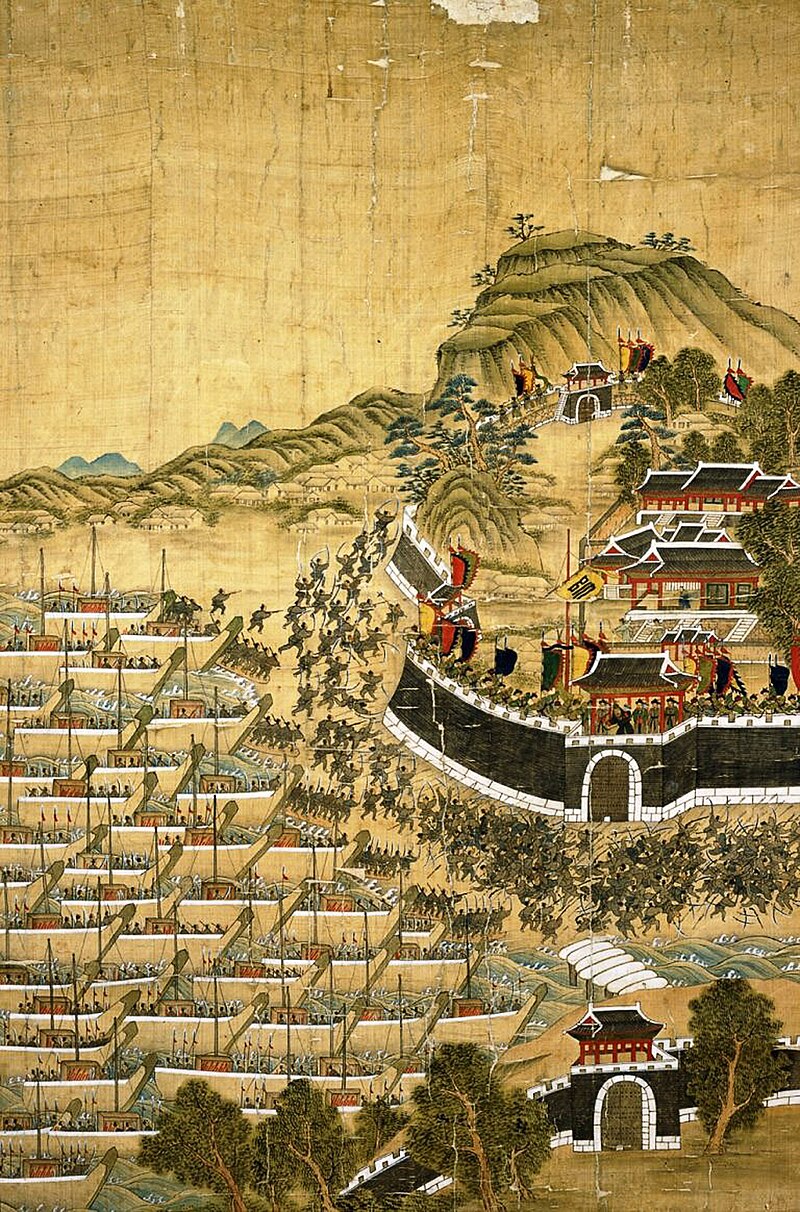
16th-century Japanese invasions of Korea {Imjin War}
South Korea

Military
War
Political
4 min read
Updated By: History Editorial Network (HEN)
Published:
The Japanese Invasions of Korea, also known as the Imjin War, were a series of brutal conflicts that lasted for several years. The invasion was led by the Japanese warlord Toyotomi Hideyoshi, who aimed to conquer the Korean Peninsula as a stepping stone to invading Ming China. The Japanese forces launched a surprise attack on Korea, catching the unprepared Korean forces off guard.
The invasion had a profound impact on Korea, leading to widespread devastation and loss of life. The Japanese forces employed ruthless tactics, including the widespread slaughter of civilians and the destruction of villages and cities. The Korean people suffered greatly during this period, with many fleeing their homes to seek refuge in the mountains.
The Korean military, led by Admiral Yi Sun-sin, played a crucial role in defending the country against the Japanese invasion. Yi Sun-sin's innovative naval tactics and leadership skills helped to turn the tide of the war in favor of the Korean forces. The famous naval Battle of Myeongnyang was a key turning point in the war, where Admiral Yi Sun-sin's smaller fleet successfully defended against a much larger Japanese force.
The Japanese Invasions of Korea eventually came to an end with the withdrawal of the Japanese forces. The war had a lasting impact on Korea, leading to significant social and economic upheaval. The invasions also had a profound effect on East Asian geopolitics, reshaping the relationships between Korea, Japan, and China.
The Imjin War remains a significant chapter in Korean history, highlighting the resilience and strength of the Korean people in the face of adversity. The legacy of Admiral Yi Sun-sin and his victories against the Japanese invaders continues to be celebrated in South Korea to this day. #JapaneseInvasions #ImjinWar #AdmiralYiSunsin #KoreanHistory

Explore the Life Moments of
 AI Twin