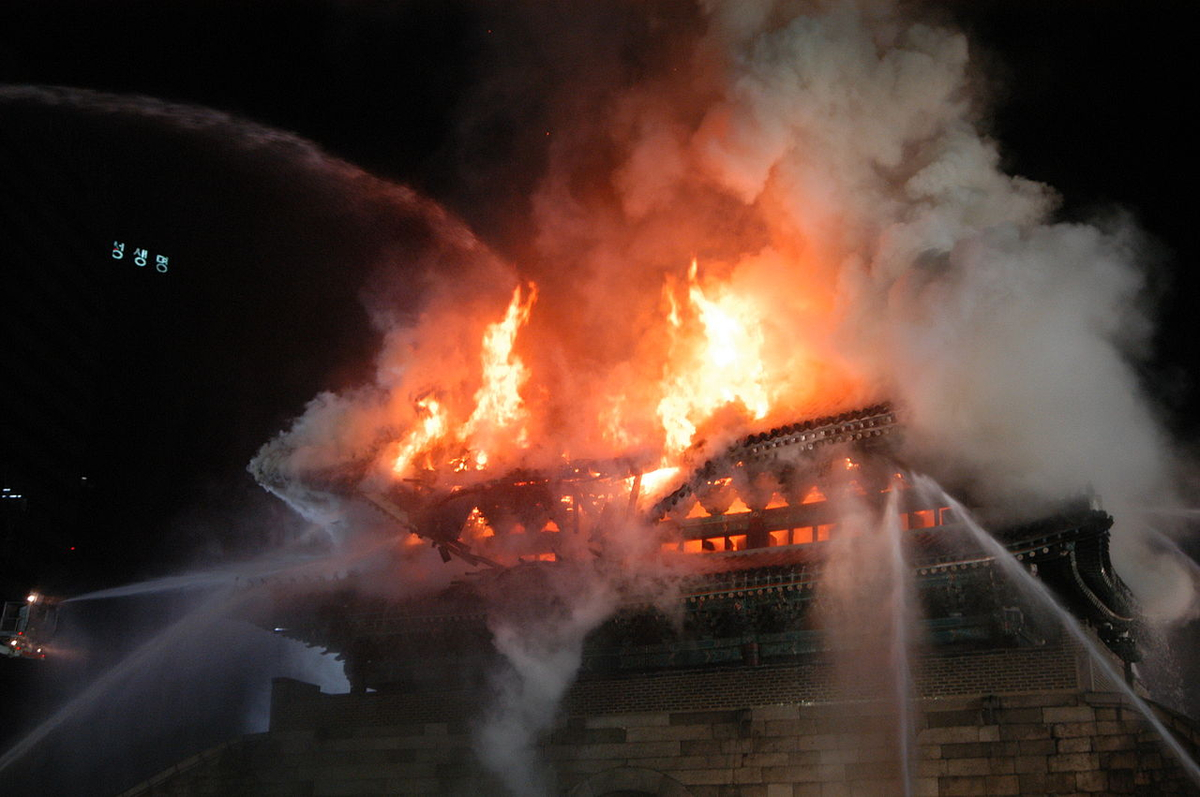
Devastating fire destroys Namdaemun Gate.
South Korea
Cultural Heritage
Disaster
Fire
4 min read
Updated By: History Editorial Network (HEN)
Published:
The Namdaemun Gate, an iconic cultural symbol in South Korea, was engulfed in flames and destroyed. The gate, also known as Sungnyemun, was designated as the country's first national treasure, holding immense historical and cultural significance. It was built in the 14th century during the Joseon Dynasty and served as a prominent landmark in central Seoul.
The fire that ravaged Namdaemun Gate was a devastating blow to the nation, as it represented more than just a physical structure—it embodied the country's rich heritage and history. Investigations revealed that the fire was intentionally set by a disgruntled individual, adding a layer of tragedy to the already heart-wrenching loss.
The impact of the Namdaemun Gate's destruction was profound, evoking sorrow and outrage among South Koreans. Many expressed their grief over the loss of such a revered national treasure, while others called for stricter measures to protect the country's historical sites from future incidents.
Efforts to rebuild Namdaemun Gate commenced shortly after the fire, with the government pledging to restore the historic structure to its former glory. The reconstruction process aimed to honor the gate's legacy and preserve its cultural significance for future generations to appreciate and cherish.
The destruction of the Namdaemun Gate underscored the vulnerability of cultural heritage sites and the importance of safeguarding them from harm. It served as a poignant reminder of the irreplaceable value of historical landmarks and the need for enhanced security measures to prevent similar tragedies in the future.
#NamdaemunGate #SouthKorea #CulturalHeritage #HistoricalLoss #Reconstruction #Preservation

Explore the Life Moments of
 AI Twin