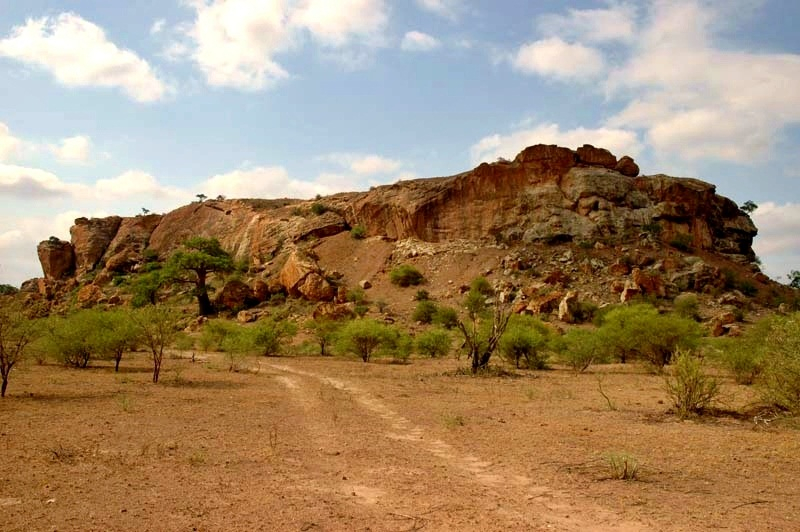
Mapungubwe Kingdom Fades: Environmental and Political Factors
Political
Environmental Changes
4 min read
Updated By: History Editorial Network (HEN)
Published:
The decline of the Kingdom of Mapungubwe was driven by a combination of environmental changes and political shifts. Mapungubwe was a thriving kingdom located in southern Africa, known for its advanced society and extensive trading networks. However, the kingdom's prosperity was short-lived due to various factors.
Environmental changes, such as prolonged droughts and soil erosion, disrupted agricultural practices and led to food shortages. This, in turn, contributed to social unrest and economic instability within the kingdom. Additionally, the depletion of natural resources further exacerbated the situation, making it difficult for the kingdom to sustain its population and maintain its status as a regional power.
Politically, internal conflicts and external pressures from neighboring kingdoms and trade partners also played a significant role in the decline of Mapungubwe. Disputes over territory and resources weakened the kingdom's influence and ultimately led to its fragmentation. The once-powerful kingdom was gradually overshadowed by emerging political entities in the region, marking the end of its dominance.
As the Kingdom of Mapungubwe declined, its impact reverberated throughout the region. Trade routes shifted, alliances were reconfigured, and new power dynamics emerged. The fall of Mapungubwe serves as a reminder of the interconnectedness between environmental sustainability and political stability in ancient civilizations.
#Mapungubwe #SouthAfrica #EnvironmentalChanges #PoliticalShifts

Explore the Life Moments of
 AI Twin